
Vénus anadyomène — History & Facts
When Jean Auguste Dominique Ingres exhibited Vénus anadyomène at the 1837 Paris Salon, the painting ignited immediate controversy—not for its mythological subject, but for its audacious treatment of the female nude. Critics were divided: some praised its classical purity, while others found its elongated proportions and anatomical liberties unsettling. Ingres himself had labored over the composition for decades, beginning sketches as early as 1808 and returning to the canvas repeatedly, determined to perfect his vision of Venus rising from the sea.
The painting became a touchstone in the heated debates over the future of French art, pitting the cool idealism of Ingres against the passionate color of his rival, Eugène Delacroix. The moment captured is the birth of Venus, the Roman goddess of love, emerging from the sea foam as described in ancient myth. Ingres freezes Venus in the act of wringing water from her long hair, her gaze turned serenely outward, her body elongated and impossibly smooth. The shell beneath her feet, the gentle curve of her arms, and the subtle play of light on her skin all reinforce her divine origin, while the cool, almost porcelain palette distances her from earthly reality.
Unlike Botticelli’s famous Birth of Venus, which surrounds the goddess with wind gods and attendants, Ingres isolates his Venus, focusing all attention on her solitary, statuesque form. The result is both an homage to antiquity and a distinctly personal vision, marked by Ingres’s fascination with line and idealized beauty. Vénus anadyomène was commissioned by Benjamin Delessert, a prominent banker and collector, who sought a modern French answer to the great nudes of the Italian Renaissance. After its controversial debut, the painting remained in private hands for decades before entering the public collection of the Musée Condé at Chantilly, where it hangs today.
For Ingres, the work marked a turning point: it was both a culmination of his lifelong study of the female form and a declaration of allegiance to the classical tradition at a time when Romanticism was in full bloom. The painting’s journey from scandal to icon mirrors the shifting tides of taste in 19th-century France, and its enigmatic Venus continues to provoke admiration and debate.
Sources: Wikidata Q29851067 · Image source (Wikimedia Commons)
More Artworks by Jean Auguste Dominique Ingres

Grande Odalisque
Jean Auguste Dominique Ingres

Madame Moitessier (seated)
Jean Auguste Dominique Ingres

Portrait of Comtesse d’Haussonville
Jean Auguste Dominique Ingres

The Source
Jean Auguste Dominique Ingres

Madame Rivière
Jean Auguste Dominique Ingres

Madame Jean-Auguste-Dominique Ingres, née Madeleine Chapelle
Jean Auguste Dominique Ingres

Portrait of a Lady
Jean Auguste Dominique Ingres

Joséphine-Éléonore-Marie-Pauline de Galard de Brassac de Béarn (1825–1860), Princesse de Broglie
Jean Auguste Dominique Ingres

The Apotheosis of Homer
Jean Auguste Dominique Ingres
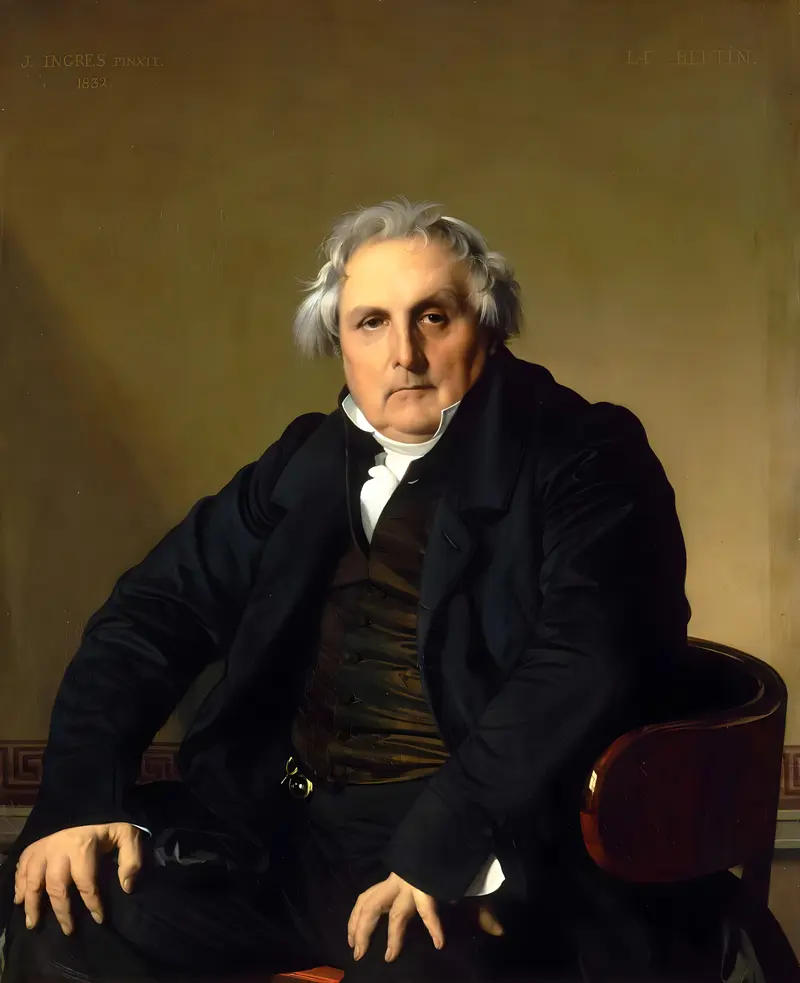
Portrait of Monsieur Bertin
Jean Auguste Dominique Ingres





