
View of Amersfoort — History & Facts
A sweep of sky dominates the scene, drawing the eye not to drama but to stillness. In View of Amersfoort, Aelbert Cuyp chooses a vantage point both literal and poetic: high ground, where two shepherds and their flock pause above the broad, flat plain. The city’s spire rises quietly from the haze, a single vertical accent in a world of horizontals and gentle curves.
The shepherds, rendered with a calm dignity, seem to stand watch not only over their sheep but over the city itself, as if the rural and the urban are bound by the same expanse of air and light. The clouds are heavy but not threatening, their slow drift mirrored in the tranquil pace of the animals below. This painting, created in 1644, belongs to a moment when Dutch artists turned their gaze to the land itself, celebrating the quiet grandeur of their own countryside. Works like this were prized by the prosperous citizens of the Dutch Republic, who saw in such scenes both a reflection of their national pride and an ideal of order and harmony.
While history has kept few traces of this particular View of Amersfoort, its presence in a modern collection reminds us how the Dutch landscape, with its careful balance of human labor and natural beauty, became a subject worthy of art. Stand before it and let your eye travel from the shepherd’s staff to the distant tower—the journey is the painting’s true subject.
More Artworks by Aelbert Cuyp

The Maas at Dordrecht
Aelbert Cuyp
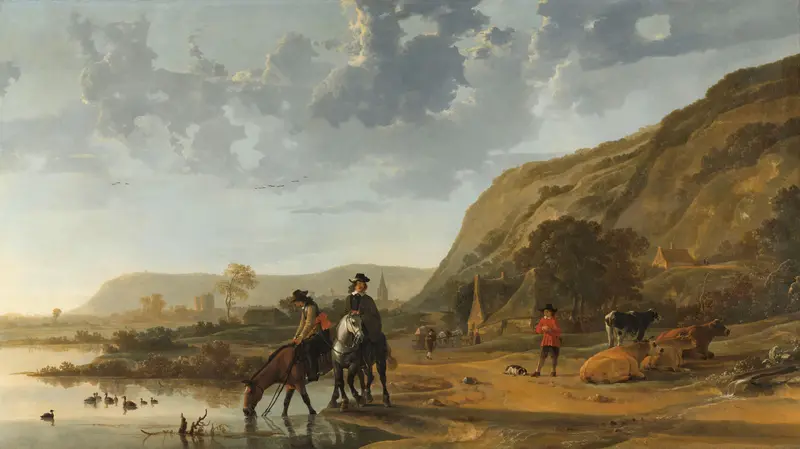
River Landscape with Riders
Aelbert Cuyp

The Maas at Dordrecht
Aelbert Cuyp
Gezicht op Dordrecht
Aelbert Cuyp
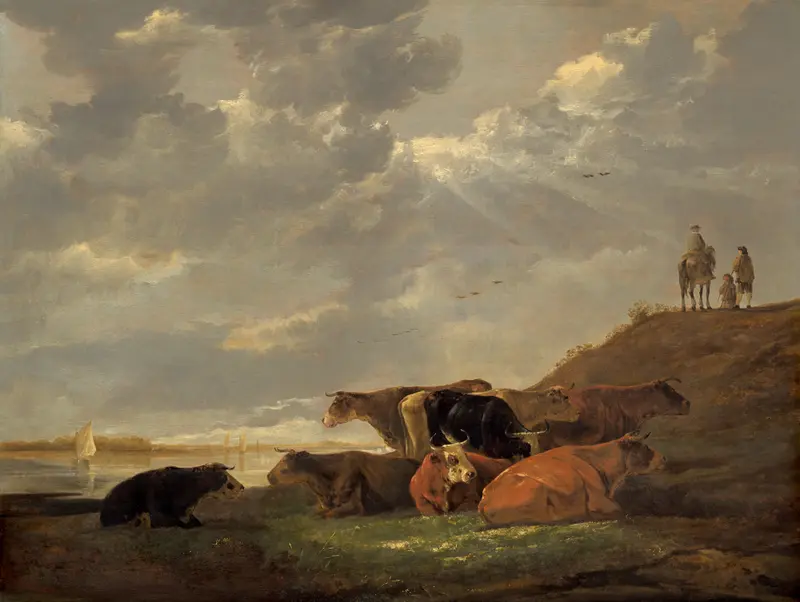
River Landscape with Cows
Aelbert Cuyp
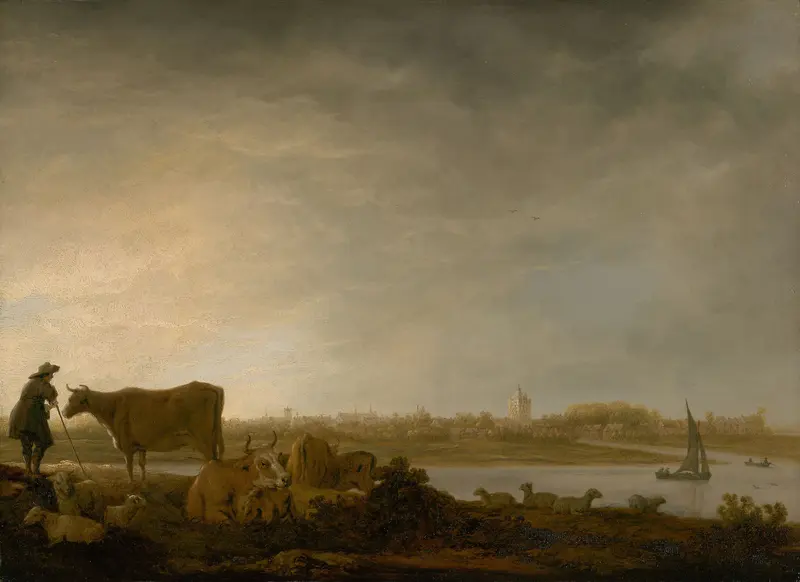
A View of Vianen with a Herdsman and Cattle by a River
Aelbert Cuyp
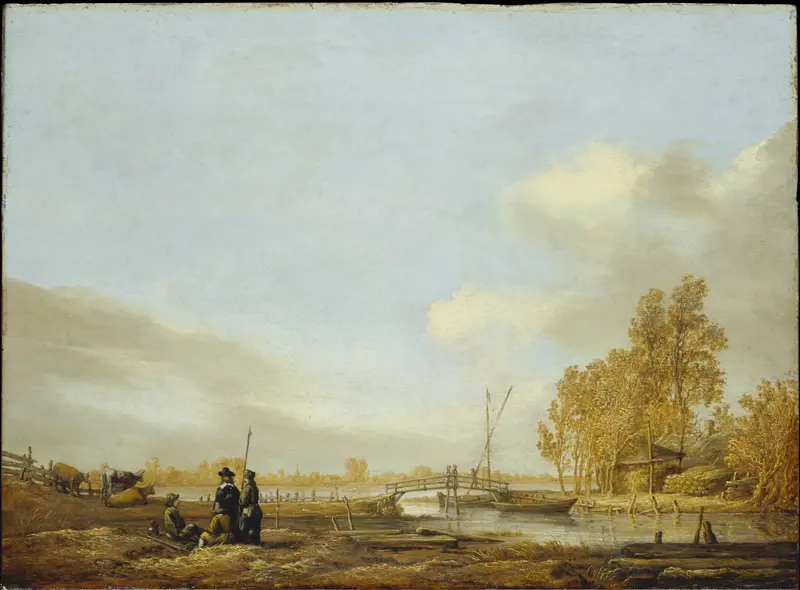
River Landscape with Footbridge
Aelbert Cuyp
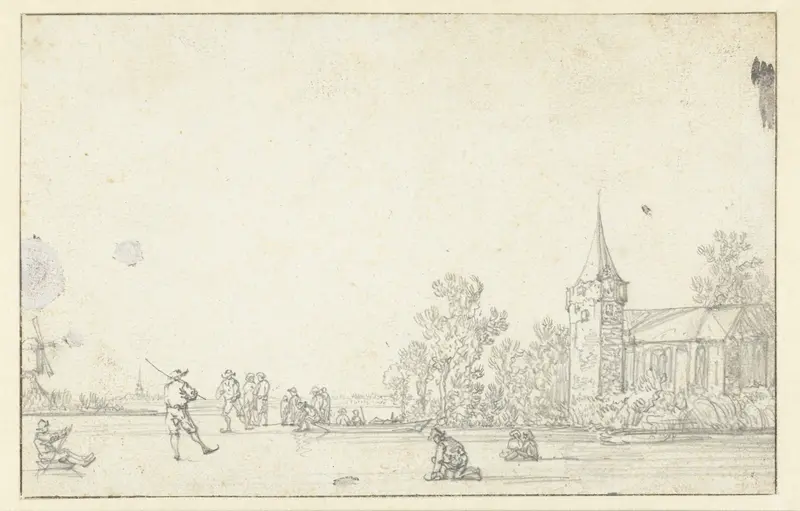
Bevroren rivier met schaatsers bij een kerk
Aelbert Cuyp

Cattle near a River
Aelbert Cuyp
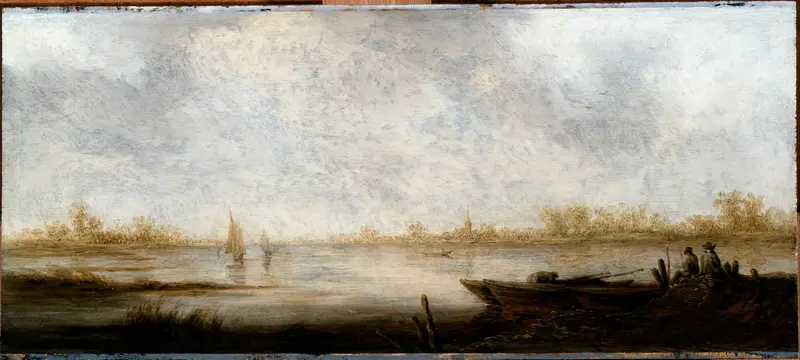
River Landscape
Aelbert Cuyp
More Landscape Art

The Starry Night
Vincent van Gogh

View of Delft
Johannes Vermeer

Water Lilies
Claude Monet

The Grand Canal, Venice, looking north-west from the Ca' Corner to the Ca' Contarini degli Scrigni, with the campanile of Santa Maria della Carità
Canaletto

Windsor Castle
Canaletto

The Grand Canal looking North-East from the Palazzo Dolfin-Manin to the Rialto Bridge
Canaletto