
View of Le Crotoy from Upstream — History & Facts
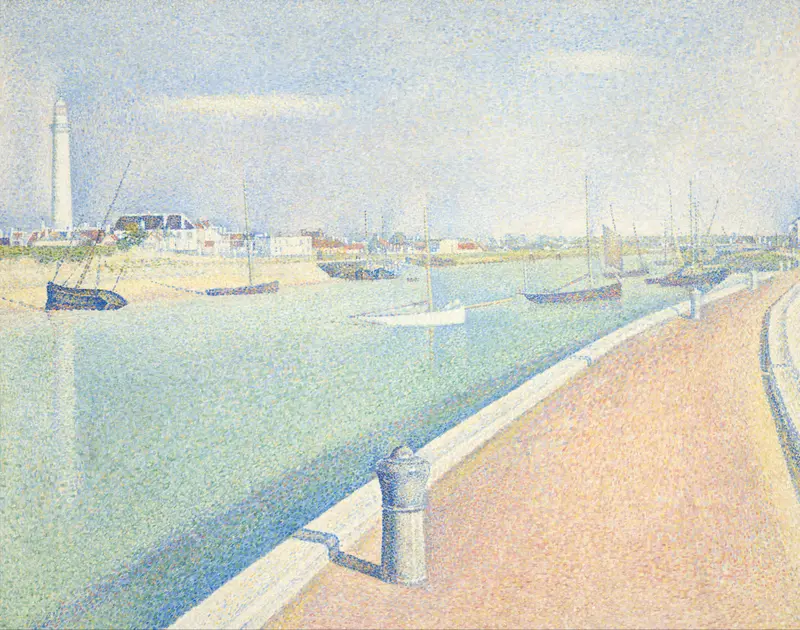
When Georges Seurat painted View of Le Crotoy from Upstream in 1889, he was deep into his exploration of pointillism, a technique that would soon define his legacy. What makes this work particularly notable is that it was painted during Seurat’s final summer in the north of France, just a year before his untimely death at age 31. The town of Le Crotoy, perched on the edge of the Somme estuary, had become a favored retreat for artists seeking the peculiar light of the Channel coast.
Seurat returned there repeatedly, and this painting is one of several views he made of the place, each capturing subtle shifts in atmosphere and tide. In this scene, Seurat fixes his gaze on the calm riverbank as the town rises gently in the distance, its church spire a slender marker against the pale sky. The composition is a study in stillness: boats rest at anchor, the water’s surface broken only by faint ripples, and the land is rendered in delicate dots of color that shimmer at a distance. The artist’s choice to paint from upstream, looking toward the town, creates a sense of anticipation—as if the viewer is arriving by water, drawn toward the clustered rooftops and the promise of life within.
Unlike the bustling, sunlit beaches of Monet’s Normandy scenes, Seurat’s Le Crotoy is quiet, its mood shaped by the cool, measured touch of his brush. The painting’s subsequent history is less dramatic than its making; it passed through private French collections before entering the public domain in the twentieth century. Its precise provenance remains somewhat obscure, a common fate for works of this period that were not immediately acquired by major museums. Today, View of Le Crotoy from Upstream stands as a testament to Seurat’s relentless experimentation and his fascination with the science of color, marking a pivotal moment in the evolution of the Neo-Impressionist movement.
The work continues to invite viewers into its tranquil world, offering a glimpse of the artist’s search for harmony between nature and technique.
More Artworks by Georges Seurat
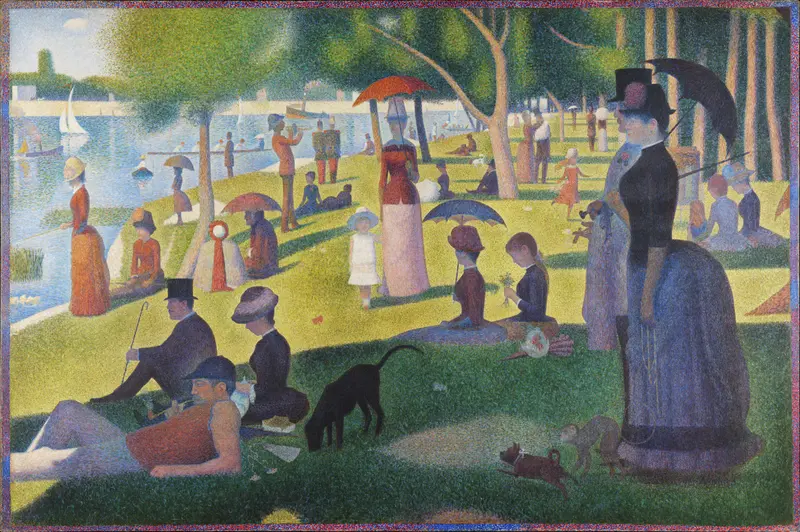
A Sunday Afternoon on the Island of La Grande Jatte
Georges Seurat
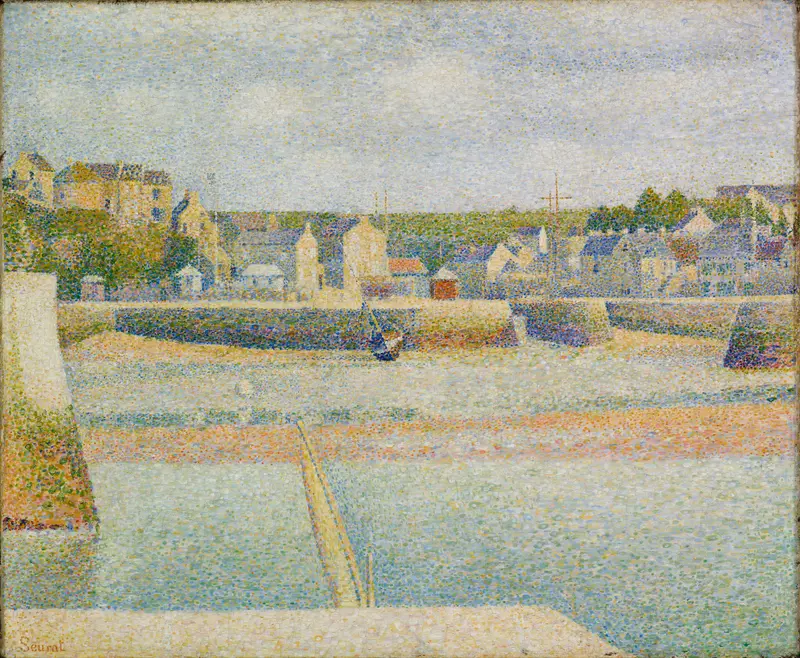
Port-en-Bessin, The Outer Harbor (Low Tide)
Georges Seurat
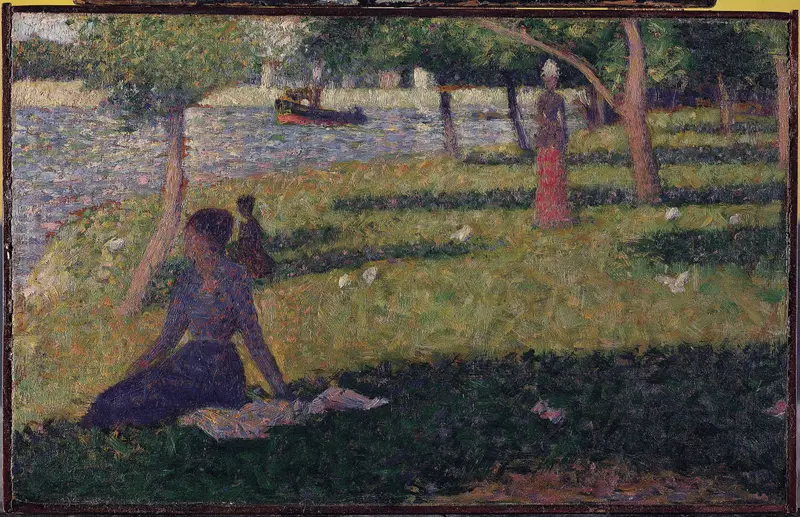
Étude pour ‘La Grande Jatte’ (Study for ‘La Grande Jatte’)
Georges Seurat
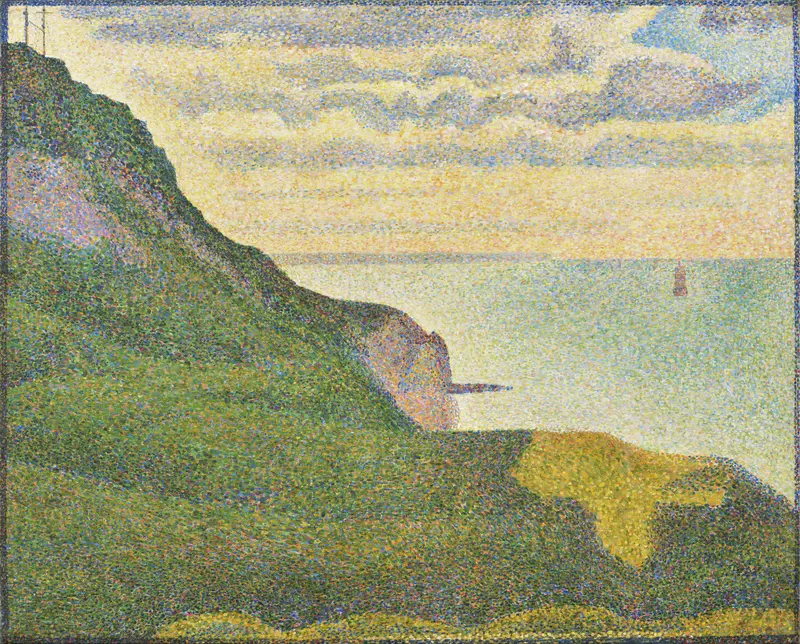
Seascape at Port-en-Bessin,Normandy
Georges Seurat
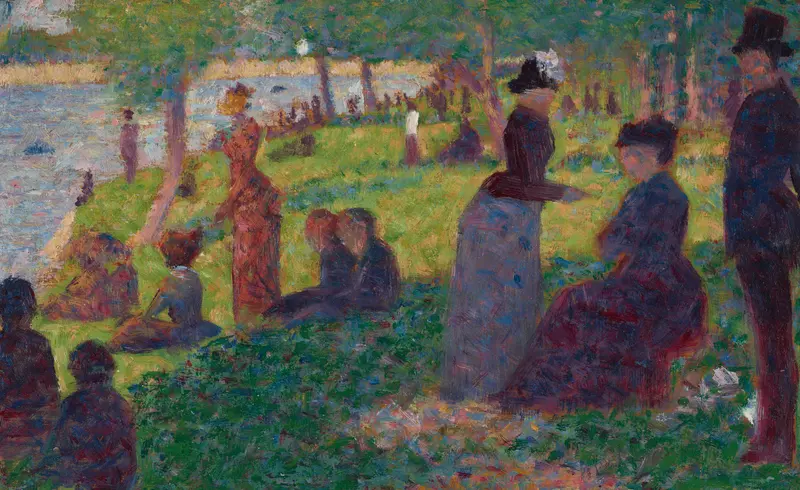
Oil Sketch for "A Sunday on La Grande Jatte — 1884"
Georges Seurat
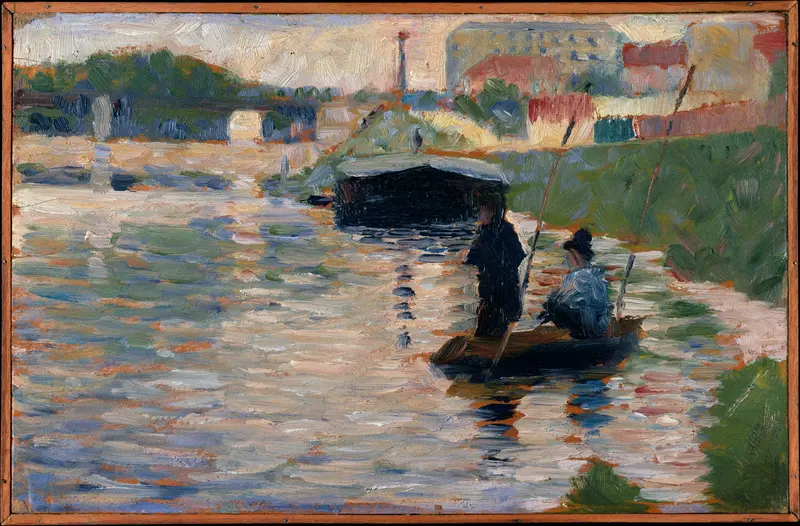
View of the Seine
Georges Seurat
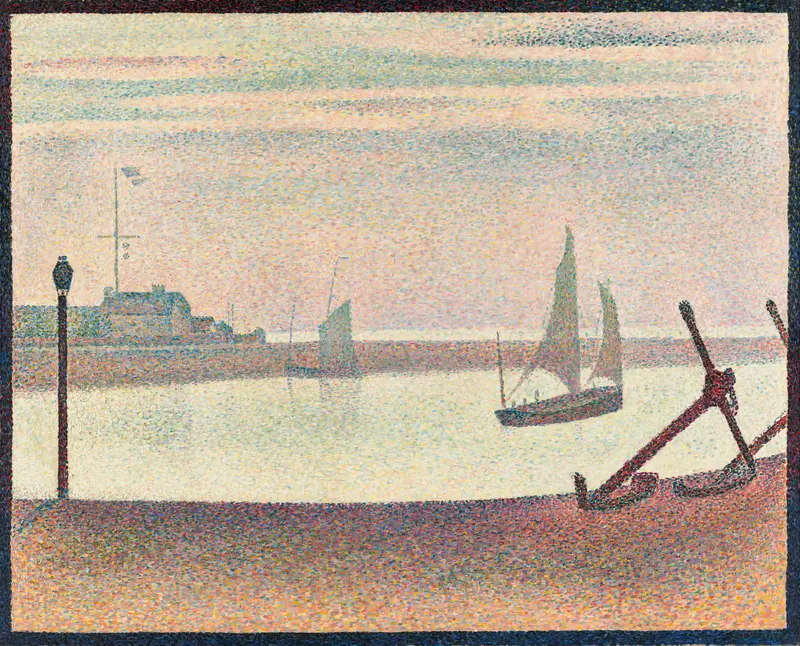
The Channel at Gravelines, Evening
Georges Seurat
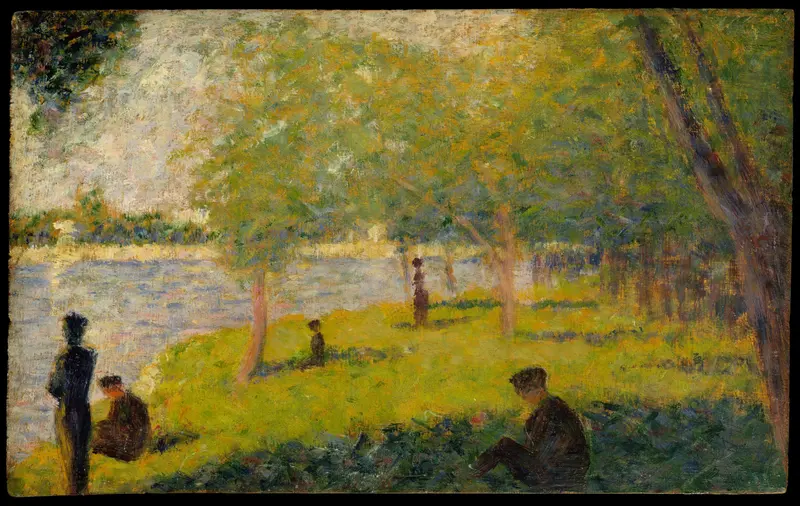
Study for ‘A Sunday on La Grande Jatte’
Georges Seurat
Study for A Sunday on La Grande Jatte
Georges Seurat
The Channel of Gravelines, Petit Fort Philippe
Georges Seurat
More Landscape Art

The Starry Night
Vincent van Gogh

View of Delft
Johannes Vermeer

Water Lilies
Claude Monet

The Grand Canal, Venice, looking north-west from the Ca' Corner to the Ca' Contarini degli Scrigni, with the campanile of Santa Maria della Carità
Canaletto

Windsor Castle
Canaletto

The Grand Canal looking North-East from the Palazzo Dolfin-Manin to the Rialto Bridge
Canaletto