
View of Venice — History & Facts
The first thing to catch the eye in View of Venice by Antonio María de Reyna Manescau is the sweep of golden light that bathes the lagoon, turning the water into a shimmering mirror for the sky. The painter draws us in from the left, where clustered fishing boats with ochre and russet sails anchor the scene in the everyday. Children wade and play in the shallows, their gestures lively and unposed, while the city’s domes and campaniles rise in the distance, softened by the haze of late afternoon.
The horizon sits low, giving the sky and its drama of clouds the upper hand, while the gentle bustle of boats, birds, and bathers keeps the scene grounded in lived experience. Every detail, from the weathered hulls to the distant silhouettes, invites the viewer to linger and wander through the painting’s layered spaces. Painted in the 1880s, this work belongs to a moment when Venice was both a living city and a favorite subject for artists seeking the poetry of light and water. Scenes like this were often collected by travelers and the rising middle class, eager for reminders of journeys or dreams of far-off places.
Antonio María de Reyna Manescau was part of a generation that found in Venice not only picturesque views but also a stage for modern life, balancing nostalgia with observation. Today, the painting resides in the Museo Carmen Thyssen in Málaga, a fitting home for a work that bridges Spanish artistry and Italian subject matter. As you look again, notice how the painting holds the tension between fleeting moment and enduring city, inviting you to step into its luminous calm.
More Artworks by Antonio María de Reyna Manescau
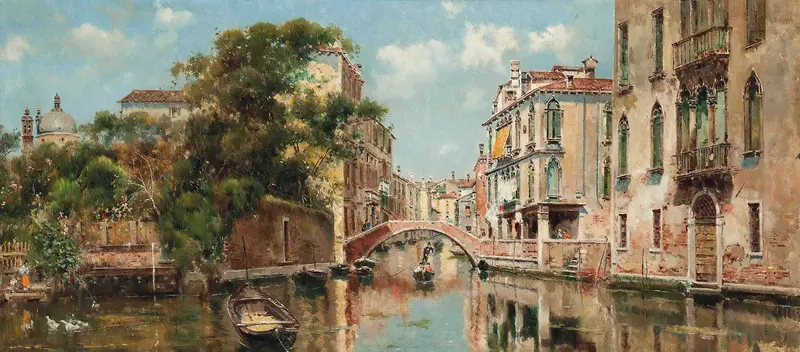
A gondolier before a Venetian bridge
Antonio María de Reyna Manescau
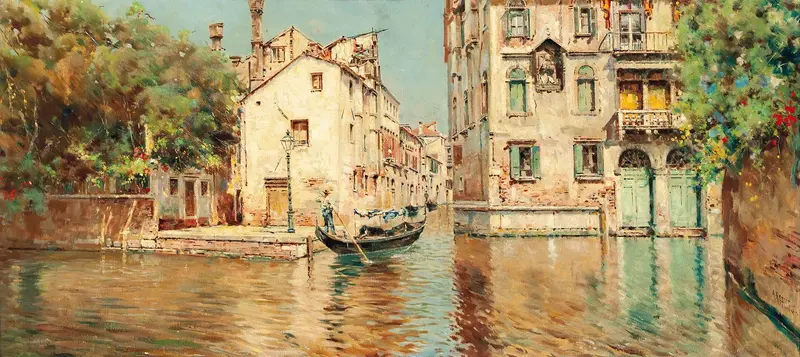
A gondolier on a Venetian backwater
Antonio María de Reyna Manescau
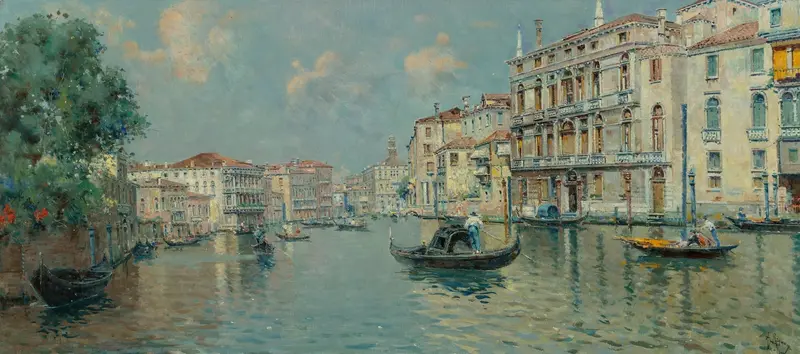
Grand Canal, Venice
Antonio María de Reyna Manescau
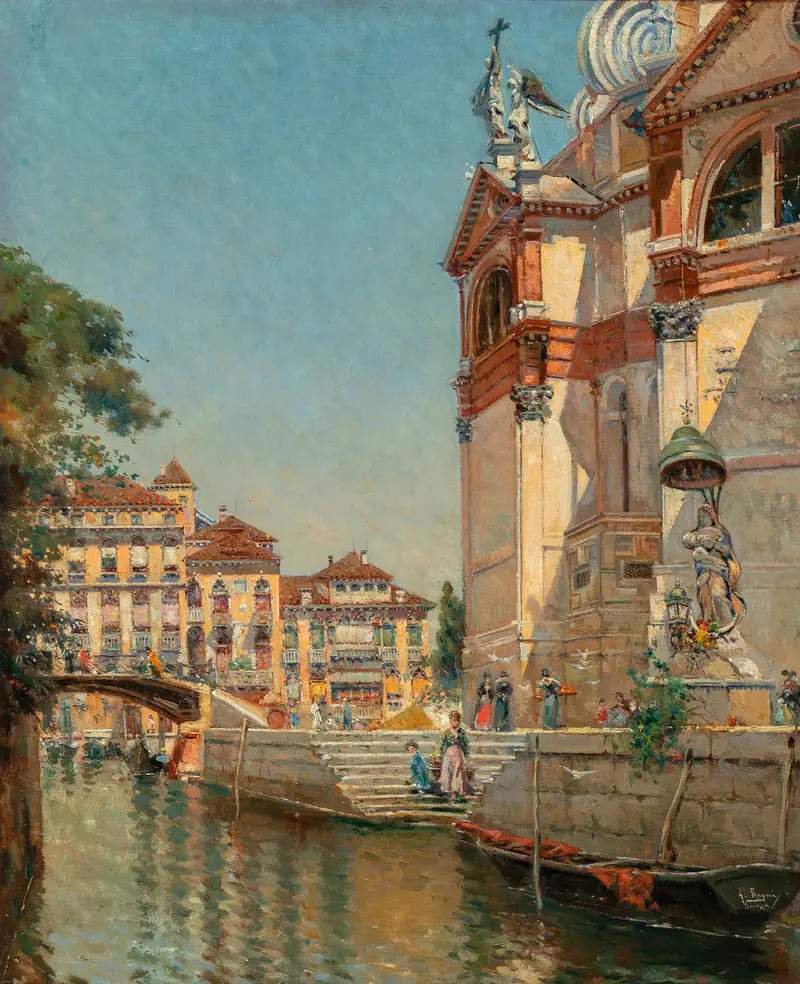
Santa Maria della Salute, Venice, seen from the side
Antonio María de Reyna Manescau
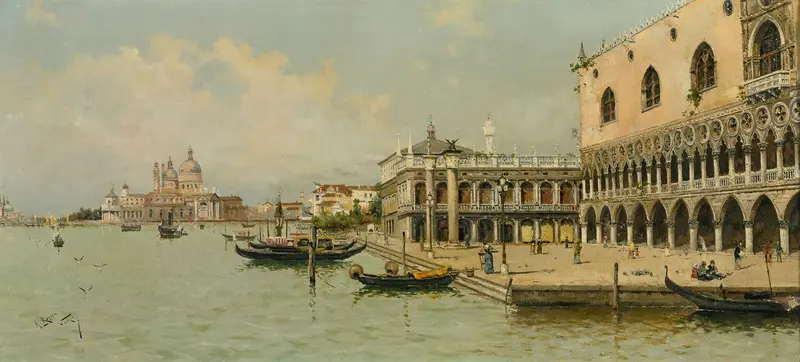
Gondolas By The Doge’s Palace
Antonio María de Reyna Manescau
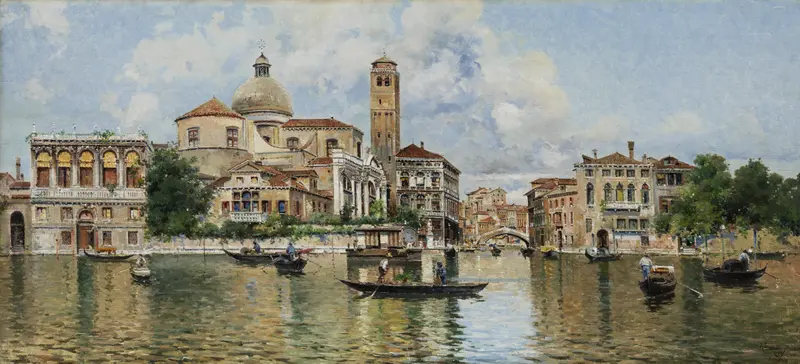
Vedute von Venedig
Antonio María de Reyna Manescau
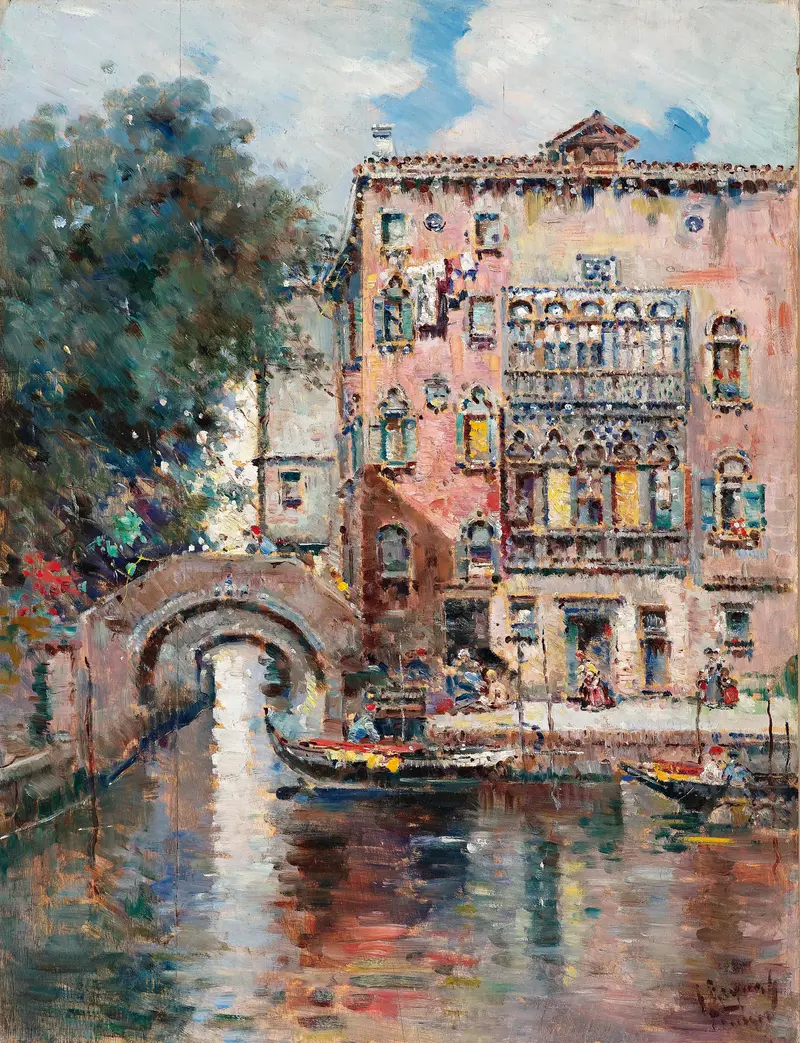
Gondeln in Venedig
Antonio María de Reyna Manescau
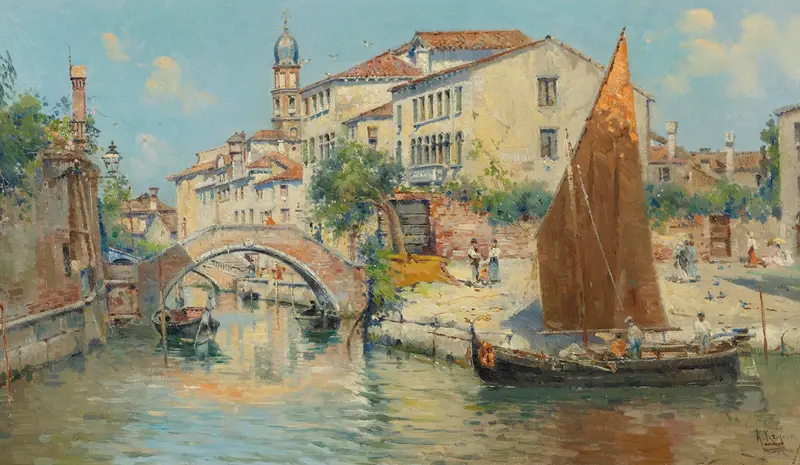
Venice
Antonio María de Reyna Manescau
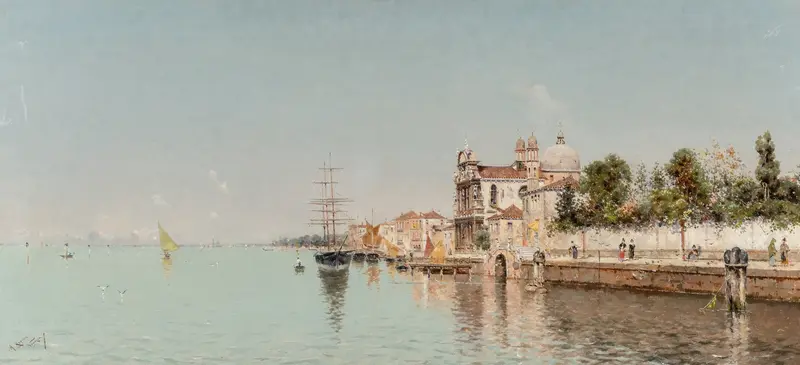
A Venetian waterfront
Antonio María de Reyna Manescau
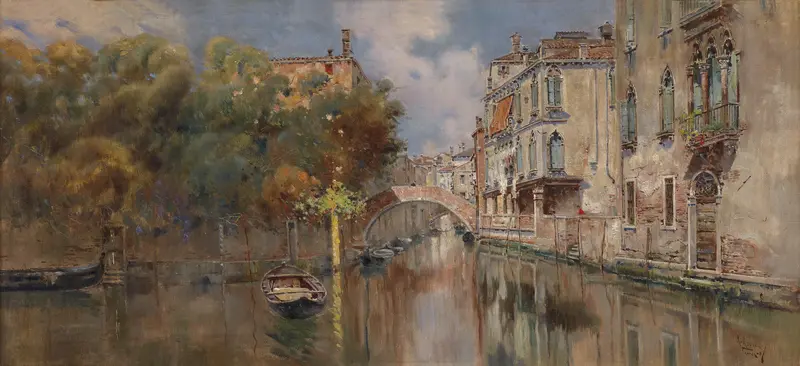
Blick auf einen Kanal in Venedig
Antonio María de Reyna Manescau





