
Waimea Plains and cultivated country near Nelson — History & Facts
Did the painter know this moment would outlive them? In the tranquil embrace of nature, silence reigns, inviting the viewer to pause and breathe with the landscape. Look to the foreground where rolling hills gently sweep into the horizon, painted in soft, harmonious greens and browns. The brushstrokes are deft, each stroke alive with intention, inviting you to trace the contours of the land. Notice how the light falls upon the cultivated patches, illuminating the earth's texture as it transitions from wild to nurtured.
A serene sky stretches above, melding subtle blues and whites, infusing the scene with a sense of expansive tranquility. Beneath this peaceful exterior lies a tension between the raw beauty of the untouched wilderness and the careful cultivation of the land. The separation of the cultivated fields from the wild hills reveals humanity's influence on nature, a delicate balance of coexistence. The artist’s choice of color and composition reflects not only the beauty of the region but also a deeper commentary on stewardship, reminding us of our responsibility to the landscapes we inhabit. John Gully painted this piece during a time when New Zealand was undergoing significant changes in the 19th century, moving from an unspoiled landscape to one increasingly marked by agriculture and settlement.
His work captures a moment where the natural world meets human intervention, reflecting both the challenges and the beauty of this transformation in a country rich in potential and promise.
More Artworks by John Gully
Browse all →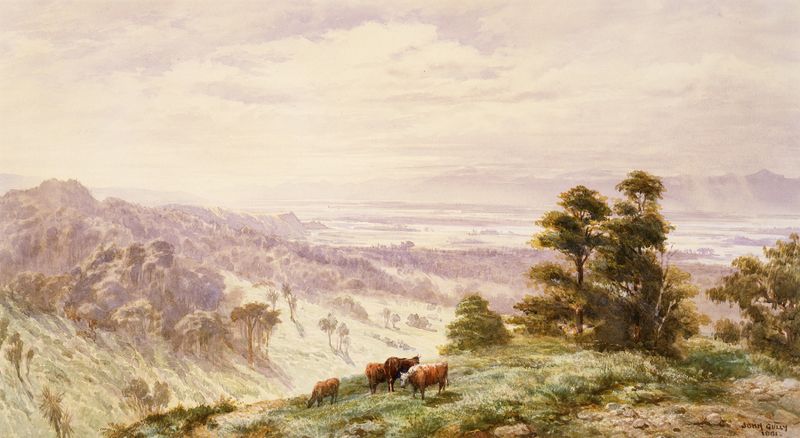
Landscape [Waimea Plains, Nelson]
John Gully
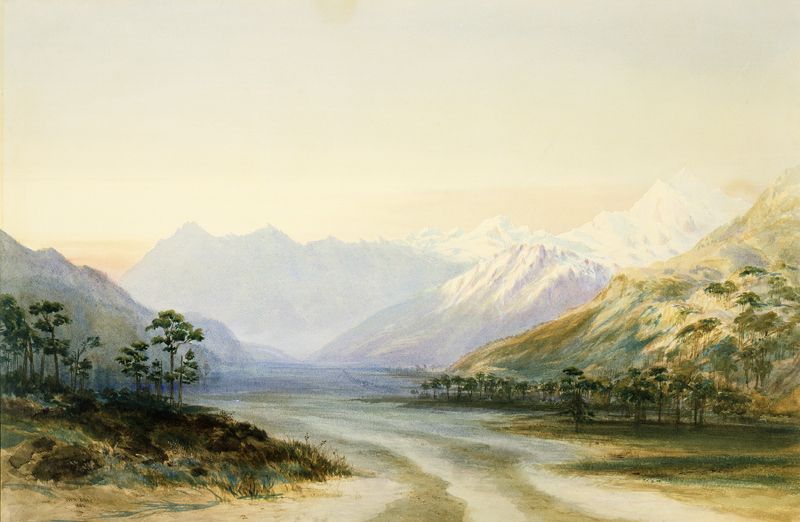
Mount Cook
John Gully
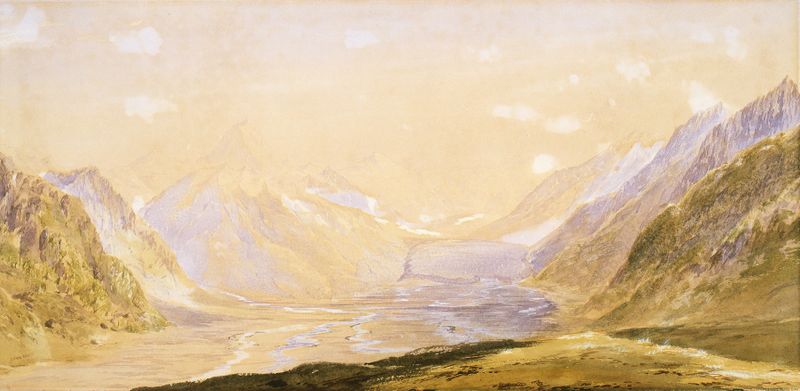
Mount Cook and the Tasman Glacier
John Gully
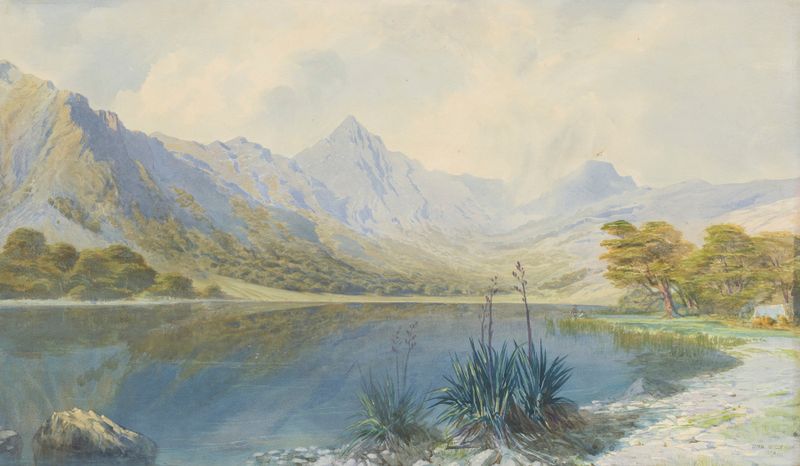
Lake scene (Lake Te Wharau)
John Gully
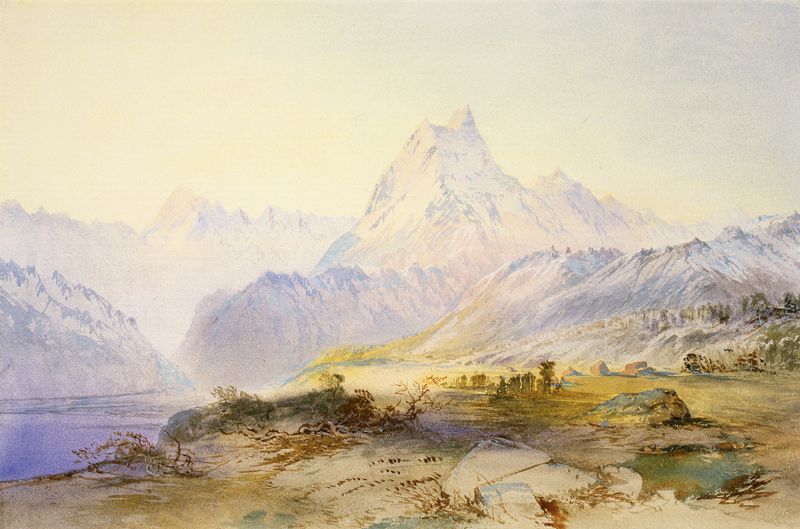
Mount Cook
John Gully

Tongariro, Ngauruhoe and Ruapehu, Central North Island
John Gully

Lake Wakatipu
John Gully

New Zealand bush scene
John Gully
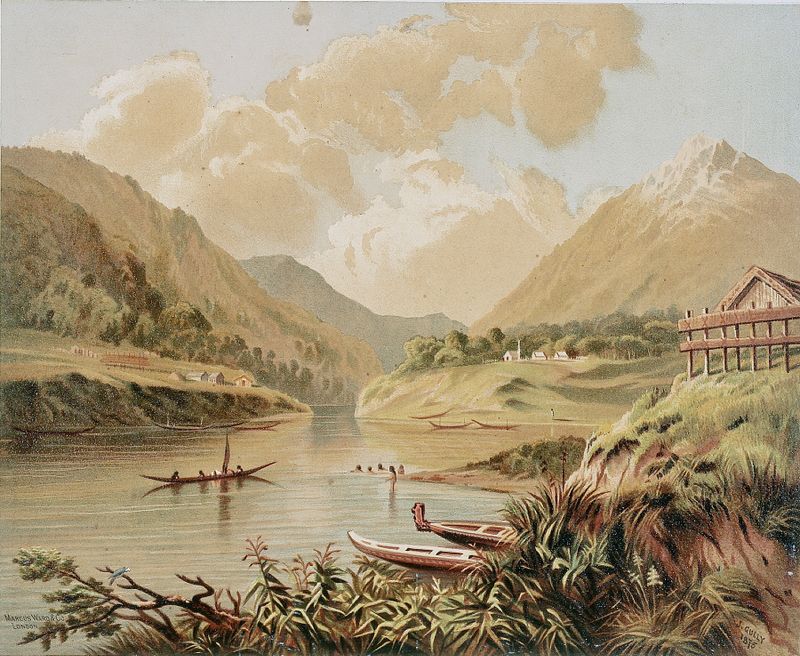
Upriver scene, Wanganui
John Gully

Paekakariki
John Gully





