Wapen van de Dood geflankeerd door man en vrouw — History & Facts
Can paint confess what words never could? In Wapen van de Dood geflankeerd door man en vrouw, the silent dialogue between mortality and existence unfolds, revealing the unspoken awe of life’s fragile balance. Focus first on the central emblem, a striking skeleton adorned with intricate armor. Its skeletal grin juxtaposes the lifelike figures of the man and woman, who stand resolutely at either side. Their garments, rich in detail and vibrant hues, starkly contrast with the dullness of death depicted at the center.
Notice how the light illuminates the folds of their clothing, emphasizing both the richness of life and the stark reminder of mortality that looms above them. As you delve deeper, consider the meaning encapsulated in their poses. The man tilts slightly, gazing down at the deathly figure, while the woman appears steadfast, her expression conveying a mix of reverence and defiance. Together, they embody the tension between the inevitability of death and the insistence on living fully.
The contrast in their expressions—one of contemplation, the other of strength—invites reflection on the human condition, evoking a profound awe at the interplay of life and death. Created in 1538, this work emerged during a significant period of Holbein's career in England. He was amid capturing the complexities of human emotion and societal status in his portraits. This painting serves not only as a memento mori but as a commentary on the uncertainties of life and the permanence of death, resonating with the anxieties and philosophies of the Reformation era.
More Artworks by Hans Holbein (II)
Browse all →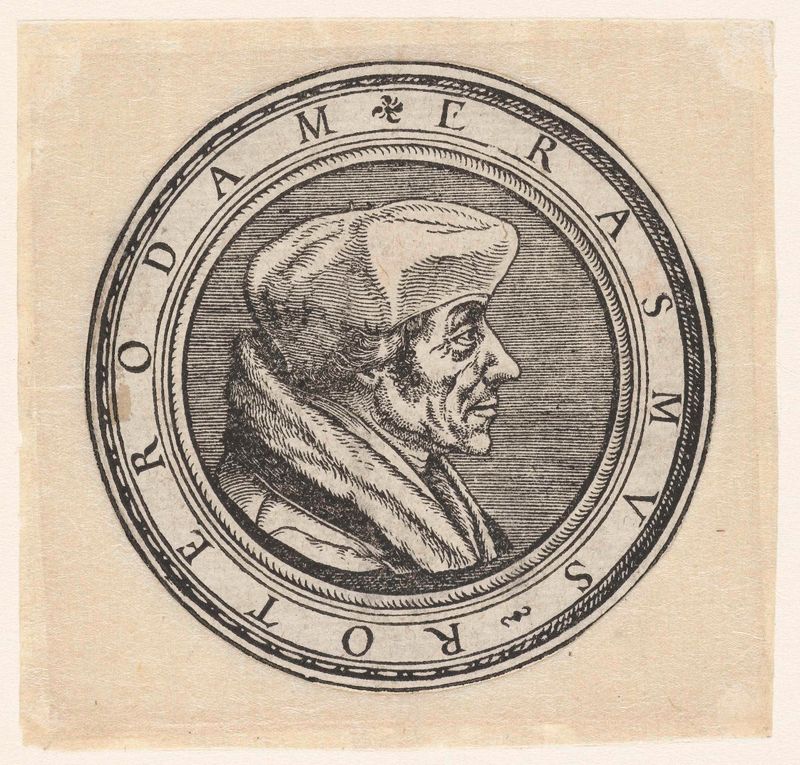
Portret van Erasmus
Hans Holbein (II)
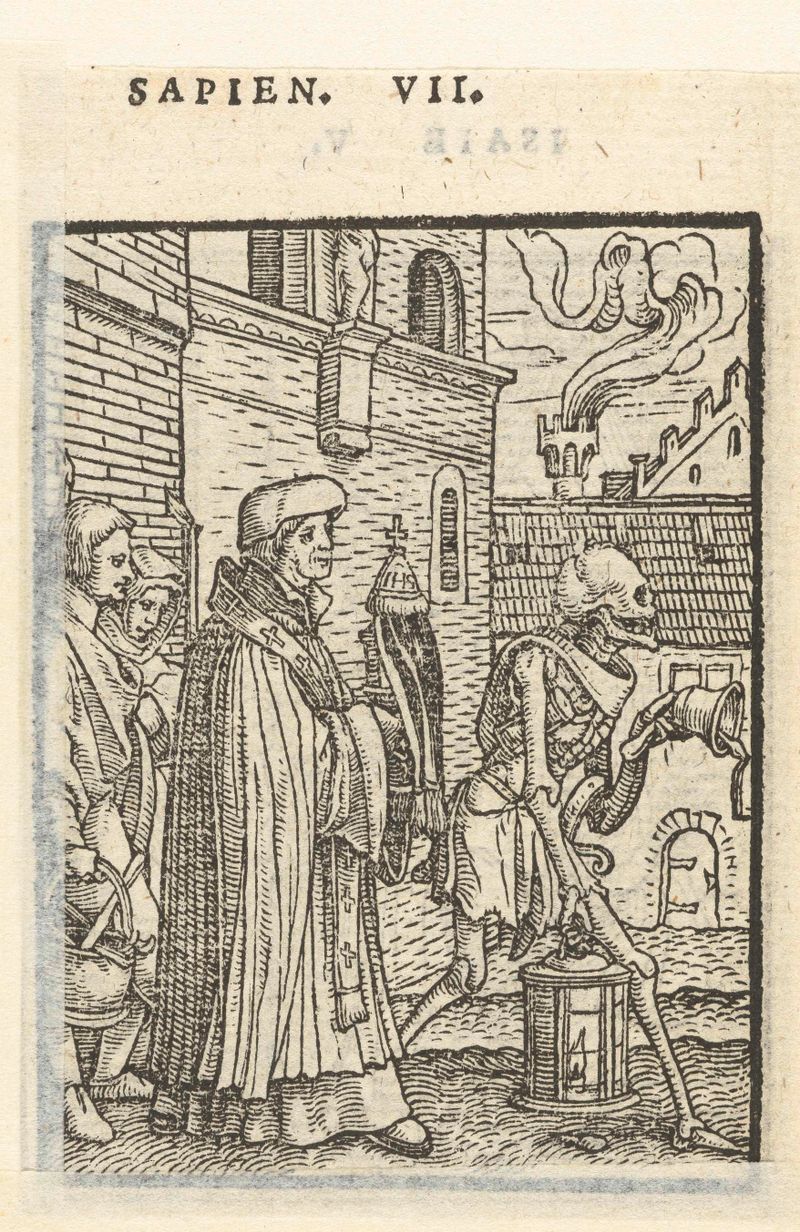
Priester en de Dood
Hans Holbein (II)
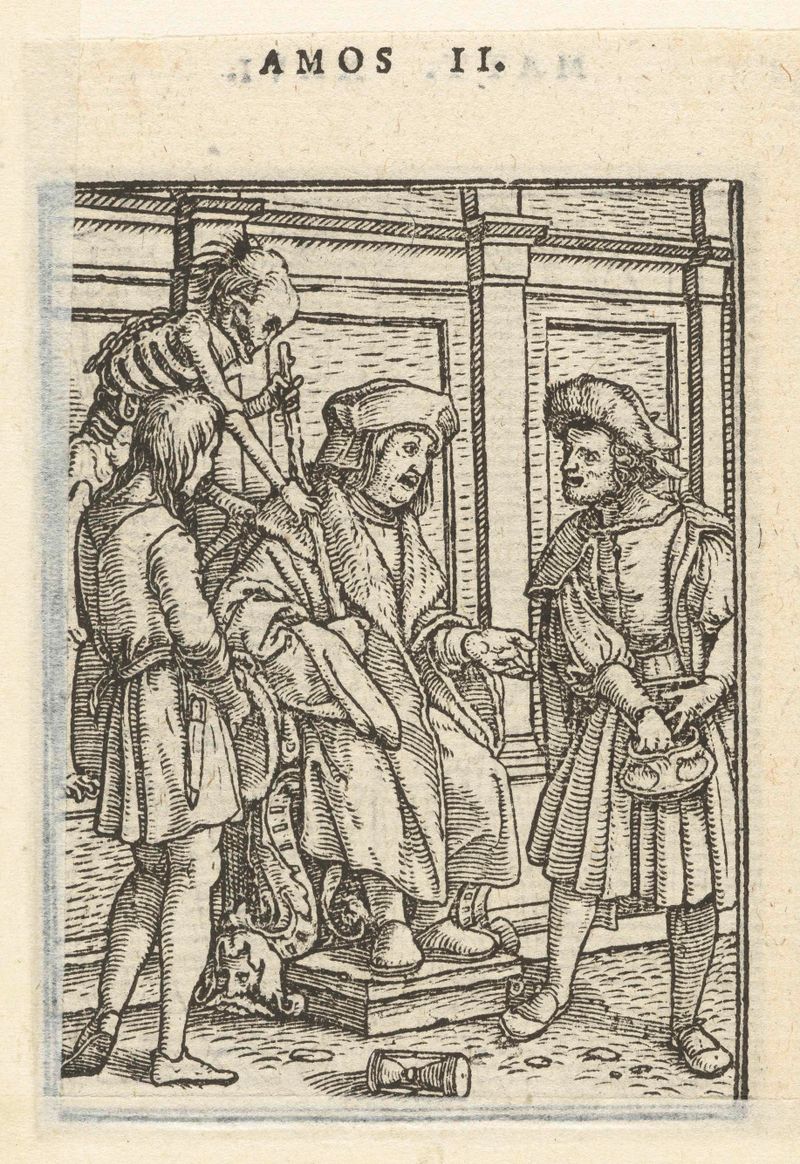
Rechter en de Dood
Hans Holbein (II)
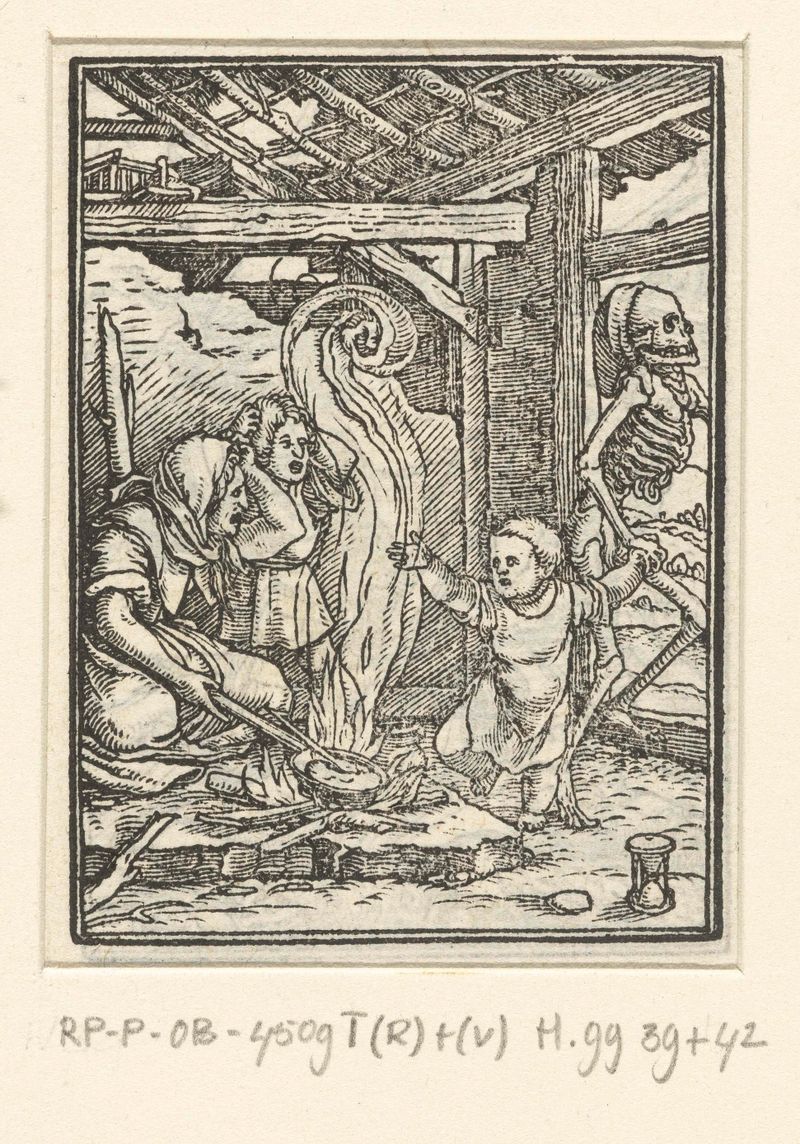
Kind en de Dood
Hans Holbein (II)
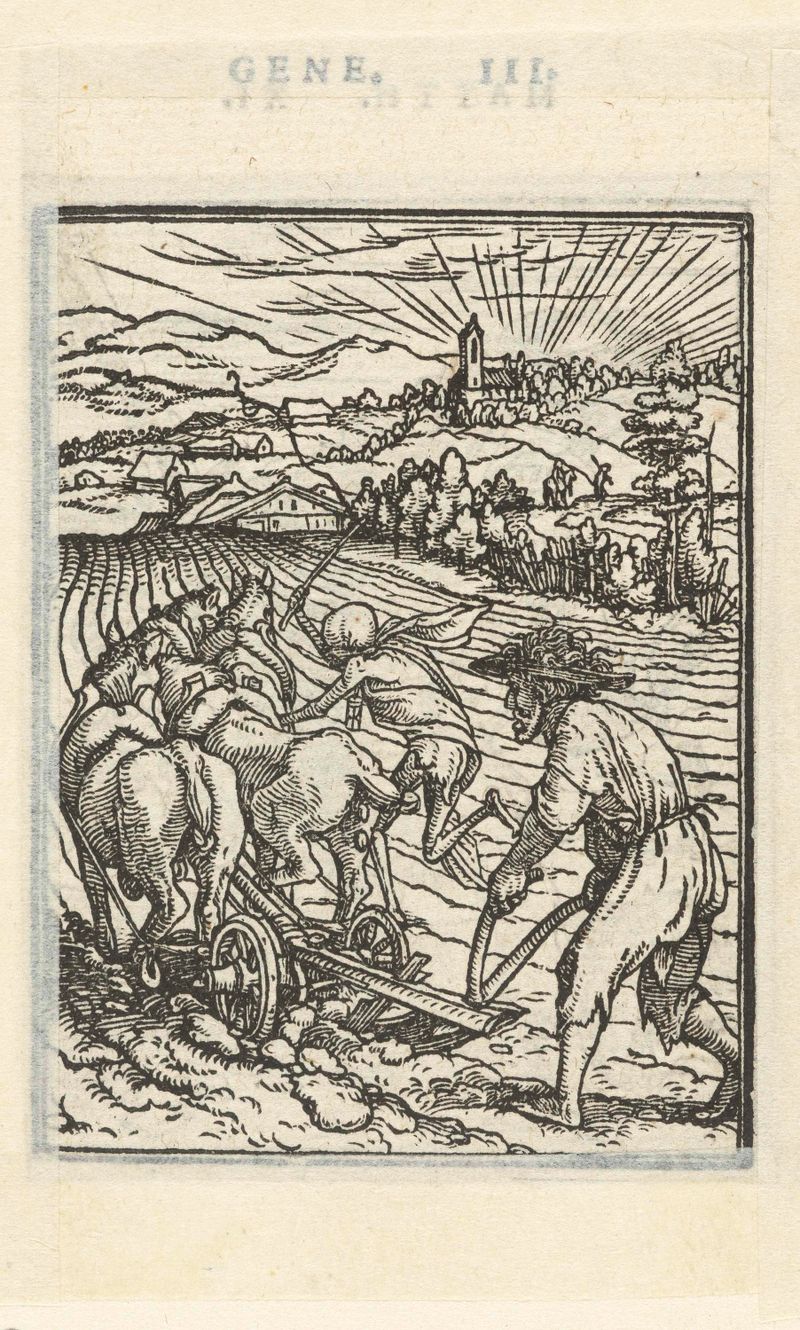
Boer en de Dood
Hans Holbein (II)
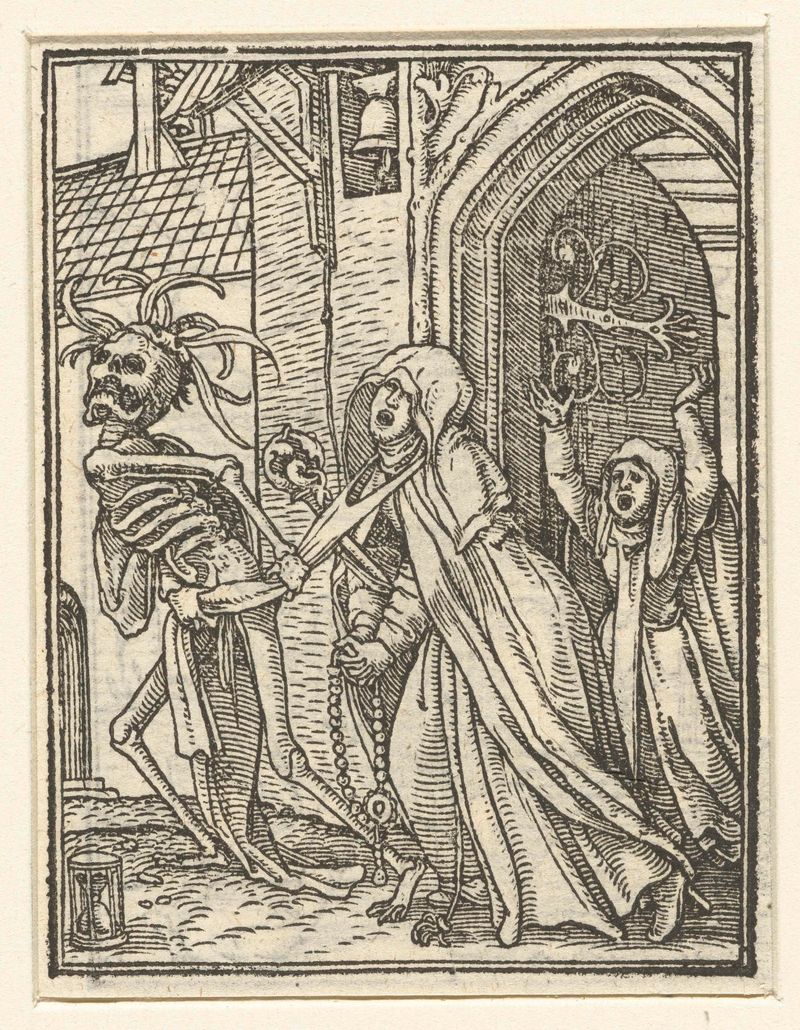
Abdis en de Dood
Hans Holbein (II)
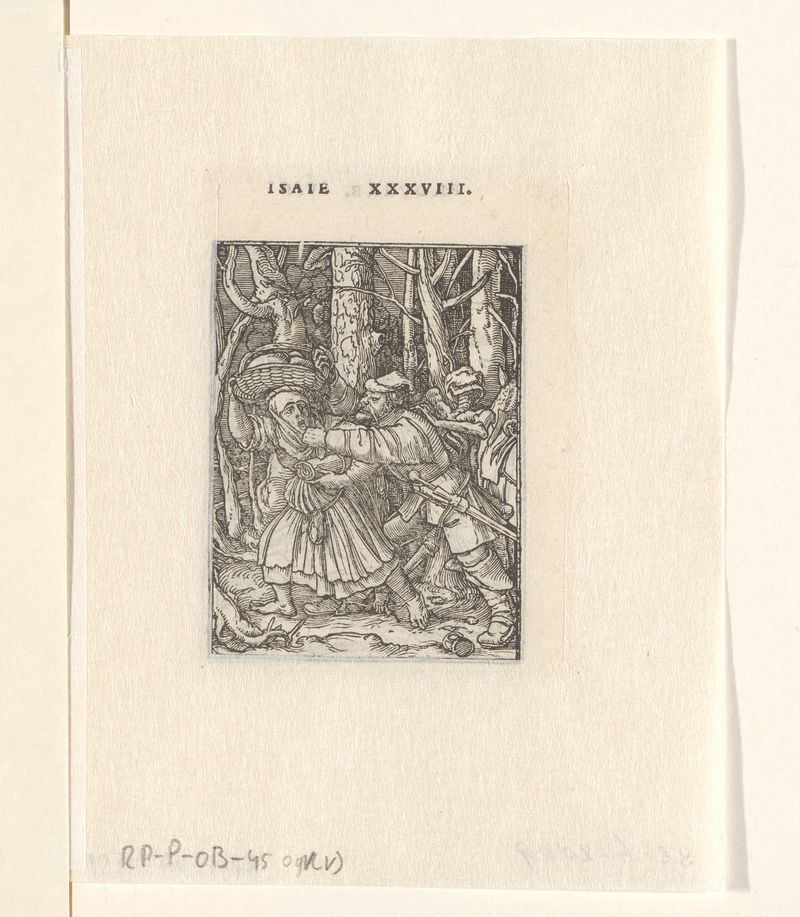
Dief en de Dood
Hans Holbein (II)
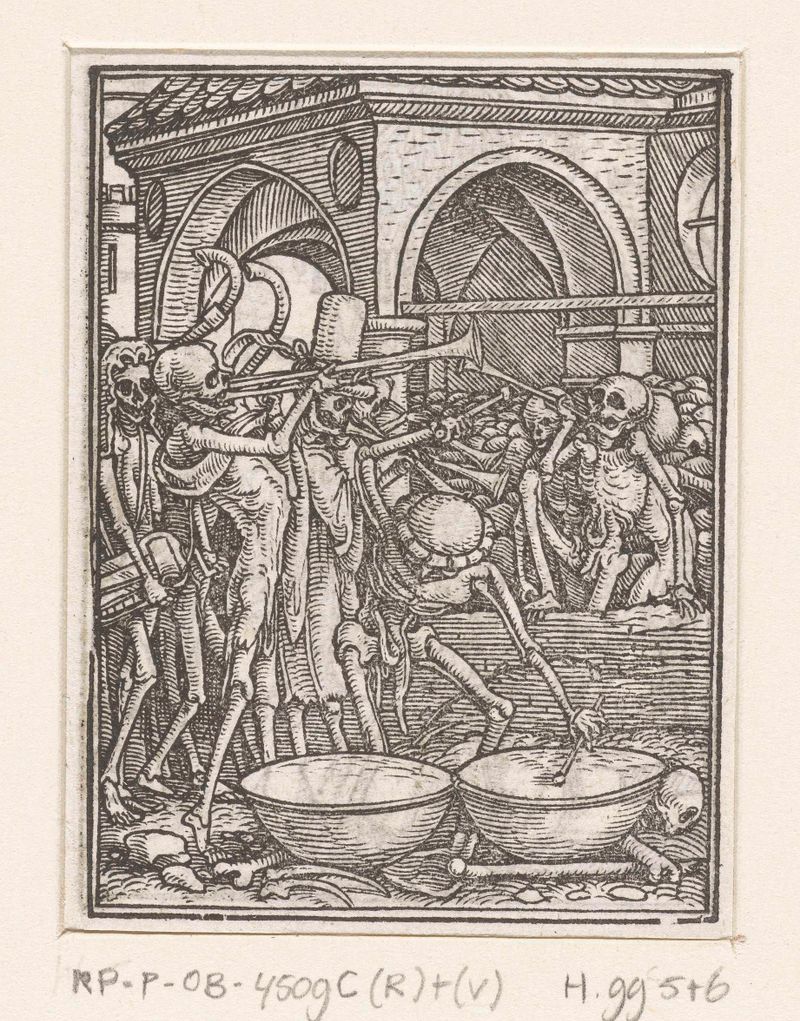
Skeletons Making Music from Dance of the Dead
Hans Holbein (II)
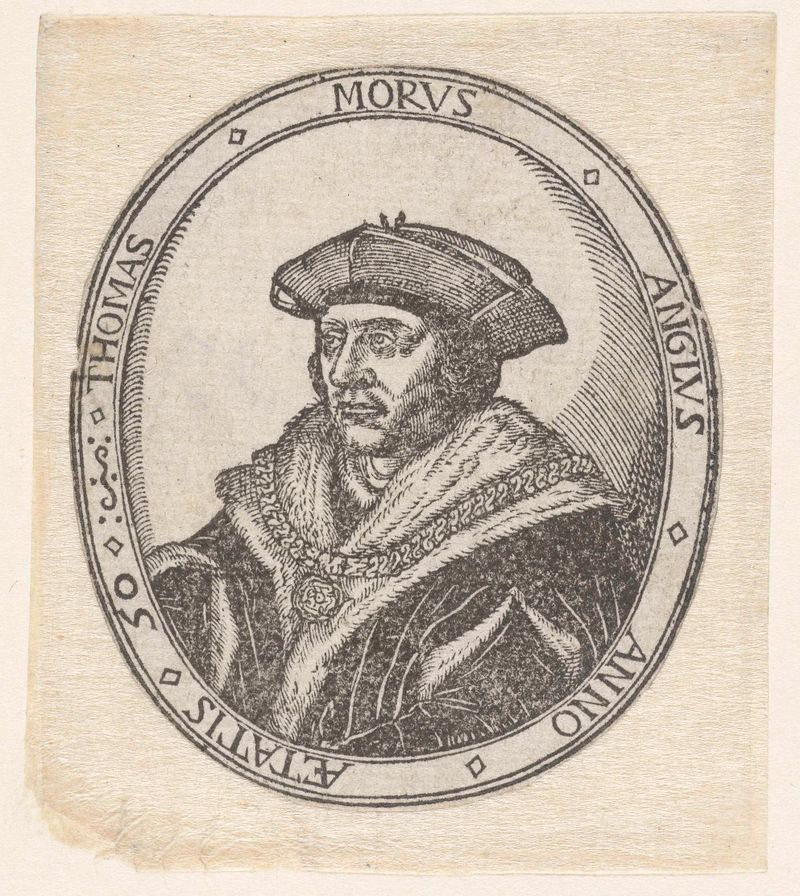
Portret van Thomas More
Hans Holbein (II)
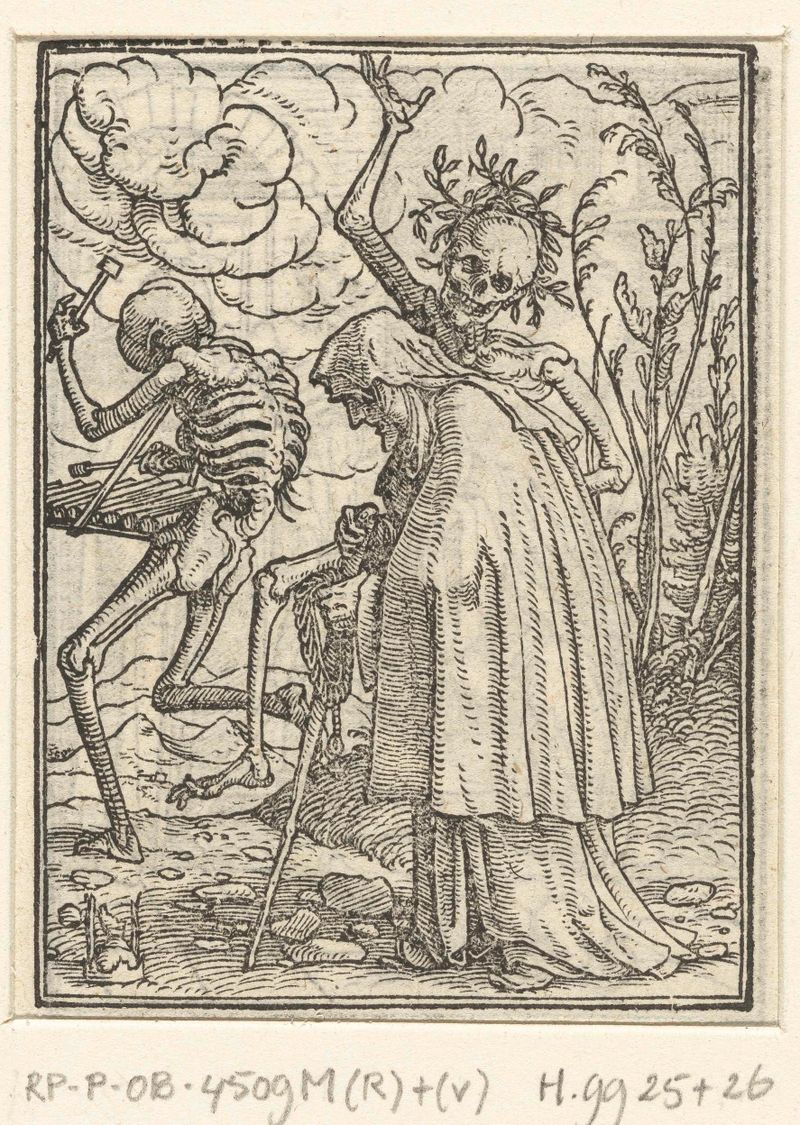
Oude vrouw en de Dood
Hans Holbein (II)