
Washerwomen at the Edge of the Pond — History & Facts
In the tranquil, unhurried world of the everyday, the divine often reveals itself in the most ordinary of moments. Focus on the left side of the canvas, where women bend over simple wooden buckets, their gestures casual yet imbued with grace. The soft hues of blue and green dance across the water’s surface, reflecting the cloudy sky above—a fleeting moment where nature and labor intertwine. Notice how Boudin captures the interplay of light and shadow, creating a serene atmosphere that invites the viewer to step into this peaceful scene.
The textures of their clothing and the gentle ripples of the pond emphasize both the simplicity of their task and the beauty of the world around them. Yet, amid the calm, there lies a contrast between labor and leisure. The women’s focused expressions reveal a depth of character—each one lost in her thoughts, contemplating the weight of life beneath the surface of their mundane chore. The pond, a symbol of both reflection and depth, hints at the hidden burdens these washerwomen carry.
The divine seems to linger in their silence, echoing the unseen stories woven into the fabric of their lives. In 1880, Boudin painted this piece while residing in Normandy, amidst a flourishing outdoor painting movement. His work during this period emphasized the relationship between humans and their environment, as industrialization was beginning to reshape France. Capturing the quiet beauty of rural life, he sought to elevate ordinary moments, paving the way for future impressionists who would follow in his footsteps.
More Artworks by Eugène Boudin
Browse all →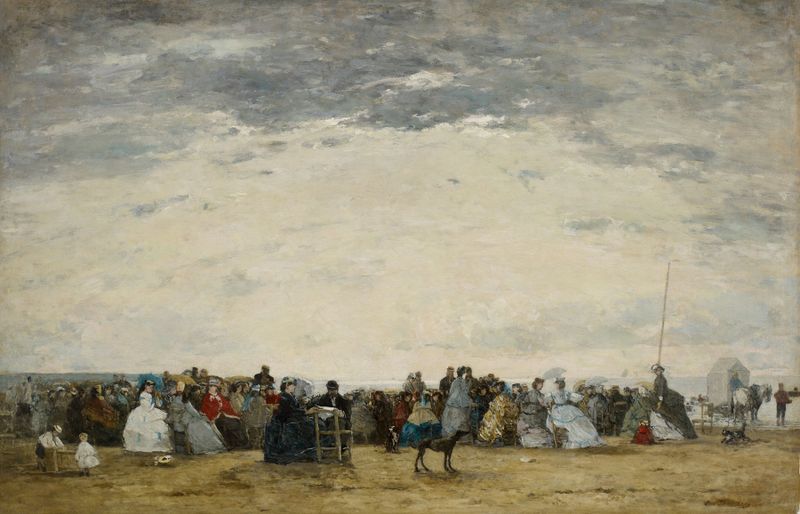
Vacationers on the Beach at Trouville
Eugène Boudin

Washerwoman near Trouville
Eugène Boudin
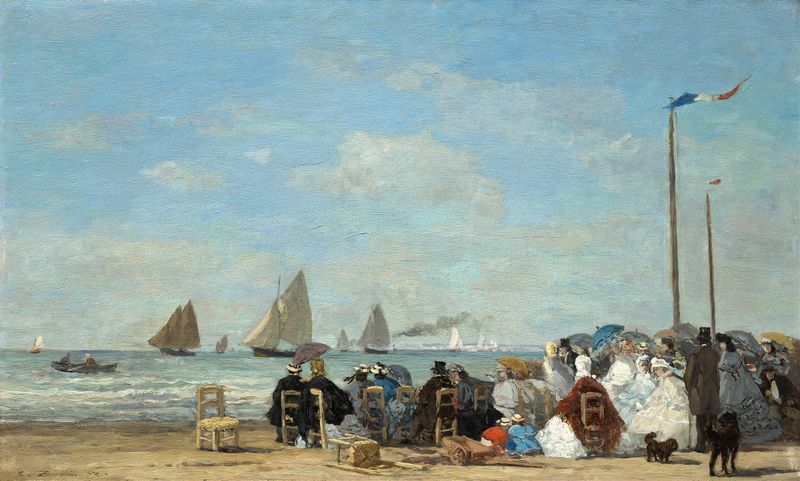
Beach Scene at Trouville
Eugène Boudin

Port aux environs d’Honfleur
Eugène Boudin

Le Faou, un coin du village
Eugène Boudin
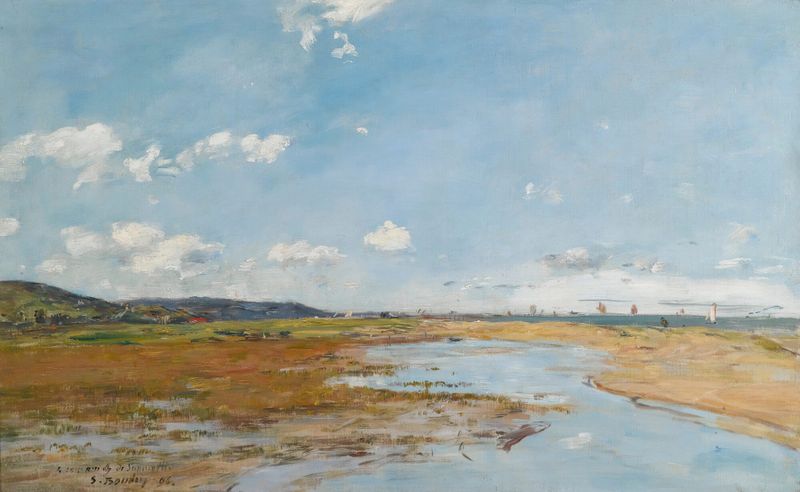
Deauville. Le Rivage
Eugène Boudin
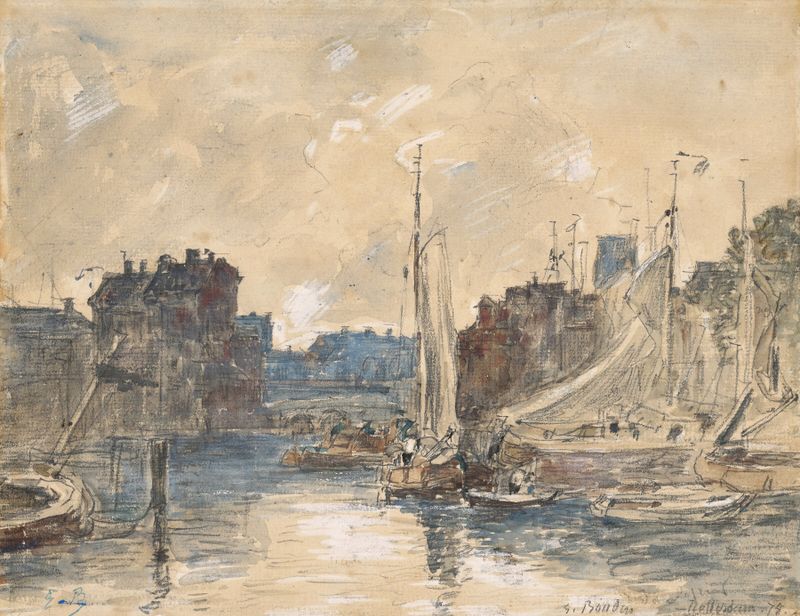
Port de Rotterdam
Eugène Boudin

View of Bordeaux, from the Quai des Chartrons
Eugène Boudin

Trouville, Scène De Plage
Eugène Boudin

Trouville, Le Port
Eugène Boudin





