
Washerwomen by the River — History & Facts
Did the painter know this moment would outlive them? A tender awakening lingers within the canvas, quietly capturing the essence of everyday labor and camaraderie along the riverbank. Look to the lower left where the figures bend over, their bodies gracefully intertwined with the landscape. The soft hues of blue and green dance beneath the sunlit sky, while the gentle murmur of the water seems to echo in the strokes, inviting you closer. Notice how the interplay of light creates a shimmering effect on the water’s surface, contrasting with the earthy tones of the women’s clothing.
Boudin’s brushwork evokes a sense of movement — a rhythmic harmony between the laborers and the flowing river, uniting them in a serene moment of toil. In the background, subtle details emerge that deepen the narrative: the distant trees stand sentinel, watching over the scene, while the ripples in the water suggest the passage of time. The women, their faces focused yet peaceful, embody resilience amid the simplicity of their task. Boudin brilliantly contrasts their labor with the natural beauty surrounding them, emphasizing the dignity of their work and the interconnectedness of human life with nature. Created in the late 19th century, this work reflects Eugène Boudin’s dedication to capturing the essence of coastal and riverine life.
At this time, he was immersed in the burgeoning Impressionist movement, exploring light and atmosphere with an innovative approach. His focus on the everyday moments of ordinary people marked a significant shift in the art world, establishing a dialogue between the mundane and the beautiful, a theme that resonates powerfully in this painting.
More Artworks by Eugène Boudin
Browse all →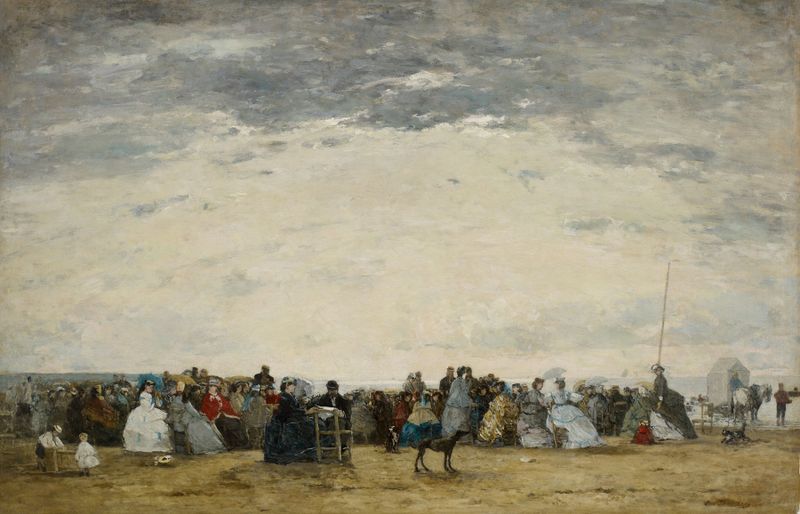
Vacationers on the Beach at Trouville
Eugène Boudin

Washerwoman near Trouville
Eugène Boudin
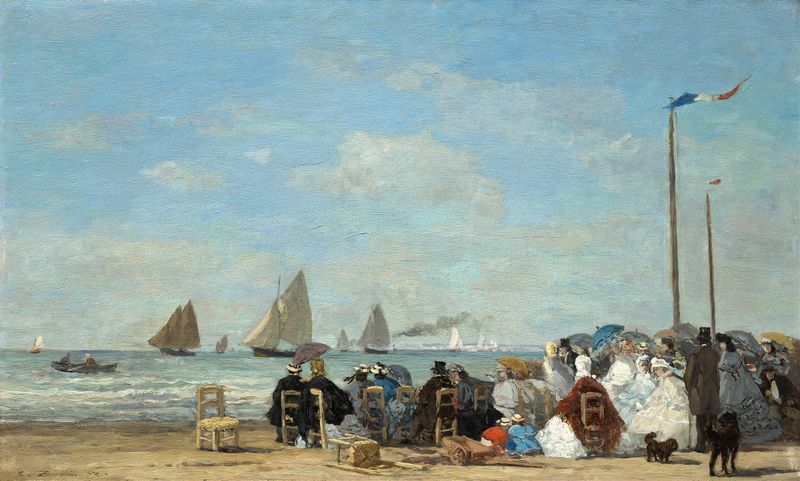
Beach Scene at Trouville
Eugène Boudin

Port aux environs d’Honfleur
Eugène Boudin

Le Faou, un coin du village
Eugène Boudin
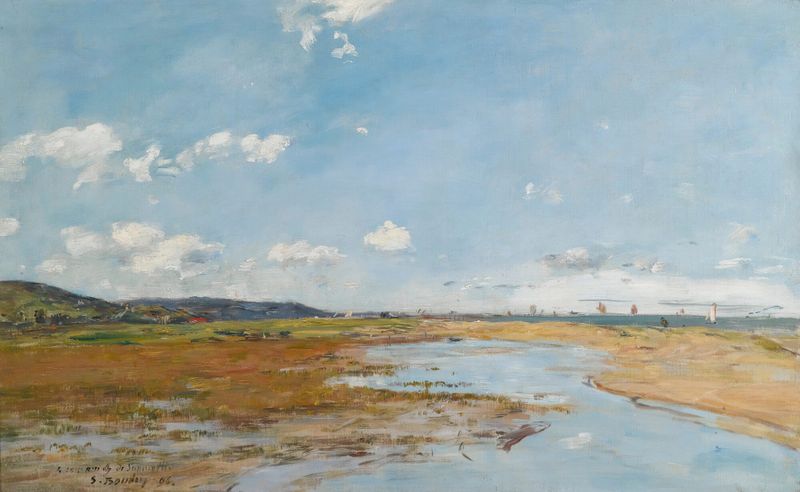
Deauville. Le Rivage
Eugène Boudin
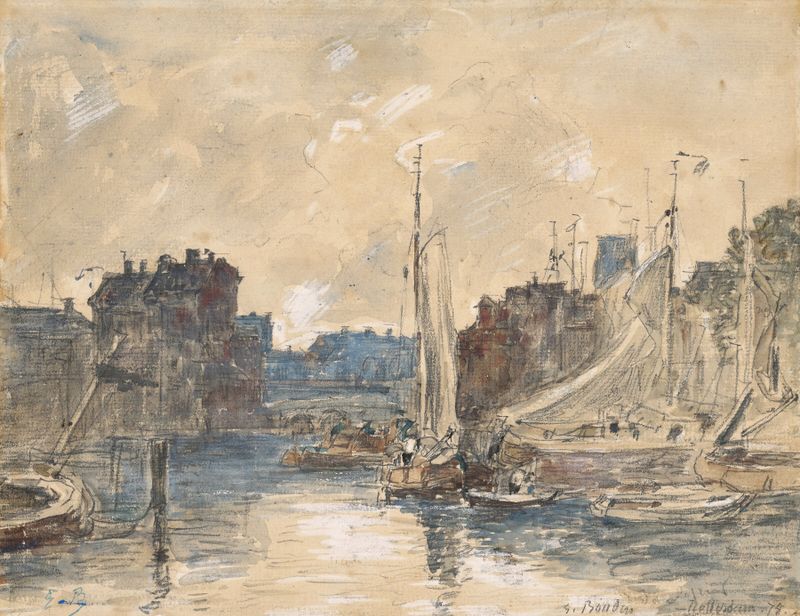
Port de Rotterdam
Eugène Boudin

View of Bordeaux, from the Quai des Chartrons
Eugène Boudin

Trouville, Scène De Plage
Eugène Boudin

Trouville, Le Port
Eugène Boudin





