
Washerwomen on the Beach of Etretat — History & Facts
Memory is a fragile thread woven through time, yet it captivates the essence of fleeting moments, anchoring them in our hearts. In a world where the past and present collide, the mundane can transform into profound beauty, as seen in the vibrant brushstrokes of a certain coastal scene. Look to the center of the canvas, where the figures of washerwomen bend under the weight of their labor. The artist employs a soft palette of blues and whites, evoking the cool sea breeze and the warm sun above.
Notice how the light plays upon the waves, as if each glimmering droplet is a memory being recalled. The composition is lively, with diagonal lines that guide the eye from the rugged cliffs to the tranquil shoreline, creating a rhythm that mirrors the ebb and flow of the tides. Yet, beyond the picturesque charm lies an emotional undercurrent. The women’s postures reveal both fatigue and resilience, embodying the strength found in routine.
While the beach is bathed in light, the shadows cast by their toil hint at the burdens carried beneath their cheerful exterior. The contrast between the lively sea and the laborious tasks illustrates a delicate balance between joy and hardship, encapsulating the human experience. In 1894, during a period of personal hardship, Boudin worked in Etretat, seeking solace by the sea. This was a time when he was increasingly recognized for his contributions to plein air painting, yet he remained overshadowed by his contemporaries.
The coastal town provided him with inspiration, allowing him to capture the essence of everyday life amidst the vibrancy of nature, cementing his role as a precursor to the Impressionist movement.
More Artworks by Eugène Boudin
Browse all →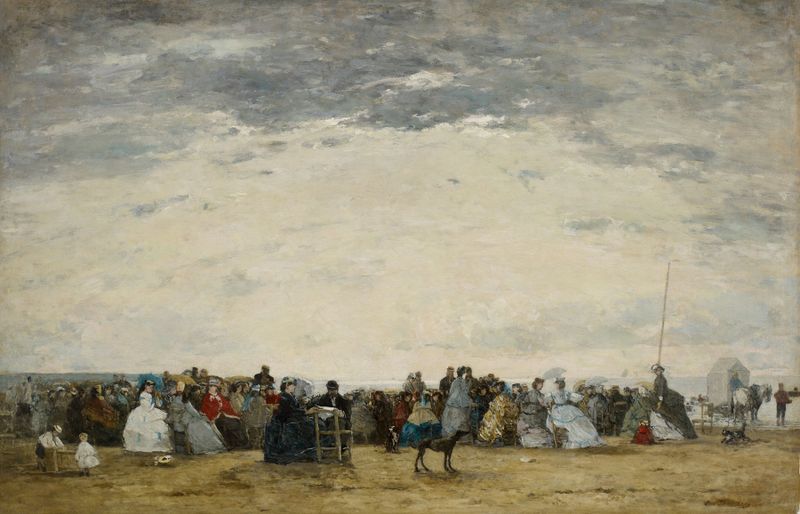
Vacationers on the Beach at Trouville
Eugène Boudin

Washerwoman near Trouville
Eugène Boudin
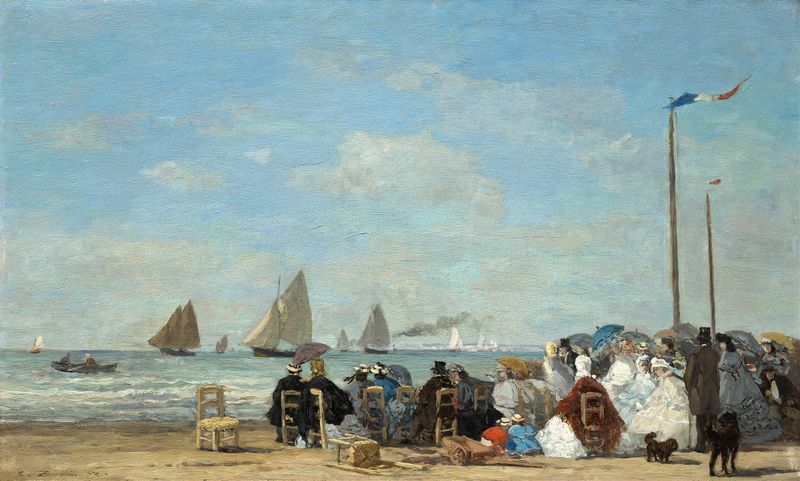
Beach Scene at Trouville
Eugène Boudin

Port aux environs d’Honfleur
Eugène Boudin

Le Faou, un coin du village
Eugène Boudin
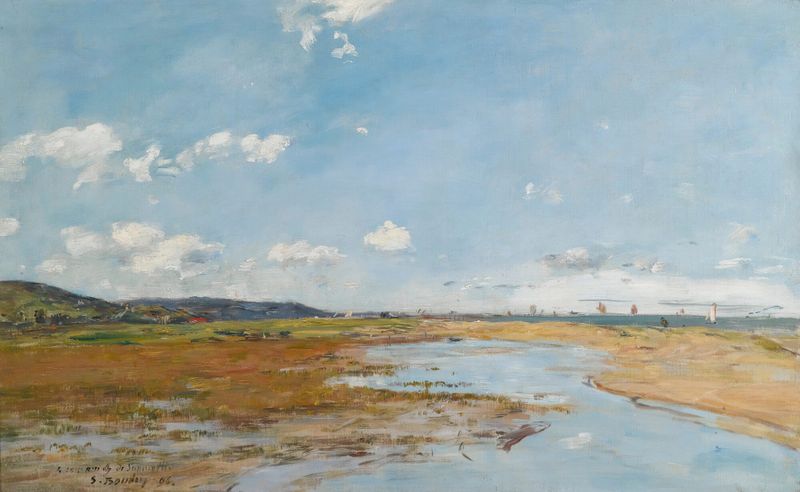
Deauville. Le Rivage
Eugène Boudin
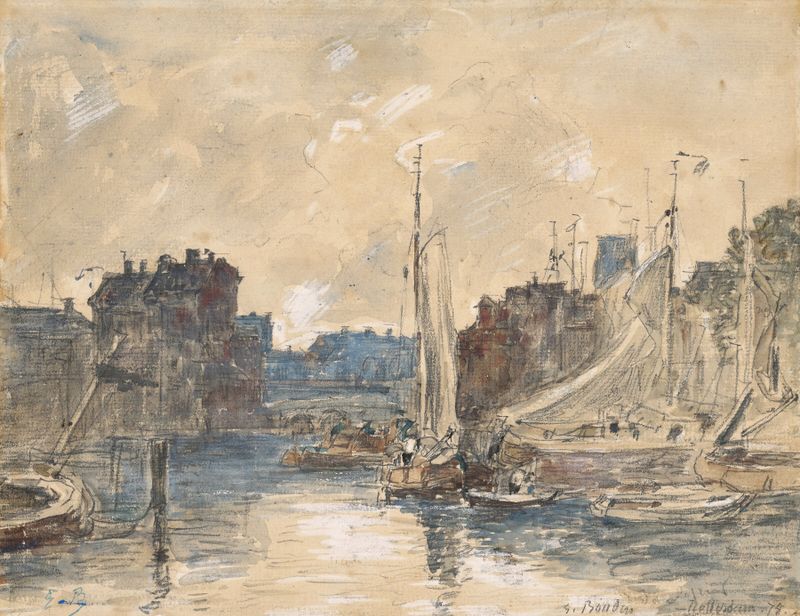
Port de Rotterdam
Eugène Boudin

View of Bordeaux, from the Quai des Chartrons
Eugène Boudin

Trouville, Scène De Plage
Eugène Boudin

Trouville, Le Port
Eugène Boudin





