
When the Heart is Young — History & Facts
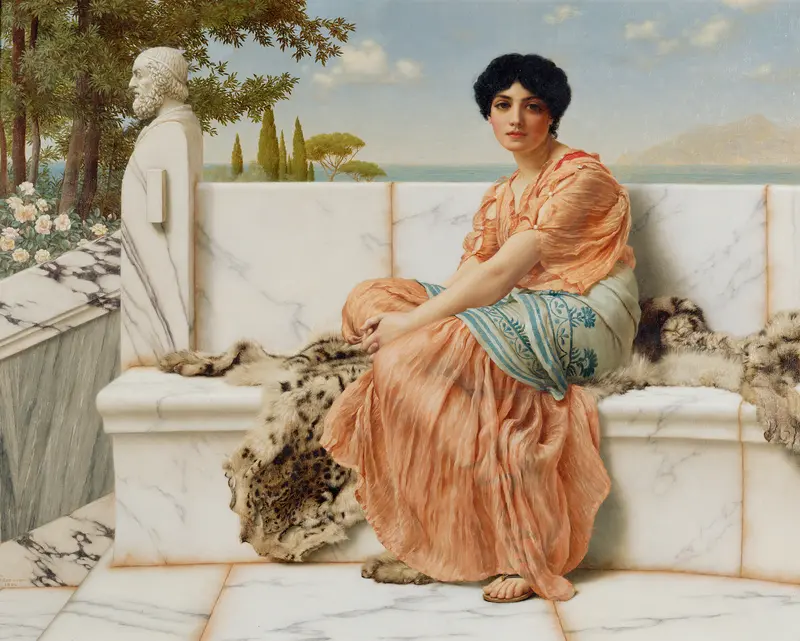
The first thing that catches the eye in When the Heart is Young is the languid pose of the young woman, her body draped across a marble bench, her head cradled in her arm, and her gaze meeting the viewer with a quiet, almost conspiratorial calm. The artist, John William Godward, orchestrates every detail to heighten this sense of suspended daydream: the sheer, rose-colored fabric of her dress clings and falls in delicate folds, while the pale marble and lush garden beyond set her apart from the world, as if she inhabits a private, sunlit reverie. The leopard skin beneath her is not merely a sign of luxury, but a deliberate contrast—its wild pattern and texture throw her softness into relief, while the peacock-feather fan at her feet hints at both idleness and opulence.
The Mediterranean blue of the distant sea draws the eye outward, but always returns us to her—anchored, unmoving, yet full of inward life. Painted in 1902, this work belongs to the last flowering of the Victorian neoclassical tradition, when artists like Godward conjured visions of ancient Greece and Rome not for historical accuracy, but as settings for beauty, contemplation, and escape. These scenes were often commissioned by wealthy patrons eager to bring a sense of cultured leisure into their homes, and Godward’s meticulous technique—his marble so cool you can almost feel it, his flowers so crisp you can smell them—was prized for its illusionistic skill. History has kept few traces of this particular painting’s early journey, though we know it appeared at Sotheby’s in New York in 2014.
What endures is the invitation it extends: to pause, to linger, and to imagine a world where the heart, for a moment, is young and untroubled.
More Artworks by John William Godward

Eighty and eighteen
John William Godward
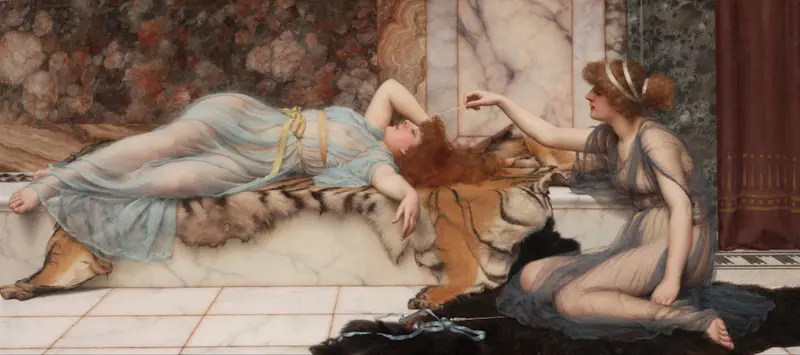
Mischief and Repose
John William Godward
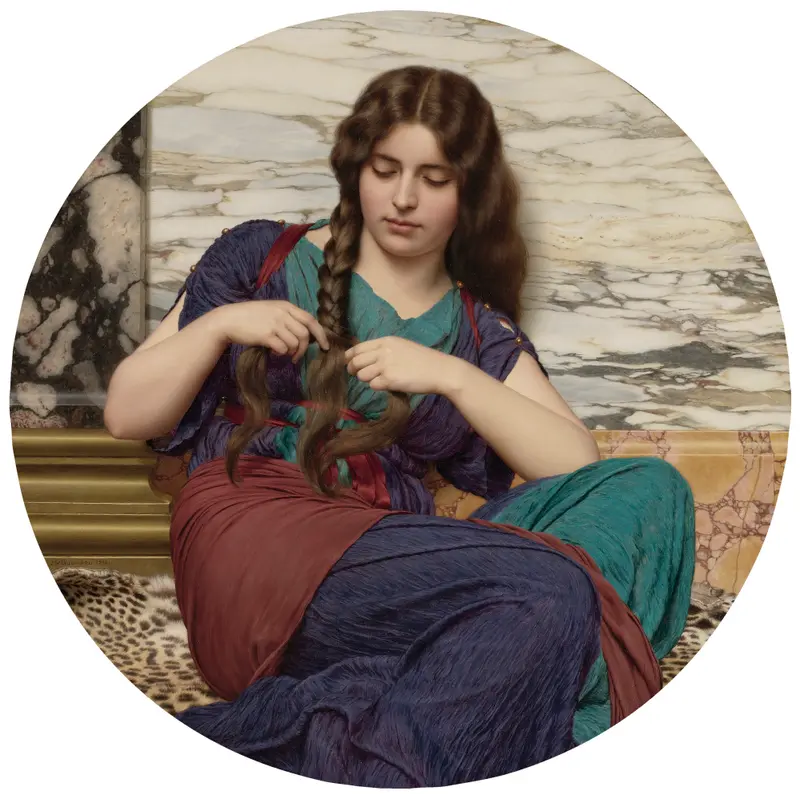
A Congenial Task
John William Godward
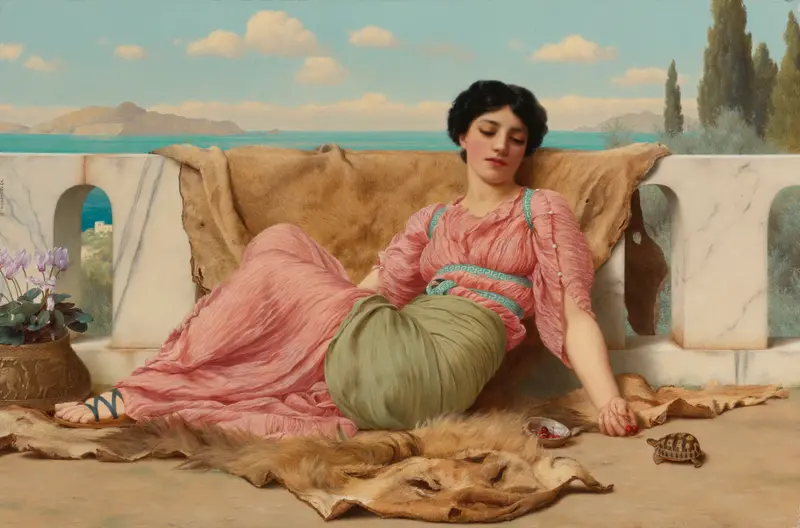
The Quiet Pet
John William Godward
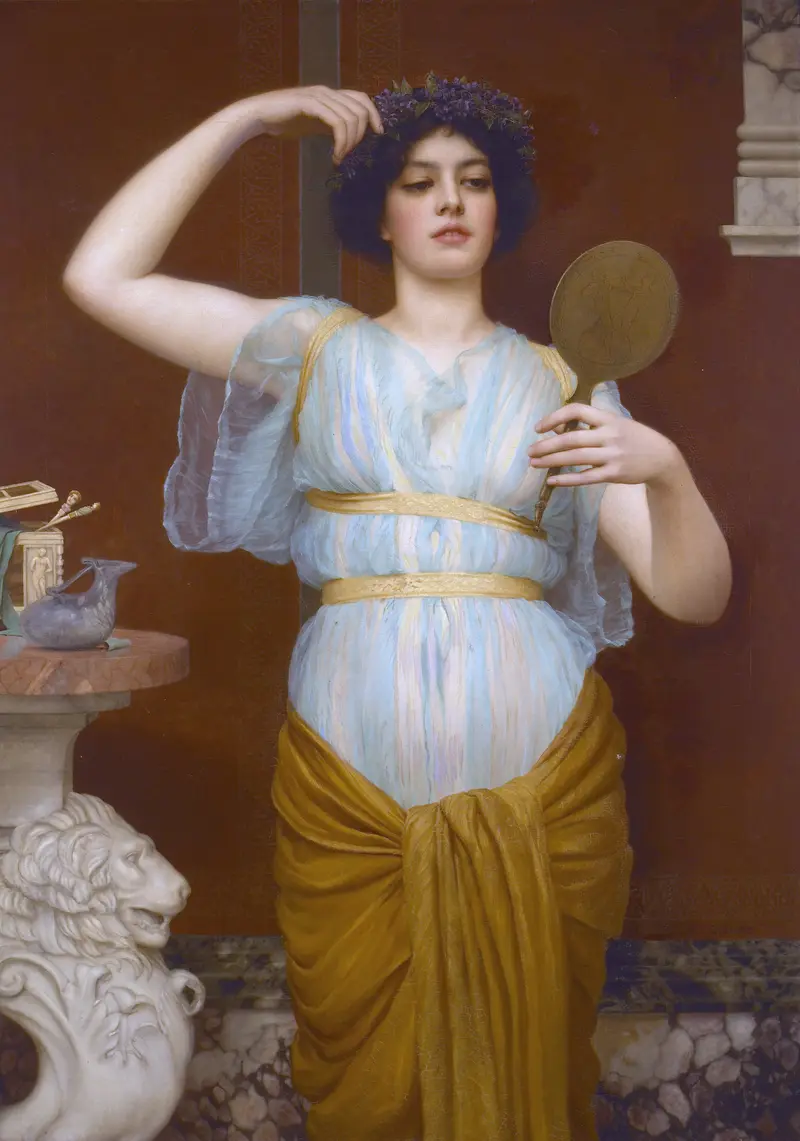
Ione
John William Godward
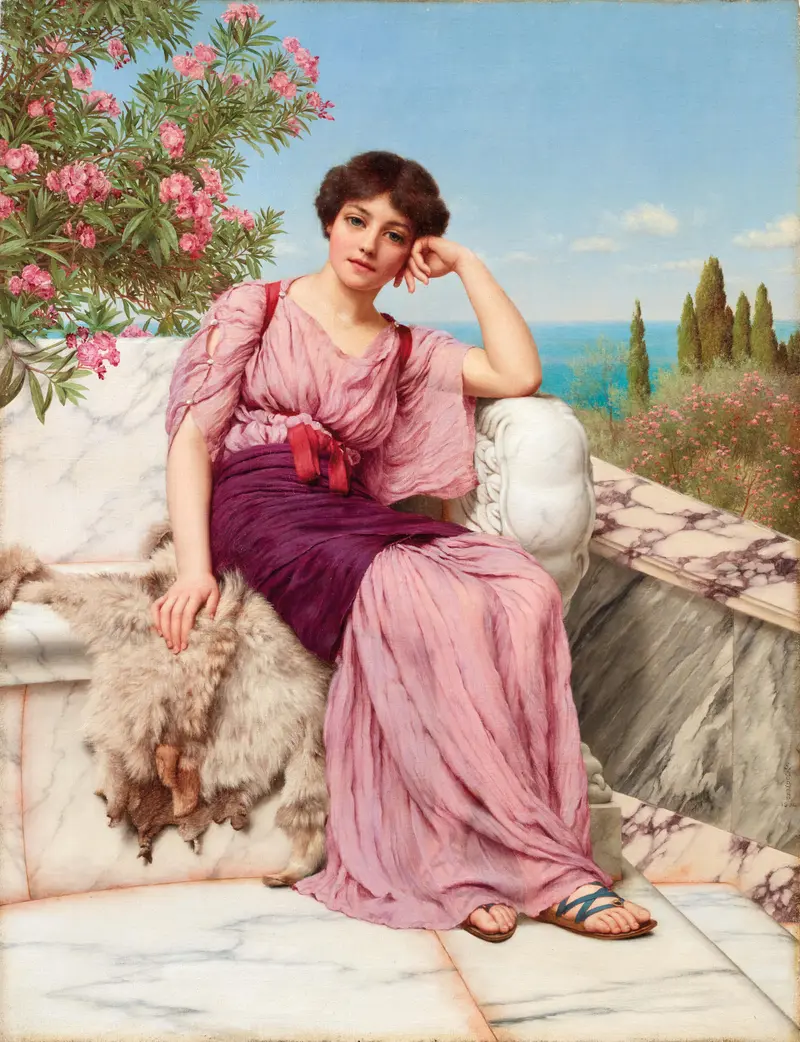
Sweet Dreams
John William Godward
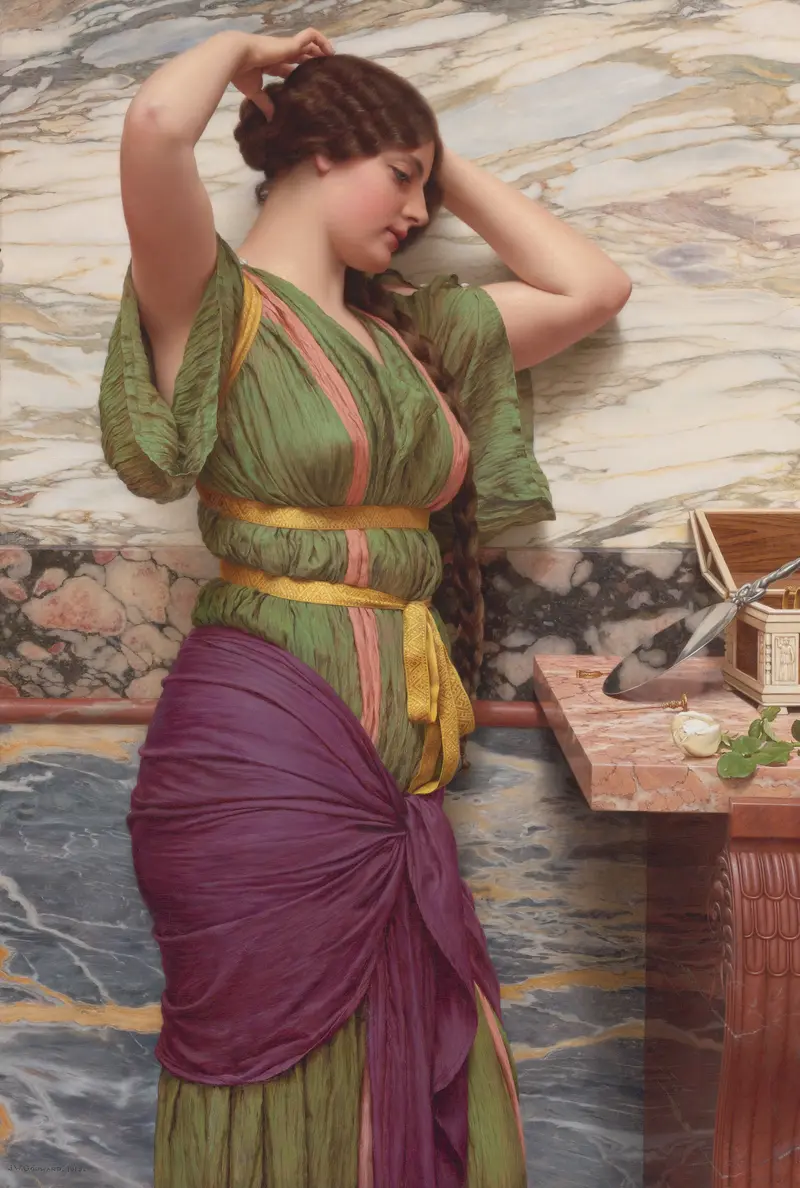
A Fair Reflection
John William Godward
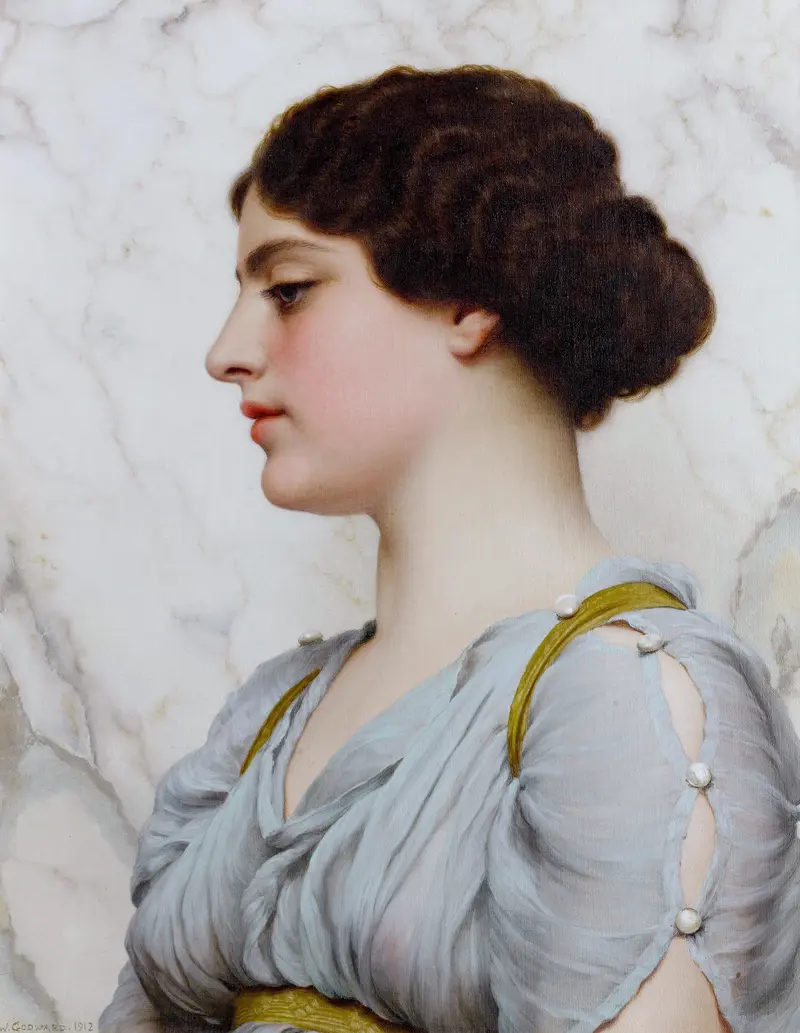
A Roman Beauty
John William Godward
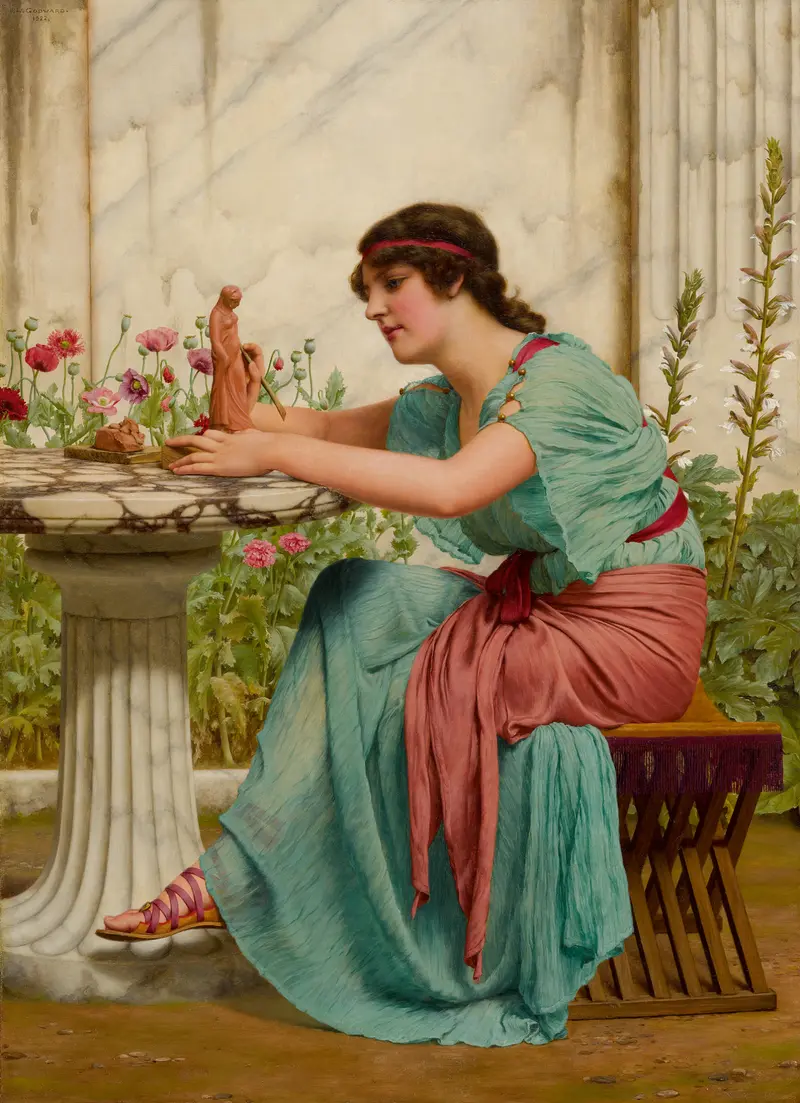
A Dilettante
John William Godward
Reverie
John William Godward



