
Woman Spinning Silk — History & Facts
When Woman Spinning Silk appeared in Edo around 1790, it marked one of the earliest known explorations by Katsushika Hokusai into the daily lives of working women—a subject rarely centered in Japanese art of the period. Unlike his later, more famous landscapes, this work quietly honors the domestic labor that underpinned the city’s prosperity. The identity of the original patron is lost, but the print’s survival suggests it found an appreciative audience among the rising merchant class, who valued scenes of ordinary life as much as legendary heroes or courtesans. At the heart of the image, a woman sits intent at her spinning wheel, her posture a study in concentration.
The painter captures the exact moment her hand draws a thread from the cocoon, a delicate action that transforms raw silk into the fabric of kimonos and banners. The scattered mulberry leaves at her feet and the basket of cocoons beside her speak to the entire cycle of silk production, while her simple robe and unadorned hair signal her status as a working woman, not an idealized beauty. Compared with Utamaro’s more sensual images of women at work, Hokusai’s approach is direct and unsentimental, inviting respect for skill rather than inviting the gaze. The precise medium of Woman Spinning Silk remains uncertain—possibly an early woodblock print or a painted study—but it stands as a rare survivor from Hokusai’s formative years.
Its journey is largely undocumented; like many of his early works, it may have circulated among private collectors before entering the public eye. Today, it is prized not only as an example of Hokusai’s early interest in everyday life, but also as a window into the world of 18th-century Japanese artisans. The piece foreshadows the artist’s lifelong fascination with ordinary people and their labors, themes that would later define his most celebrated works.
More Artworks by Katsushika Hokusai

The Great Wave off Kanagawa
Katsushika Hokusai
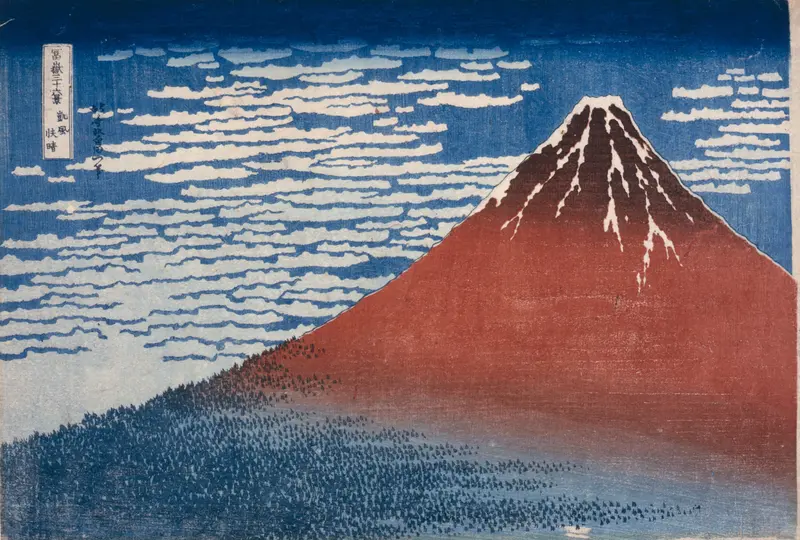
Fine Wind, Clear Morning (Red Fuji)
Katsushika Hokusai
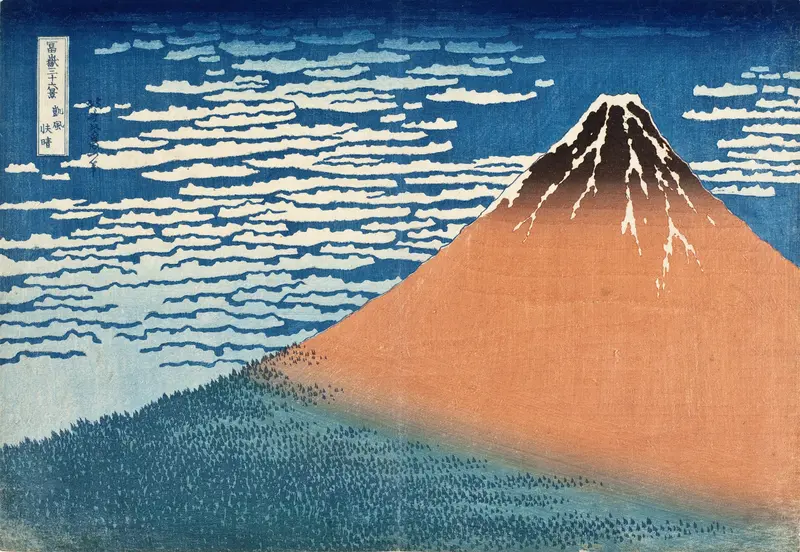
South Wind, Clear Dawn
Katsushika Hokusai
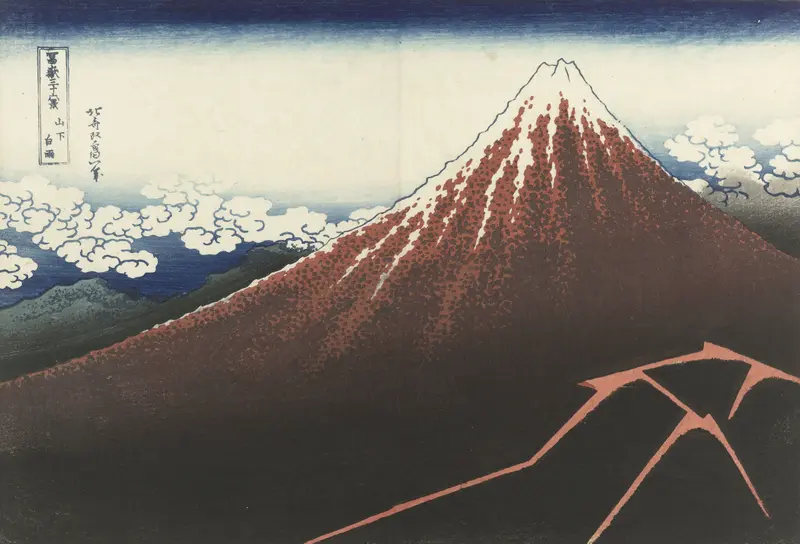
Rainstorm Beneath the Summit
Katsushika Hokusai
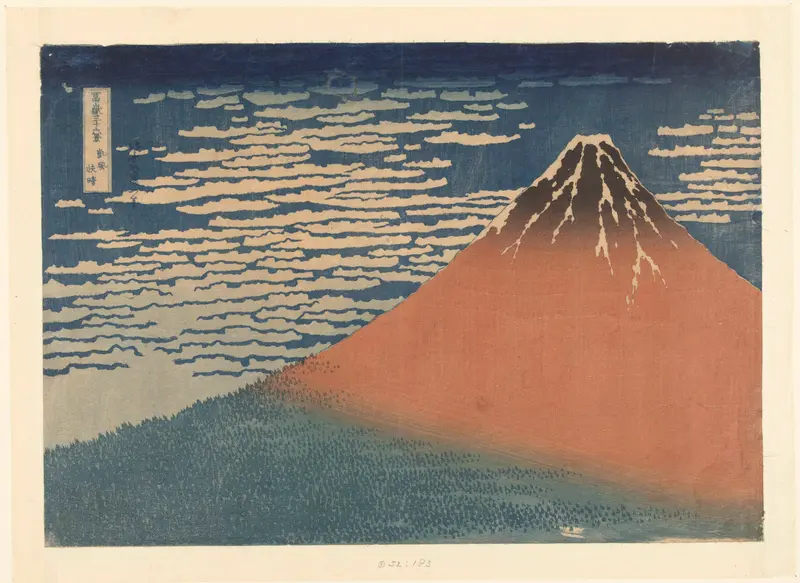
Clear Weather with a Southerly Wind
Katsushika Hokusai
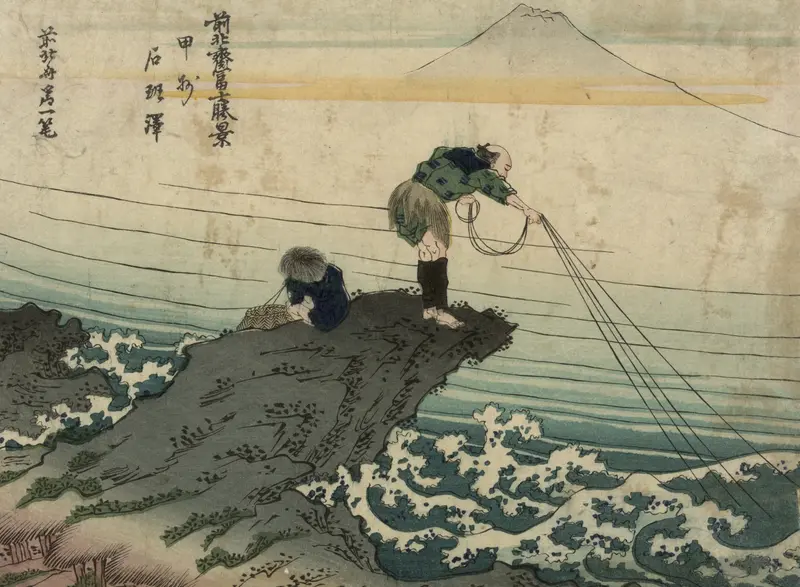
Kōshū kajikazawa
Katsushika Hokusai
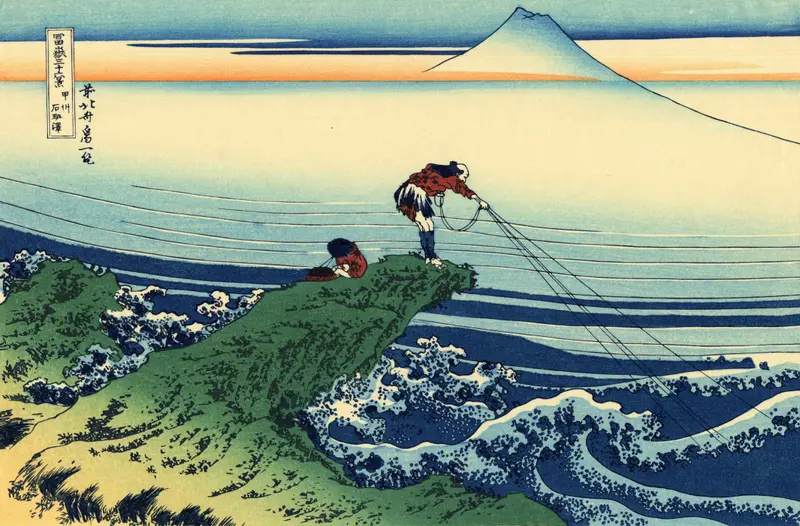
Kōshū kajikazawa 2
Katsushika Hokusai
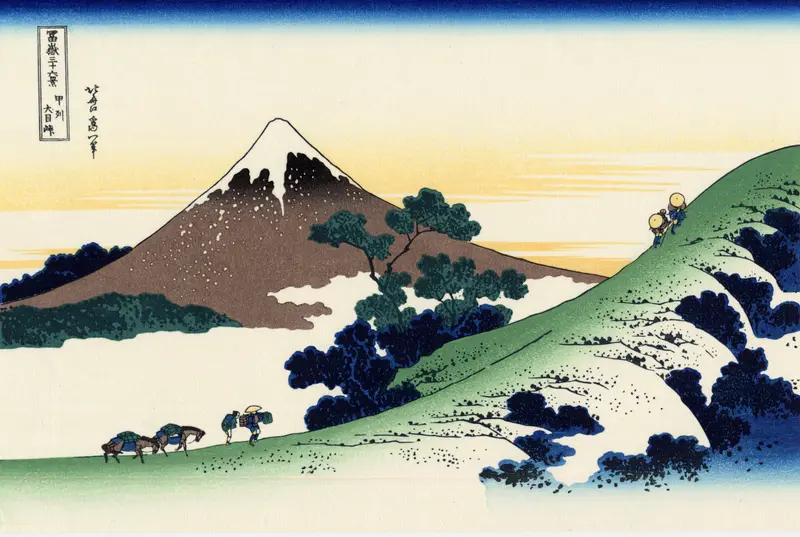
Inume Pass in Kai Province (Kôshû inume-tôge)
Katsushika Hokusai

Yoro Falls in Mino Province (Mino no Yoro no taki), from the series "A Tour of Waterfalls in Various Provinces (Shokoku taki meguri)"
Katsushika Hokusai
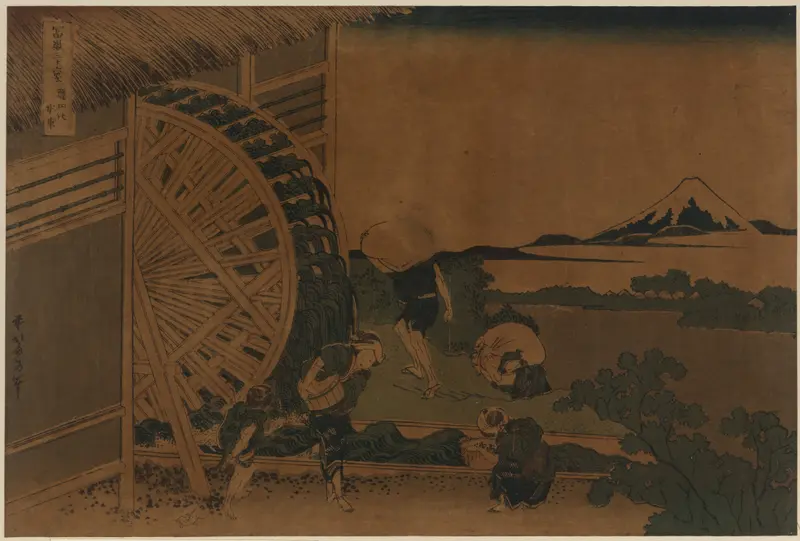
Onden no suisha
Katsushika Hokusai
More Genre Scene Art

Banquet of the Officers of the St George Civic Guard
Frans Hals

Rembrandt and Saskia in the Scene of the Prodigal Son
Rembrandt van Rijn

Bal du moulin de la Galette
Pierre-Auguste Renoir

Quadrille at the Moulin Rouge
Henri de Toulouse-Lautrec

A Burial at Ornans
Gustave Courbet

When Will You Marry?
Paul Gauguin