
Woman with a green vase — History & Facts
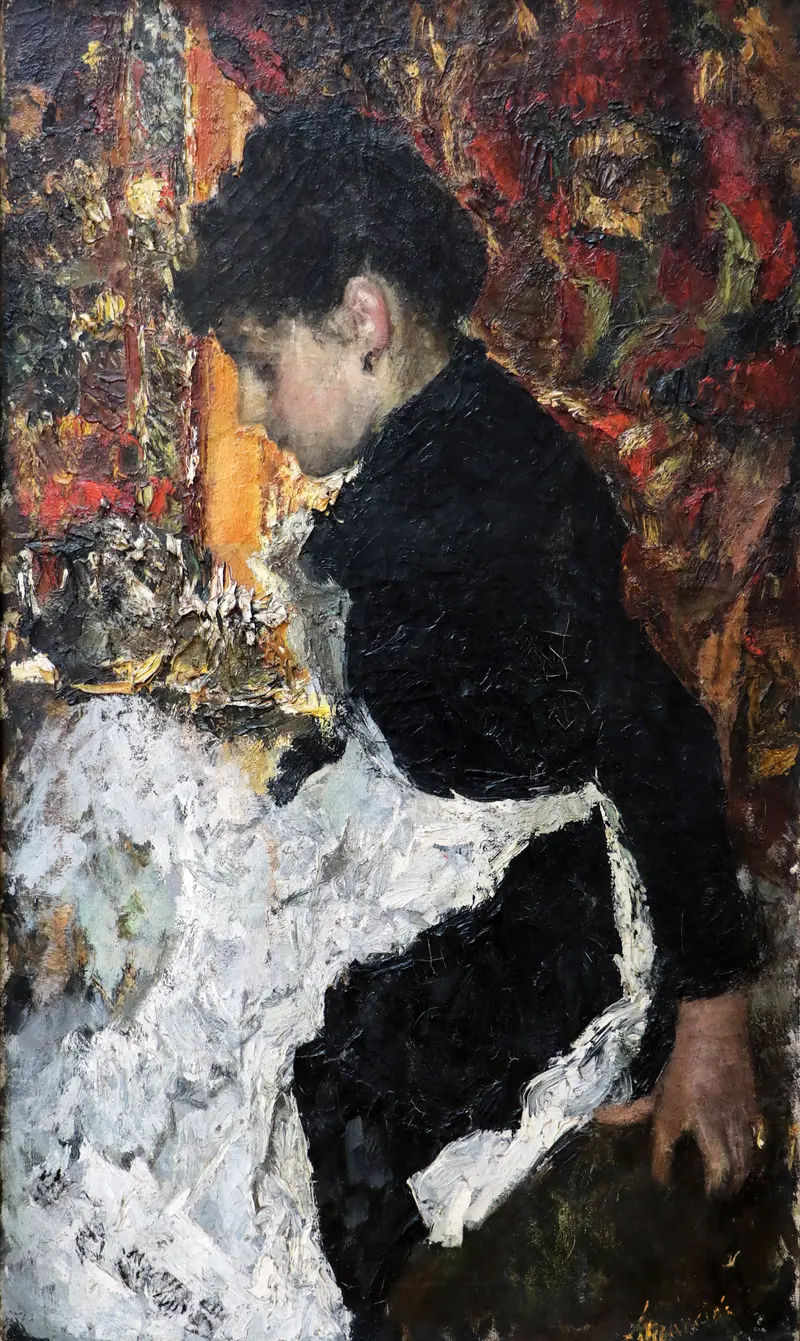
What draws the eye first is the glint of green, a heavy vase cradled in the woman’s arms as if it were both burden and treasure. The sitter’s gaze is direct, almost conspiratorial, as if she is about to share a secret or a joke. Her dark, unruly hair and the vivid red scarf thrown over her shoulders set her apart from the muted, almost unfinished background, which seems to dissolve into brushstrokes.
The flowers in the vase are battered, their petals tinged with yellow and pink, echoing the rough vitality of her hands and face. Light falls unevenly, catching the shine of the glass and the flush in her cheeks, making the whole scene feel caught between the everyday and the theatrical. Painted in 1895, Woman with a green vase belongs to a world where artists like Antonio Mancini were pushing portraiture into new territory, favoring immediacy and texture over polish. In Italy and beyond, the late nineteenth century saw a hunger for images of real people—servants, workers, street-sellers—rendered with empathy and physical presence.
The Mesdag Collection, where this work now resides, preserves such glimpses of ordinary life at the edge of modernity. History has kept few traces of this particular sitter, but the painting’s restless surface and bold palette speak of a time when artists sought to capture not just appearances, but the pulse of lived experience. Look again, and see how much of her world is conjured by a single, luminous vase.
More Artworks by Antonio Mancini

Portrait of a lady
Antonio Mancini
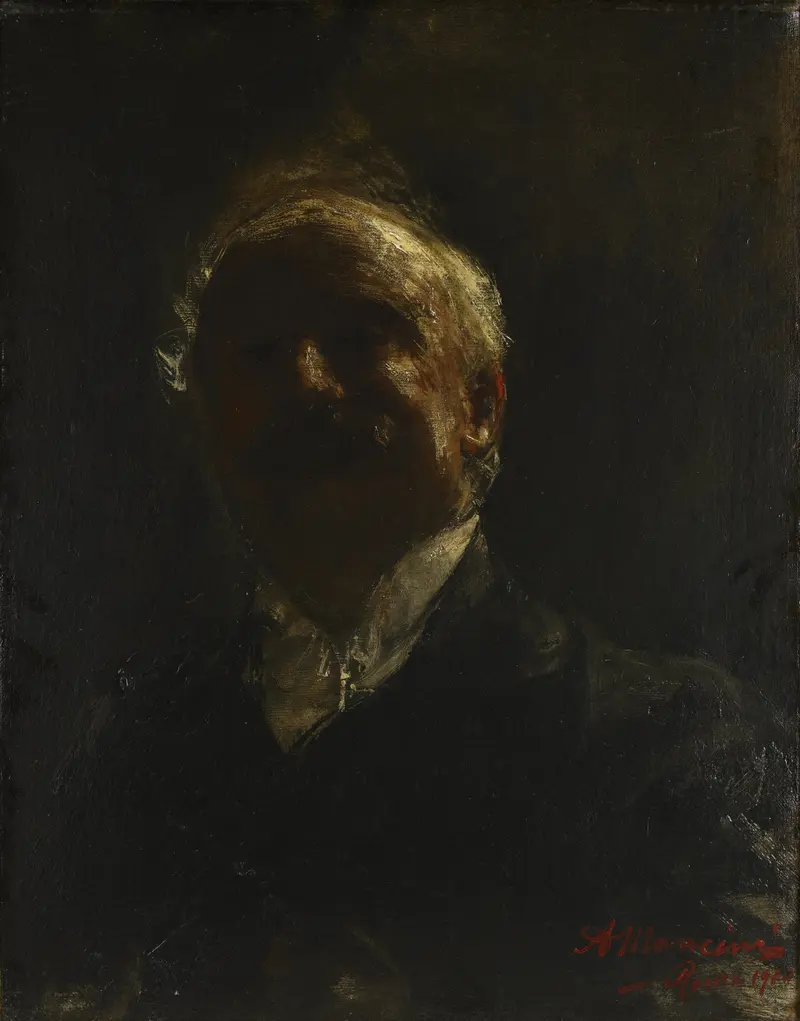
Self-Portrait
Antonio Mancini
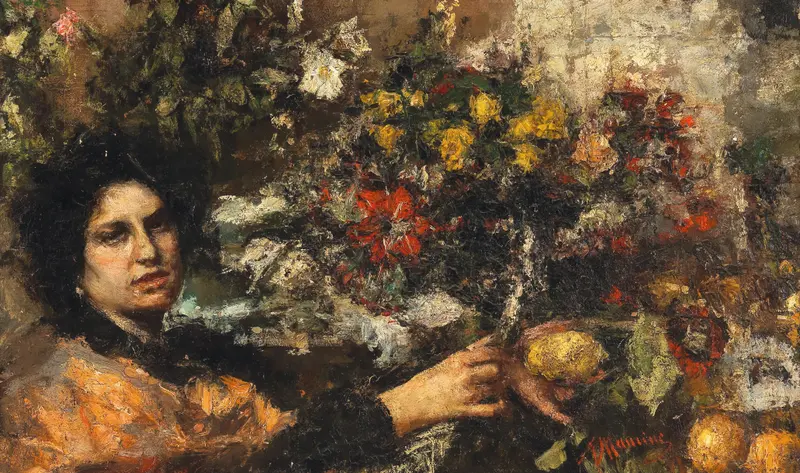
The Flower Seller
Antonio Mancini
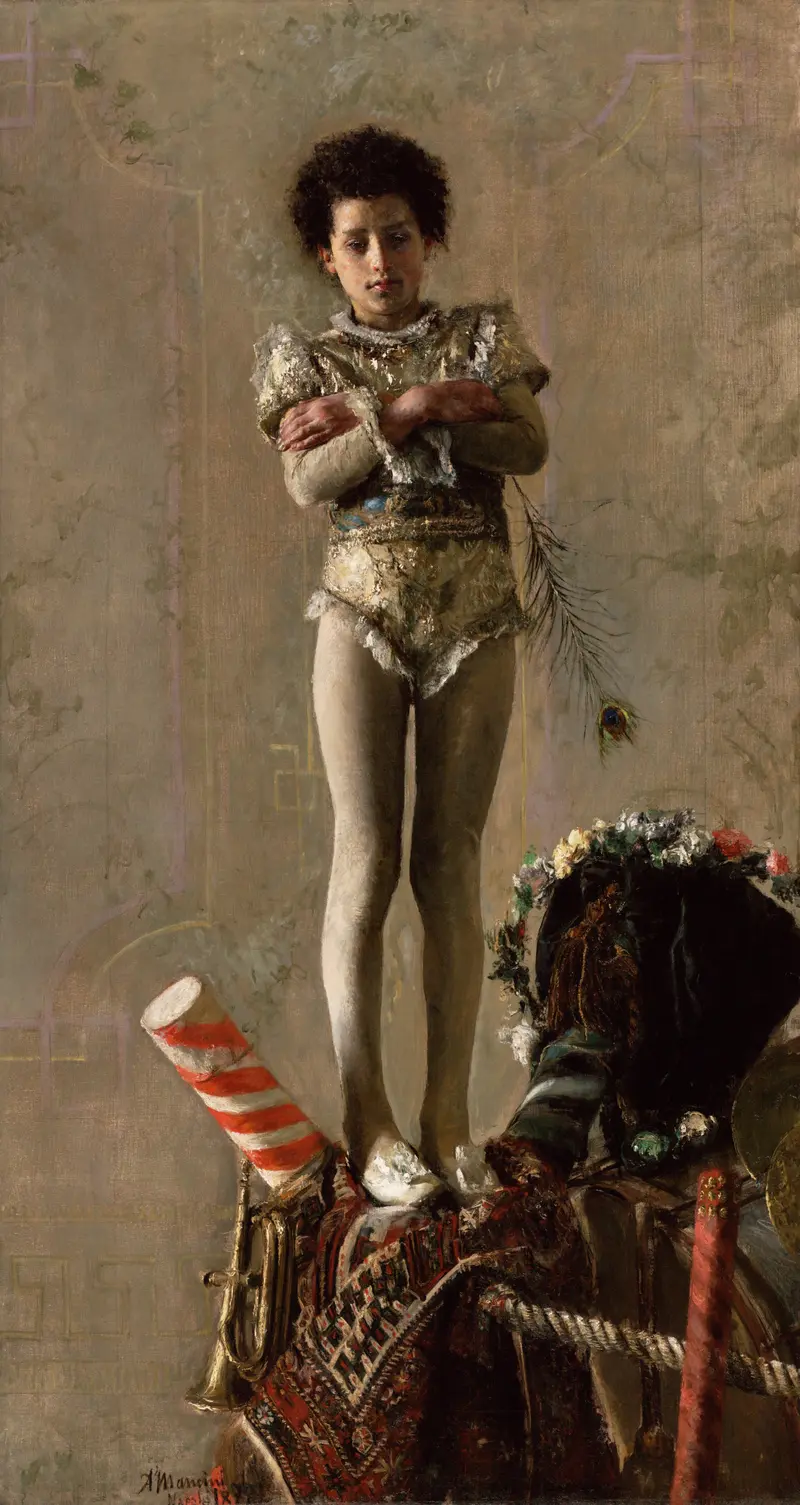
The Saltimbanco
Antonio Mancini
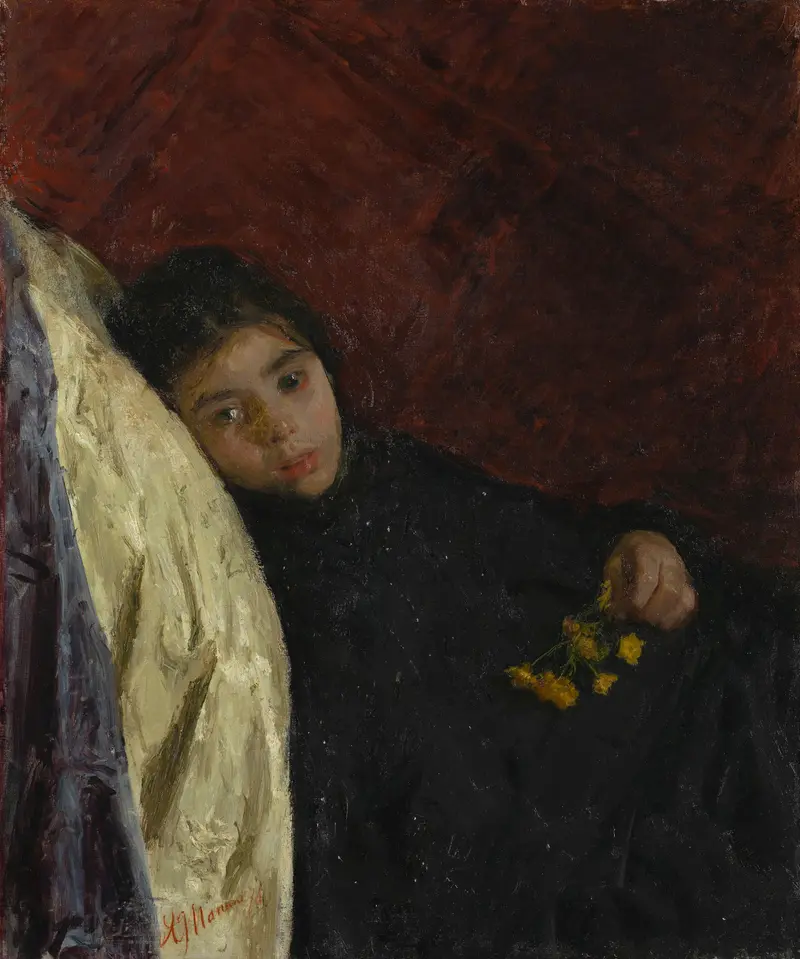
The sick child
Antonio Mancini
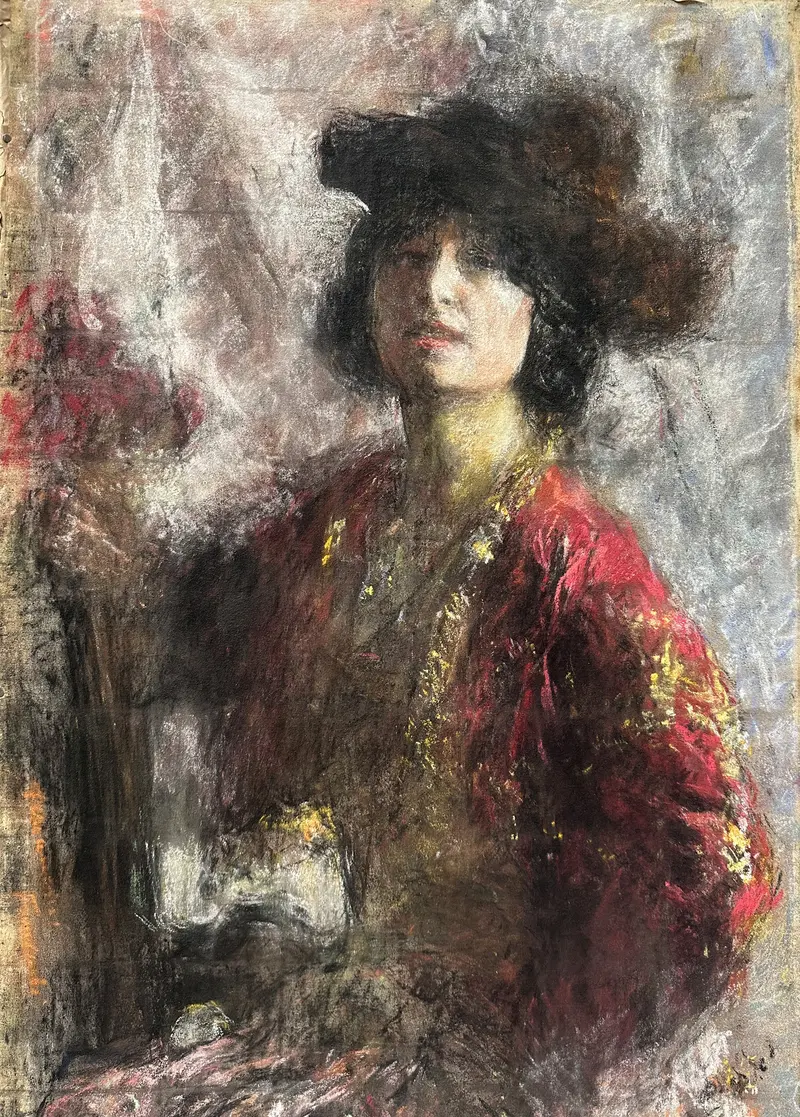
Bolero. Bullfighter
Antonio Mancini
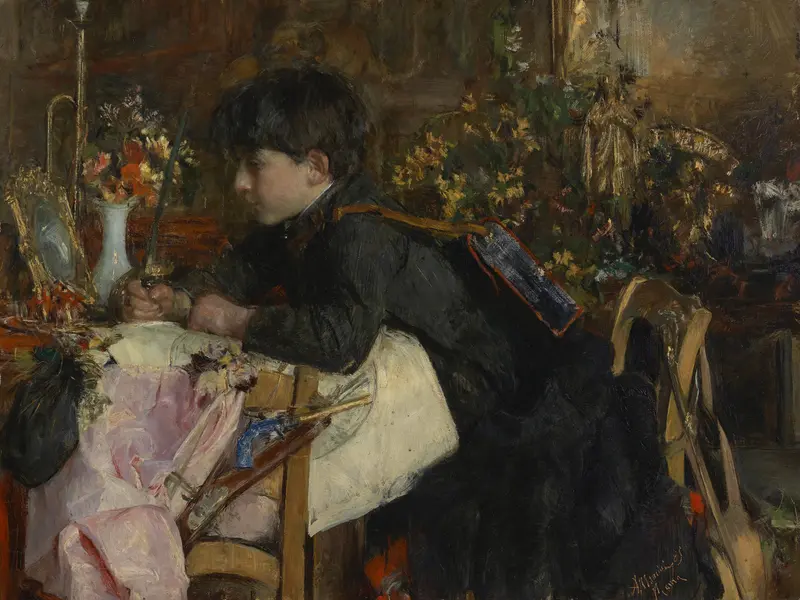
The birthday
Antonio Mancini
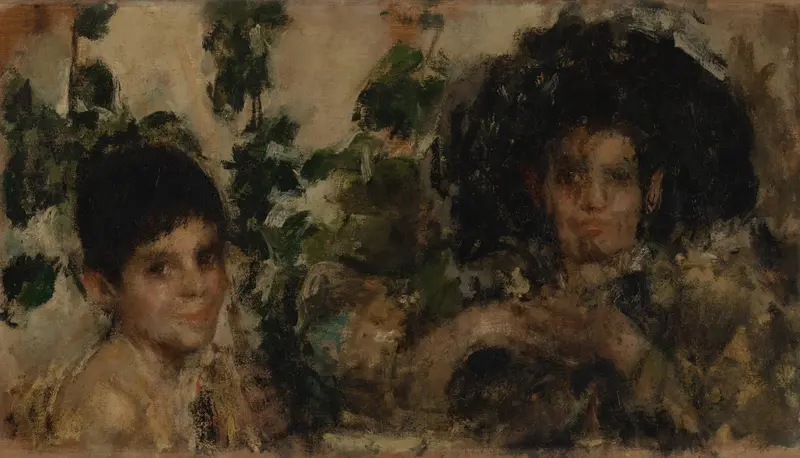
The brothers
Antonio Mancini
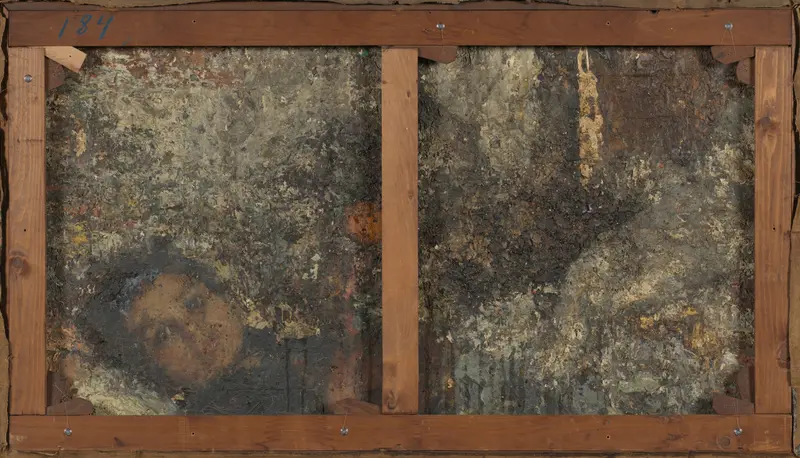
Liggend kind hwm0184v The Mesdag Collection
Antonio Mancini
Servetta
Antonio Mancini





