
The Saltimbanco — History & Facts
A boy stands on a makeshift stage, arms crossed in a gesture that is both defensive and proud, his gaze meeting the viewer’s with a candor that unsettles as much as it invites. The shimmer of his costume, battered and bright, catches the light in patches, while the peacock feather at his waist hints at a world of spectacle and show. Around him, a jumble of circus props—striped batons, a trumpet, garlands—suggests the aftermath of performance, yet the boy’s stance feels suspended between acts, as if the applause has faded but the mask remains.
The wall behind, softly patterned and almost dreamlike, pushes him forward into our space, making his isolation more acute. Every detail, from the flush on his cheeks to the frayed edges of his costume, draws us into the tension between childhood and the adult world of entertainment. Painted in 1879, The Saltimbanco by Antonio Mancini belongs to a period when images of circus and street performers fascinated European artists and audiences alike. The late nineteenth century saw the rise of the saltimbanco—the itinerant acrobat or clown—as a symbol of both hardship and artistry, often depicted to evoke empathy or social commentary.
While little is recorded about this specific work’s journey, its presence in a digital collection today allows us to appreciate how Mancini’s brushwork and psychological insight set him apart from his contemporaries. The painting stands as a testament to a world where spectacle and vulnerability went hand in hand, inviting us to look again at the boy on his precarious stage.
More Artworks by Antonio Mancini

Portrait of a lady
Antonio Mancini
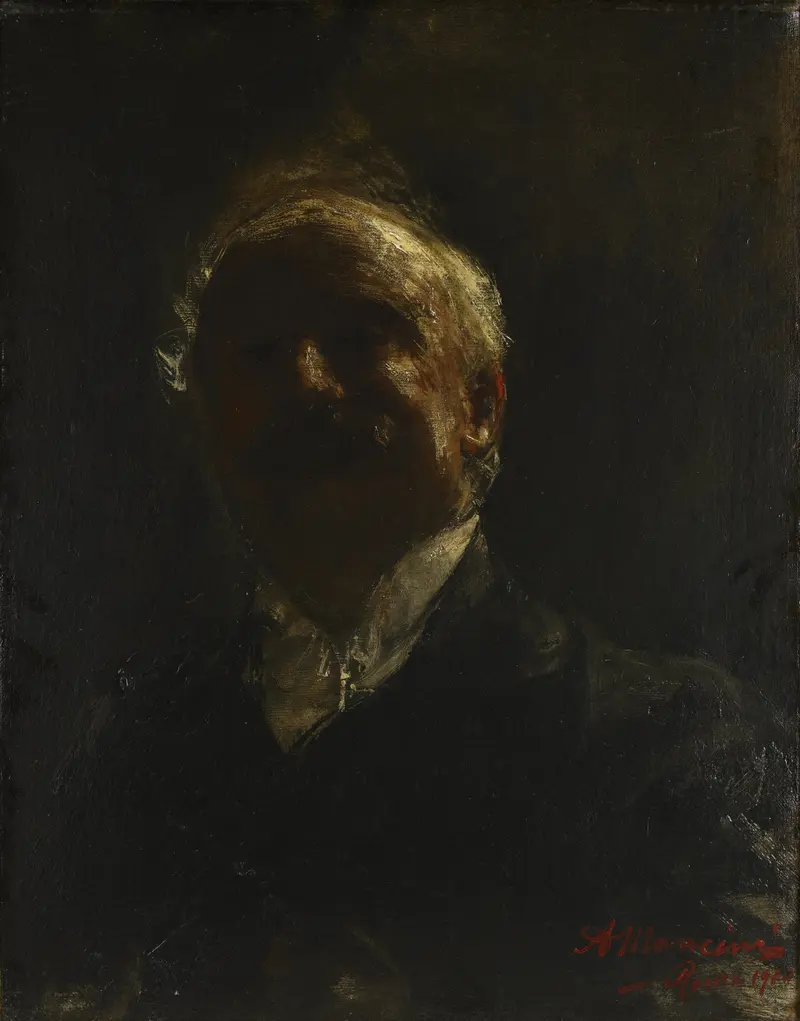
Self-Portrait
Antonio Mancini
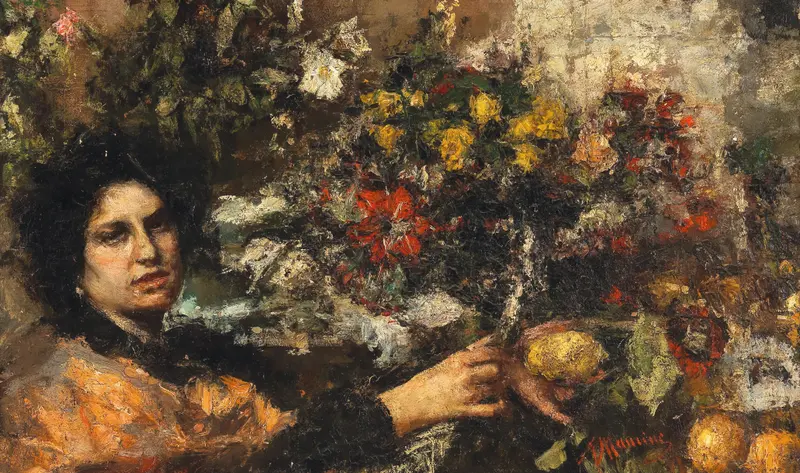
The Flower Seller
Antonio Mancini
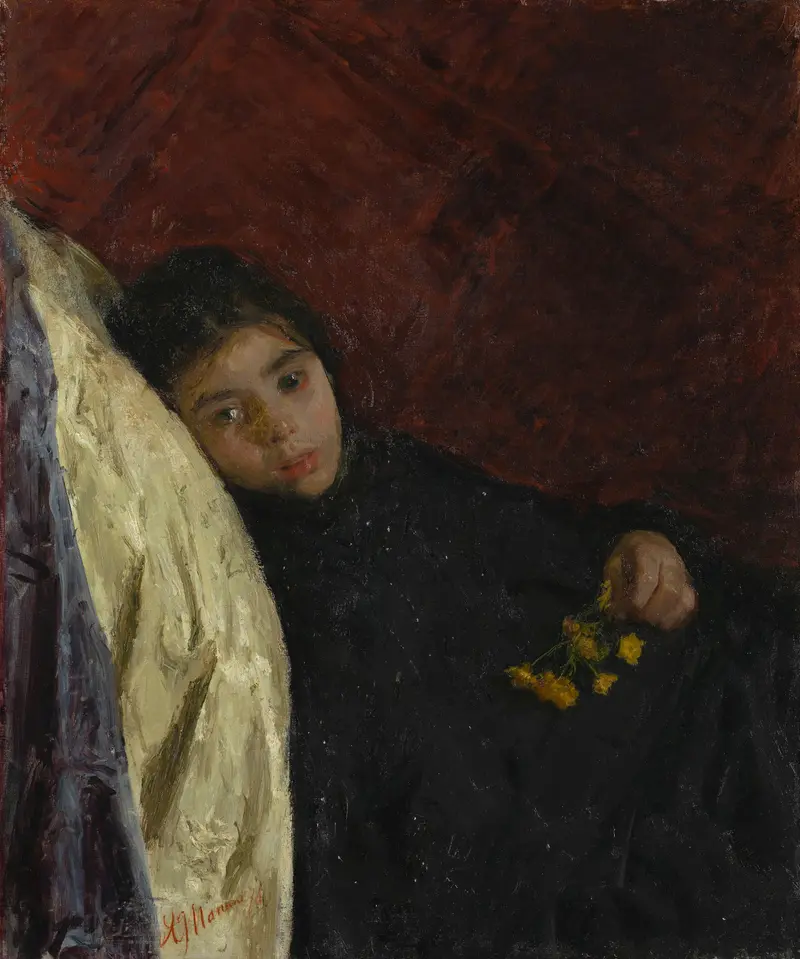
The sick child
Antonio Mancini
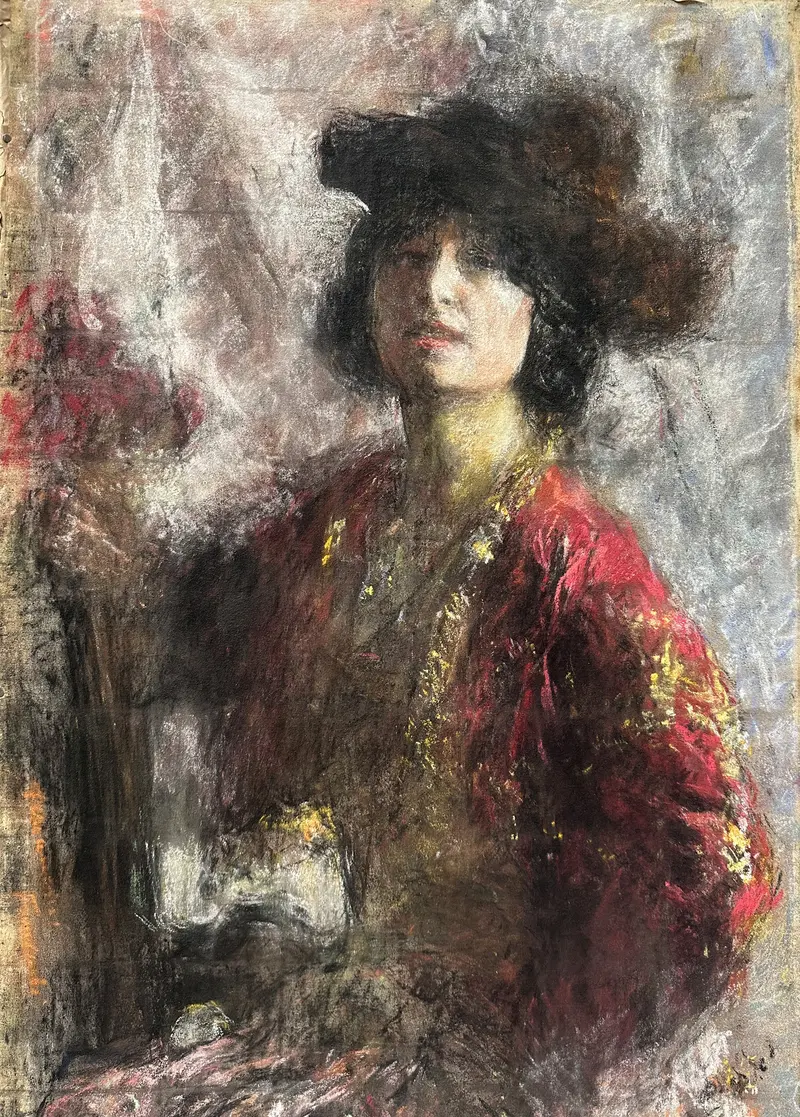
Bolero. Bullfighter
Antonio Mancini
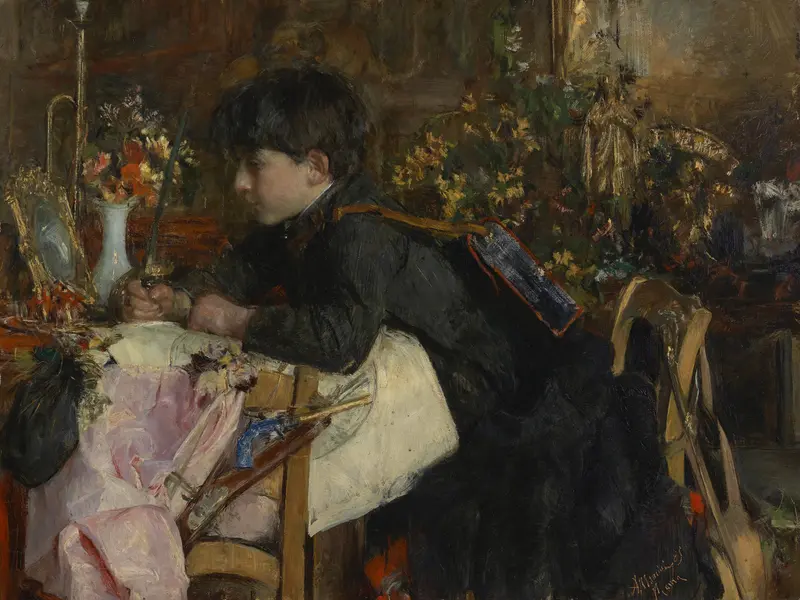
The birthday
Antonio Mancini
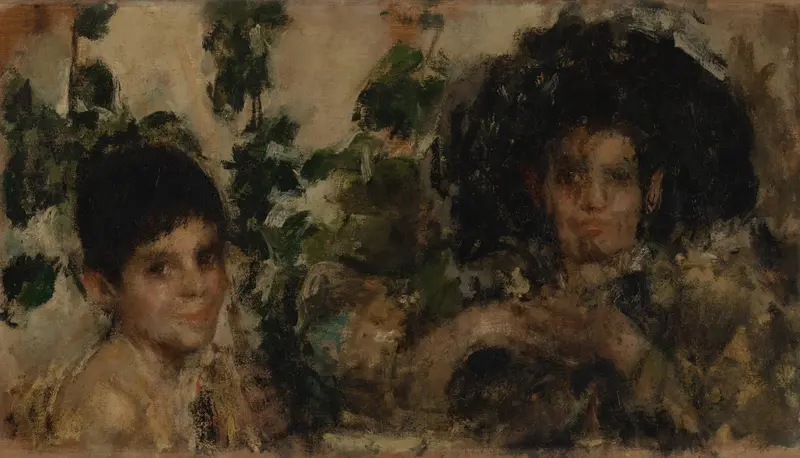
The brothers
Antonio Mancini
Liggend kind hwm0184v The Mesdag Collection
Antonio Mancini
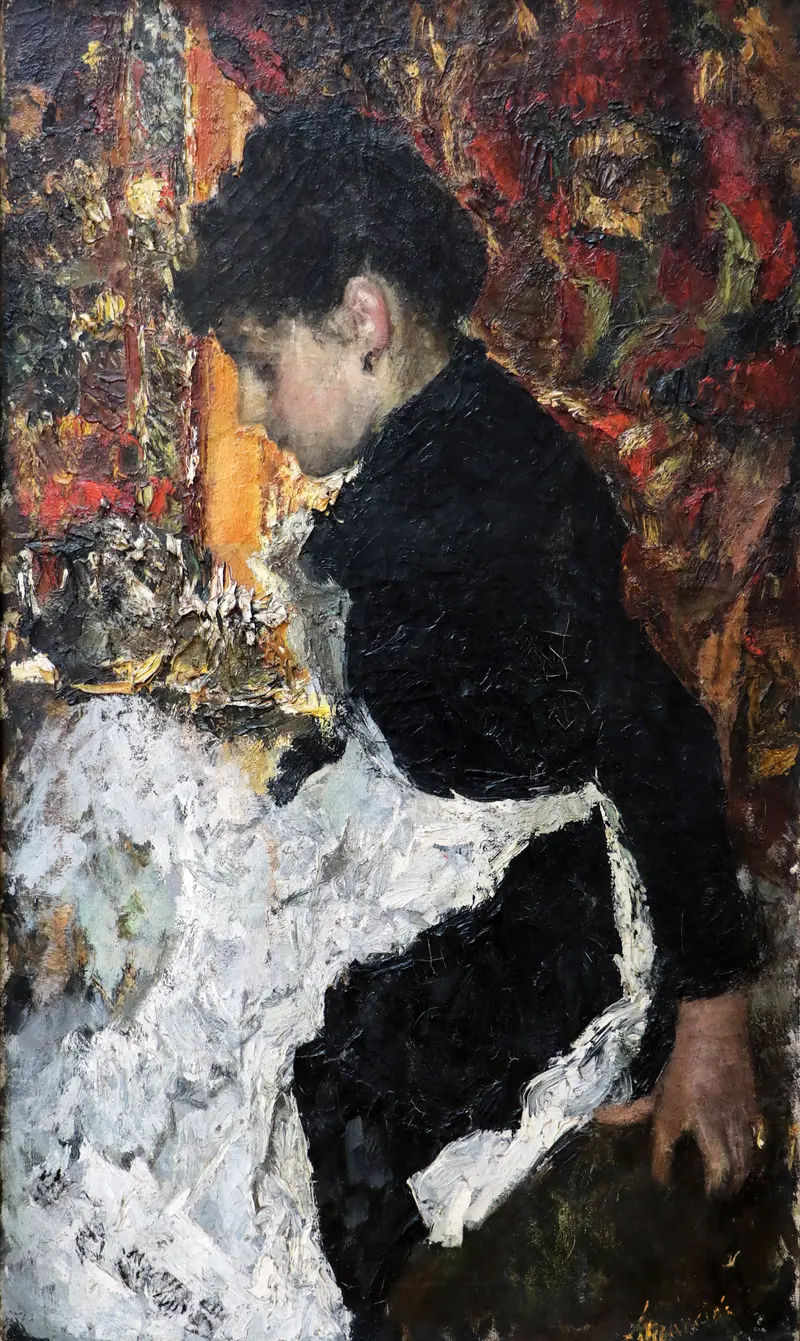
Servetta
Antonio Mancini
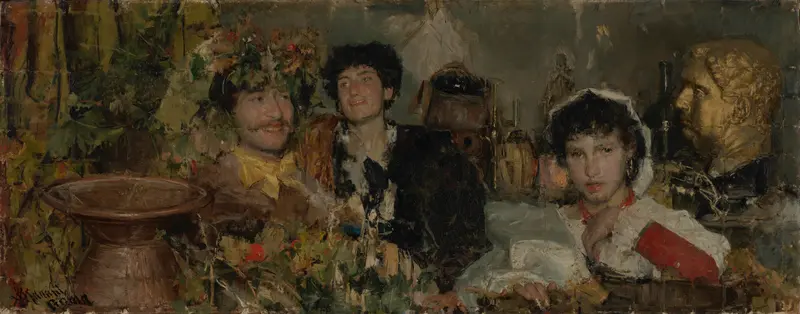
After the grape harvest
Antonio Mancini
More Genre Scene Art

Banquet of the Officers of the St George Civic Guard
Frans Hals

Rembrandt and Saskia in the Scene of the Prodigal Son
Rembrandt van Rijn

Bal du moulin de la Galette
Pierre-Auguste Renoir

Quadrille at the Moulin Rouge
Henri de Toulouse-Lautrec

A Burial at Ornans
Gustave Courbet

When Will You Marry?
Paul Gauguin