
Wreath of fruit, with some flowers, suspended from a metal ring — History & Facts
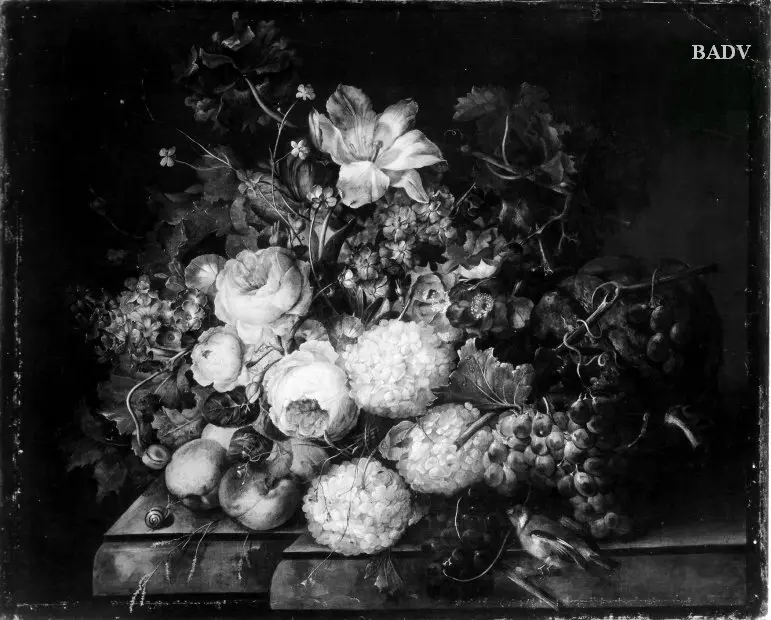
A velvet darkness frames a riot of ripeness, as if the bounty of a whole year had been gathered and suspended for a moment’s admiration. At the heart of Wreath of fruit, with some flowers, suspended from a metal ring, the painter draws your gaze to a luminous cluster of grapes and blowsy tulips, their petals edged with the faintest trace of decay. The wreath’s form is no idle garland: every fruit, every curling leaf is arranged to tempt both eye and appetite, while the cool gleam of the metal ring and the blue ribbon above remind us that this abundance hangs by human design.
A goldfinch perches quietly at the top, a living note among the painted harvest, as if to test what is real and what is artifice. The shadows deepen at the edges, drawing you back again and again to the glowing center. This kind of painting flourished in the Dutch and German lands of the late seventeenth century, when artists like Abraham Mignon transformed the still life into a stage for both nature’s beauty and human ingenuity. Wealthy patrons, eager to display their taste and prosperity, commissioned such works to adorn their homes—each fruit a symbol of luxury, each flower a fleeting reminder of time’s passage.
Painted between 1665 and 1679, and now held in the Staatliche Kunstsammlungen Dresden, this wreath belongs to that world of careful display and coded meaning. While history has kept few traces of this particular canvas’s journey, its lush surface invites us to linger and look for the stories hidden in every petal and peel.
More Artworks by Abraham Mignon

Still Life with Flowers and a Watch
Abraham Mignon
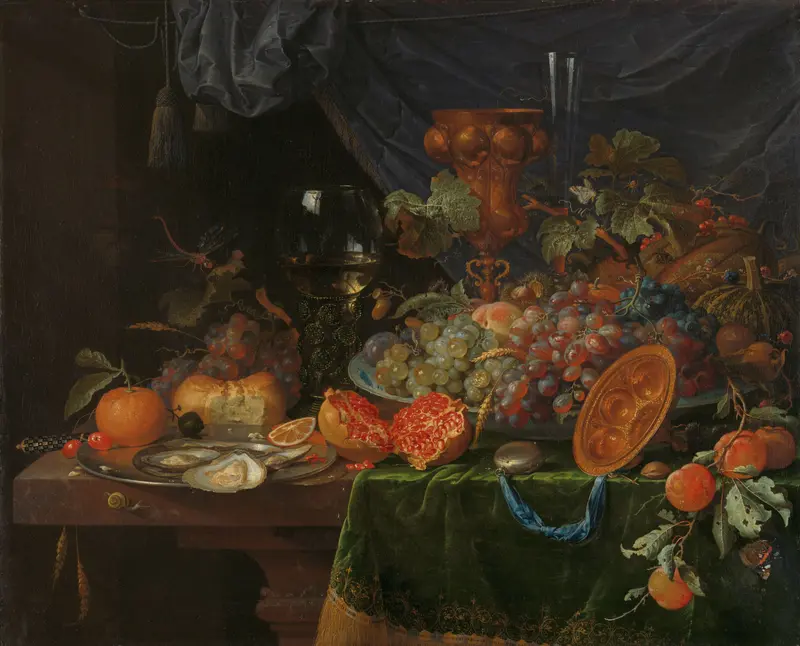
Still Life with Fruit and Oysters
Abraham Mignon
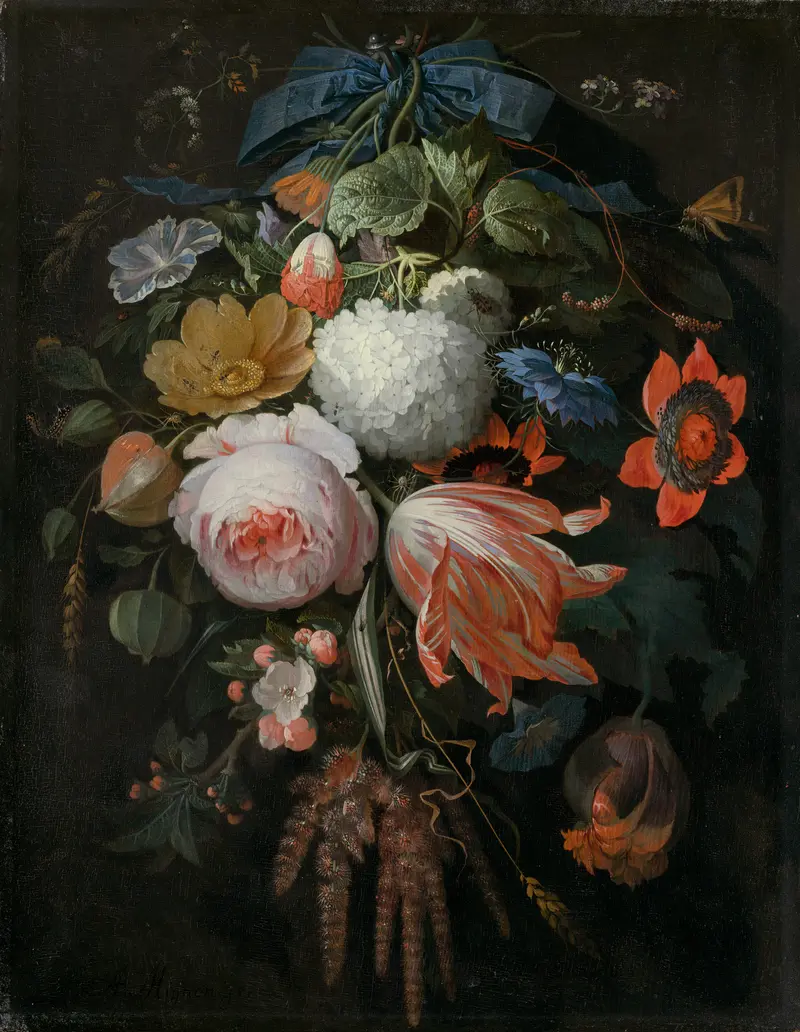
A Hanging Bouquet of Flowers
Abraham Mignon
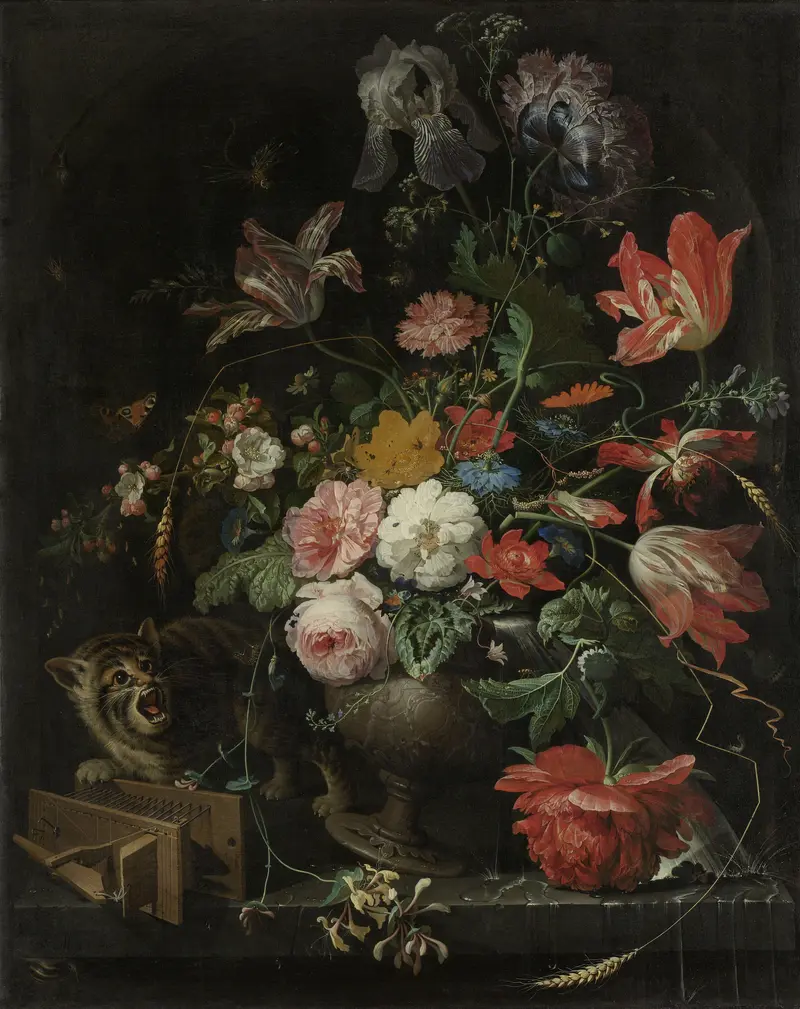
Bouquet with cat and mousetrap
Abraham Mignon
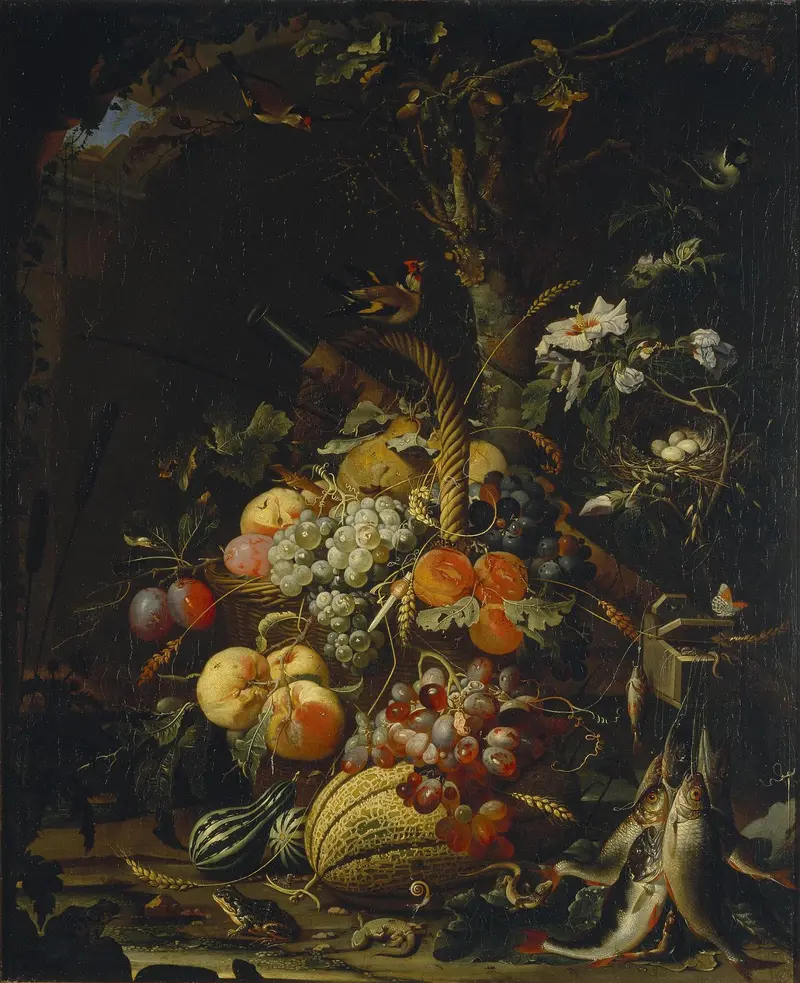
Forest floor still life with fruit, fish and a bird's nest
Abraham Mignon
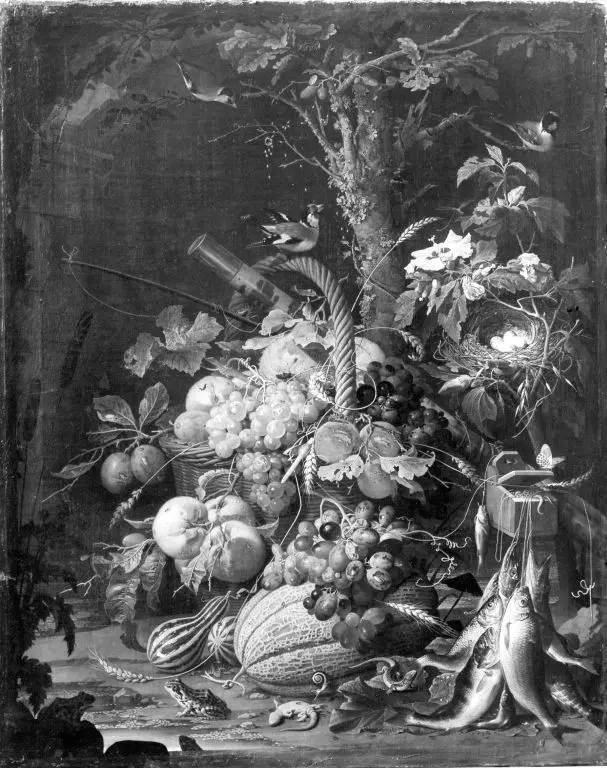
Still life with fruit, fish and a bird's nest
Abraham Mignon
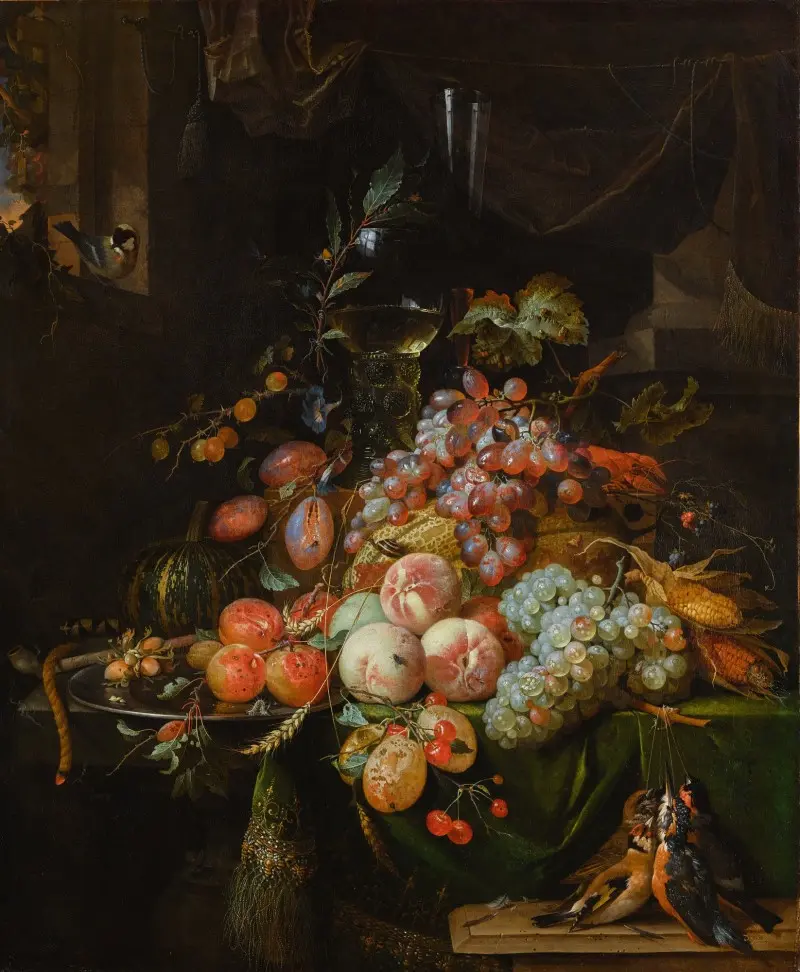
Still Life with Plums, Peaches, Apricots, Grapes and a Melon
Abraham Mignon
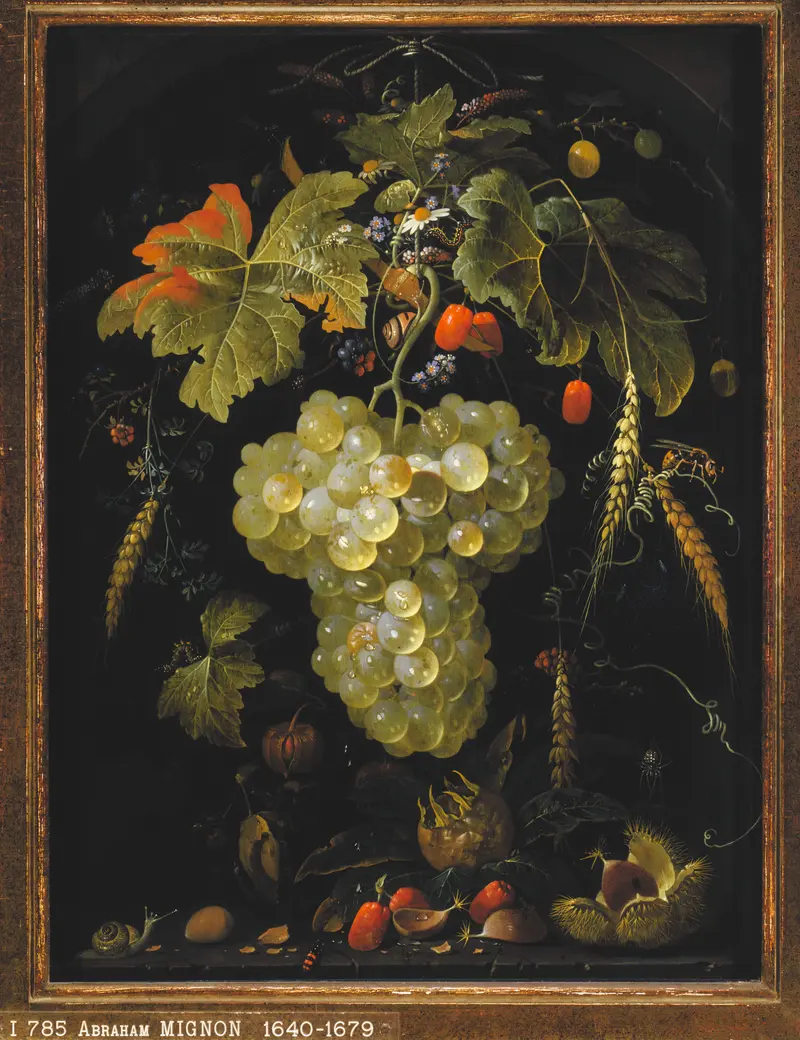
Festoon of fruit suspended from a rope, in a niche
Abraham Mignon
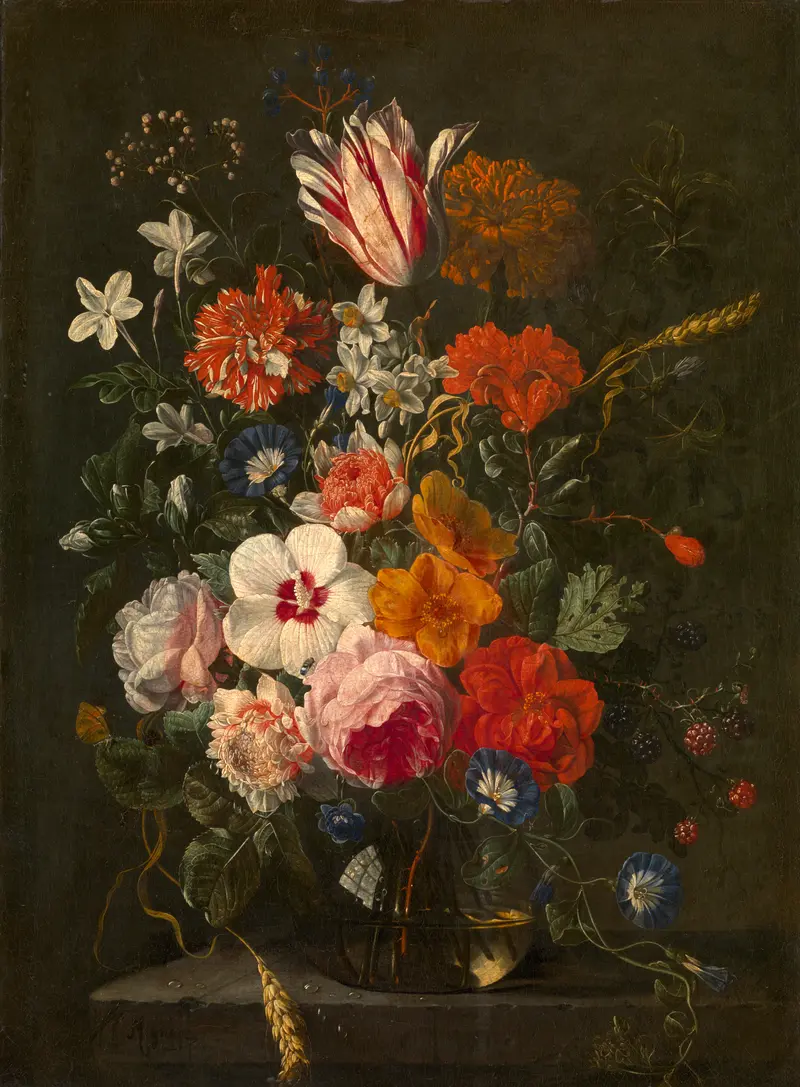
Flowers and a branch of berries in a glass vase on a stone ledge
Abraham Mignon
Flowers and fruit on a plinth
Abraham Mignon





