
Young Spanish Nobleman — History & Facts
No one knows for certain who the sitter is in Young Spanish Nobleman, painted by Diego Velázquez during his first trip to Italy in 1629, and it is this mystery that has long captivated scholars. Some have speculated that the young man might be a visiting Spanish aristocrat or even a self-portrait, but no documents confirm his identity. The painting stands as one of Velázquez’s earliest experiments with the Italian style, created during a formative period when he was absorbing the lessons of Venetian masters.
Its anonymity has inspired generations of viewers to project their own stories onto the sitter’s enigmatic gaze. The young nobleman appears at a three-quarter angle, his dark eyes meeting ours with a steady, almost challenging directness. He is dressed in austere black, relieved only by a crisp white collar and a delicate gold chain—symbols of status, but also of restraint. The background is a deep, undefined shadow, pushing all attention onto the sitter’s face and hands, rendered with the loose, confident brushwork that Velázquez would later perfect.
The play of light across the face recalls the psychological intensity of Caravaggio, yet the restraint and dignity are unmistakably Spanish. Unlike the elaborate court portraits of Anthony van Dyck, here the focus is on character rather than costume. The early history of Young Spanish Nobleman is unclear, as is often the case with works from Velázquez’s Italian period. It is not listed in the inventories of the Spanish royal collection until much later, and its provenance in the seventeenth century remains a subject of research.
Today, the painting is celebrated as a key work in Velázquez’s development, marking his transition from the severe realism of his Seville years to the more nuanced, psychological portraits of his Madrid maturity. Its presence in the Prado highlights the artist’s lifelong fascination with the complexities of identity, both revealed and concealed by the painter’s hand.
More Artworks by Diego Velázquez

Las Meninas
Diego Velázquez
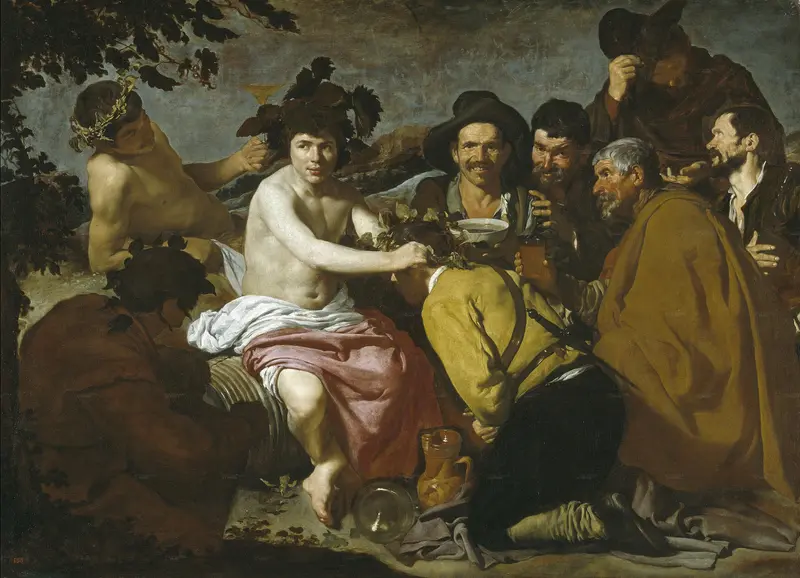
The Triumph of Bacchus
Diego Velázquez
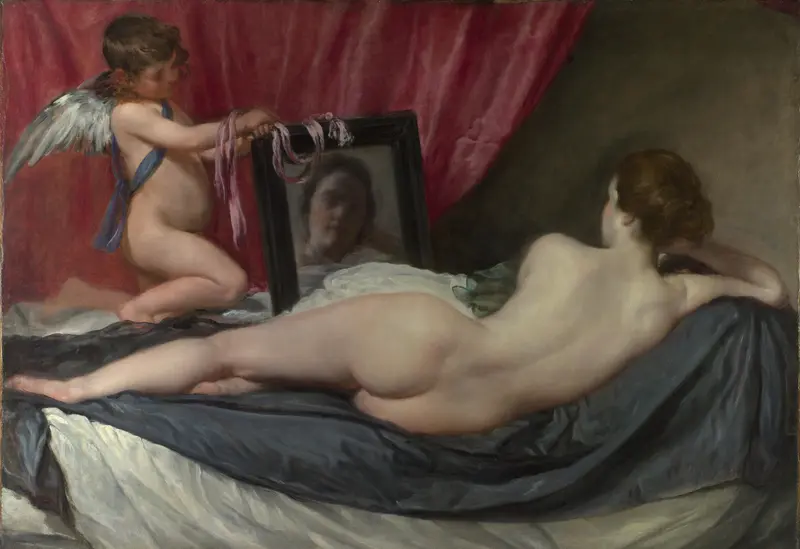
Rokeby Venus
Diego Velázquez
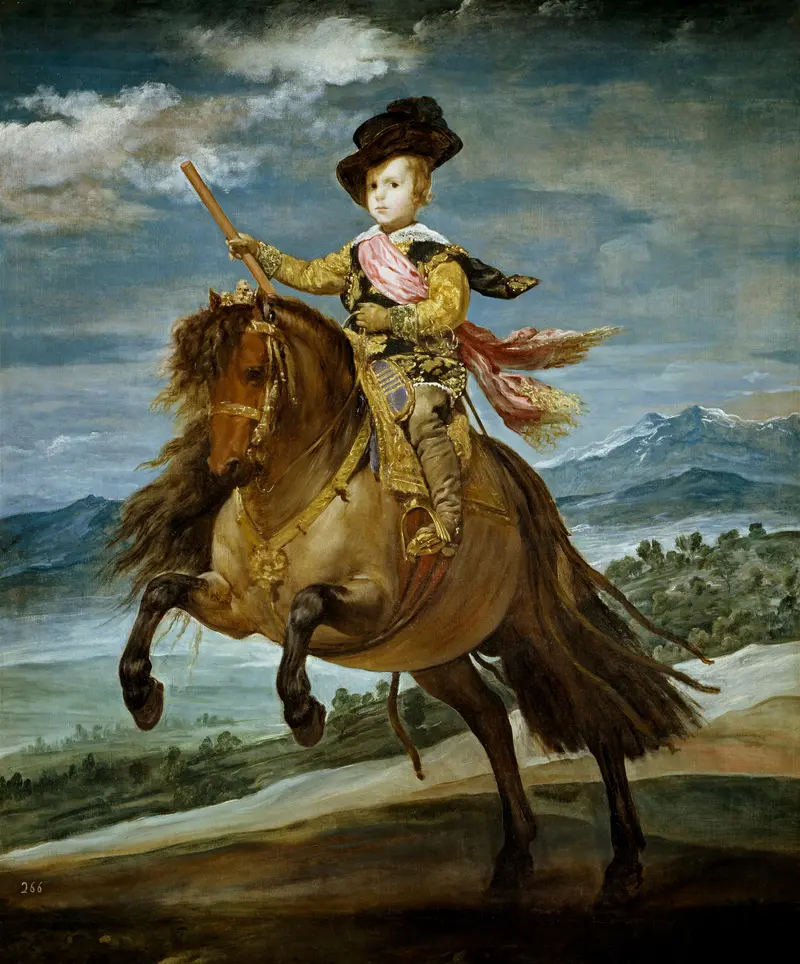
Equestrian Portrait of Prince Balthasar Charles
Diego Velázquez
Bacchus
Diego Velázquez
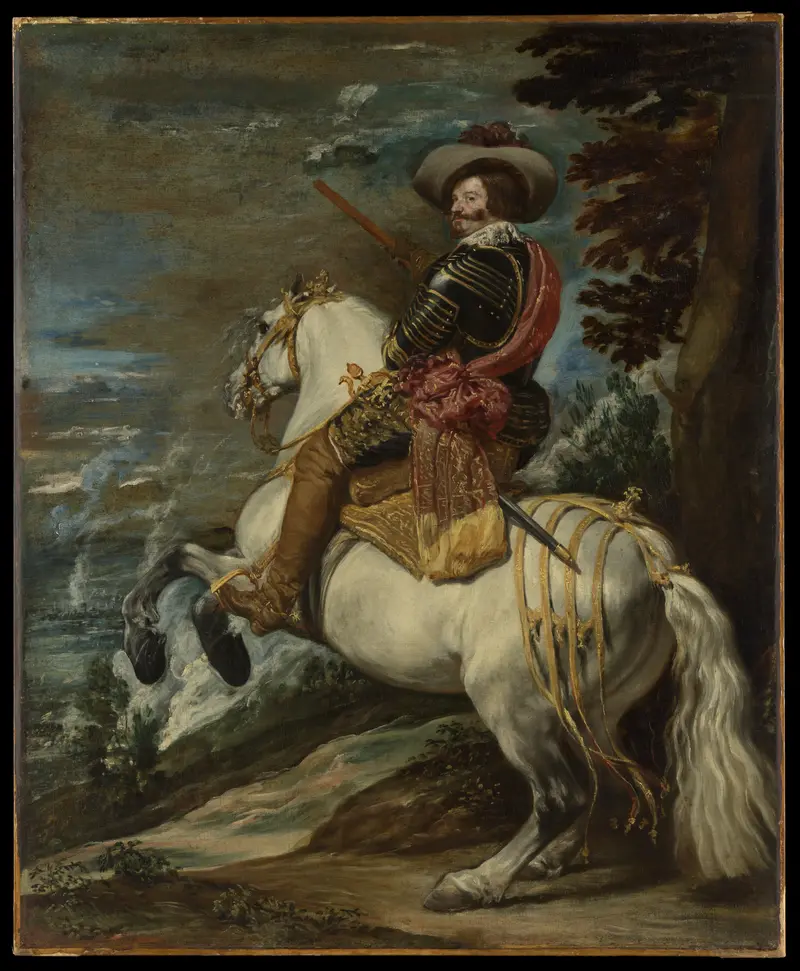
Don Gaspar de Guzmán (1587–1645), Count-Duke of Olivares
Diego Velázquez
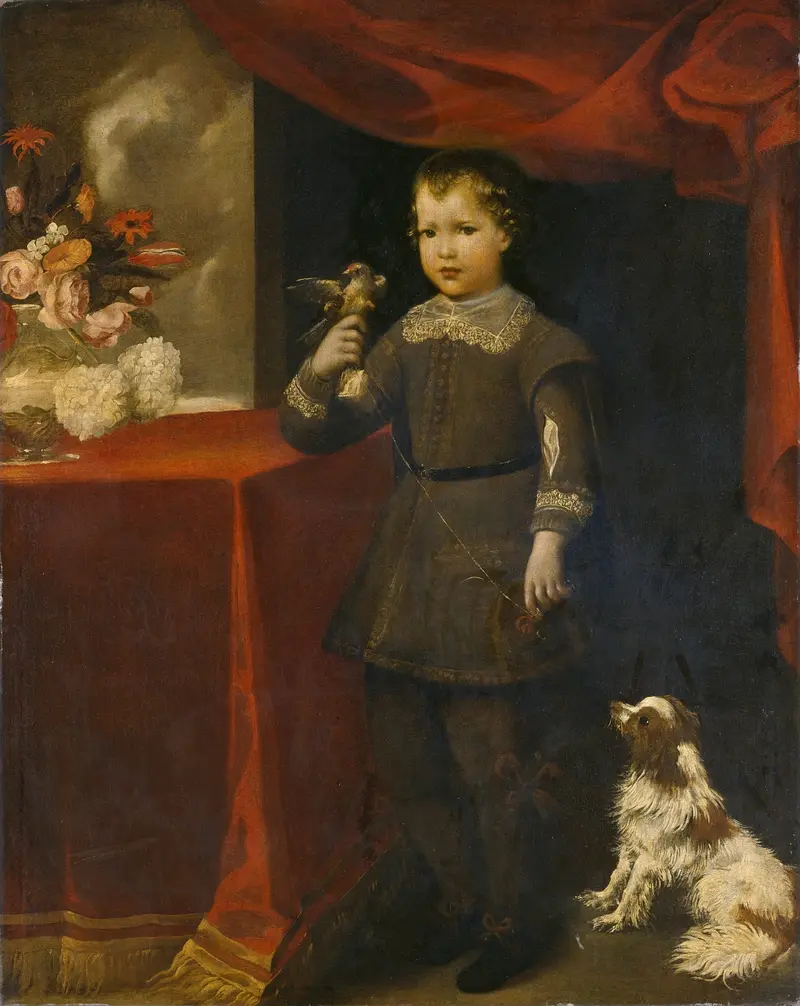
El príncipe Baltasar Carlos de Austria
Diego Velázquez
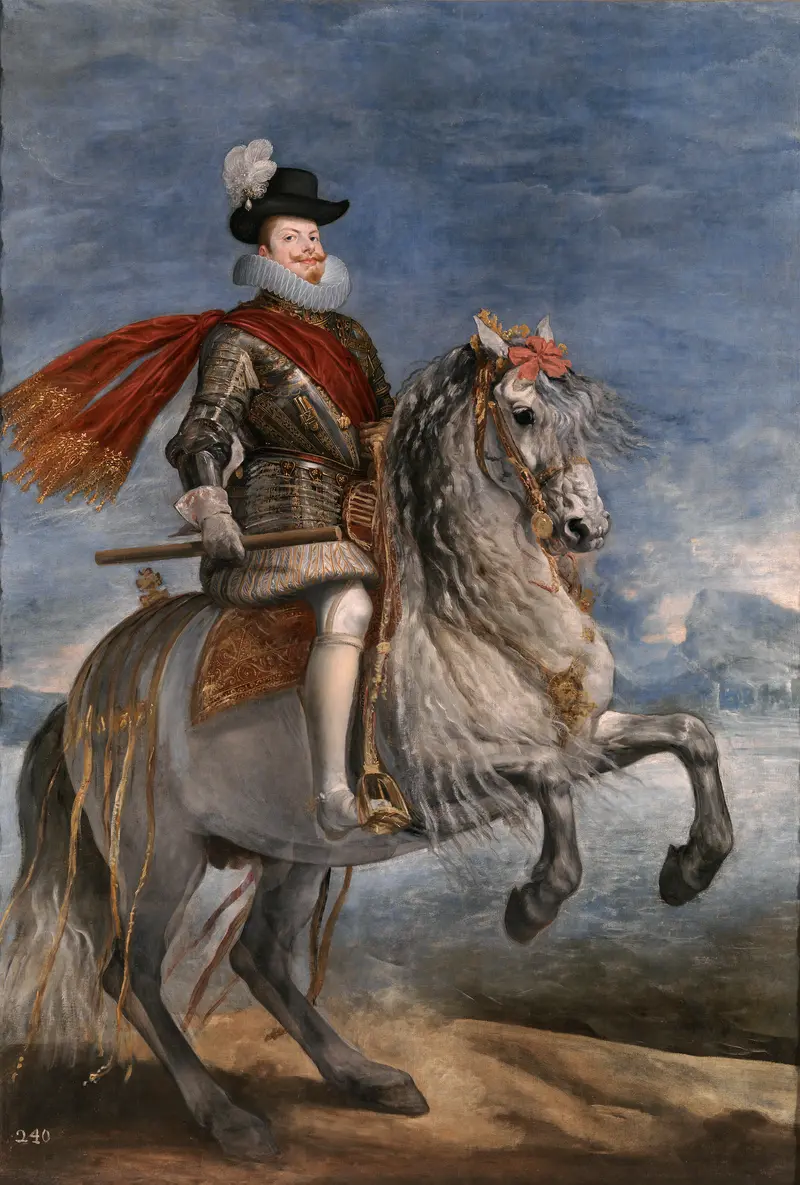
Equestrian Portrait of Philip III
Diego Velázquez
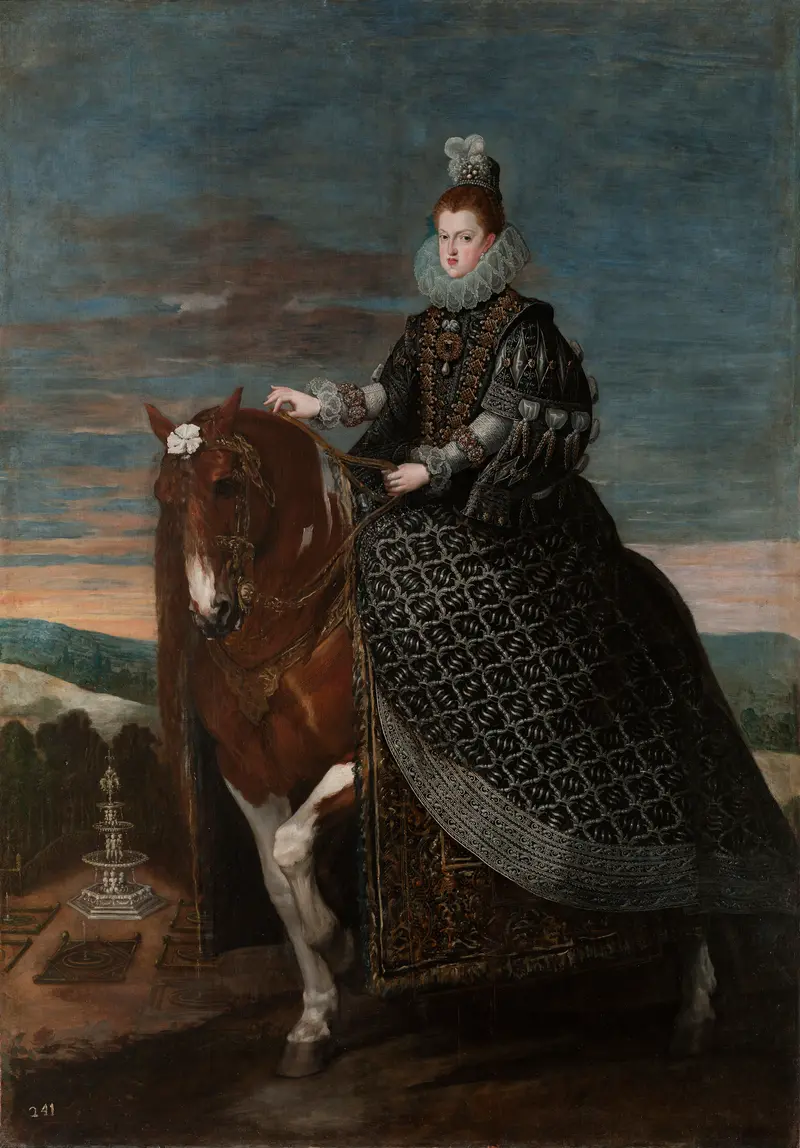
Equestrian Portrait of Margarita of Austria
Diego Velázquez
Las Hilanderas
Diego Velázquez




