Zijaanzicht van een boerderij bij Winterswijk — History & Analysis
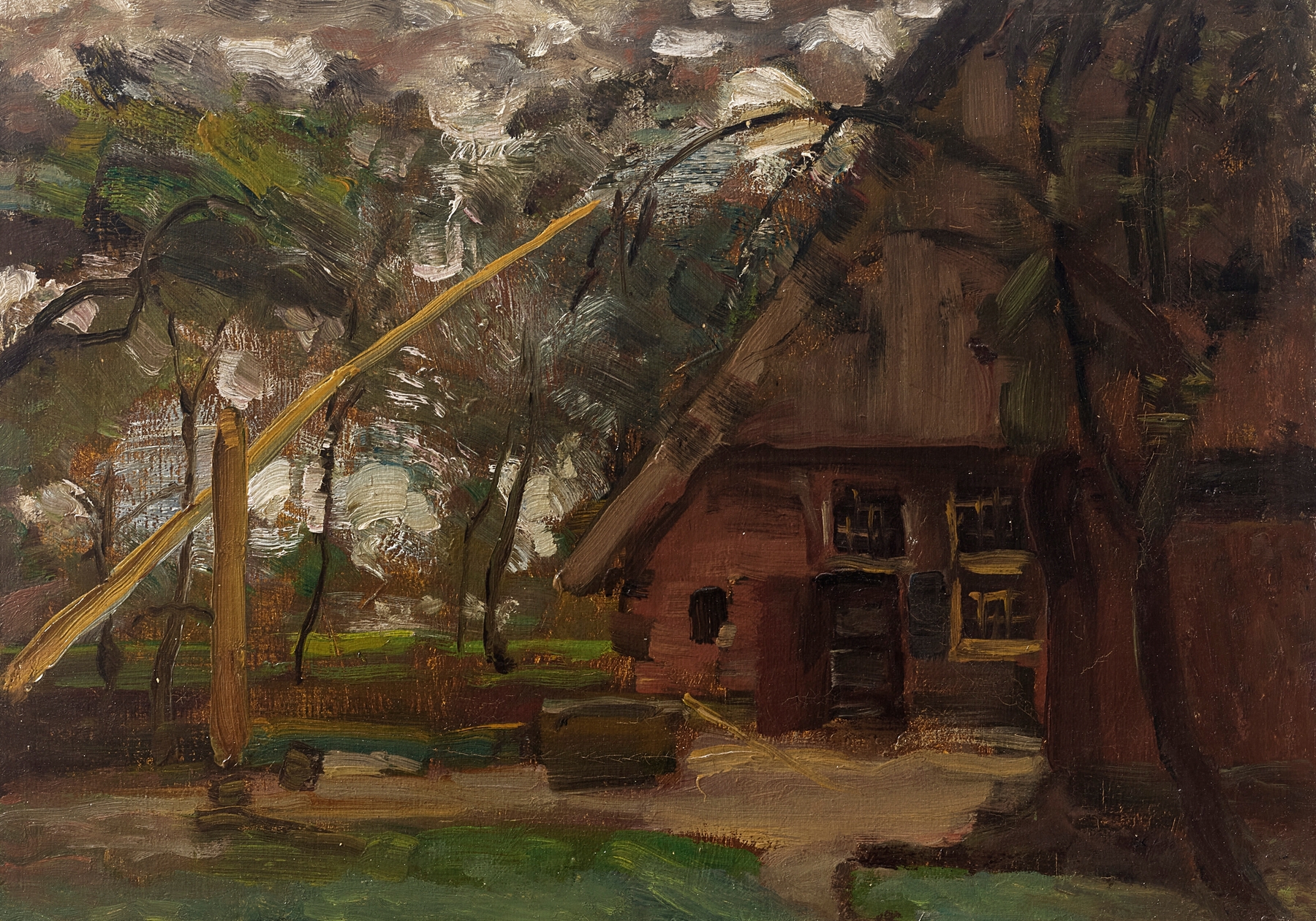
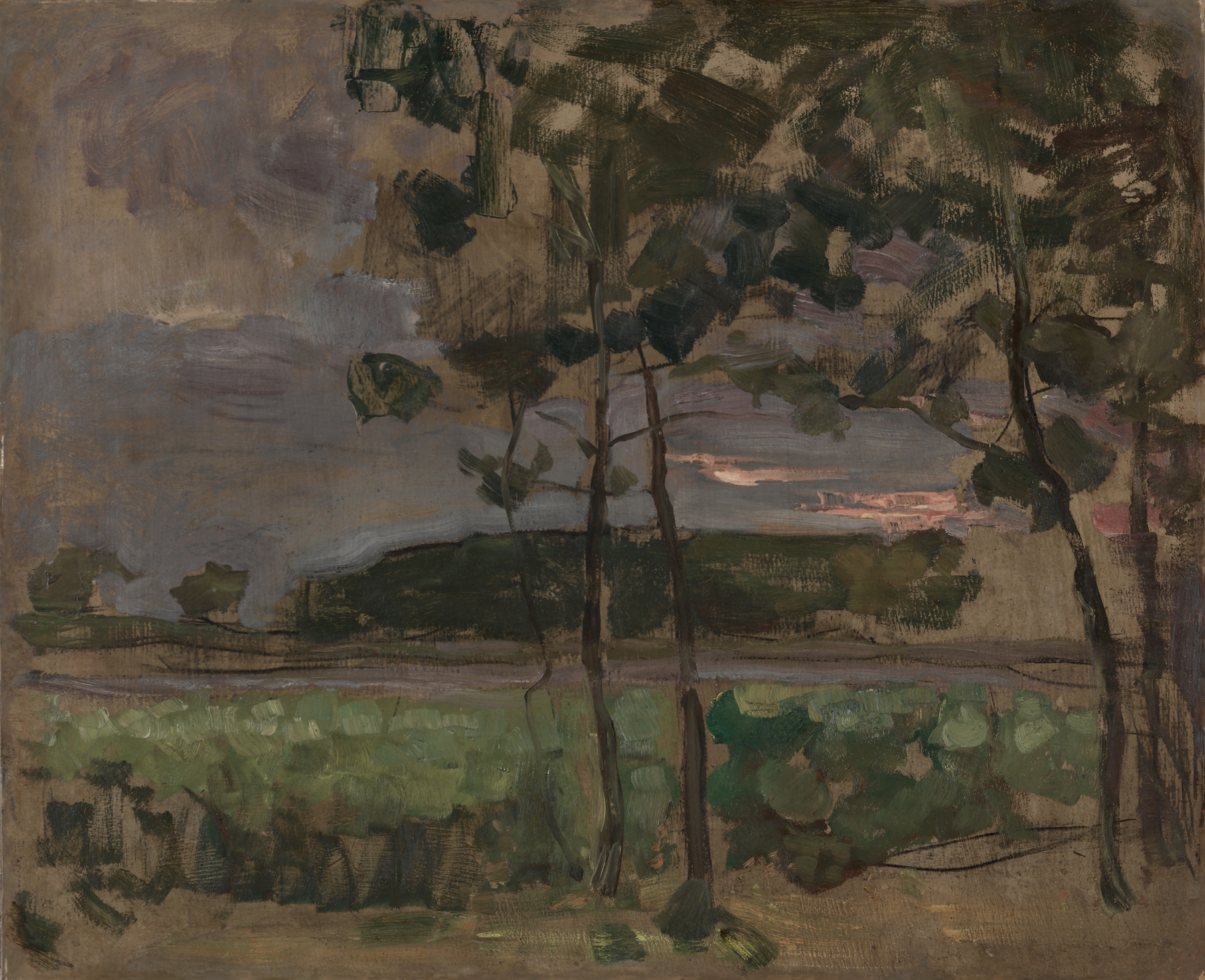
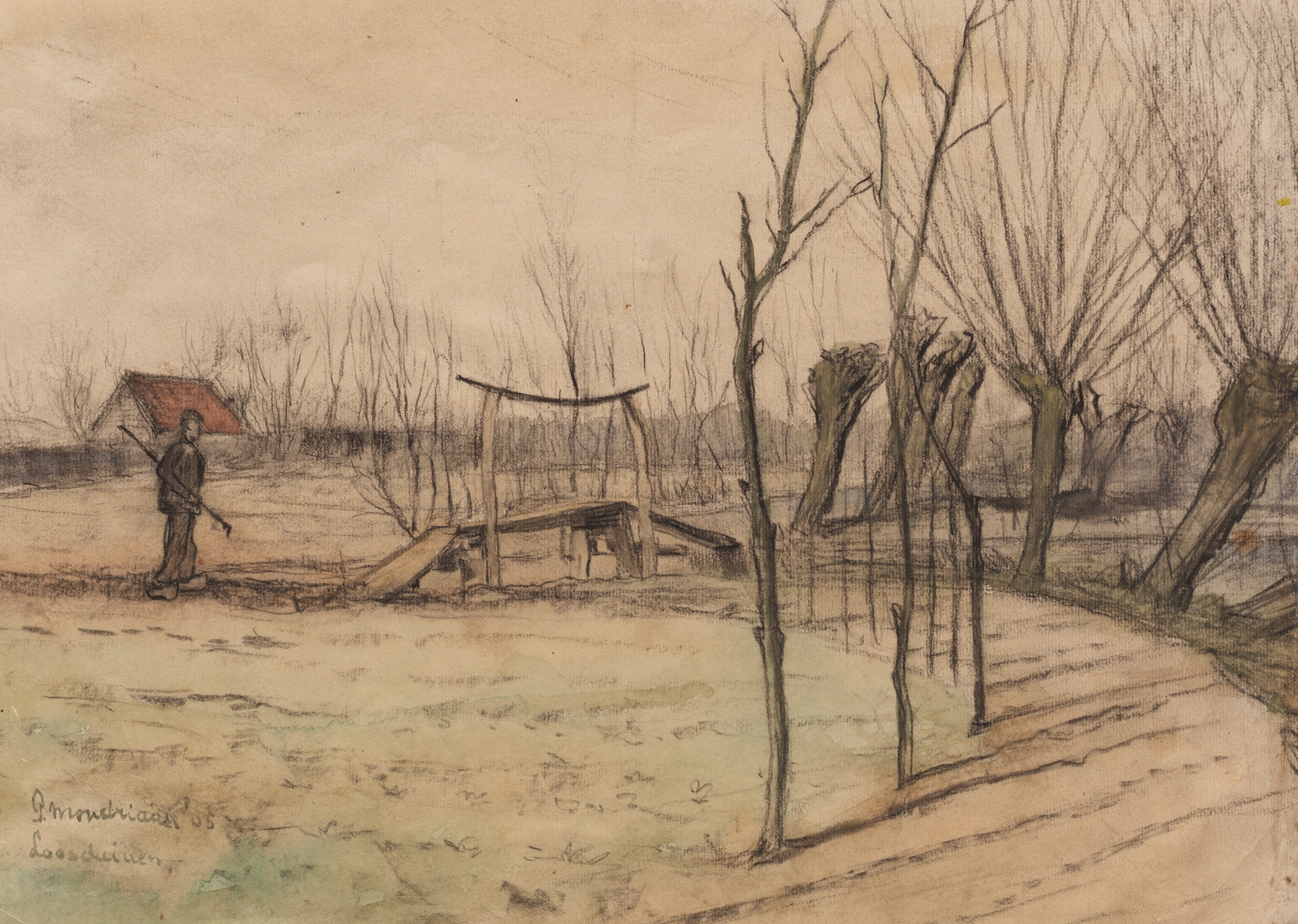
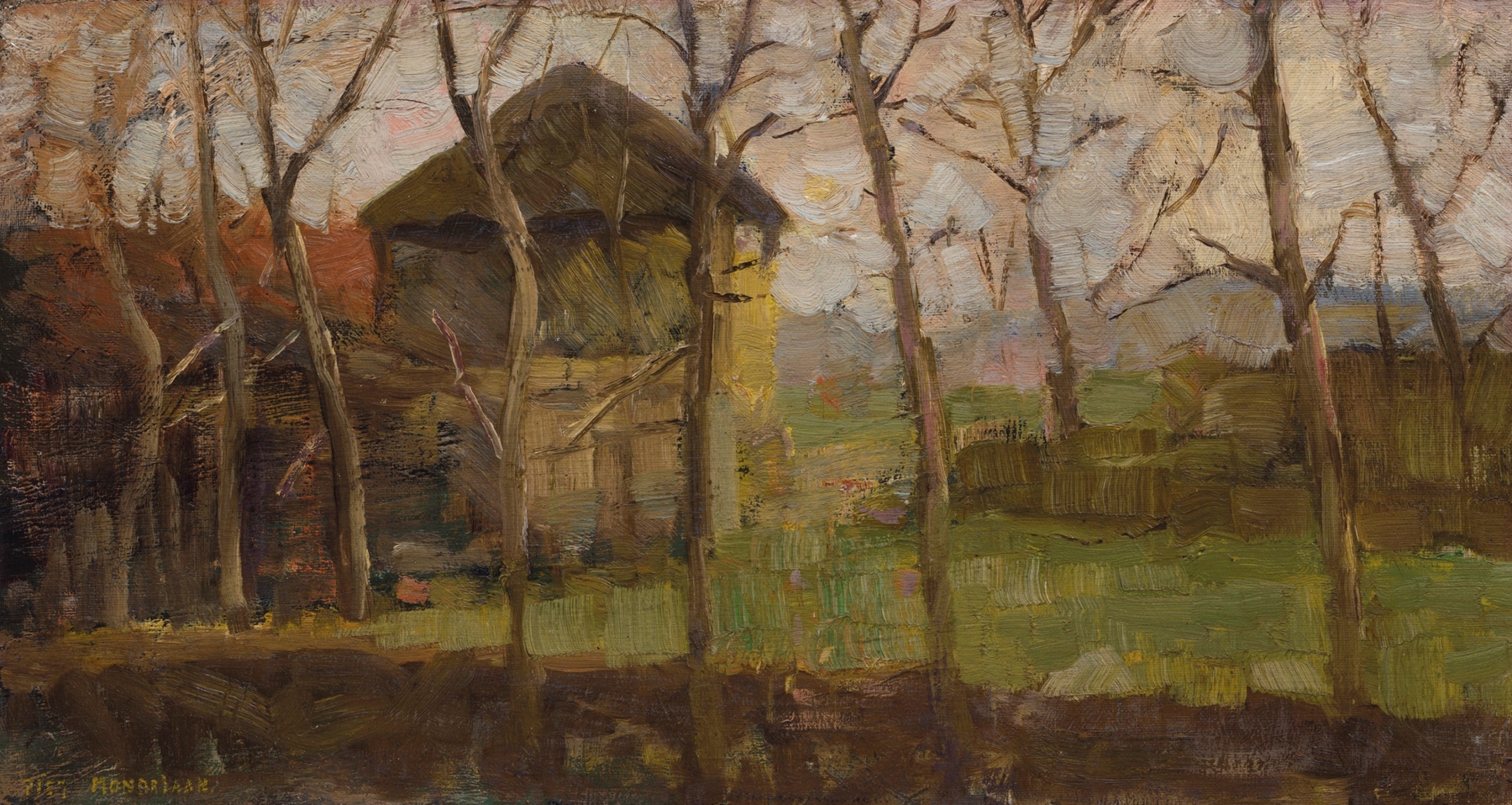
Did the painter know this moment would outlive them? The quiet serenity captured in Zijaanzicht van een boerderij bij Winterswijk reverberates through time, offering a glimpse into the gentle rhythms of rural life. In this work, the essence of rebirth flourishes—not just in the landscape, but in the artist himself as he forges a path toward abstraction and modernity. Look to the left at the sturdy farmhouse, its structure rendered with precise lines. The muted tones of earthy browns and greens envelop the scene, emphasizing the early evening light that softly bathes the fields.
Notice how the diagonal composition draws your eye toward the horizon, instilling a sense of movement and continuity. The delicate play of light and shadow reveals Mondrian’s early mastery of color and form, a precursor to his later, more geometric style. Within this pastoral tableau lies a tension between simplicity and complexity. The steady outlines of the house contrast with the flowing contours of nature, suggesting both stability and vulnerability. The minimalistic approach hints at a deeper connection to the cyclical nature of life, where the ordinary becomes extraordinary through observation.
Each brushstroke echoes with the whispers of the land—an invitation to contemplate the passage of time and the essence of existence. In the late 1890s, when this piece was created, Mondrian was immersed in the traditional Dutch landscape scene while simultaneously grappling with the burgeoning ideas of modernism. Living in the Netherlands during a time of shifting artistic currents, he was poised at the brink of his transformation. Little did he know that this exploration of form and light would lay the groundwork for the radical abstraction that would soon define his legacy.