
Zittende herderin en twee schapen — History & Facts
When did color learn to lie? In the world of art, hues can evoke profound truths or fabricate delicate illusions, as we see in the serene pastoral scene before us. Focus on the soft, muted palette that envelops the shepherdess and her two sheep. Notice how the gentle golden light bathes her figure, accentuating the folds of her clothing as they flow with the contours of her body. The greenery surrounding her, tenderly painted in varying shades of green and earthy browns, invites you to feel the tranquil embrace of nature, while the sheep, symbols of innocence and vitality, seem almost alive, their woolly coats imbued with warmth. Delve deeper to uncover the emotional currents beneath this idyllic portrayal.
The shepherdess, with her calm demeanor, embodies a quiet strength and hope amidst the simplicity of rural life. The juxtaposition of her solitary figure against the soft, grazing sheep captures the duality of solitude and connection; she is both alone and inherently a part of her environment. The lingering sunlight hints at a promise of warmth and renewal, suggesting that in the routine of pastoral existence lies the pulse of life and the whispers of dreams yet unspoken. Created between 1646 and 1652, this work emerged during a time when Nicolaes Pietersz Berchem was establishing his reputation in the artistic circles of the Dutch Golden Age.
Surrounded by the flourishing tradition of landscape painting, he skillfully balanced realism with an idealized interpretation of rural life. The world was embracing the beauty of nature and the human experience, and in this moment, he captured not just a scene but a profound sentiment that resonates through the ages.
More Artworks by Nicolaes Pietersz Berchem
Browse all →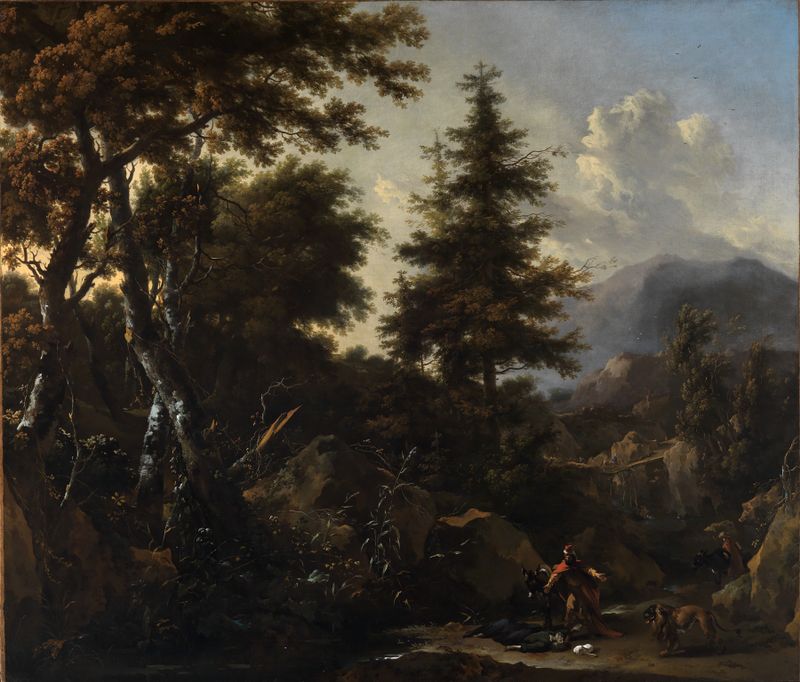
Schlucht im Bergwald mit alttestamentlicher Staffage
Nicolaes Pietersz Berchem
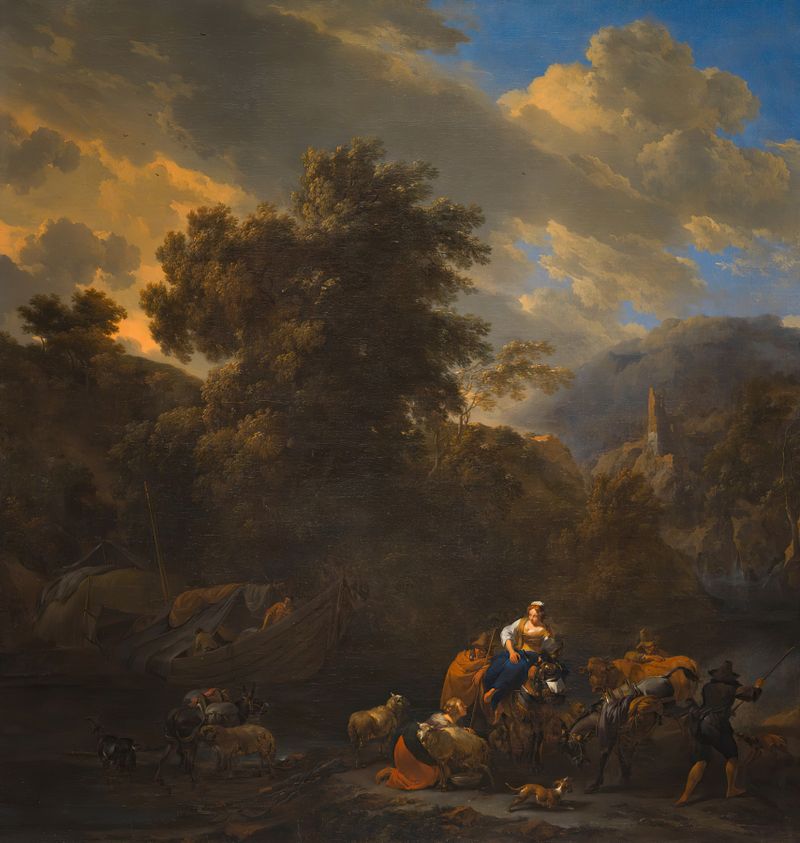
Italianate Landscape with Figures and Pack Animals on the Banks of a River
Nicolaes Pietersz Berchem
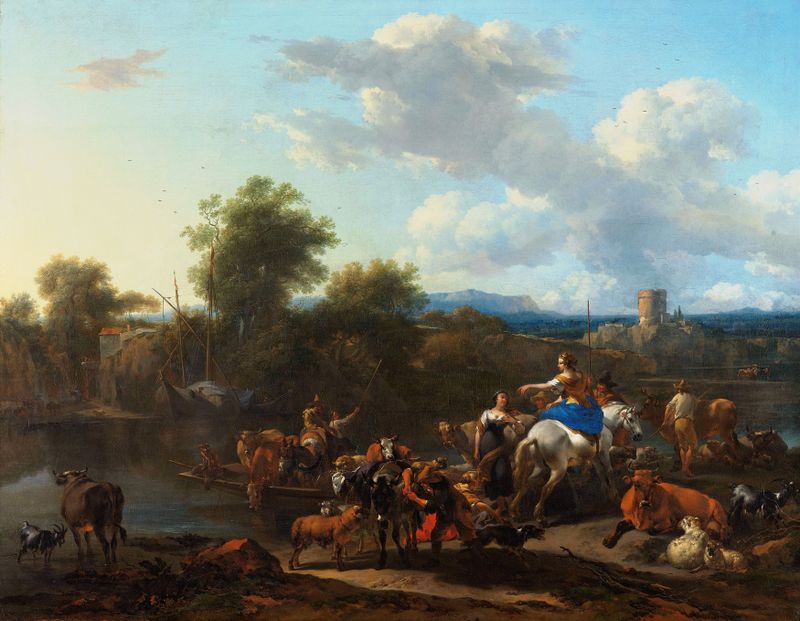
The Cattle Ferry
Nicolaes Pietersz Berchem
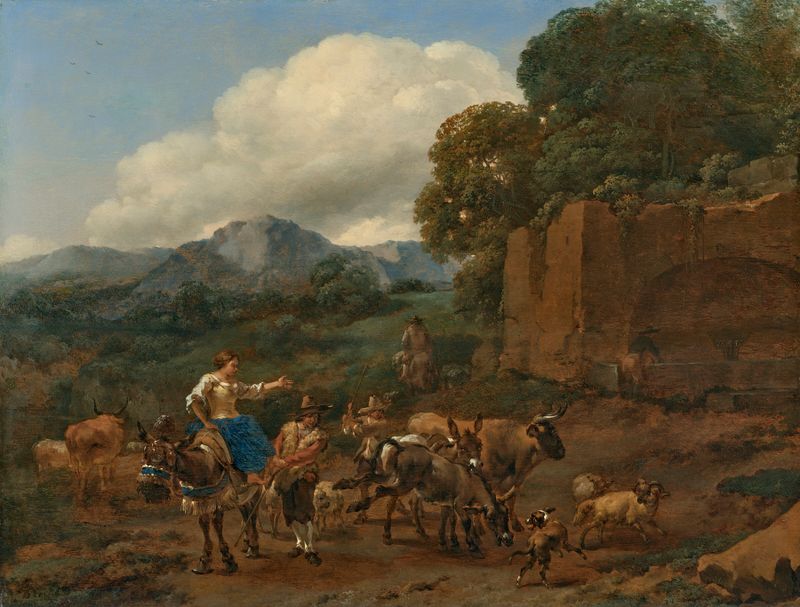
An Italianate landscape with a shepherdess on a mule and a shepherd, herding cattle, sheep, donkeys and dogs on a mountain track next to ruins
Nicolaes Pietersz Berchem
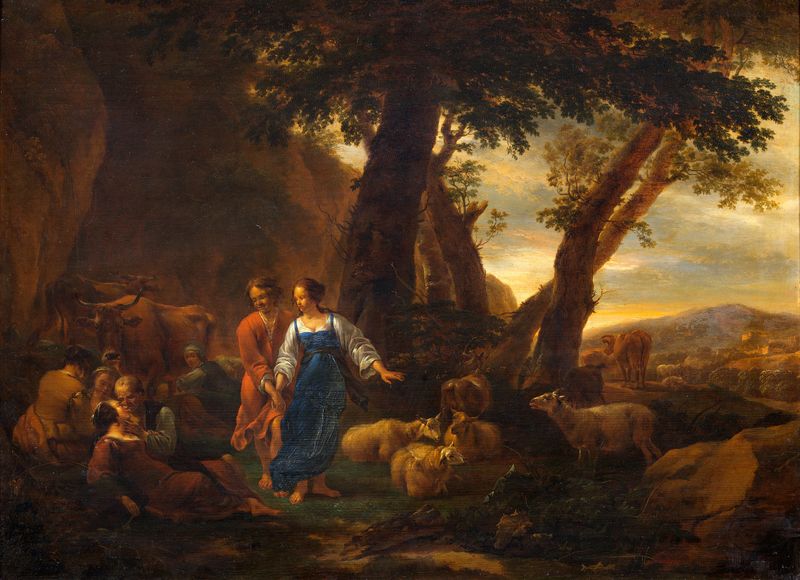
Landscape with Peasants and Cattle
Nicolaes Pietersz Berchem
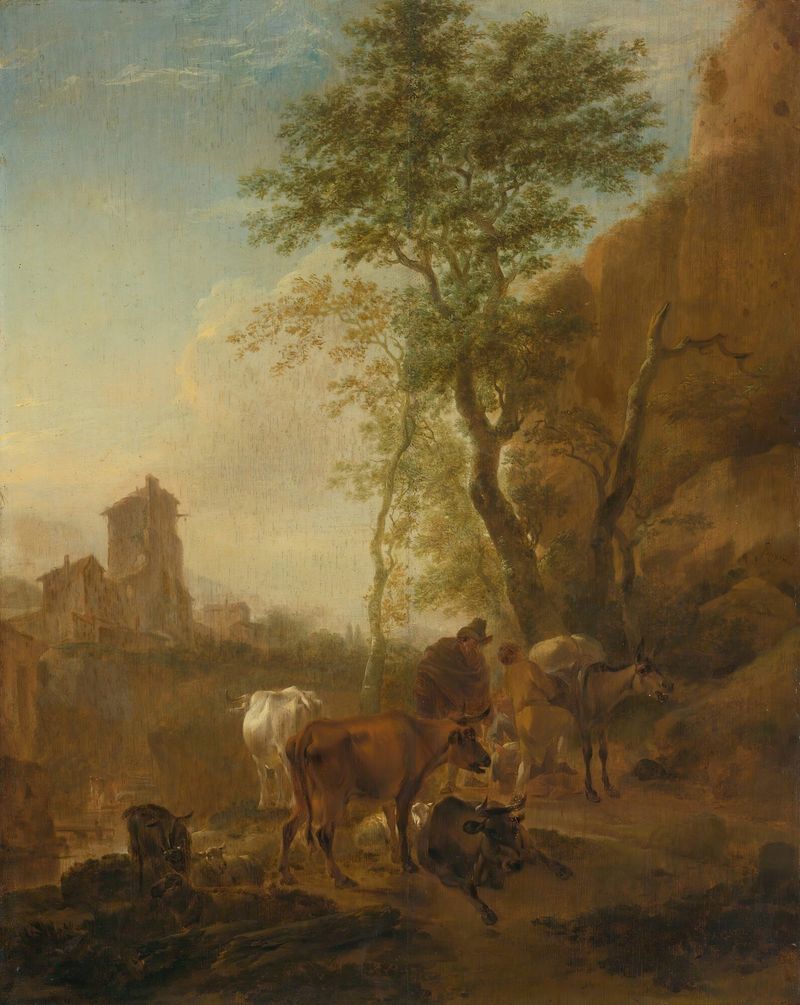
Italianate Landscape With Cows
Nicolaes Pietersz Berchem
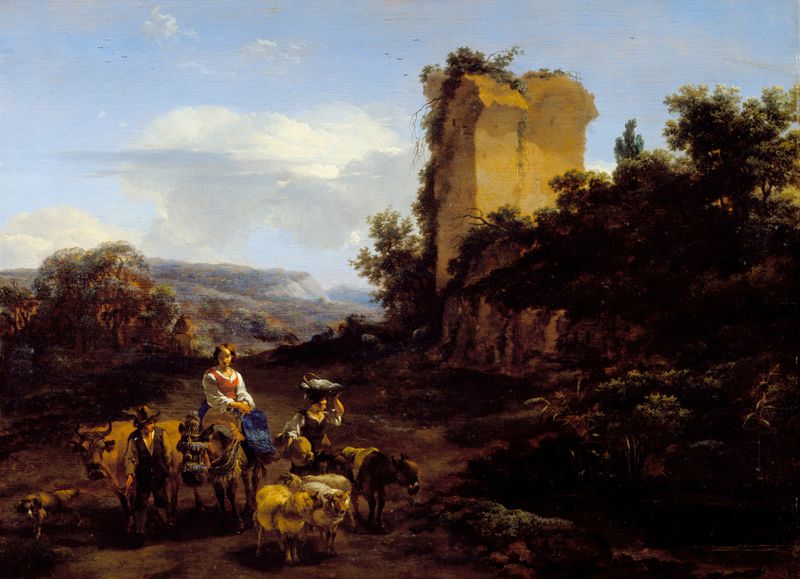
Landscape with Ruins and Travelers
Nicolaes Pietersz Berchem
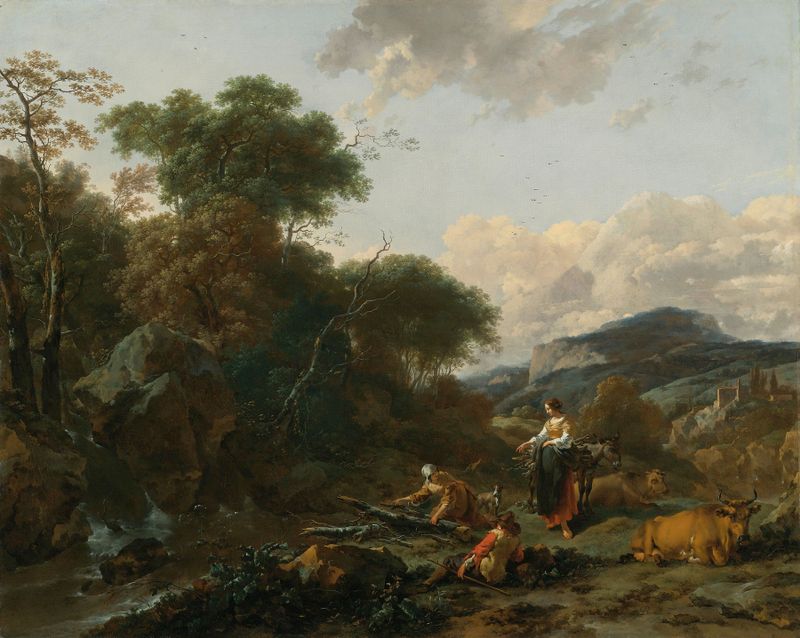
A Landscape With Figures
Nicolaes Pietersz Berchem
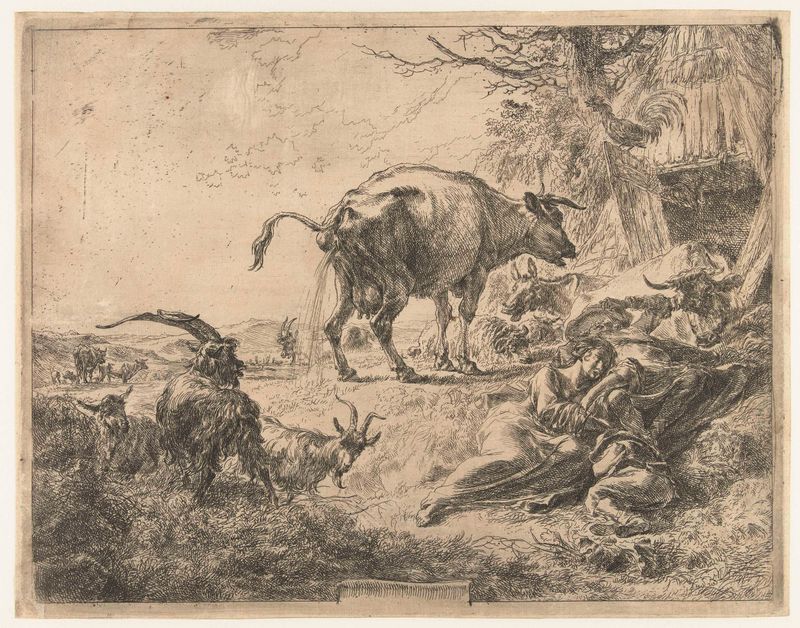
Slapende herdersfamilie en rustend vee
Nicolaes Pietersz Berchem
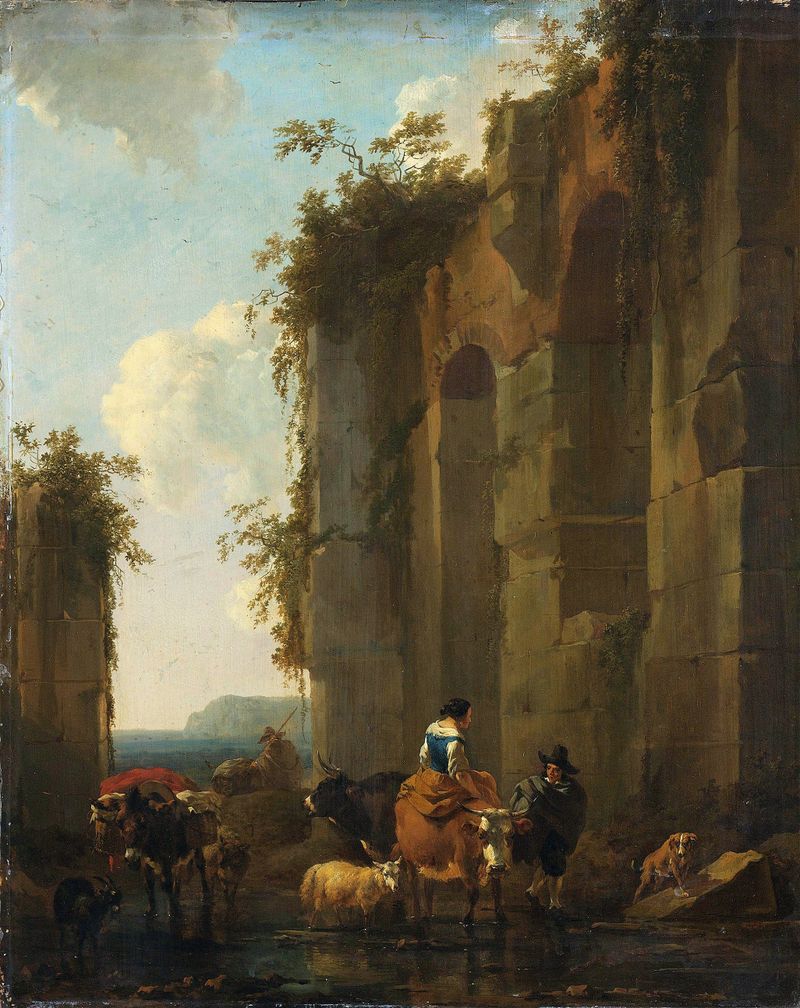
Ruins in Italy
Nicolaes Pietersz Berchem





