
A Capriccio of the prisons of San Marco set in a piazza with a coach and townsfolk — History & Facts
Few paintings by Canaletto have sparked as much debate among scholars as A Capriccio of the prisons of San Marco set in a piazza with a coach and townsfolk. Unlike his celebrated views of real Venetian landmarks, this work invents a dramatic architectural fantasy, blending recognizable elements of Venice with imagined structures. The painting’s exact date and commission remain unknown, but it stands out for its bold manipulation of reality—a capriccio, or fanciful composition, that blurs the line between fact and fiction.
Such inventions were highly prized by eighteenth-century collectors, eager for scenes that captured both the spirit and the spectacle of Venice. In this capriccio, the forbidding arches of the San Marco prisons loom over a lively piazza, where a grand coach arrives amid bustling townsfolk. The artist chooses a moment of everyday spectacle: the arrival of a carriage, perhaps bearing a dignitary or a visitor, as citizens pause to watch. Light glances off the stone facades and the coach’s lacquered panels, drawing the eye from the shadowed prison to the animated crowd.
The juxtaposition of the monumental, almost theatrical architecture with the intimacy of daily life is typical of Canaletto, yet here the fantasy is heightened—unlike the strict topographical accuracy of his The Grand Canal with the Rialto Bridge, this scene is a deliberate invention, inviting viewers to imagine Venice as both real and dreamlike. The painting’s origins are uncertain; no definitive record of its first owner or commission has survived. Works of this type were often produced for British Grand Tourists, who prized capricci as souvenirs of their travels. Over the centuries, A Capriccio of the prisons of San Marco set in a piazza with a coach and townsfolk has passed through various private collections, its attribution to Canaletto occasionally questioned due to the unusual subject and lack of documentation.
Today, it stands as a testament to the artist’s inventive spirit and his ability to conjure a Venice that is both familiar and fantastical, bridging the gap between memory and imagination.
More Artworks by Canaletto

The Grand Canal, Venice, looking north-west from the Ca' Corner to the Ca' Contarini degli Scrigni, with the campanile of Santa Maria della Carità
Canaletto

Venice, Bacino di San Marco on Ascension Day
Canaletto

Windsor Castle
Canaletto

The Grand Canal looking North-East from the Palazzo Dolfin-Manin to the Rialto Bridge
Canaletto

Venice: The Campo SS. Giovanni e Paolo
Canaletto

Venice: The Grand Canal from the Rialto to the Palazzo Foscari
Canaletto
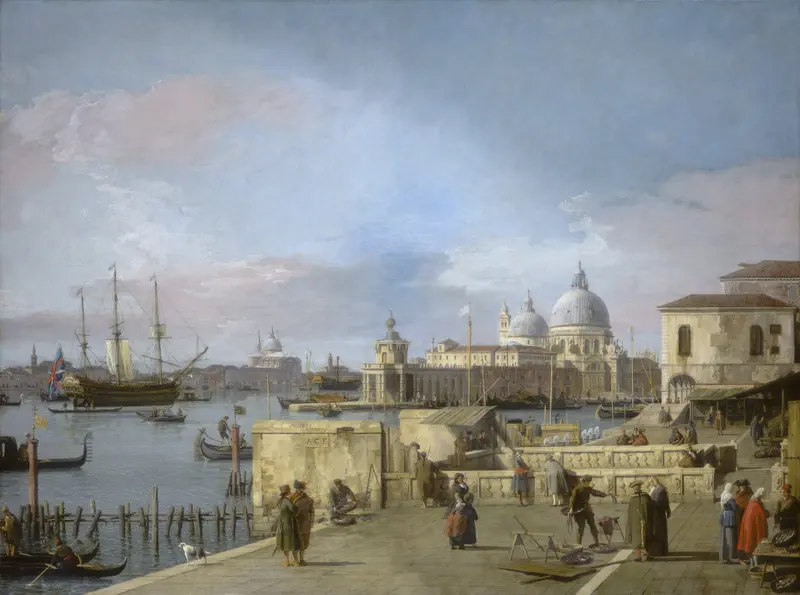
Venice: The Molo towards the Dogana and Santa Maria della Salute
Canaletto

Venice: The Piazzetta
Canaletto
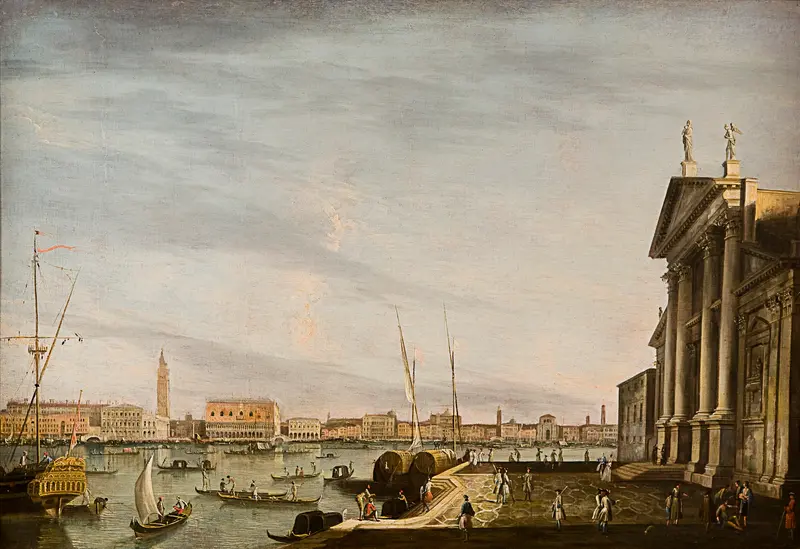
Venice, View of San Giorgio Maggiore
Canaletto

London: The Thames from Somerset House Terrace towards Westminster
Canaletto


