
A Cowherd at Valhermeil, Auvers-sur-Oise — History & Facts
In the tender scene of a cowherd tending to his charges, hidden depths of revelation linger just beneath the surface. What appears as a simple pastoral moment holds layers that beckon the viewer to look closer, to consider the nuances of nature and labor intertwined. Look to the foreground, where the cowherd stands, a figure of humble dedication. The soft earth tones of his clothing blend seamlessly with the rich greens and golden hues of the field, creating a harmonious connection with the land.
Notice how the light gently bathes the scene, casting a warm glow that invites both serenity and reflection. Pissarro’s masterful brushwork captures the fluid movement of the cows, emphasizing their presence as they graze, tethering the viewer to the rhythm of rural life. Delve deeper into the painting’s emotional tensions. The isolation of the cowherd amidst the vast landscape evokes a sense of solitude, a common thread in the artist’s work reflecting the struggles of the working class.
The movement of the cows, though peaceful, symbolizes the weight of responsibility that burdens the figure, suggesting a cycle of labor and endurance. Each brushstroke acts as a quiet manifesto of existence, where beauty conceals the inherent struggles of rural life. Pissarro created this work in 1874 during a transformative period in his career while living in Auvers-sur-Oise, a place that nurtured his Impressionist ideals. This era was marked by a growing camaraderie among artists seeking to capture the essence of modern life.
In a world rapidly changing with industrialization, he focused on the rural, offering a poignant contrast to the tumult of urban expansion.
More Artworks by Camille Pissarro
Browse all →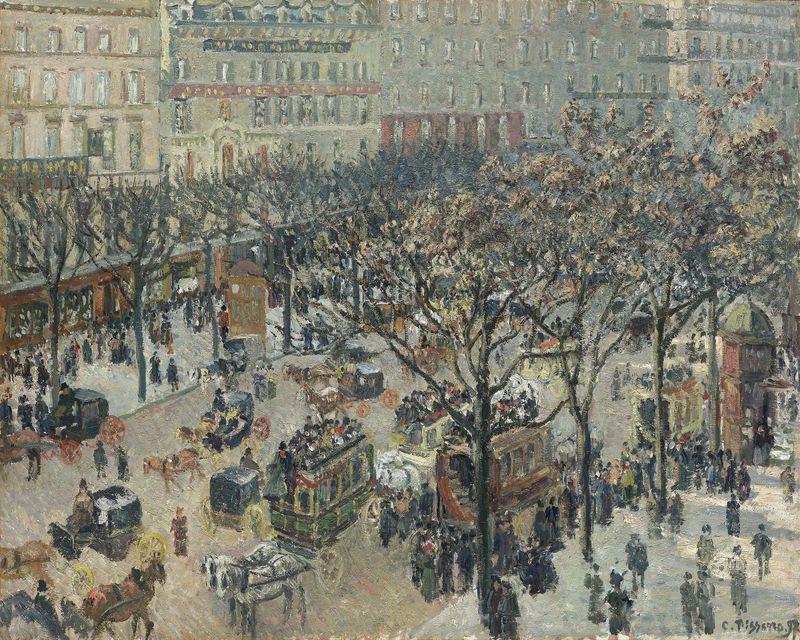
Boulevard des Italiens,Morning_Sunlight
Camille Pissarro
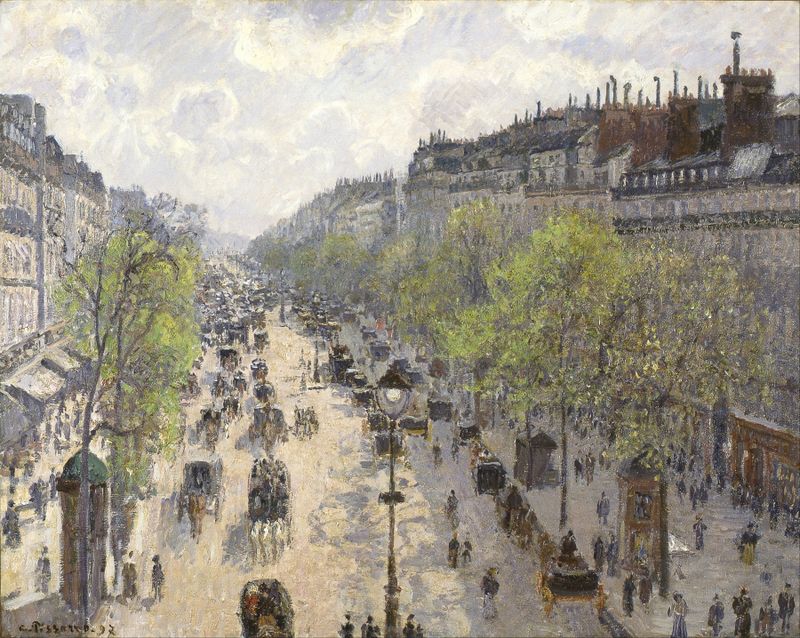
Boulevard Montmartre, Spring
Camille Pissarro
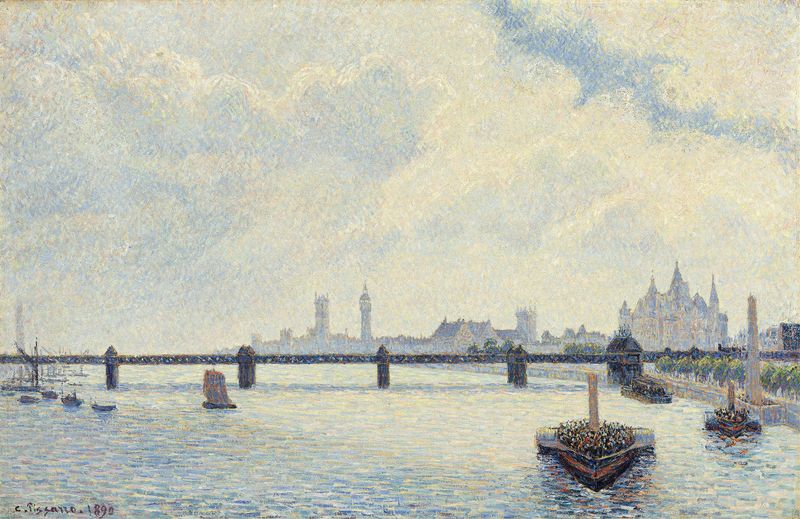
Charing Cross Bridge,London
Camille Pissarro
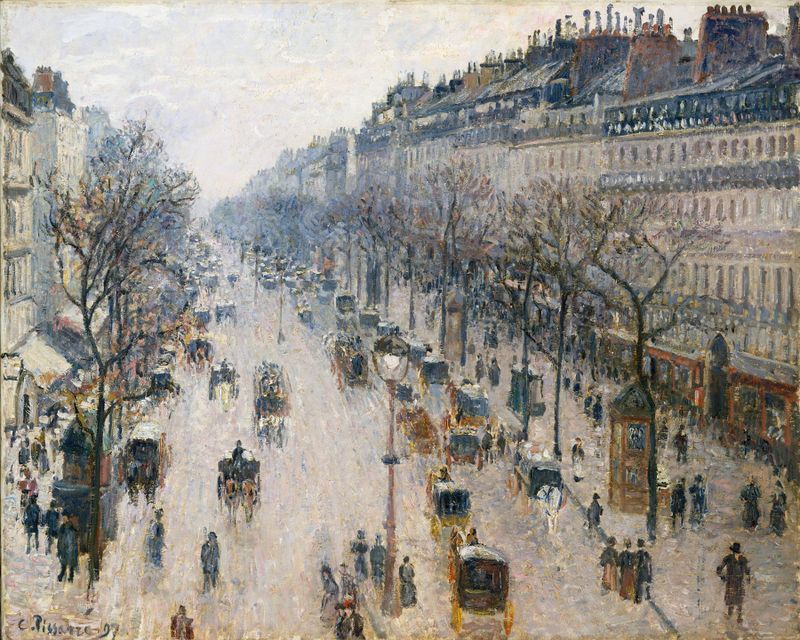
The Boulevard Montmartre on a Winter Morning
Camille Pissarro
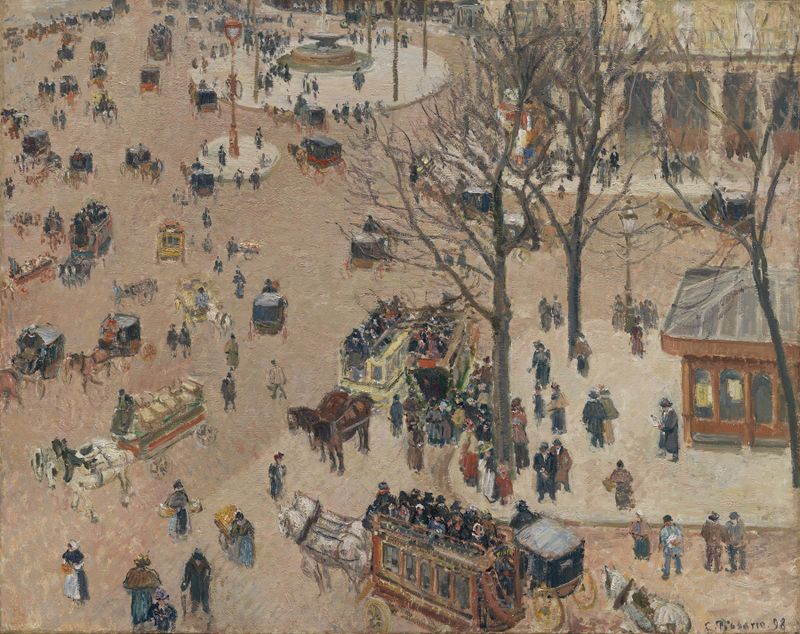
La Place du Théâtre Français
Camille Pissarro

Rue Saint-Lazare, Paris
Camille Pissarro
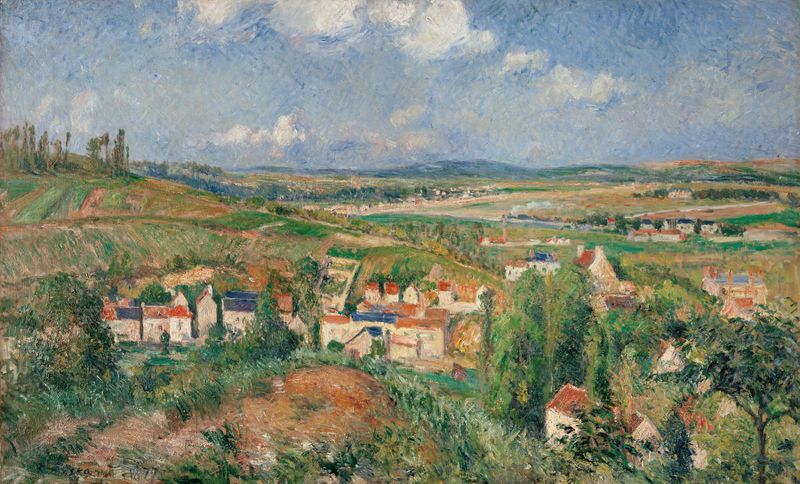
L’hermitage En Été, Pontoise
Camille Pissarro

Place du Theatre Francais,Fog Effect
Camille Pissarro
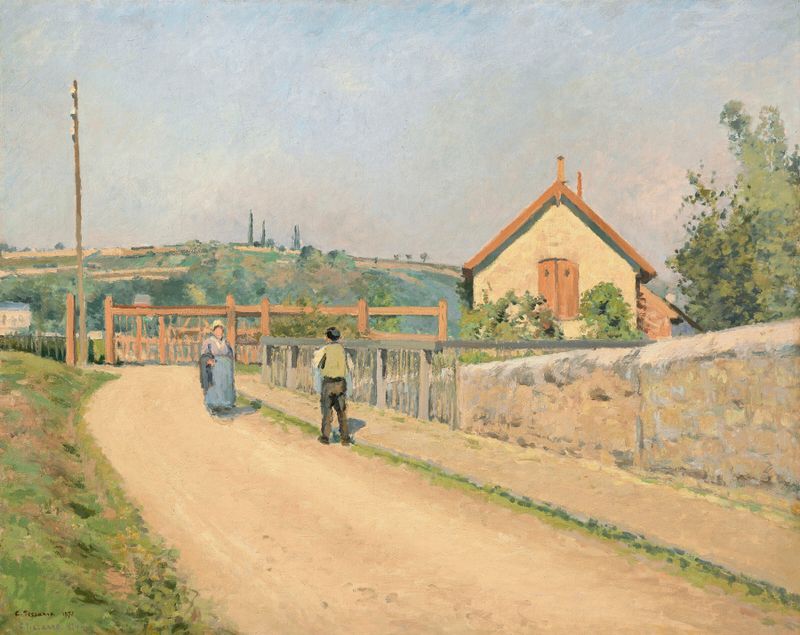
La barrière du chemin de fer, aux Pâtis près Pontoise
Camille Pissarro
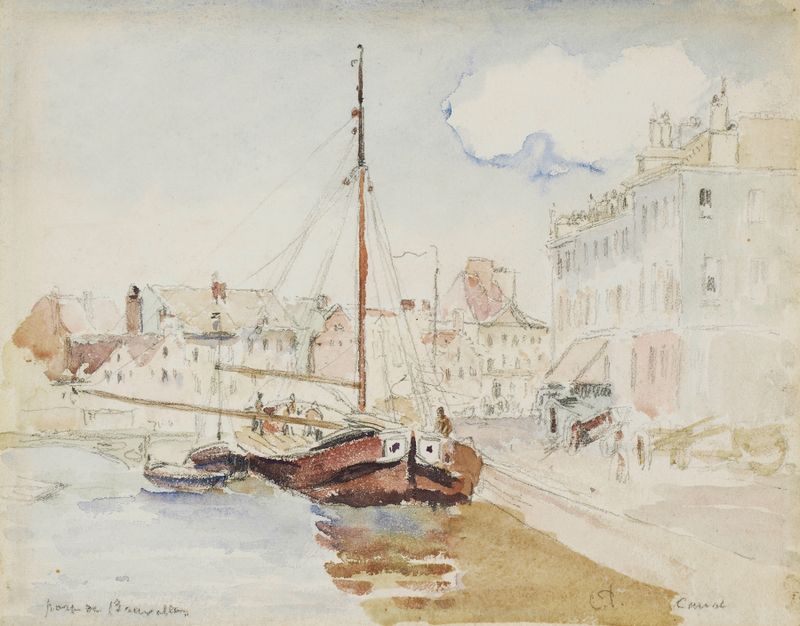
Port de Bruxelles
Camille Pissarro





