
A Man holding a Platter of Fish — History & Facts
What first catches the eye in A Man holding a Platter of Fish is the direct, almost unblinking gaze of the sitter—a man who offers both his catch and the coins he has earned for it, as if inviting the viewer into a quiet transaction. The painting draws you in with its calm, earthy palette and the careful play of light across the man’s face and hands. His broad-brimmed hat throws a shadow that frames his features, while the crisp white of his collar stands out against the sober brown of his coat.
The fish, rendered with a glistening realism, spill from the platter toward us, their silver bodies echoing the coins in his outstretched palm. Every detail, from the rough texture of his hands to the subtle weariness in his eyes, speaks of a life shaped by honest labor and the daily rhythms of trade. Painted in 1652, this work belongs to the world of the Dutch Golden Age, when artists like Aelbert Cuyp found beauty and dignity in the ordinary. In bustling towns like Dordrecht, portraits of tradesmen and market scenes became a celebration of civic pride and the prosperity of a rising middle class.
Such paintings were often commissioned by guilds or private patrons eager to honor the trades that sustained their communities. Today, A Man holding a Platter of Fish resides in the Dordrechts Museum, a quiet testament to an era when the fruits of daily work were worthy of the painter’s—and the viewer’s—closest attention. Look again at the man’s open hand: the exchange he proposes is not just of fish for coins, but of a moment of recognition across centuries.
More Artworks by Aelbert Cuyp

The Maas at Dordrecht
Aelbert Cuyp
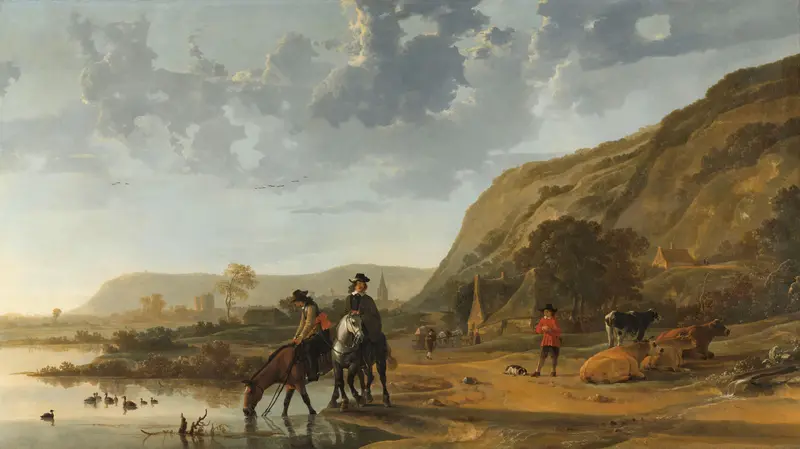
River Landscape with Riders
Aelbert Cuyp

The Maas at Dordrecht
Aelbert Cuyp
Gezicht op Dordrecht
Aelbert Cuyp
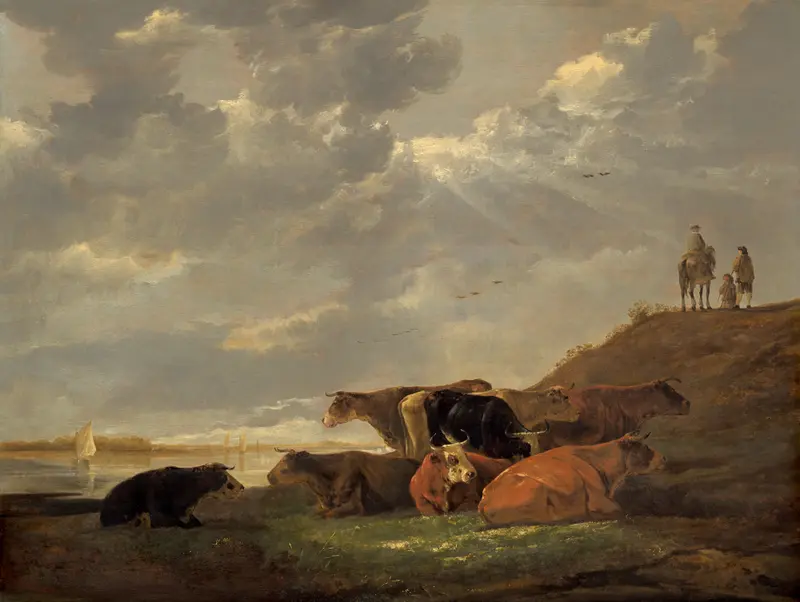
River Landscape with Cows
Aelbert Cuyp
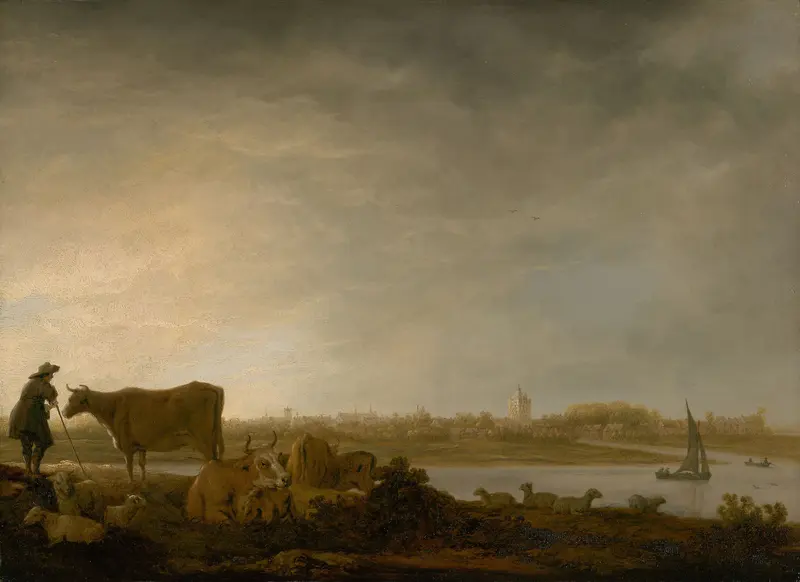
A View of Vianen with a Herdsman and Cattle by a River
Aelbert Cuyp
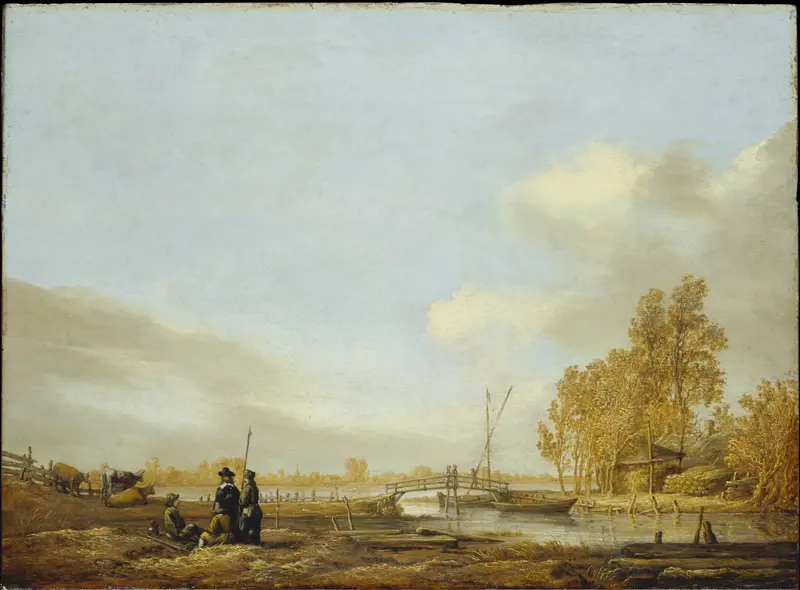
River Landscape with Footbridge
Aelbert Cuyp
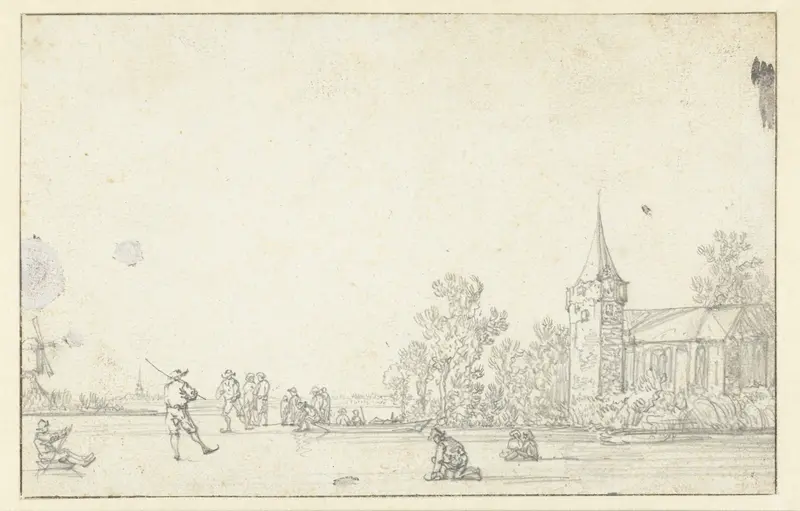
Bevroren rivier met schaatsers bij een kerk
Aelbert Cuyp

Cattle near a River
Aelbert Cuyp
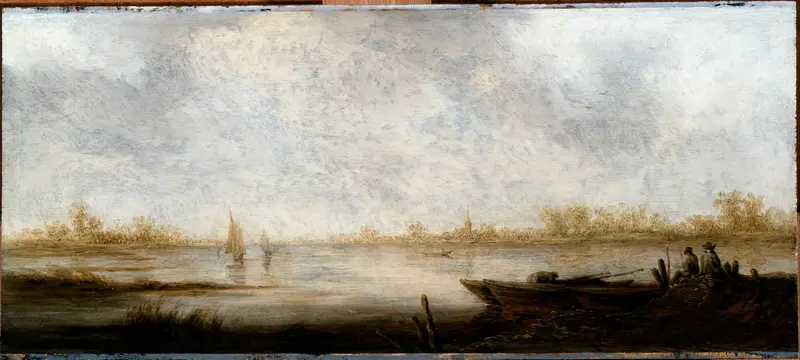
River Landscape
Aelbert Cuyp
More Genre Scene Art

Banquet of the Officers of the St George Civic Guard
Frans Hals

Rembrandt and Saskia in the Scene of the Prodigal Son
Rembrandt van Rijn

Bal du moulin de la Galette
Pierre-Auguste Renoir

Quadrille at the Moulin Rouge
Henri de Toulouse-Lautrec

A Burial at Ornans
Gustave Courbet

When Will You Marry?
Paul Gauguin