
A Marine — History & Facts
This notion resonates deeply in the world of art, where reflection becomes a gentle whisper of the soul. Focus on the serene waters that dominate the canvas, drawing your gaze toward their tranquil surface. Notice the delicate interplay of light and shadow that dances across the water, revealing subtle shades of blue and green, while the soft brushwork evokes a sense of calm. The horizon, where the sky meets the water, teems with layered clouds, infused with warm hues of sunset that illuminate the scene, creating a harmonious balance between nature and the artist's emotional imprint. In the distance, a lone boat patiently drifts, symbolizing solitude and introspection.
This solitary vessel invites contemplation, while the surrounding landscape, with its muted tones, suggests an inviolable peace amid the chaos of life. The contrast between the vibrant sky and the stillness of the water hints at the duality of existence—between the frenetic pulse of the world and the inner tranquility that can be found in moments of reflection. George Inness painted this work around 1874–75 during a period of profound personal growth, embracing a philosophy that blended naturalism with spiritualism. At this time, he was deeply influenced by the principles of the Hudson River School and was exploring the emotional resonance of landscapes.
His commitment to capturing nature's essence became a hallmark of his style, reflecting both his inner life and the broader cultural shifts occurring in the art world.
More Artworks by George Inness
Browse all →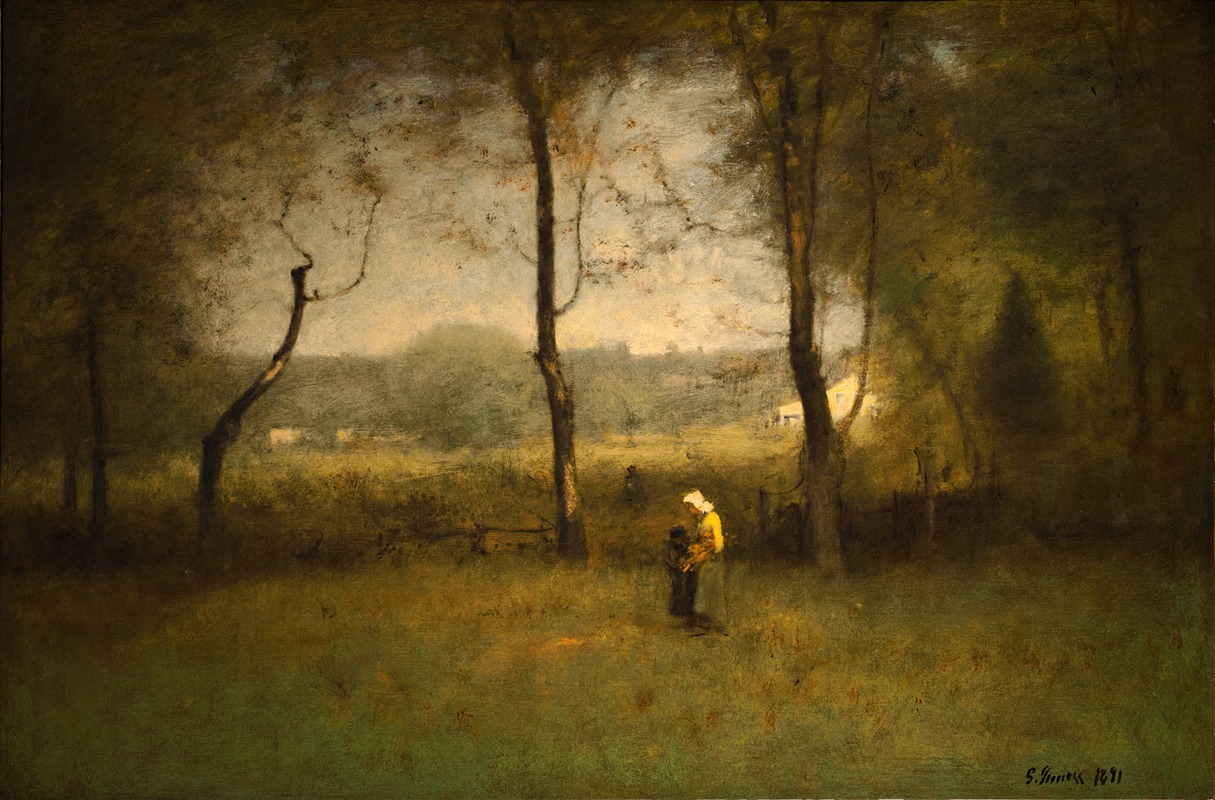
Autumn Woods
George Inness
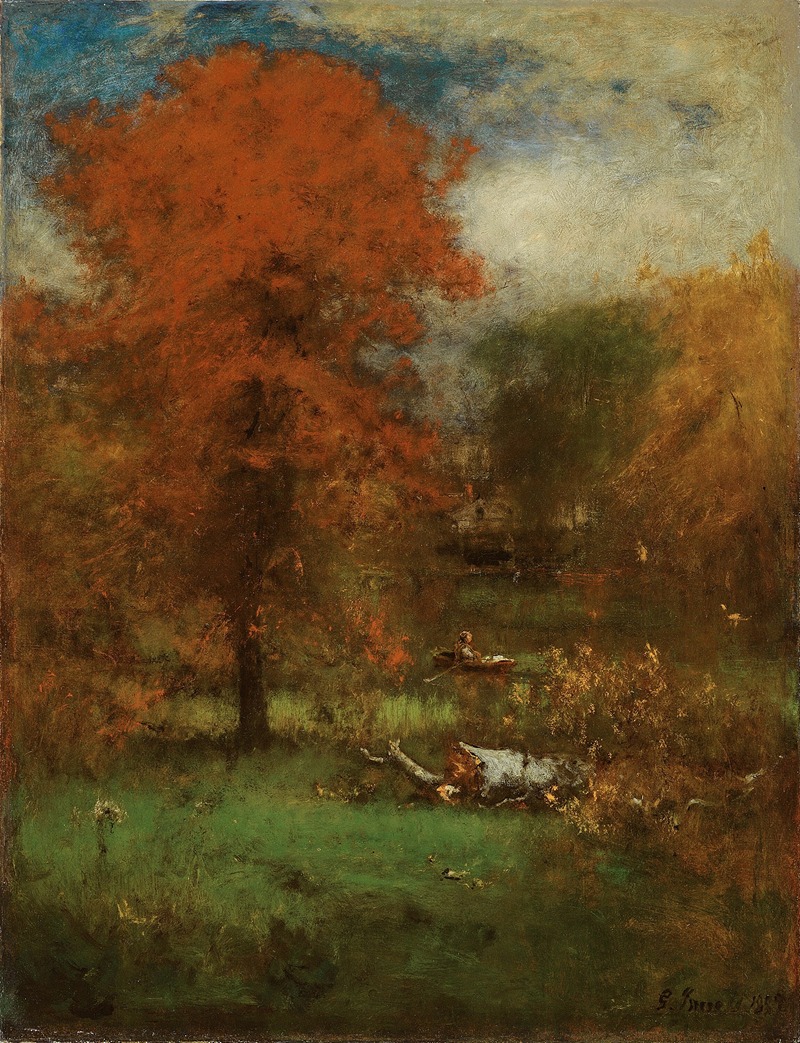
The Mill Pond
George Inness
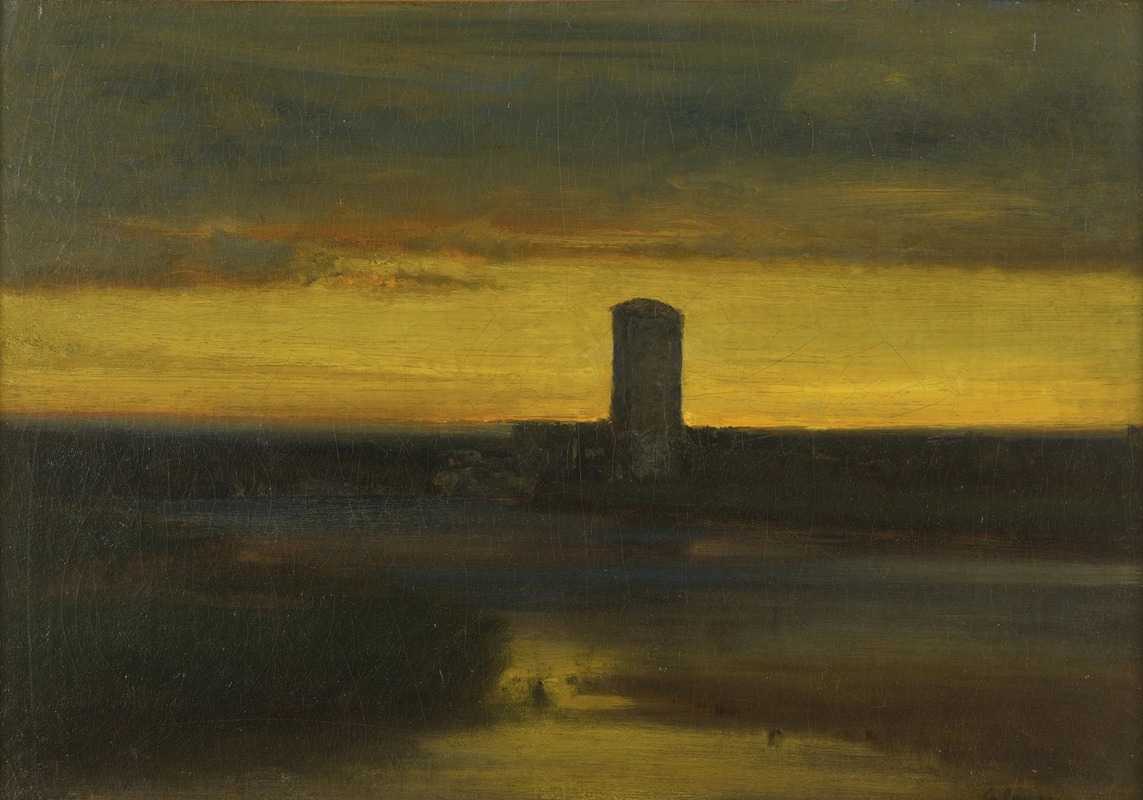
Afterglow
George Inness
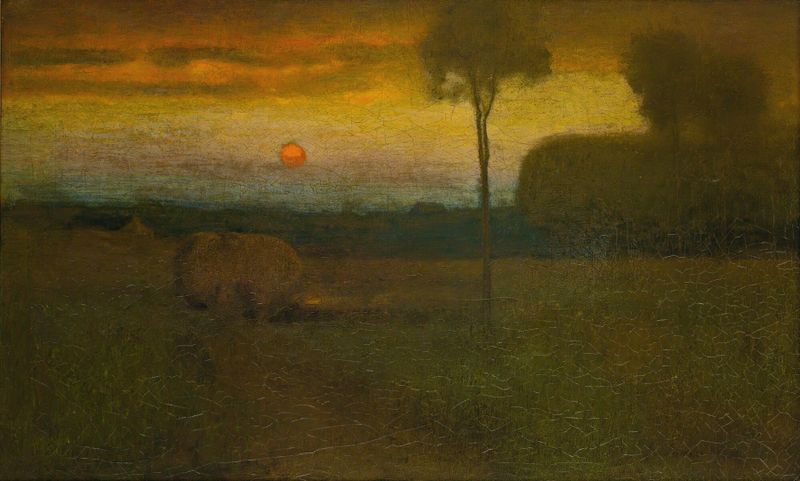
Landscape (Evening Landscape)
George Inness

Montclair
George Inness

View in Berkshire County, Massachusetts, Clearing Off after a September Storm
George Inness

October
George Inness
Landscape, Sunset
George Inness
Afterglow
George Inness
Catskill Mountains
George Inness





