
A Peasant Singing — History & Facts
What first grips the viewer in A Peasant Singing is the sheer abandon with which the figure throws his head back, mouth wide open in mid-song, utterly lost to the world. The peasant’s rough, earth-toned clothes and the battered wooden seat root him firmly in a humble reality, yet his posture—elbow cocked, a jug balanced in his fist—signals a moment of private joy or perhaps drunken bravado. The warm, muted palette and soft, almost smoky light draw the eye to the flushed face and open mouth, making the act of singing the painting’s true subject.
Every brushstroke seems to revel in the textures of worn wood and coarse linen, while the emptiness around the figure isolates him, turning this fleeting moment into something almost monumental. Works like this from the 1630s, especially by Adriaen Brouwer, belong to a tradition of genre painting that flourished in the Low Countries, where scenes of everyday life—often comic, sometimes unflinching—were prized by a new class of collectors. These pictures were rarely grand commissions but rather intimate glimpses into the lives of ordinary people, painted for private enjoyment or the open market. The Staatliche Museen zu Berlin, where this painting now resides, preserves it as a testament to that era’s fascination with the rough music of taverns and the unvarnished realities of peasant life.
In a world where history has kept few traces of such moments, Brouwer’s peasant invites us to listen for the echo of laughter and song in the silence of the gallery.
More Artworks by Adriaen Brouwer

The Smokers
Adriaen Brouwer
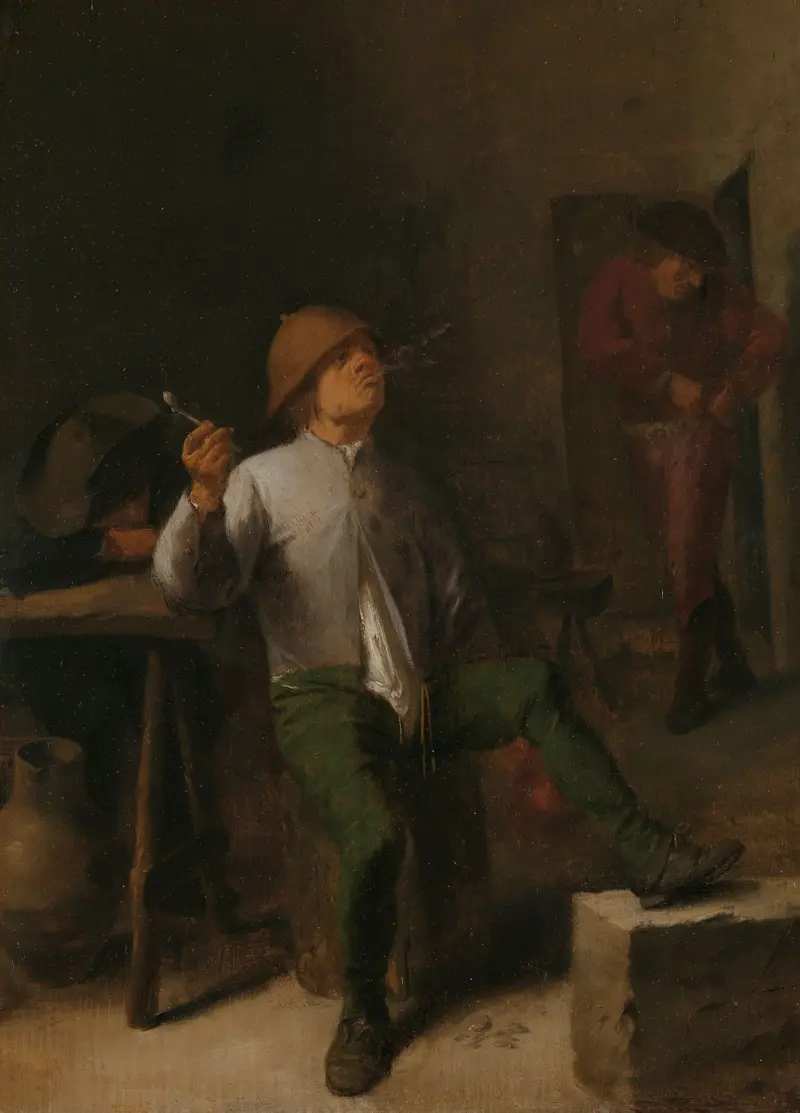
The Smoker
Adriaen Brouwer
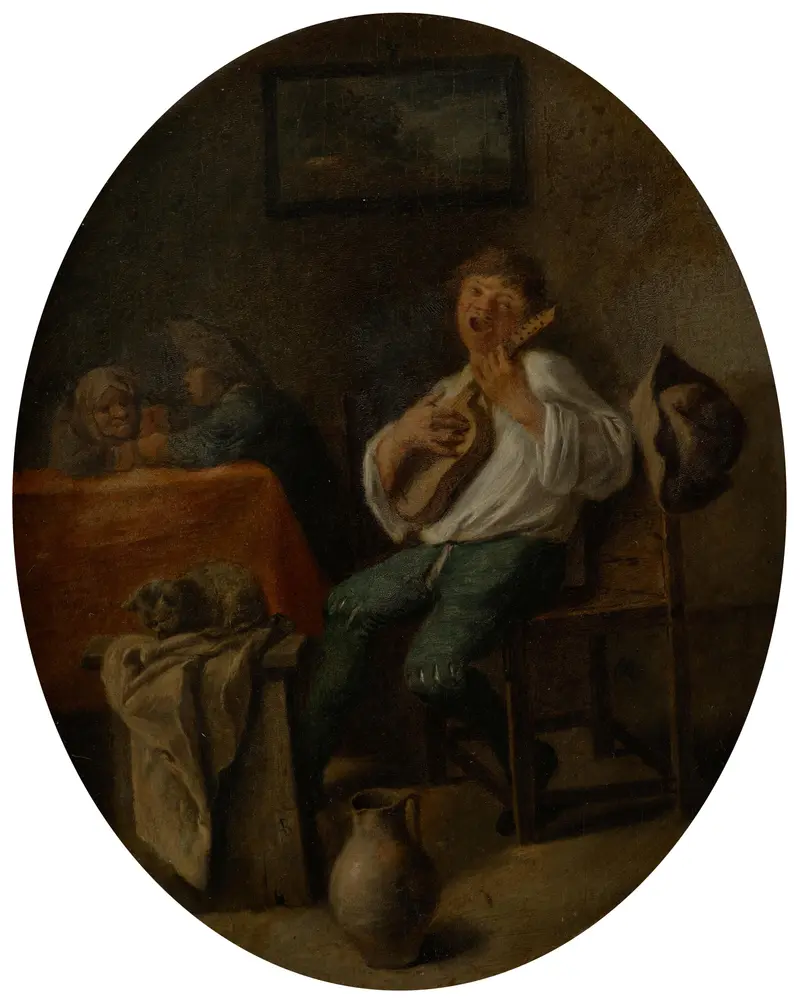
The Guitar Player
Adriaen Brouwer
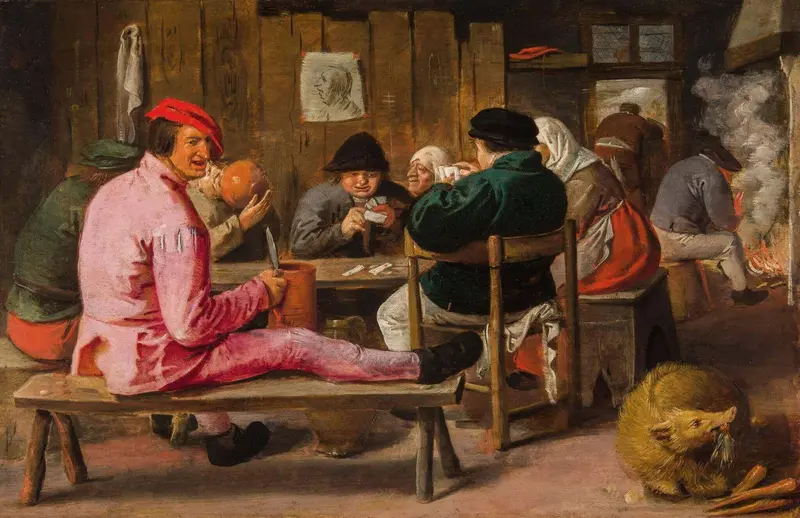
Merry Peasants in an Inn
Adriaen Brouwer
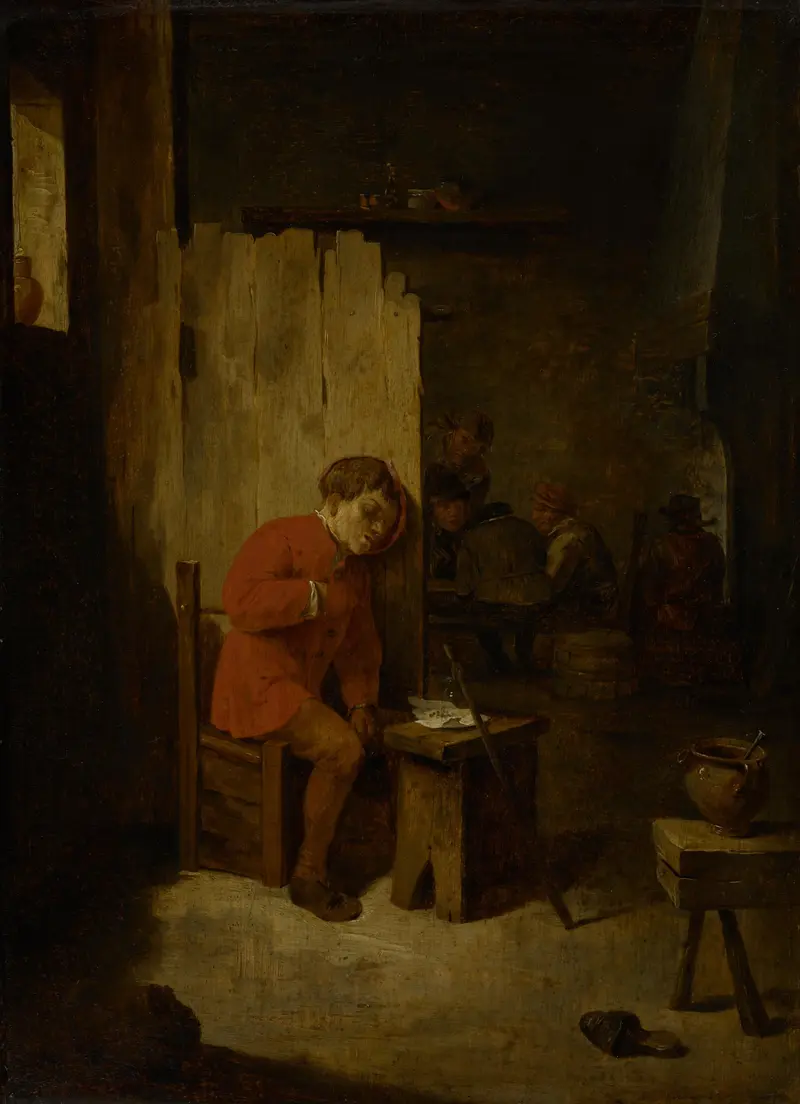
Nachahmer, Schlafender Bauer 853G Gemäldegalerie
Adriaen Brouwer
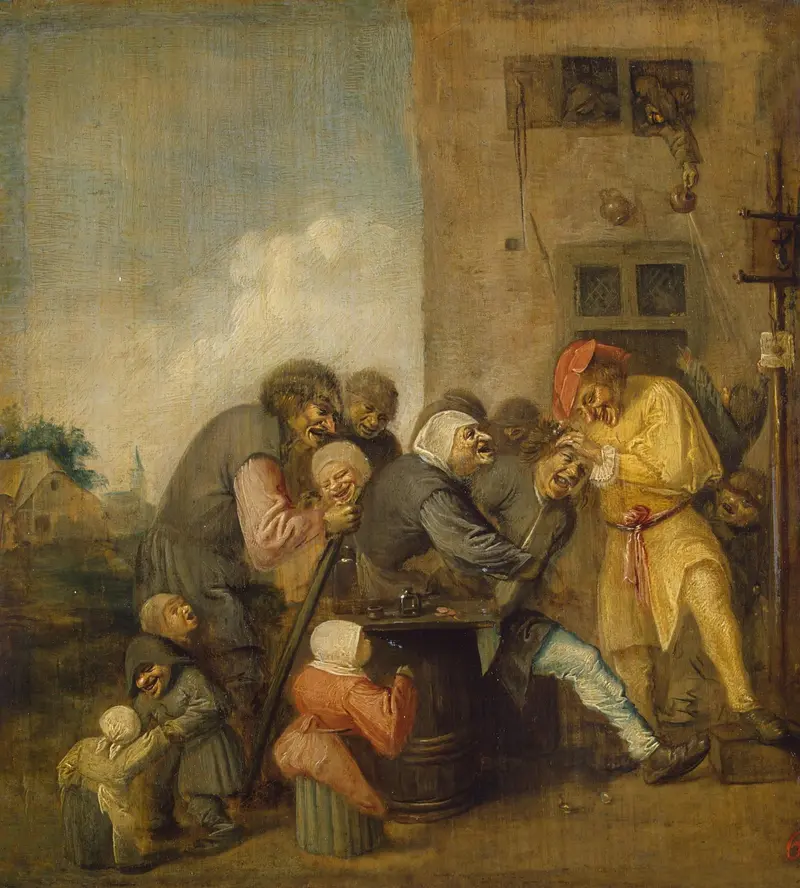
Village Charlatan (The Operation for Stone in the Head)
Adriaen Brouwer
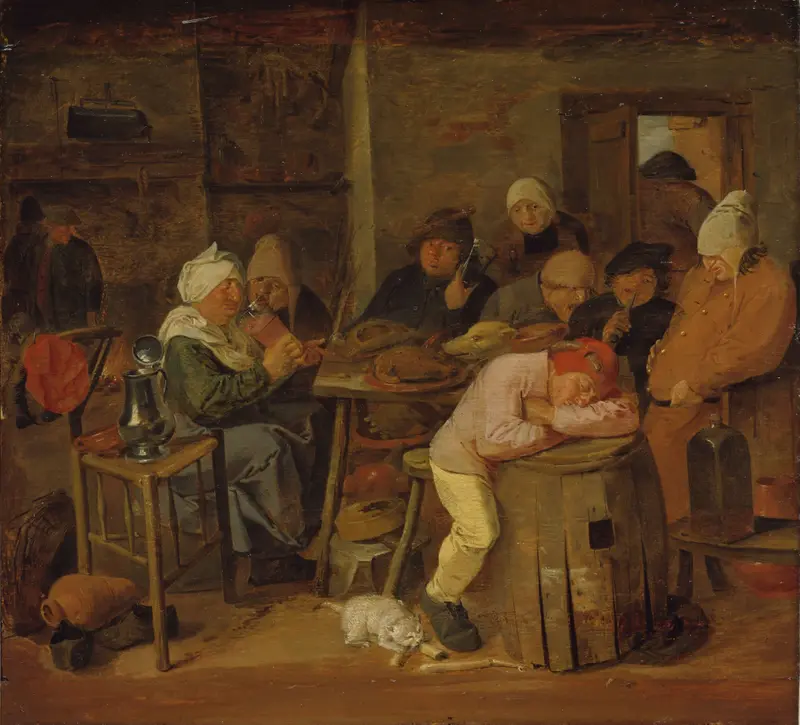
Peasants in an interior (The slaughter feast)
Adriaen Brouwer
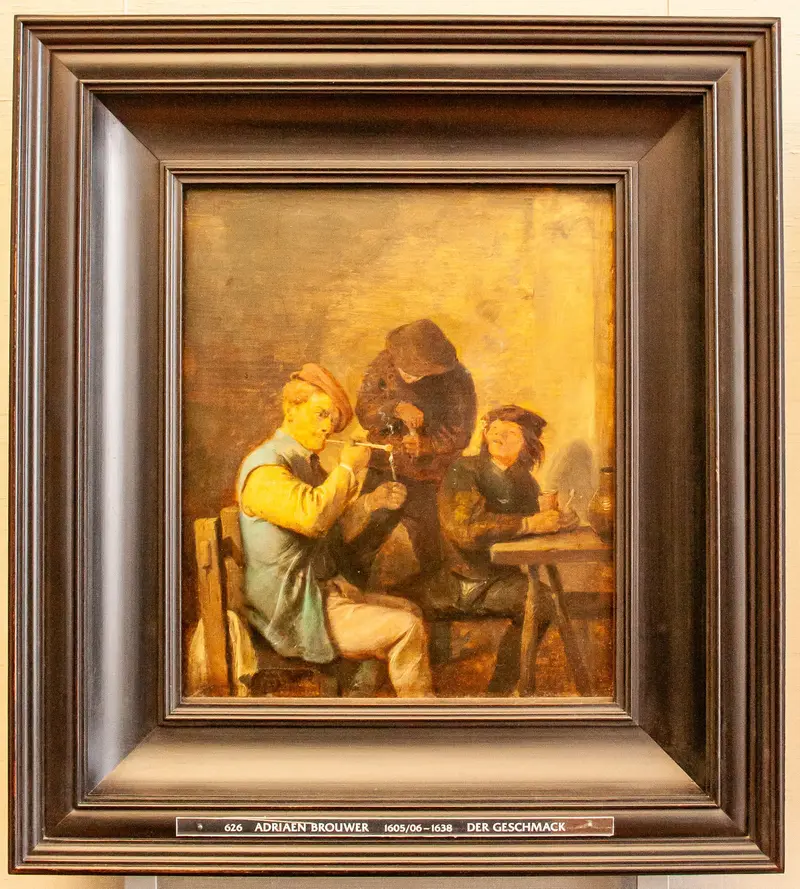
The Taste
Adriaen Brouwer
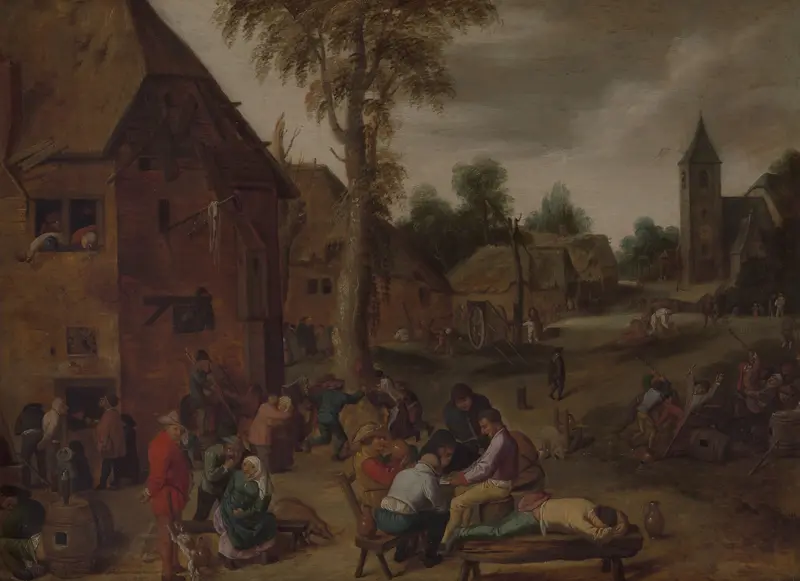
A Fair
Adriaen Brouwer
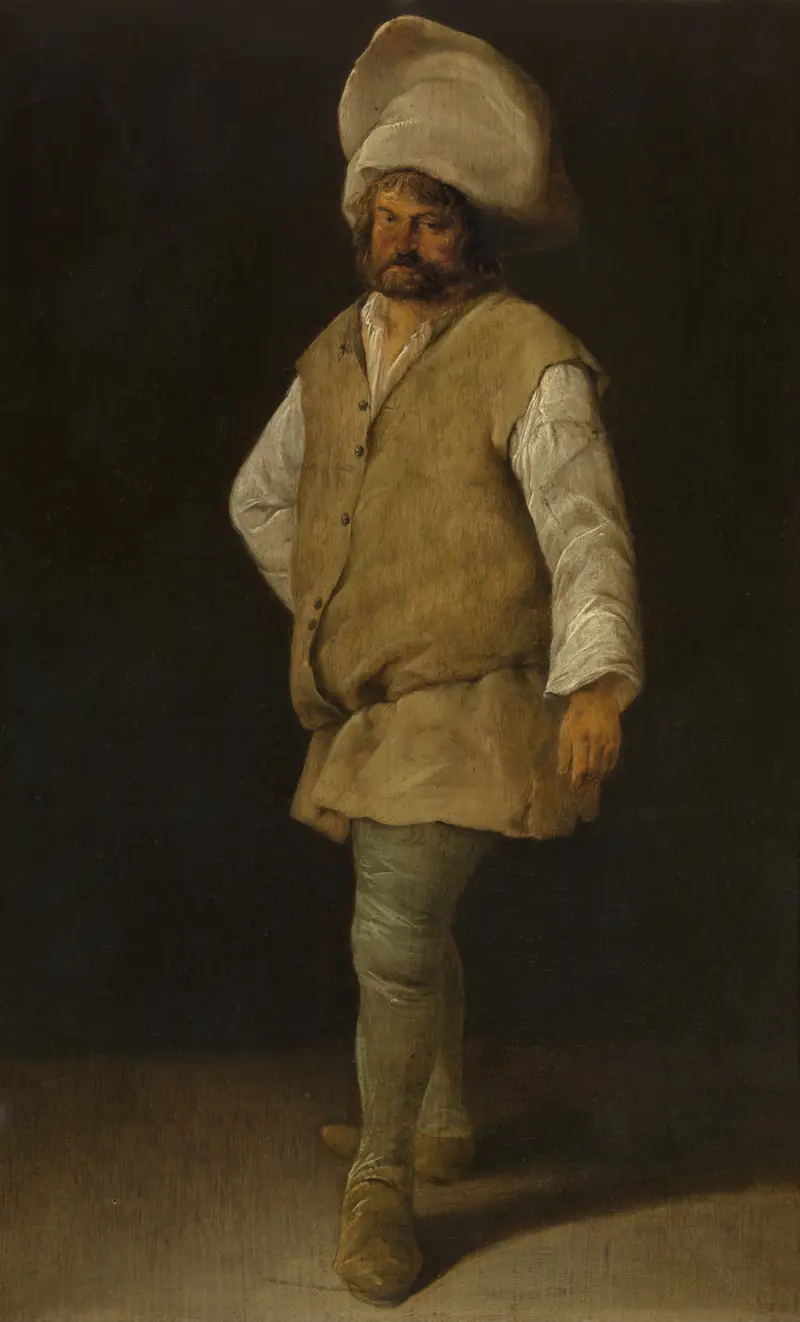
A Porter
Adriaen Brouwer
More Genre Scene Art

Banquet of the Officers of the St George Civic Guard
Frans Hals

Rembrandt and Saskia in the Scene of the Prodigal Son
Rembrandt van Rijn

Bal du moulin de la Galette
Pierre-Auguste Renoir

Quadrille at the Moulin Rouge
Henri de Toulouse-Lautrec

A Burial at Ornans
Gustave Courbet

When Will You Marry?
Paul Gauguin