
Merry Peasants in an Inn — History & Facts
The gaze of the man in pink, caught mid-turn with a sly smile and a jug in hand, pulls the viewer instantly into the raucous, smoky warmth of Merry Peasants in an Inn. Every inch of this cramped tavern pulses with life: the cards clutched in greasy fingers, the laughter curling around the table, the fire stoked in the corner, and even the piglet gnawing at scraps on the floor. Brouwer’s brush leads us from the foreground’s brash pink and red to the shadowy recesses, where figures huddle and the air thickens with drink and woodsmoke.
The painter’s eye for gesture is sharp—the way a knife is poised, the way a jug is tipped, the conspiratorial hunch of shoulders over cards—each detail a clue to the rough camaraderie and fleeting joys of this world. This is the world of early seventeenth-century Flanders, where scenes of peasant revelry became a favored subject for collectors and connoisseurs alike. Artists like Adriaen Brouwer specialized in these intimate, earthy glimpses of everyday life, often painted on a small scale for private enjoyment rather than grand display. Such works captured not only the humor and humanity of their subjects but also a subtle social commentary—inviting viewers to laugh, judge, or perhaps recognize themselves in the rowdy company.
The documented journey of this particular painting, from private German hands in the late twentieth century to Belgian collections and sales, is a reminder that history has kept few traces of its earliest admirers. Yet the scene itself endures, as lively and immediate as the day it was painted—challenging us to linger, to listen, and to join the game.
Sources: Wikidata Q87112951 · Image source (Wikimedia Commons)
More Artworks by Adriaen Brouwer

The Smokers
Adriaen Brouwer
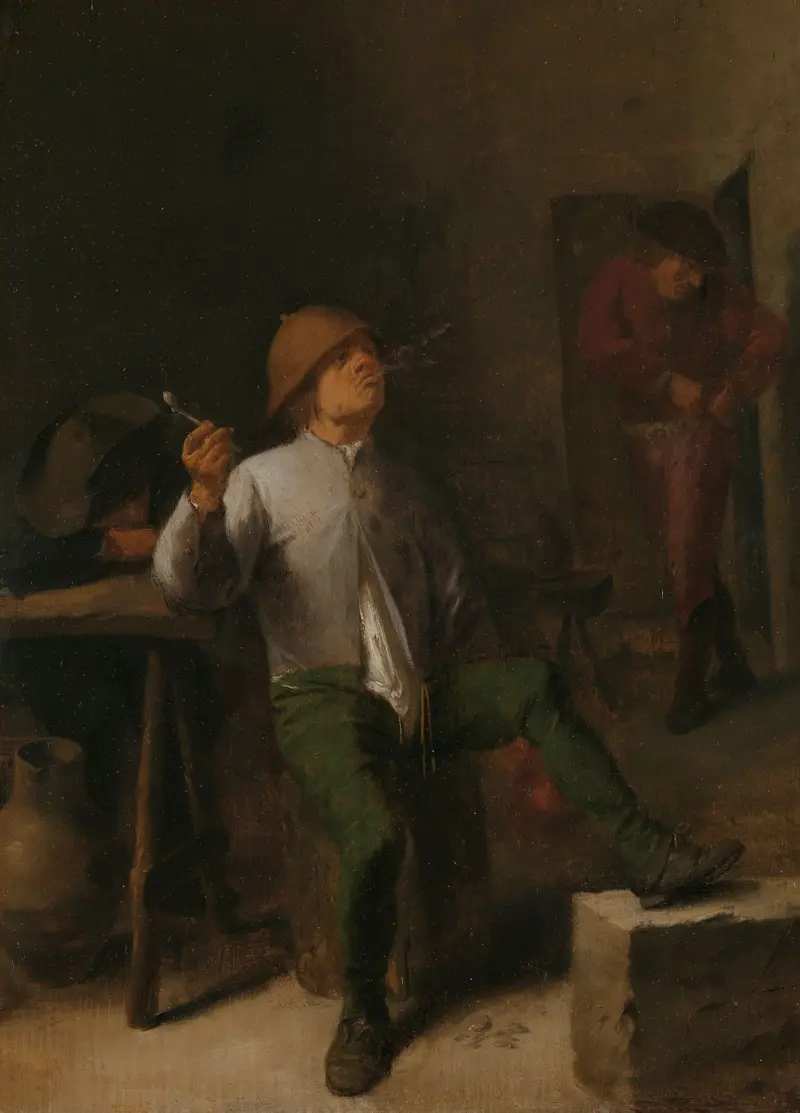
The Smoker
Adriaen Brouwer
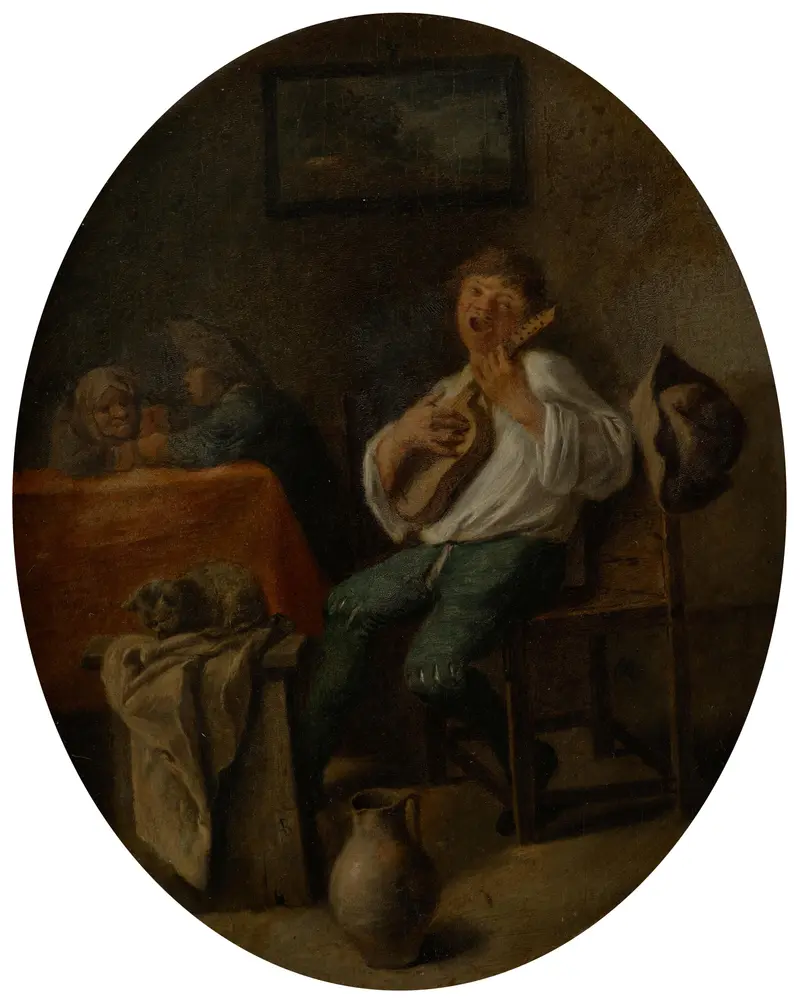
The Guitar Player
Adriaen Brouwer
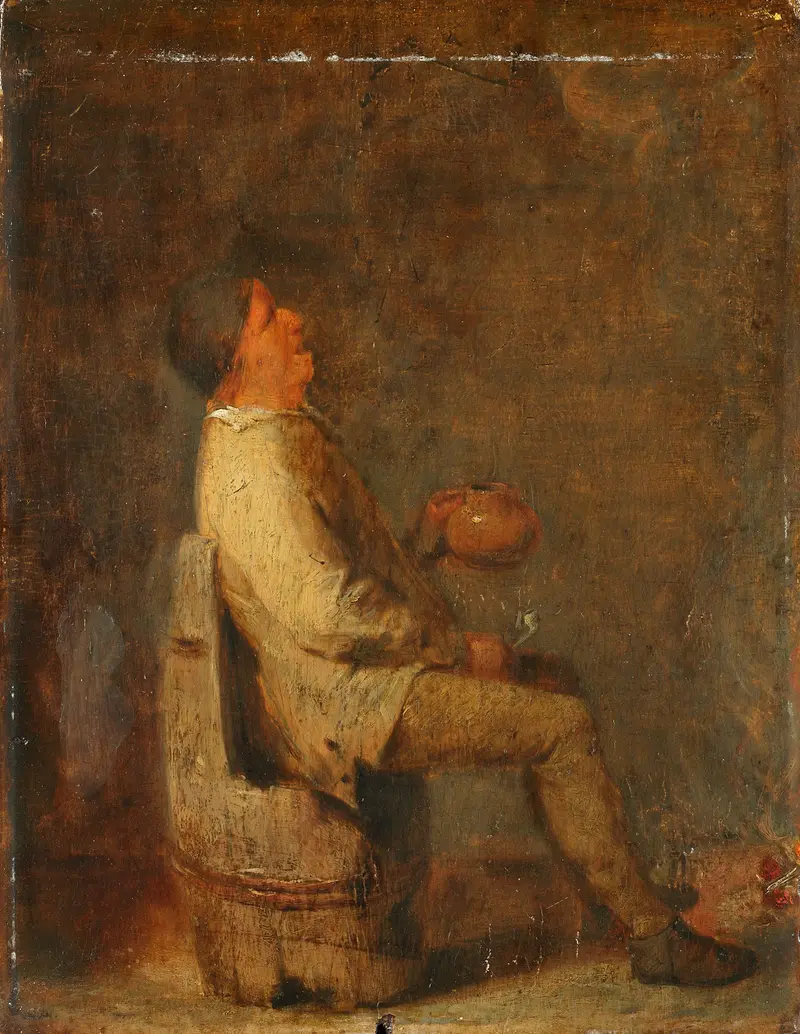
A Peasant Singing
Adriaen Brouwer
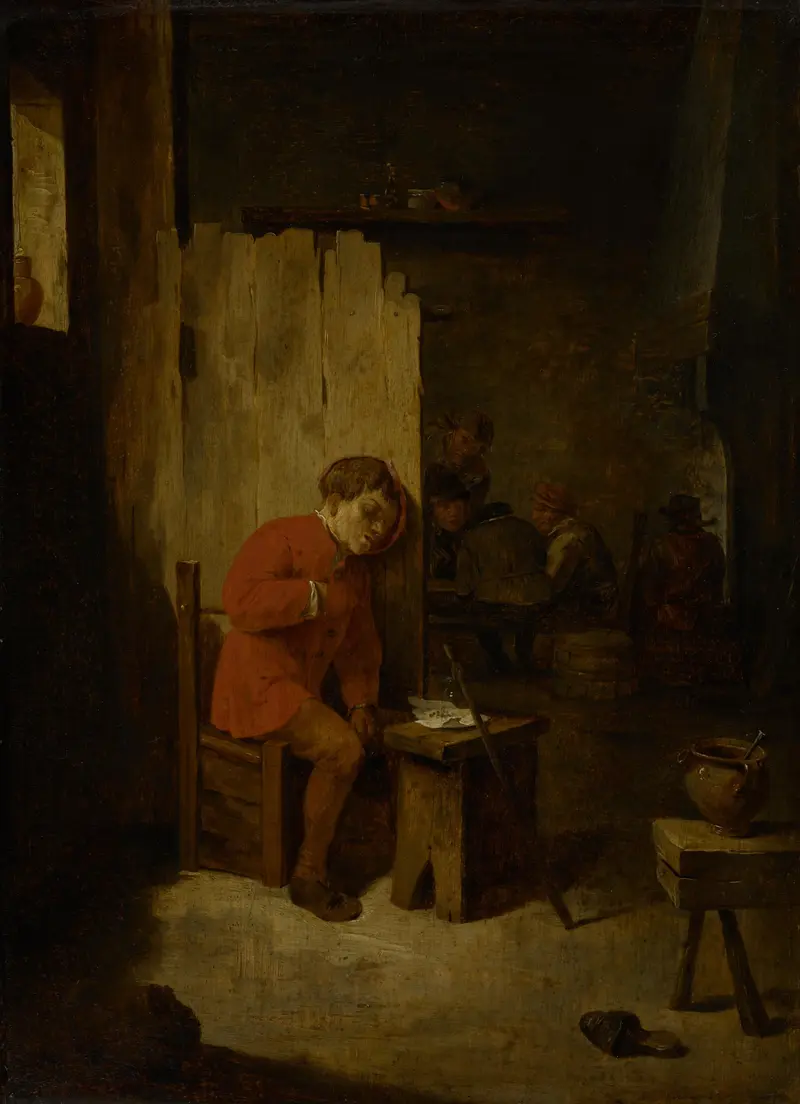
Nachahmer, Schlafender Bauer 853G Gemäldegalerie
Adriaen Brouwer
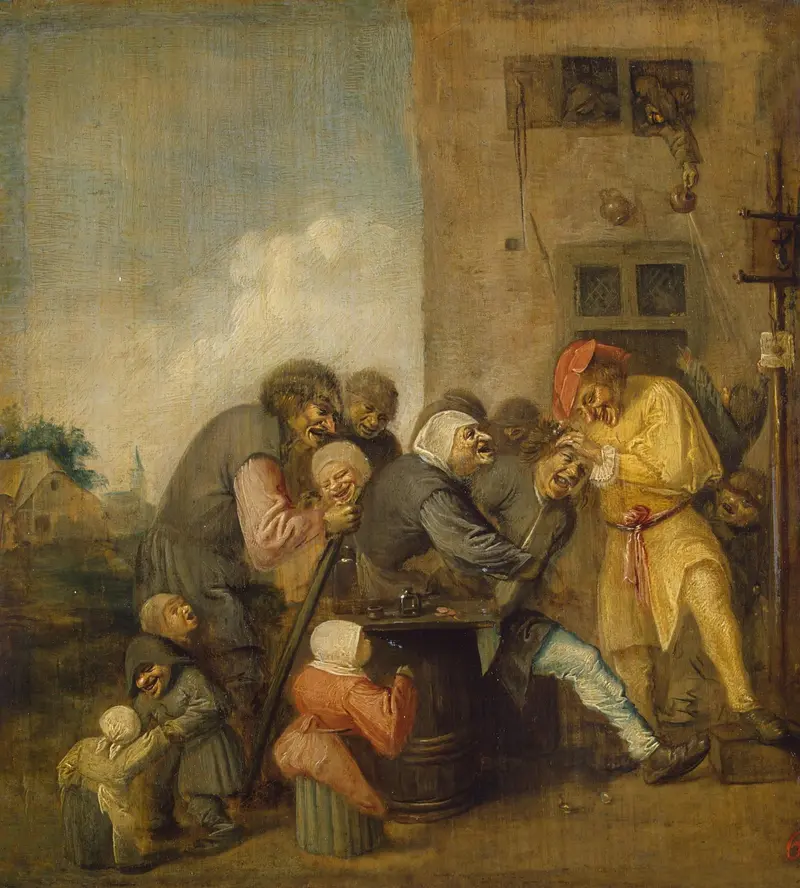
Village Charlatan (The Operation for Stone in the Head)
Adriaen Brouwer
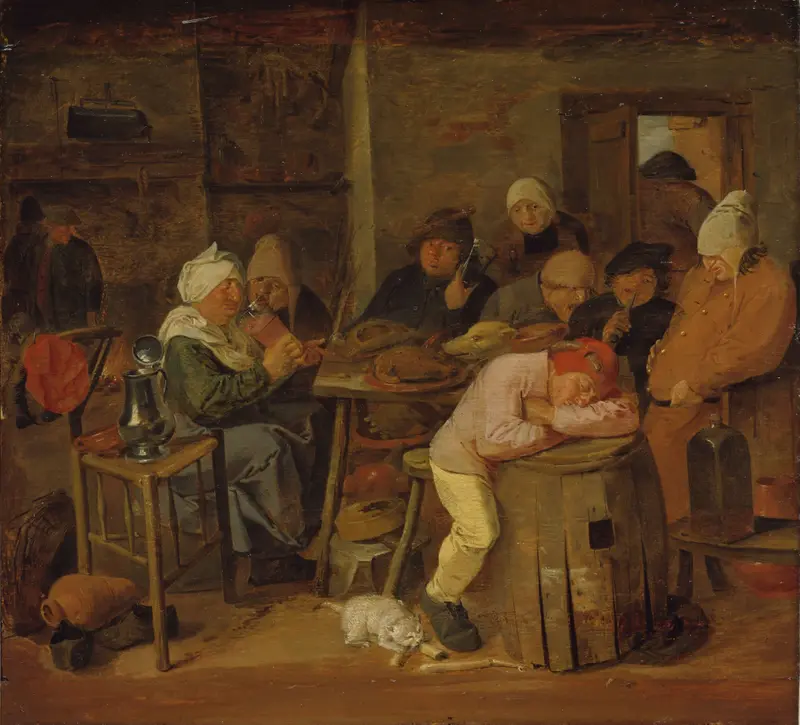
Peasants in an interior (The slaughter feast)
Adriaen Brouwer
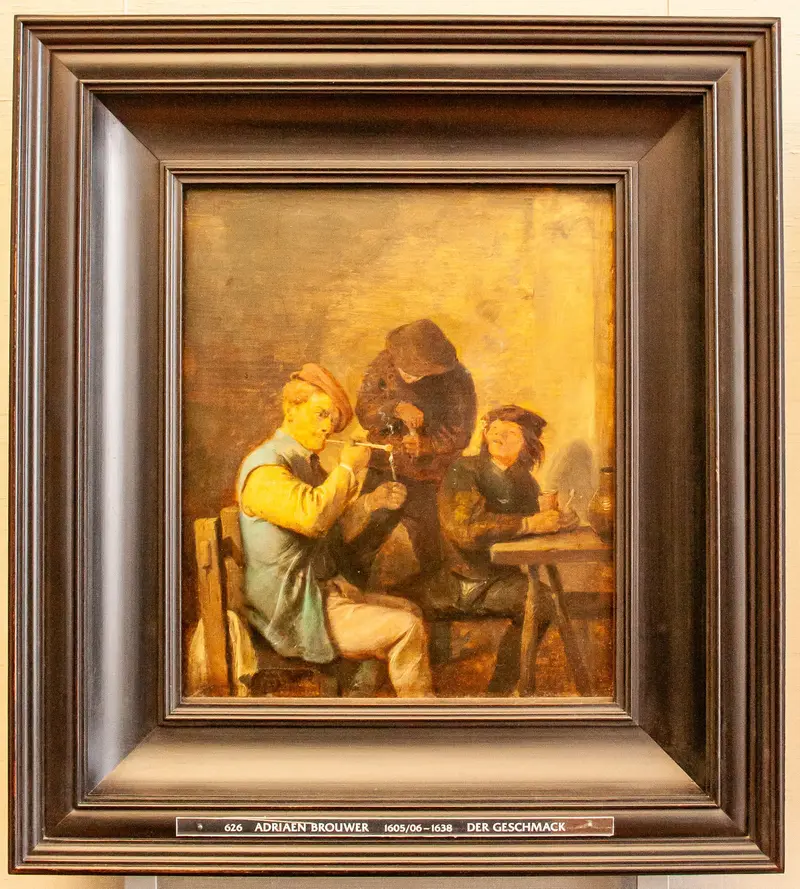
The Taste
Adriaen Brouwer
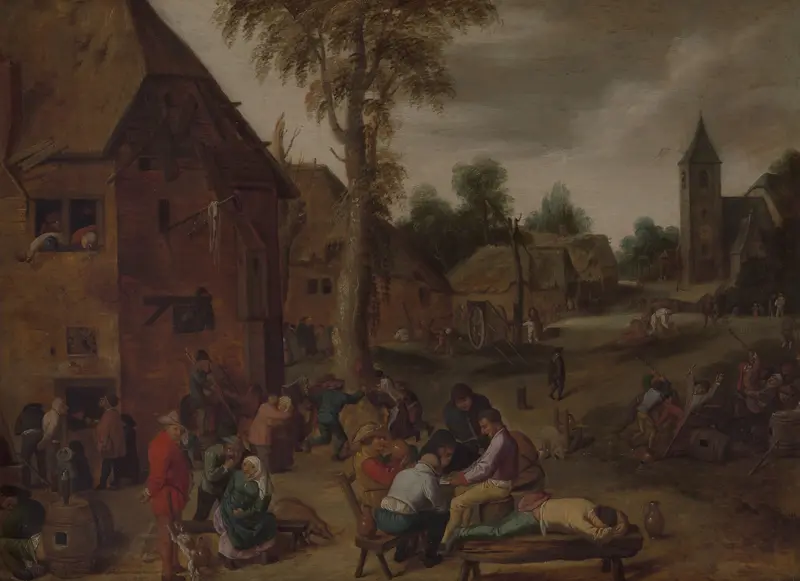
A Fair
Adriaen Brouwer
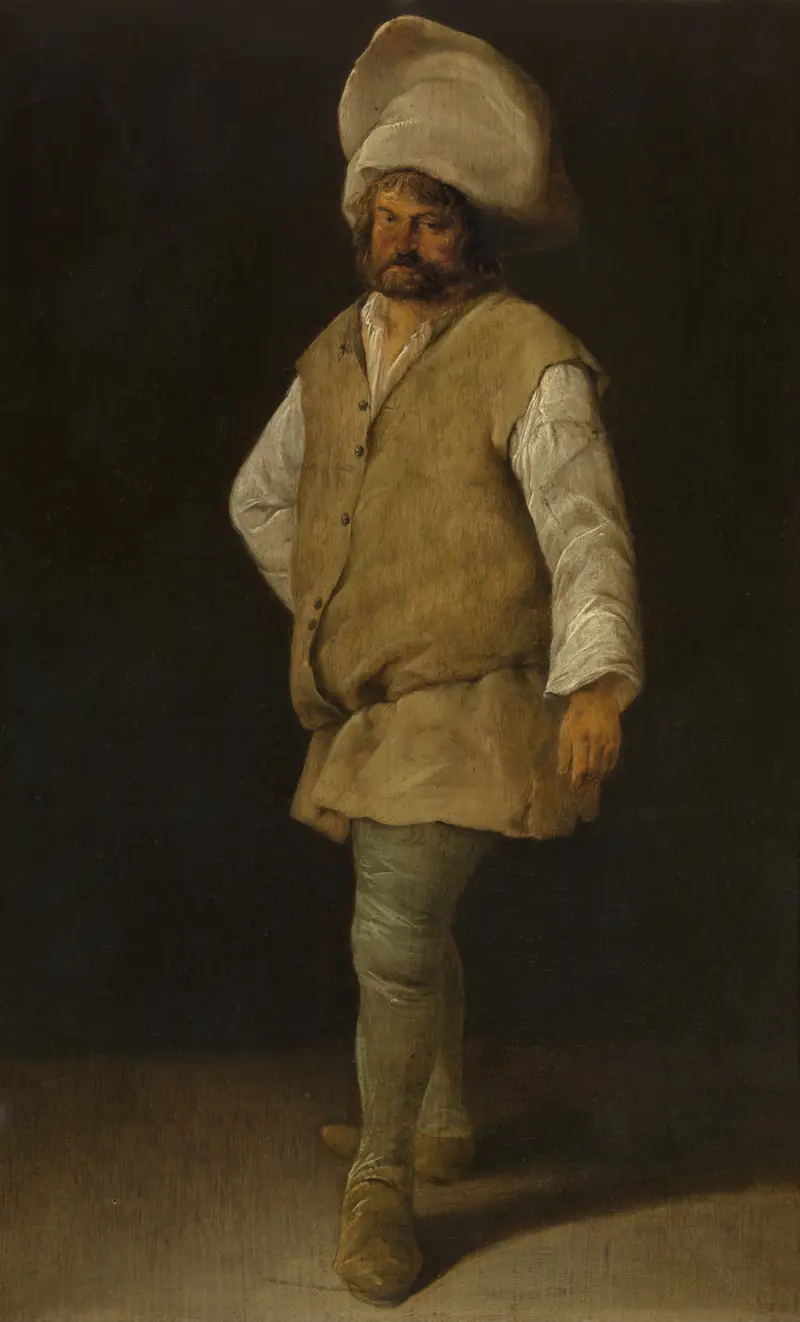
A Porter
Adriaen Brouwer
More Genre Scene Art

Banquet of the Officers of the St George Civic Guard
Frans Hals

Rembrandt and Saskia in the Scene of the Prodigal Son
Rembrandt van Rijn

Bal du moulin de la Galette
Pierre-Auguste Renoir

Quadrille at the Moulin Rouge
Henri de Toulouse-Lautrec

A Burial at Ornans
Gustave Courbet

When Will You Marry?
Paul Gauguin