
A soldier and a waitress in a tavern — History & Facts
What draws the eye first in A soldier and a waitress in a tavern is the glint of sunlight pouring through the open door, catching on the glass the soldier raises in a silent toast. The painter, Abraham van Strij (I), chooses a moment of quiet exchange: the soldier, resplendent in his red coat trimmed with fur and feathered hat, leans back with a relaxed confidence, while the waitress, jug in hand, leans in with a gentle admonition or perhaps a teasing remark. The dog at his feet, nose to the floor, adds a note of domestic disorder, while the clutter of bread, cheese, and crockery on the table speaks to the everyday pleasures of the tavern.
The open door frames a sunlit courtyard, drawing the viewer’s gaze outward to a world bustling with townsfolk, yet the real drama remains in the charged glance between the two figures inside. Painted in 1825, this work stands at the crossroads of Dutch genre tradition and the early nineteenth-century taste for nostalgia. Scenes like this, celebrating the small rituals of daily life, were cherished by collectors and the rising middle class for their familiarity and warmth. By this date, the Dutch Republic’s golden age was long past, but its visual language endured: the careful rendering of textures, the play of light on whitewashed walls, the subtle humor in human gestures.
Abraham van Strij (I) was part of a family of painters who revived and reinterpreted these themes for a new era. Little is recorded about the specific journey of this painting, now found in the Web Gallery of Art collection, but its lively atmosphere invites us to linger, imagining the stories that might unfold just beyond the tavern door.
More Artworks by Abraham van Strij (I)

Abraham van (I) Strij Portret van Petronella van der Koogh (1788 89 1878), echtgenote van Jr. DM 017 1190 Dordrechts Museum
Abraham van Strij (I)

Abraham van (I) Strij Binnenhuis met vrouw en kind DM 847 42 Dordrechts Museum
Abraham van Strij (I)

Hendrik Weymans and his Family
Abraham van Strij (I)
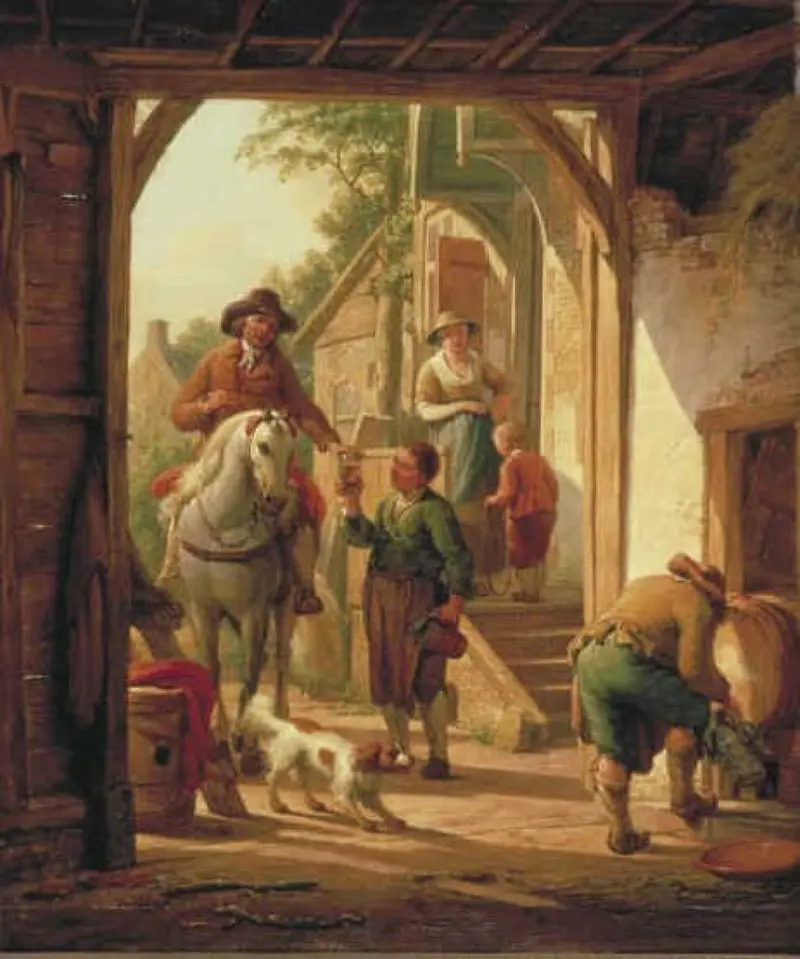
Horseman Resting near a Village Inn
Abraham van Strij (I)
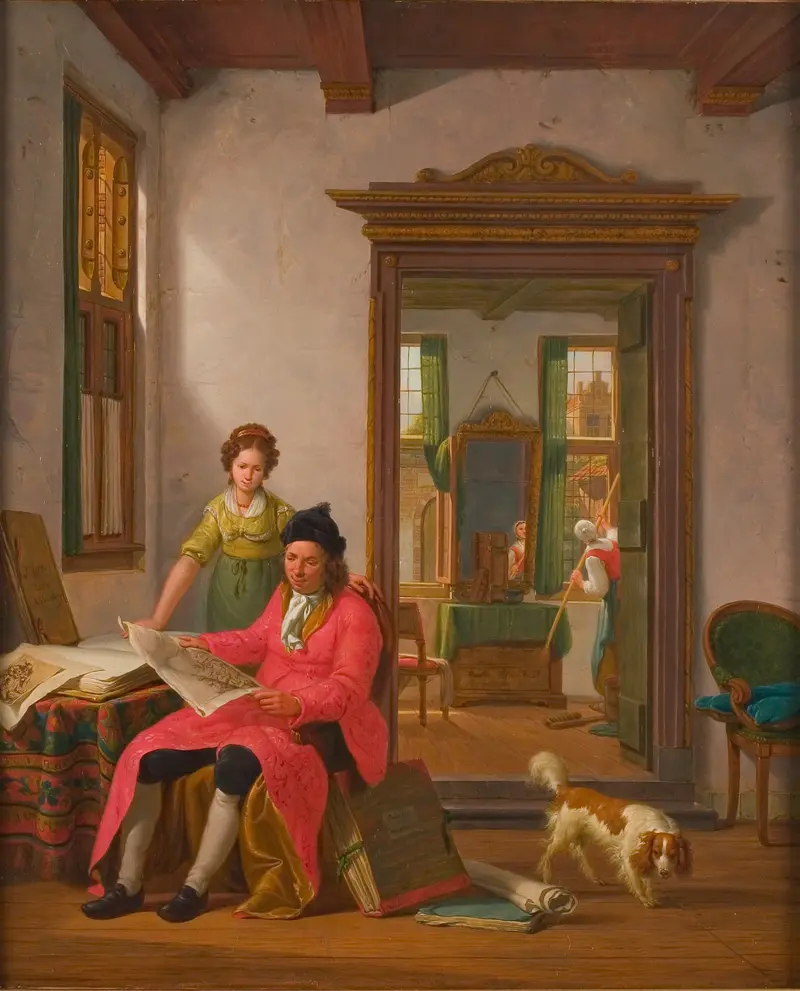
Portrait of an unknown man
Abraham van Strij (I)
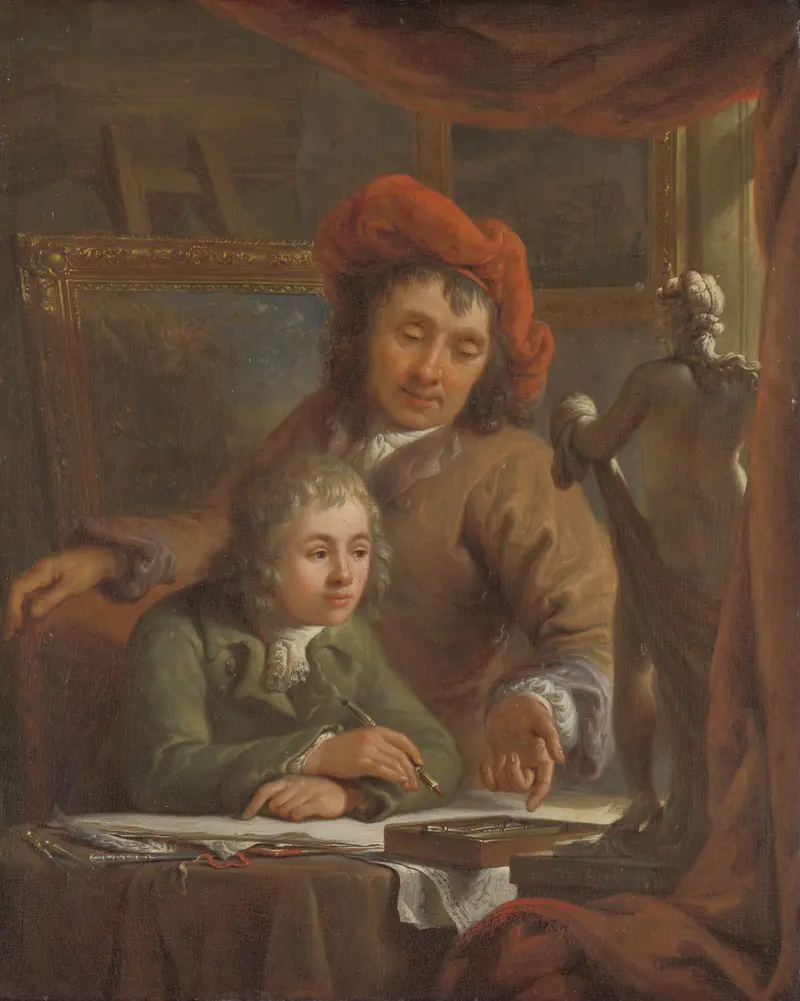
The Drawing Lesson
Abraham van Strij (I)
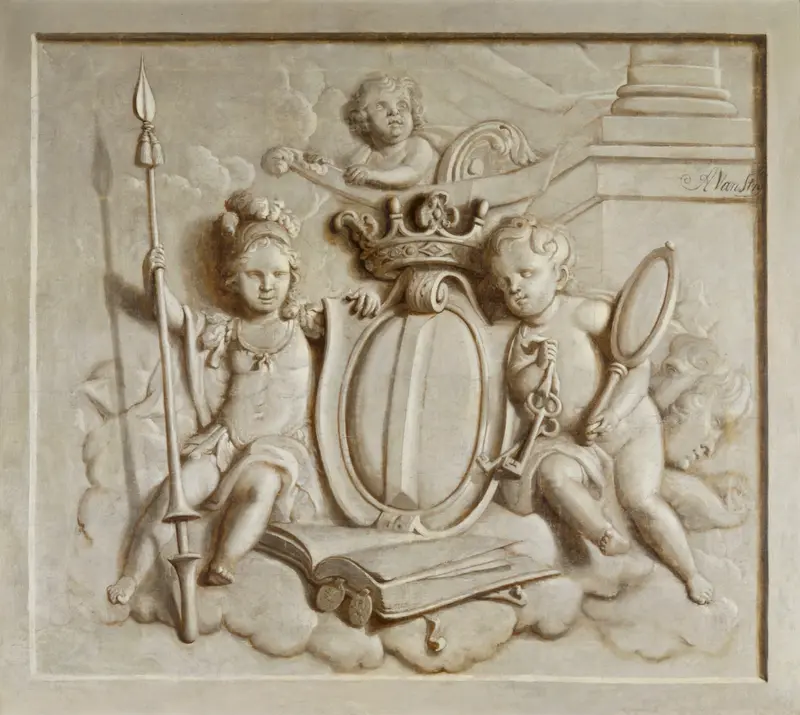
Abraham van (I) Strij Bovendeurstuk met allegorie op de stad Dordrecht DM 017 1188 Dordrechts Museum
Abraham van Strij (I)
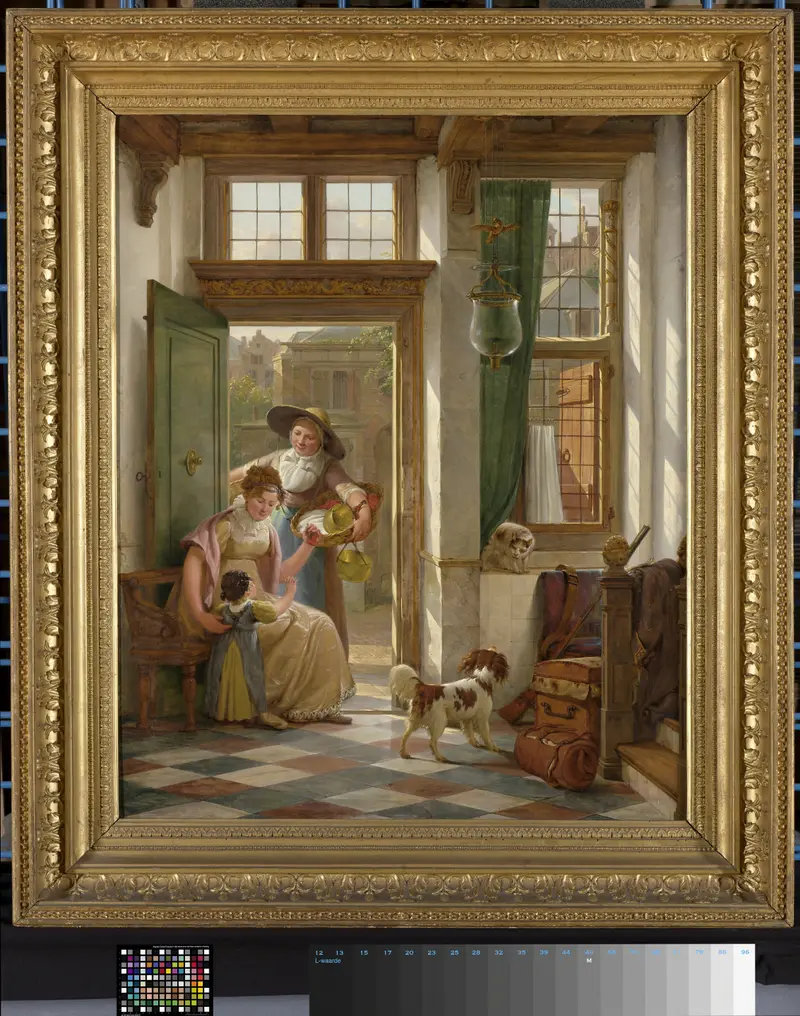
Een kersenverkoopster aan de deur
Abraham van Strij (I)
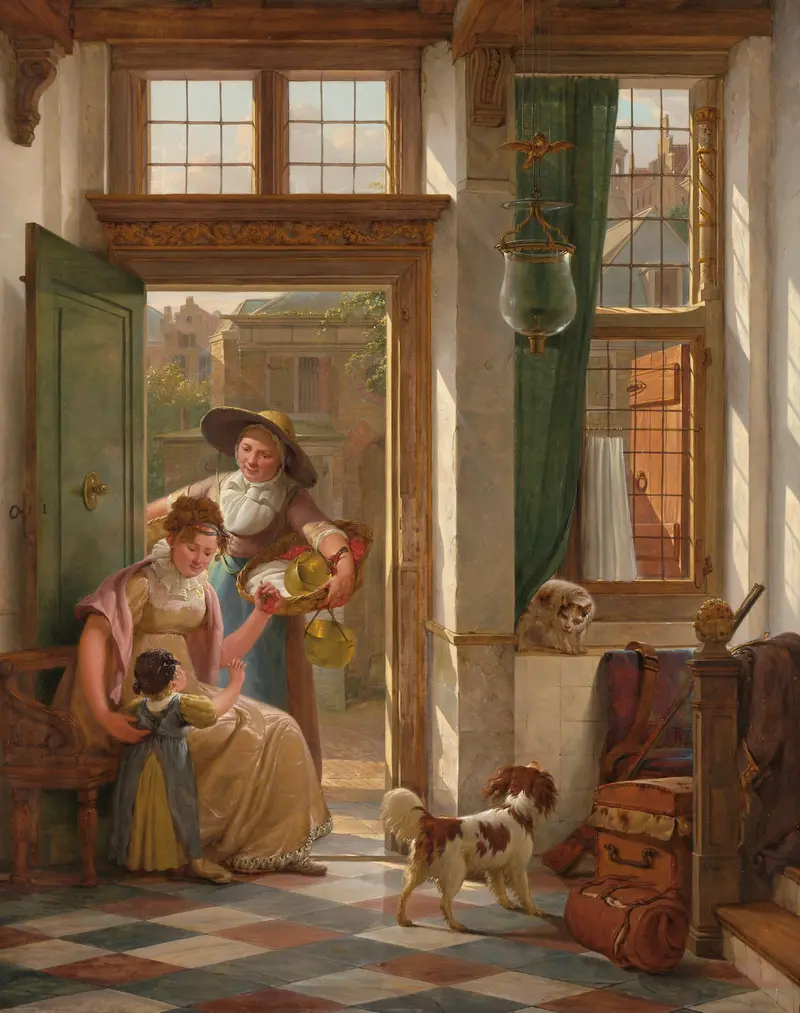
A Cherry Vendor at the Door
Abraham van Strij (I)
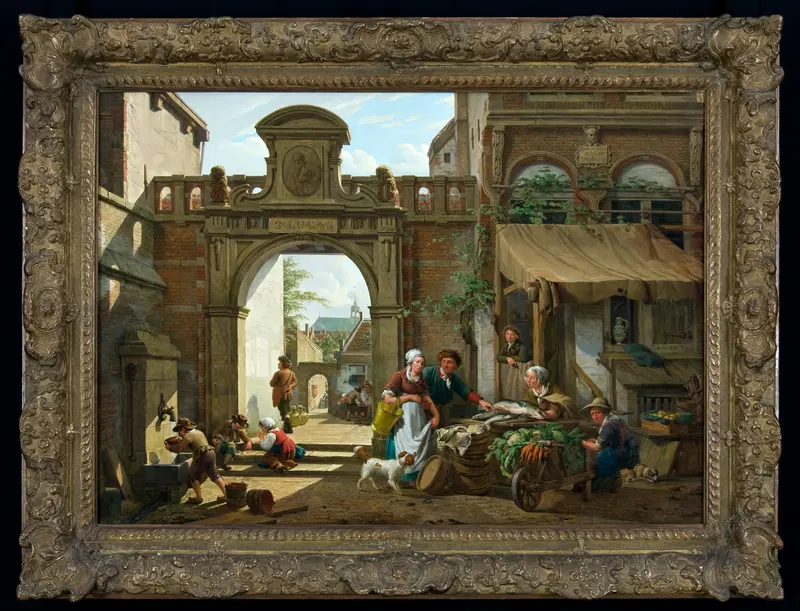
Abraham van (I) Strij Stadsgezicht met het gebouw van het St. Lucasgilde DM 010 950 Dordrechts Museum
Abraham van Strij (I)
More Genre Scene Art

Banquet of the Officers of the St George Civic Guard
Frans Hals

Rembrandt and Saskia in the Scene of the Prodigal Son
Rembrandt van Rijn

Bal du moulin de la Galette
Pierre-Auguste Renoir

Quadrille at the Moulin Rouge
Henri de Toulouse-Lautrec

A Burial at Ornans
Gustave Courbet

When Will You Marry?
Paul Gauguin