
A street in Gilleleje. — History & Facts
What draws the eye first in A street in Gilleleje is the hush—an empty lane winding between thatched cottages, sunlight pooling on pale earth, not a figure in sight. The close, low angle invites you to step into the scene, to feel the rough stones underfoot and the uneven shadows cast by the eaves. The houses huddle close, their whitewashed walls and golden roofs catching the soft northern light, while the fence and facades guide your gaze deeper into the quiet heart of the village.
Every brushstroke seems to weigh the stillness: the windowpanes glint, the thatch bristles with ochre and moss, and the path bends away, promising more just out of sight. Painted between 1884 and 1906, this work belongs to a moment when Danish artists like Albert Gottschalk turned their attention to the country’s rural life and coastal towns, capturing the everyday with a new sense of intimacy. Such street scenes were rarely grand commissions; instead, they answered a growing hunger for images of local identity and the changing rhythms of village life, as modernization crept ever closer. The painting’s journey through time is partly obscured—at one point it was even described as a view of Dragør, a reminder of how easily these quiet places might be mistaken for one another, or lost altogether.
The world it comes from is one of transition, and the painting invites you to linger in its stillness, to notice what endures.
More Artworks by Albert Gottschalk
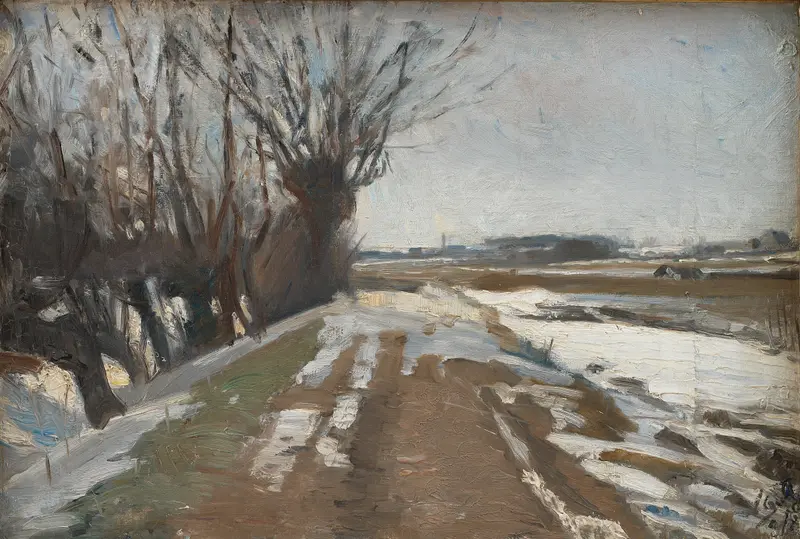
Winter Landscape. Utterslev near Copenhagen
Albert Gottschalk
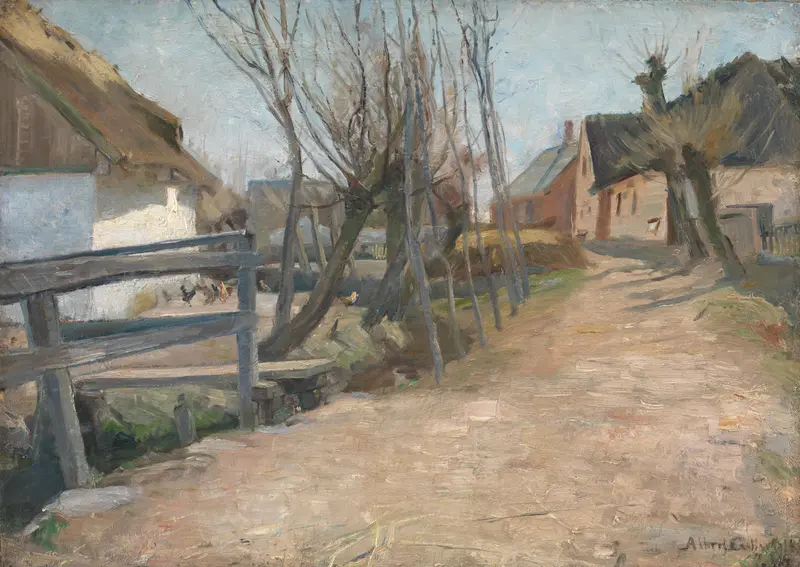
Tidlig forårsdag i Glostrup
Albert Gottschalk
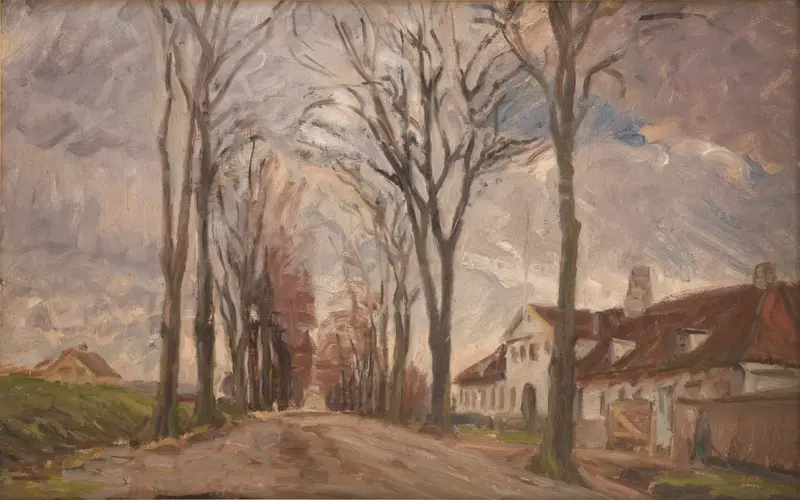
Lyngbyvejen ved Vintappergården
Albert Gottschalk
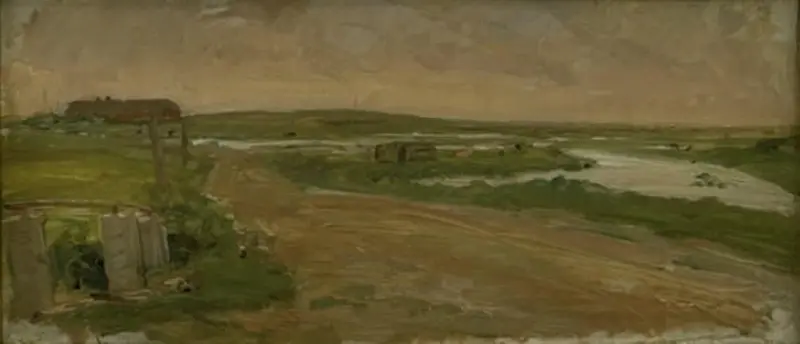
Vestjysk landskab. Holmsland
Albert Gottschalk
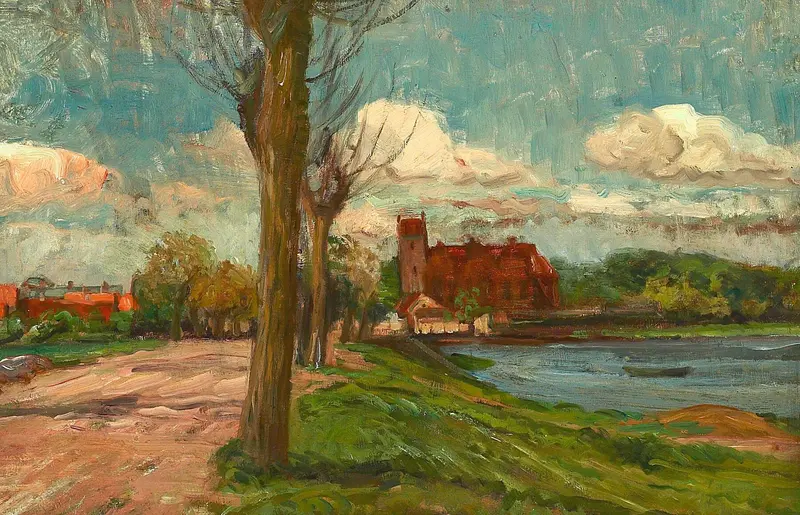
A road leading to a small town with a church.
Albert Gottschalk
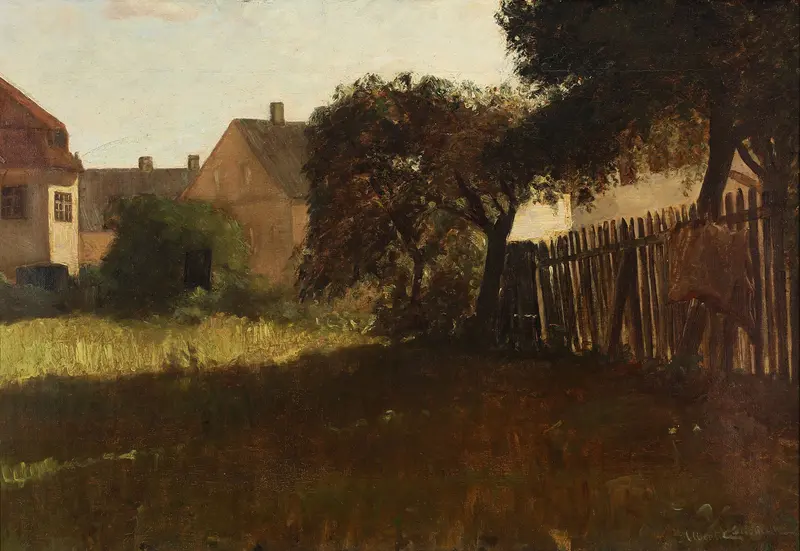
A summer day in a Garden in Vesterbro, Copenhagen
Albert Gottschalk
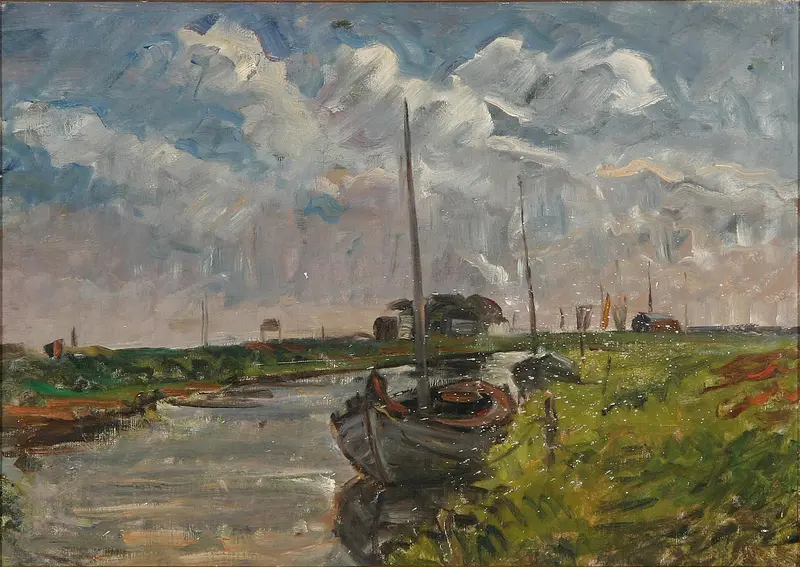
A canal with a boat.
Albert Gottschalk
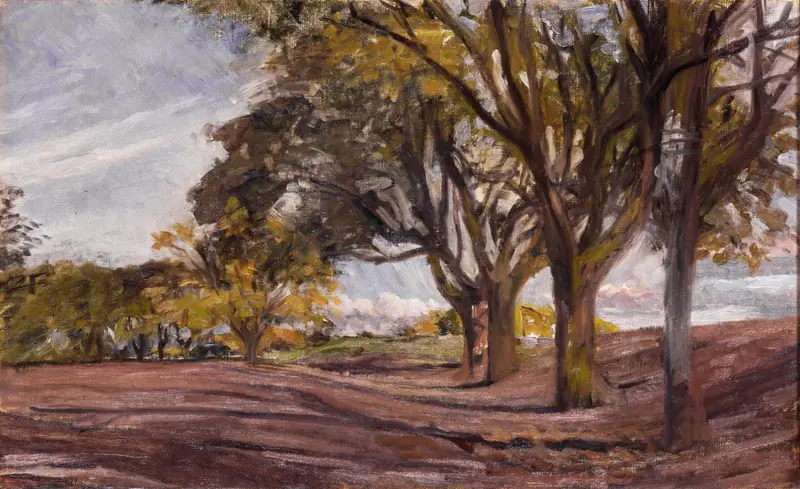
Chestnut Avenue at the Hermitage.
Albert Gottschalk
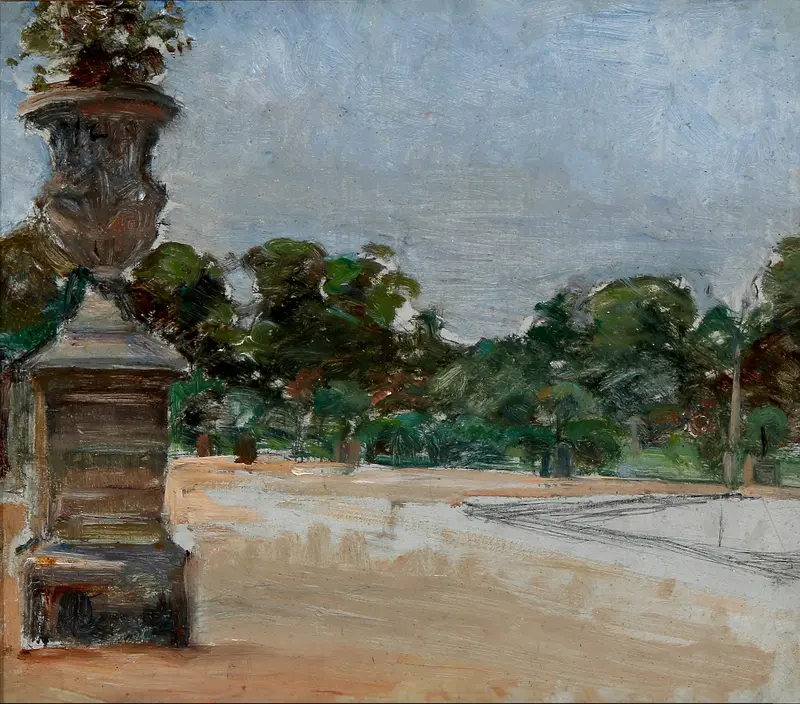
From the Tuileries Garden in Paris
Albert Gottschalk
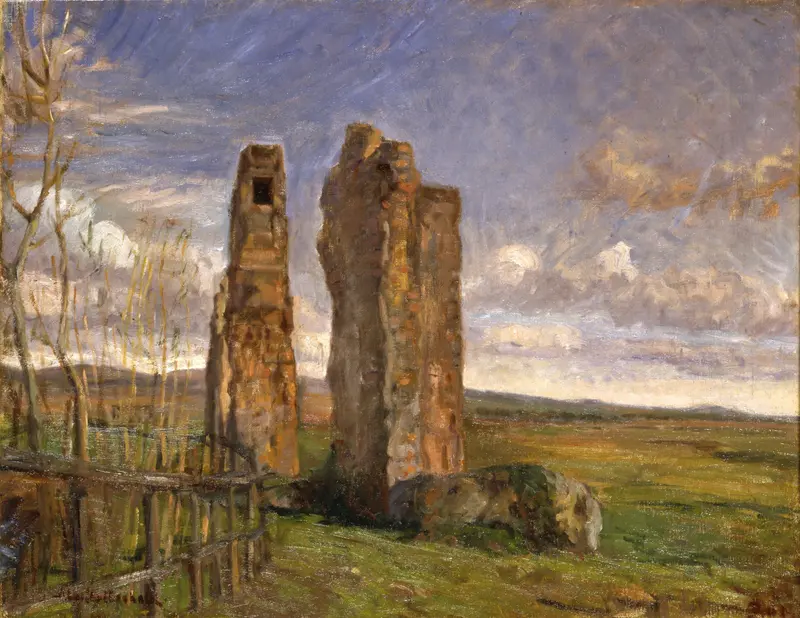
Ruins in Campagna
Albert Gottschalk
More Landscape Art

The Starry Night
Vincent van Gogh

View of Delft
Johannes Vermeer

Water Lilies
Claude Monet

The Grand Canal, Venice, looking north-west from the Ca' Corner to the Ca' Contarini degli Scrigni, with the campanile of Santa Maria della Carità
Canaletto

Windsor Castle
Canaletto

The Grand Canal looking North-East from the Palazzo Dolfin-Manin to the Rialto Bridge
Canaletto