
Ruins in Campagna — History & Facts
Two battered stone towers rise out of the open plain, their surfaces catching the last gold of the afternoon sun. The eye is drawn first to their stark verticality, then to the way their rough textures are echoed by the quick, lively brushstrokes that animate the entire scene. A few slender trees, just budding, lean in from the left, their branches tracing the wind’s path through the air.
The sky, restless with swirling clouds and streaks of blue, seems to press down and expand all at once, giving the ruins a sense of both isolation and endurance. The fence in the foreground, loosely sketched, leads you in and then lets you wander—there is no clear path, only the suggestion of time passing and nature reclaiming. Painted in 1904, Ruins in Campagna belongs to a moment when artists across Europe were drawn to the melancholy beauty of ancient remains and the open countryside. The Campagna, the broad plain around Rome, had long been a magnet for painters seeking the poetry of decay and the grandeur of history.
By the early twentieth century, such scenes were as much about mood as about documentation: they offered a quiet resistance to the rush of modernity. Albert Gottschalk here channels that tradition, but with a looser, more atmospheric touch than his academic predecessors—his ruins are not monuments, but survivors. Now part of the Davids Samling collection, the work invites us to linger where the past and present meet, in the long shadow of stone and sky.
More Artworks by Albert Gottschalk
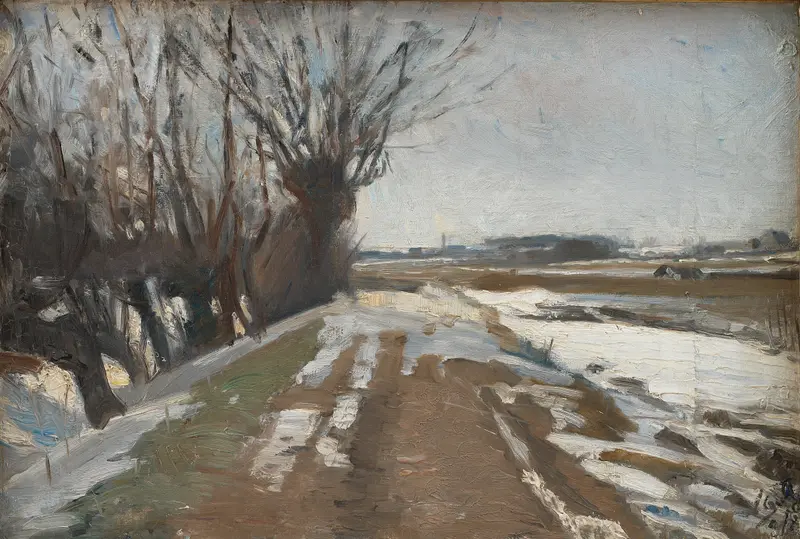
Winter Landscape. Utterslev near Copenhagen
Albert Gottschalk
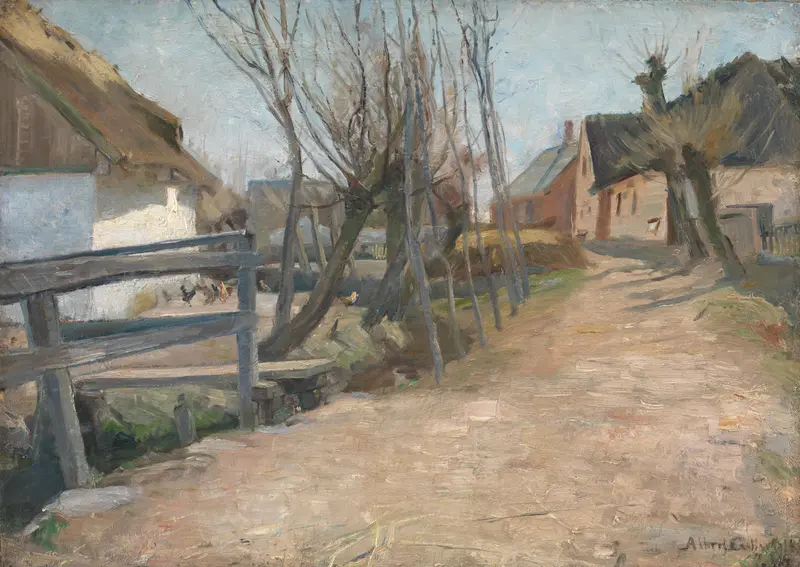
Tidlig forårsdag i Glostrup
Albert Gottschalk
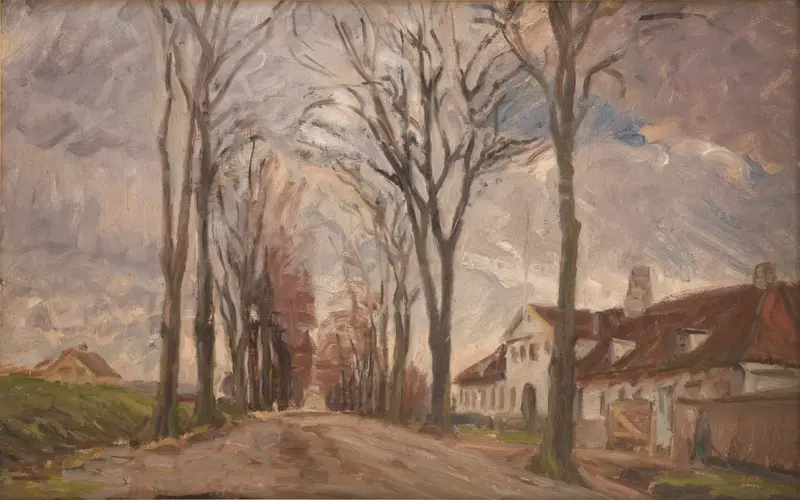
Lyngbyvejen ved Vintappergården
Albert Gottschalk
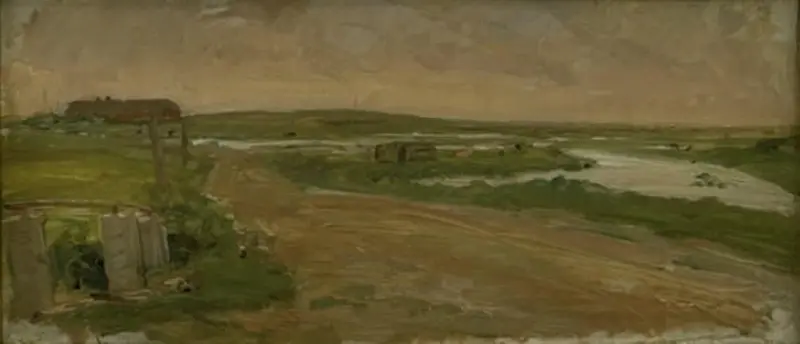
Vestjysk landskab. Holmsland
Albert Gottschalk
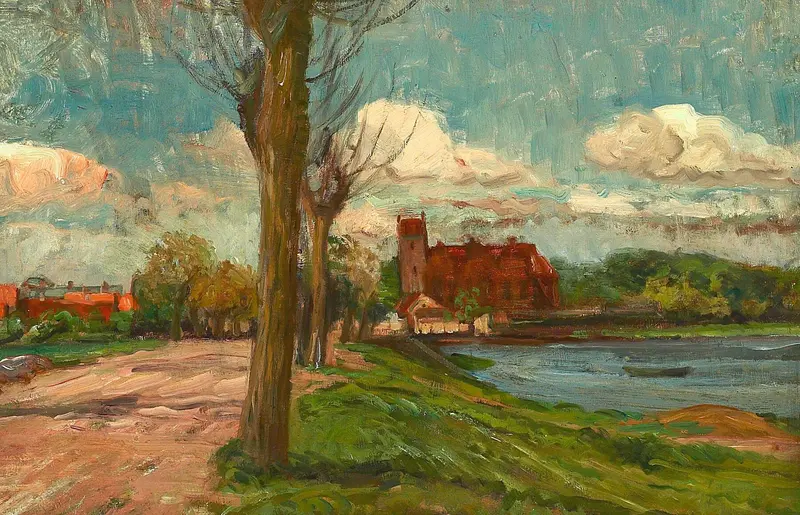
A road leading to a small town with a church.
Albert Gottschalk
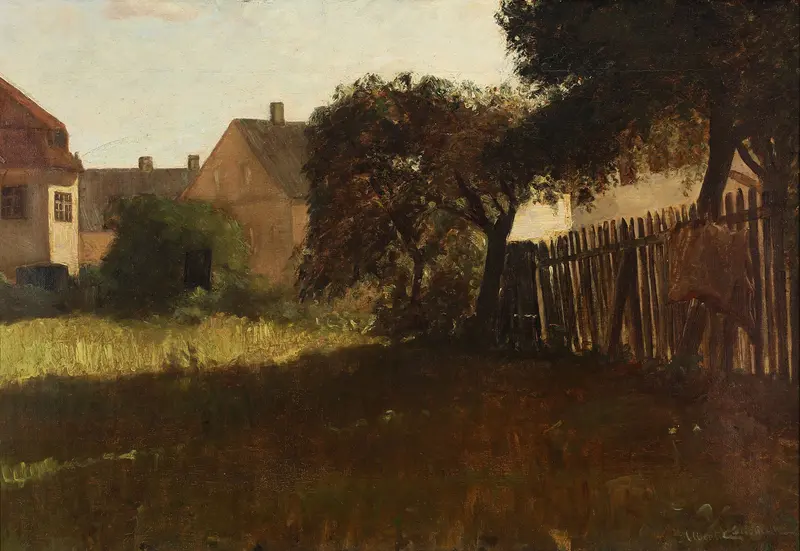
A summer day in a Garden in Vesterbro, Copenhagen
Albert Gottschalk
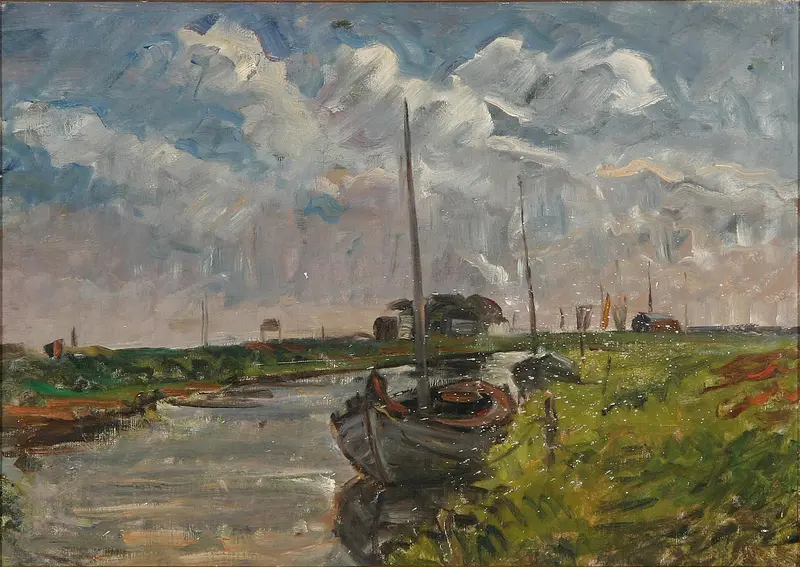
A canal with a boat.
Albert Gottschalk
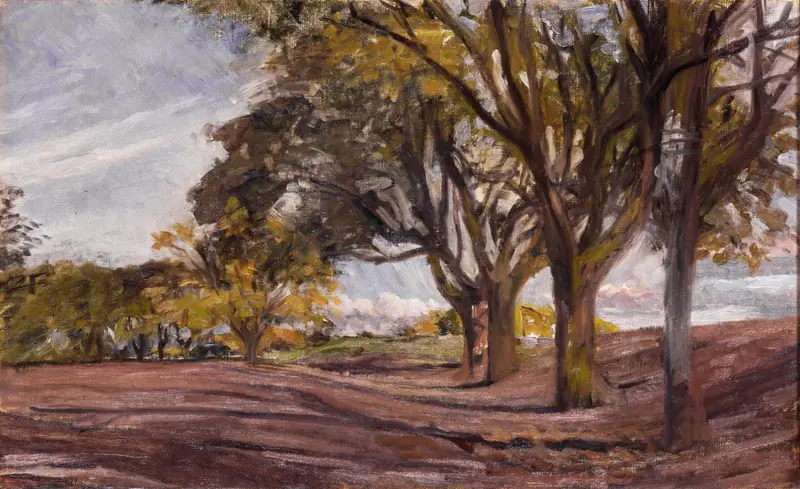
Chestnut Avenue at the Hermitage.
Albert Gottschalk
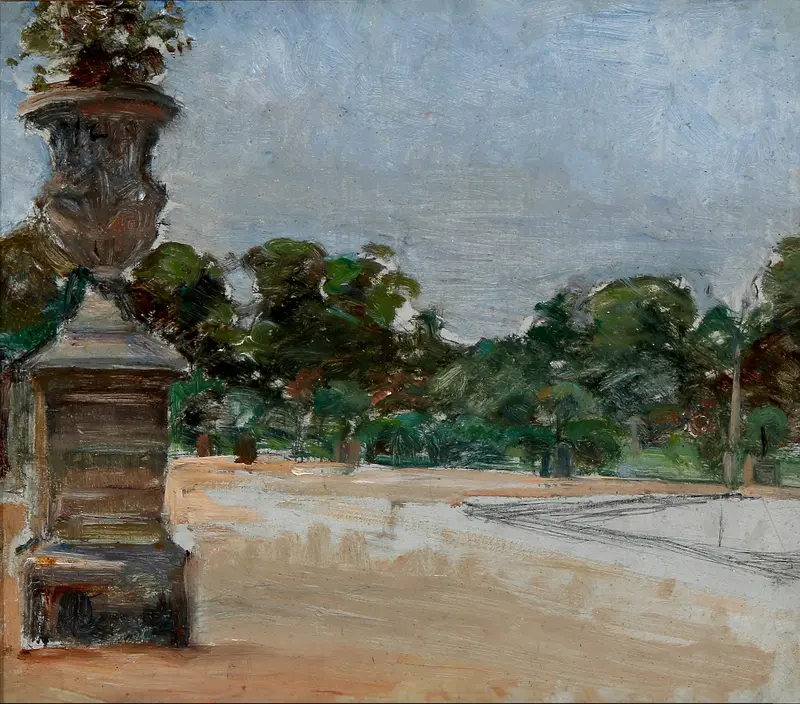
From the Tuileries Garden in Paris
Albert Gottschalk
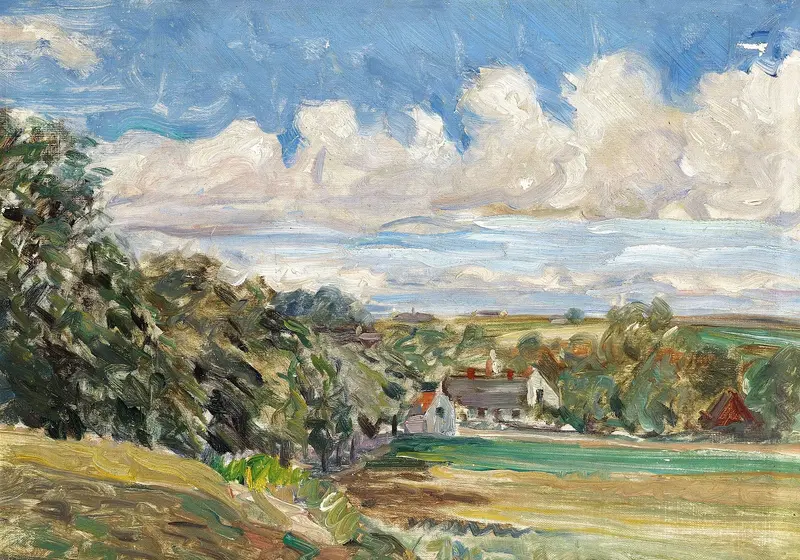
Landscape on a Summer's Day.
Albert Gottschalk
More Landscape Art

The Starry Night
Vincent van Gogh

View of Delft
Johannes Vermeer

Water Lilies
Claude Monet

The Grand Canal, Venice, looking north-west from the Ca' Corner to the Ca' Contarini degli Scrigni, with the campanile of Santa Maria della Carità
Canaletto

Windsor Castle
Canaletto

The Grand Canal looking North-East from the Palazzo Dolfin-Manin to the Rialto Bridge
Canaletto