
A Street in Morlaix — History & Facts
Who listens when art speaks of silence? In A Street in Morlaix, the absence of sound becomes a resonant presence, inviting viewers into a serene moment of transcendence. Look to the foreground, where cobblestones glisten with subtle reflections, their intricate patterns guiding the eye through the narrow street. The buildings, tinged with soft, muted colors, rise and lean into one another, forming a protective embrace around the scene. Notice how the light gently cascades down, illuminating the warm hues of the facades, casting long shadows that stretch and play, creating a dialogue between light and darkness. Delve deeper into the interplay of stillness and movement.
The solitary figure at the end of the street, partly obscured, evokes a sense of solitude and contemplation, as if caught in a moment of reflection. This character’s small stature against the towering houses suggests both vulnerability and the grandeur of the landscape, while the quietness of the setting amplifies the emotional weight of their presence. The painting hints at stories untold, where every crevice and corner holds a whisper of the past. Eugène Isabey painted A Street in Morlaix in 1850, during a time when France was experiencing significant social and political change.
Living in Paris, he was part of an artistic movement that sought to capture the essence of everyday life. This work reflects both his affinity for landscape and his ability to weave personal narratives into broader historical contexts, revealing the silent poetry that lingers in forgotten corners of the world.
More Artworks by Eugène Isabey
Browse all →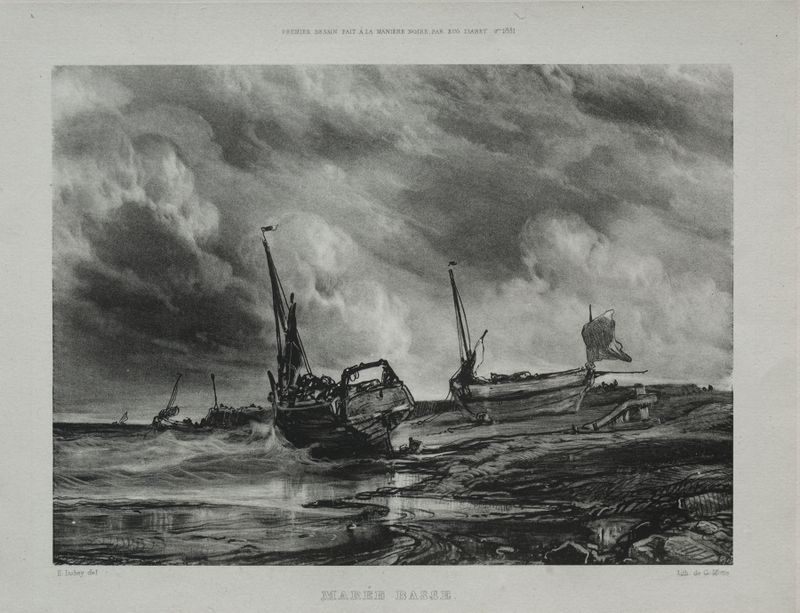
Marée basse
Eugène Isabey

Shipwreck
Eugène Isabey

Shipwreck
Eugène Isabey

The Wreck
Eugène Isabey
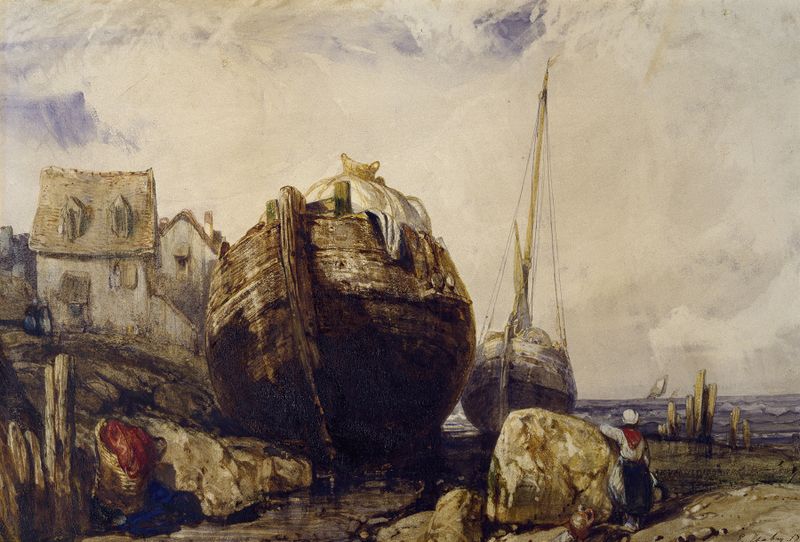
Fishing Boats
Eugène Isabey
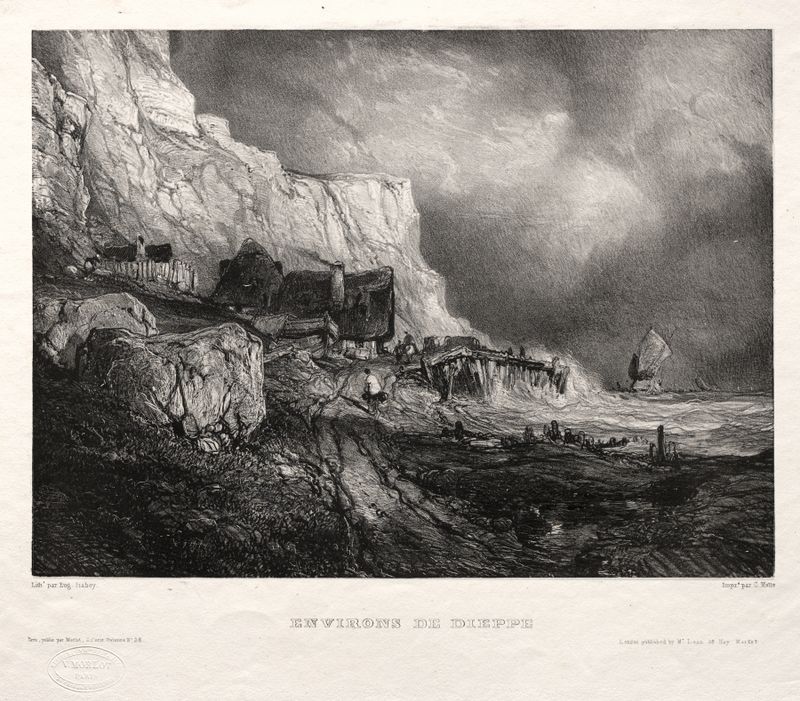
Environs de Dieppe
Eugène Isabey
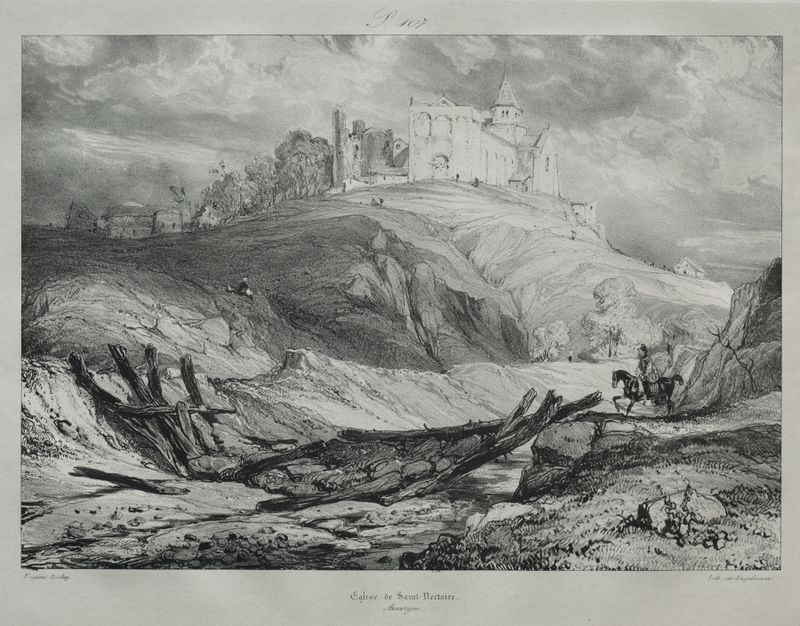
Église de St. Nectaire
Eugène Isabey

Fishing boat at the seaside
Eugène Isabey

Sunset on the Normandy Coast
Eugène Isabey
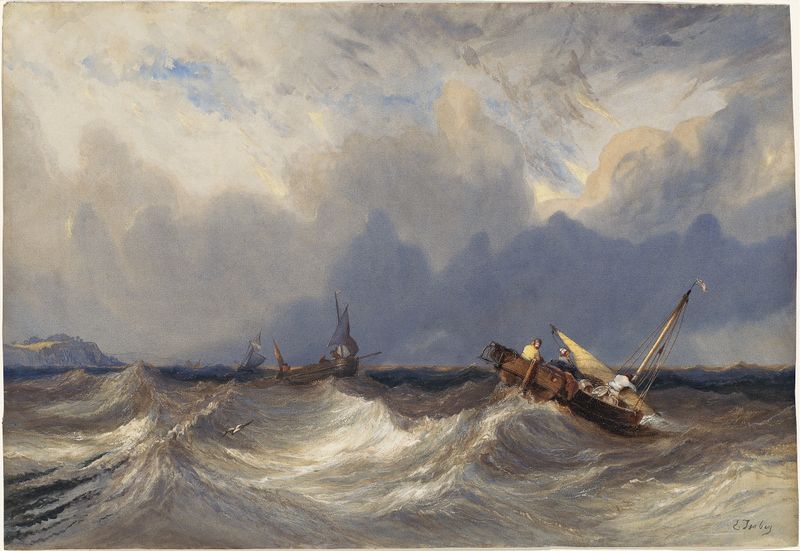
Fishing Boats Tossed before a Storm
Eugène Isabey
More Architecture Art
Browse all →
The statue of Liberty
Frédéric Auguste Bartholdi

View of Houses in Delft, Known as ‘The Little Street’
Johannes Vermeer

View of Houses in Delft, Known as ‘The Little Street’
Johannes Vermeer

The Cathedral in Rouen. The portal, Grey Weather
Claude Monet

The yellow house
Vincent van Gogh

The Church in Auvers-sur-Oise, View from the Chevet
Vincent van Gogh