
A Summer’s Day at Nivaa. — History & Facts
The first thing to catch the eye in A Summer’s Day at Nivaa is the way the road curves gently into the distance, inviting the viewer to step into the scene and follow its path. The painter, Albert Gottschalk, uses the sturdy line of the fence and the dappled shadows beneath the trees to lead us from the cool, reflective water in the foreground to the warm, sunlit fields beyond. The white house, half-shielded by foliage, stands as a quiet sentinel beside the pond, its reflection softly blurred by the ripples.
Every brushstroke seems to flicker with movement: the restless leaves overhead, the shifting clouds, the play of light on the path. The palette is earthy and immediate, capturing the sensation of a summer afternoon where time seems to pause. Painted in 1903, this work belongs to a moment in Danish art when artists like Gottschalk turned their attention to the countryside, seeking to capture the fleeting moods of nature and rural life. Such landscapes were often painted for a growing middle class, eager to bring the peace of the countryside into their city homes.
The painting now resides in the collection of davidmus.dk, a reminder of how these quiet corners of Denmark were once at the heart of artistic innovation. History has kept few traces of the specific stories behind scenes like this, but the painting’s open road and tranquil water invite us to imagine our own.
More Artworks by Albert Gottschalk
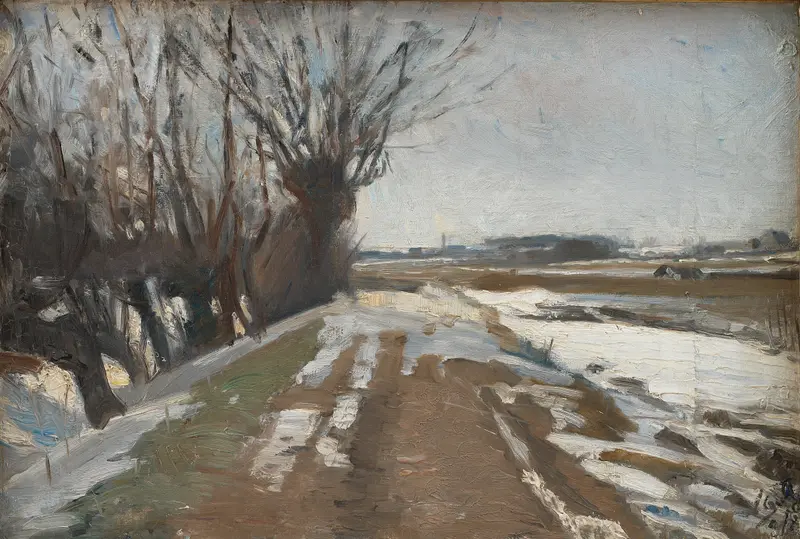
Winter Landscape. Utterslev near Copenhagen
Albert Gottschalk
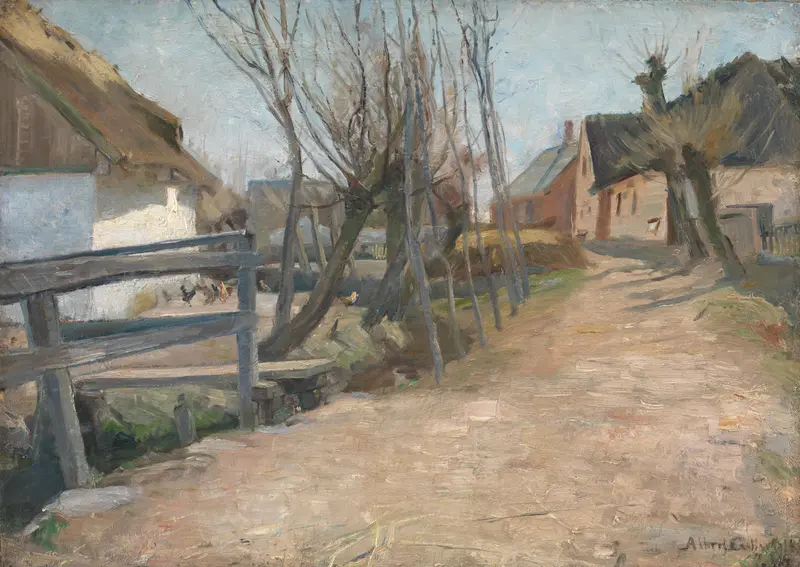
Tidlig forårsdag i Glostrup
Albert Gottschalk
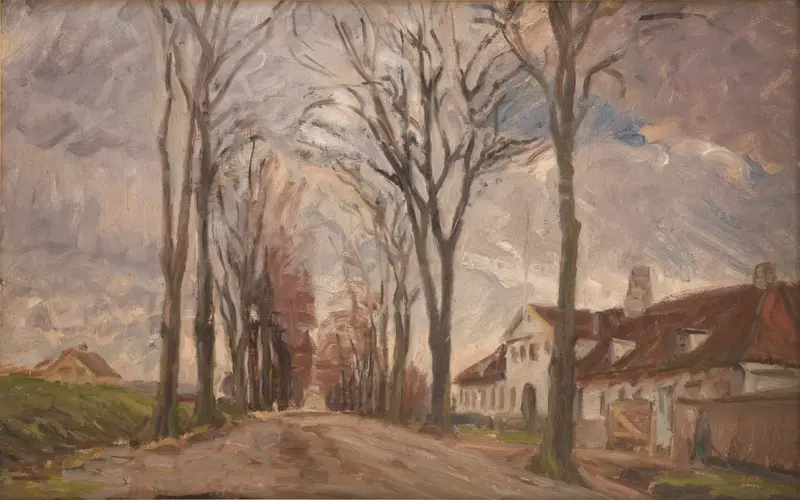
Lyngbyvejen ved Vintappergården
Albert Gottschalk
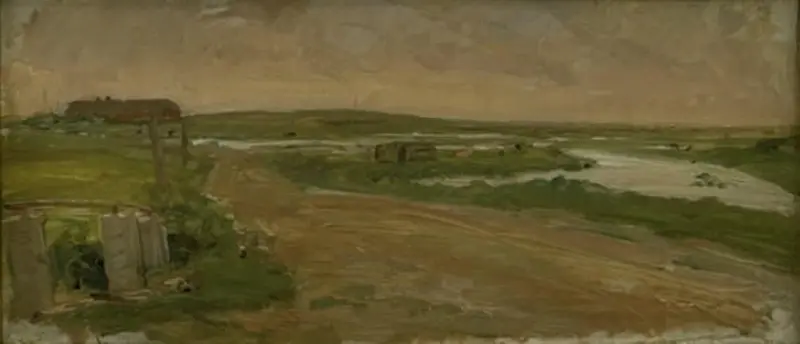
Vestjysk landskab. Holmsland
Albert Gottschalk
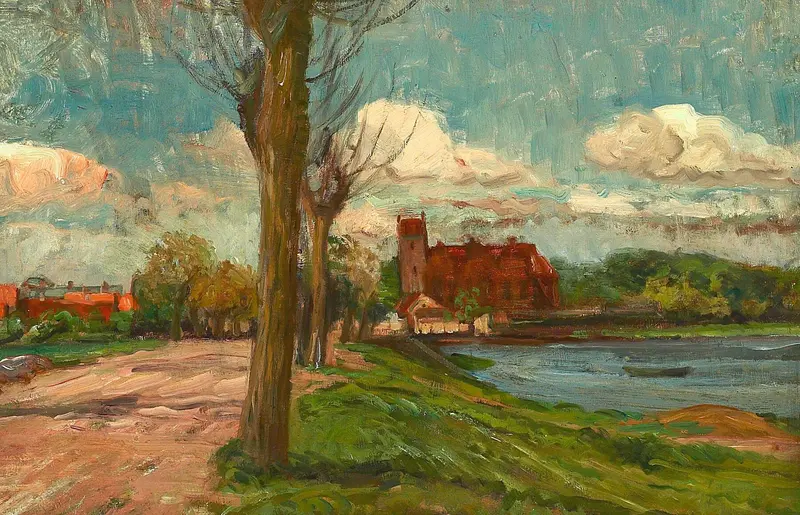
A road leading to a small town with a church.
Albert Gottschalk
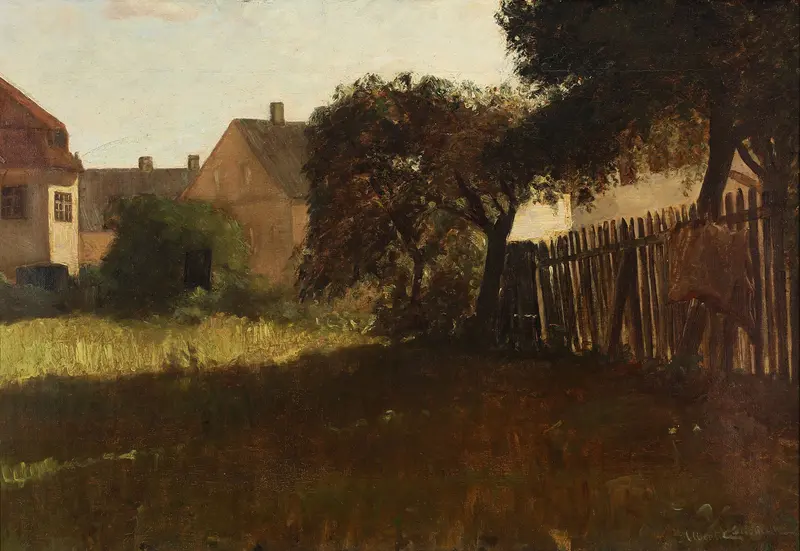
A summer day in a Garden in Vesterbro, Copenhagen
Albert Gottschalk
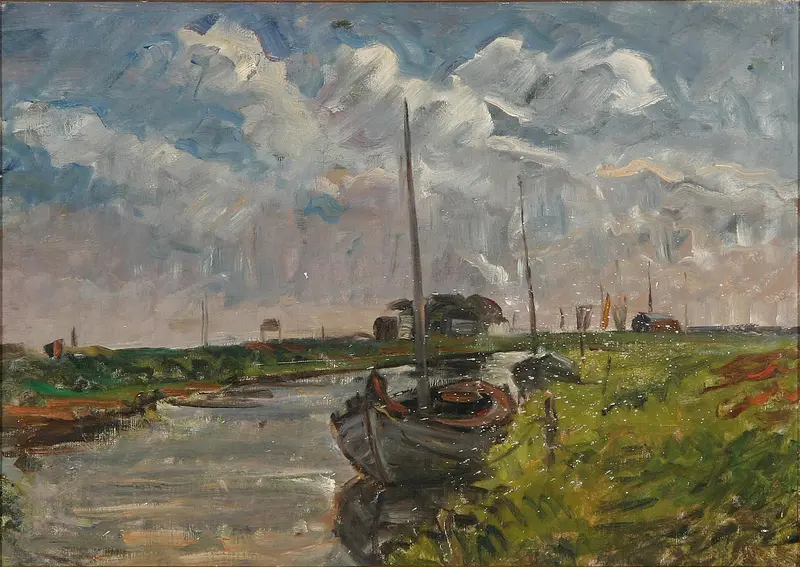
A canal with a boat.
Albert Gottschalk
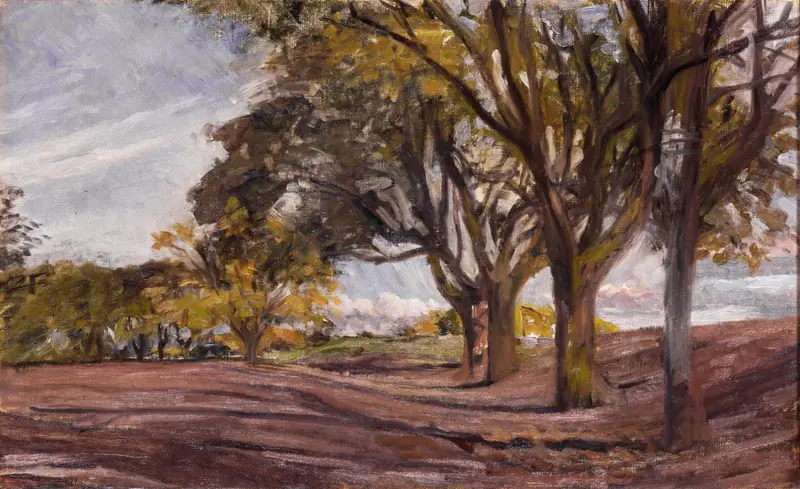
Chestnut Avenue at the Hermitage.
Albert Gottschalk
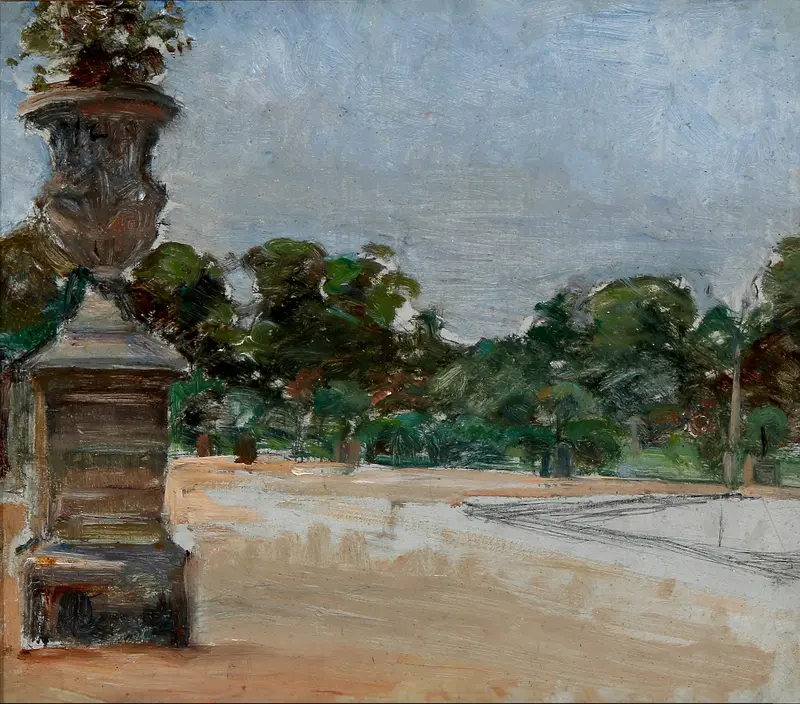
From the Tuileries Garden in Paris
Albert Gottschalk
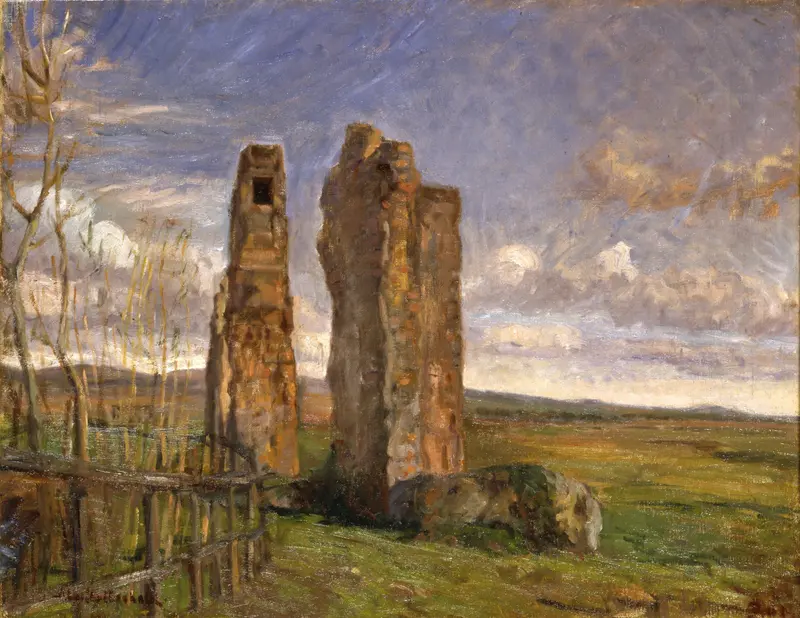
Ruins in Campagna
Albert Gottschalk
More Landscape Art

The Starry Night
Vincent van Gogh

View of Delft
Johannes Vermeer

Water Lilies
Claude Monet

The Grand Canal, Venice, looking north-west from the Ca' Corner to the Ca' Contarini degli Scrigni, with the campanile of Santa Maria della Carità
Canaletto

Windsor Castle
Canaletto

The Grand Canal looking North-East from the Palazzo Dolfin-Manin to the Rialto Bridge
Canaletto