
A Woman holding Oliebol Treats — History & Facts
What draws the eye first is not the bowl of treats, but the direct, level gaze of the woman who holds them. Her expression is steady, almost reserved, as if she is pausing in her work to meet the viewer’s attention. The light, soft and clear, falls across her face and crisp white collar, setting her apart from the subdued, shadowy background.
The earthenware pot she cradles is filled with golden-brown oliebollen—Dutch festive fritters—rendered with such care that you can almost sense their warmth. Every fold in her sleeve, every glint on the glazed pot, speaks of quiet pride in simple abundance. This painting belongs to the world of mid-seventeenth-century Holland, where scenes of everyday life were celebrated in paint as never before. Works like this, created around 1652 by Aelbert Cuyp and now in the Dordrechts Museum, reflect a society that found dignity and meaning in domestic rituals and honest labor.
Such images were often commissioned or purchased by prosperous burghers who wished to see their own values—order, prosperity, modesty—mirrored on their walls. History has kept few traces of the individual sitters in these portraits, but the genre itself remains a window onto a world where the ordinary was worthy of close, loving attention. The woman’s gaze invites you back, to wonder what stories lie behind her calm composure.
More Artworks by Aelbert Cuyp

The Maas at Dordrecht
Aelbert Cuyp
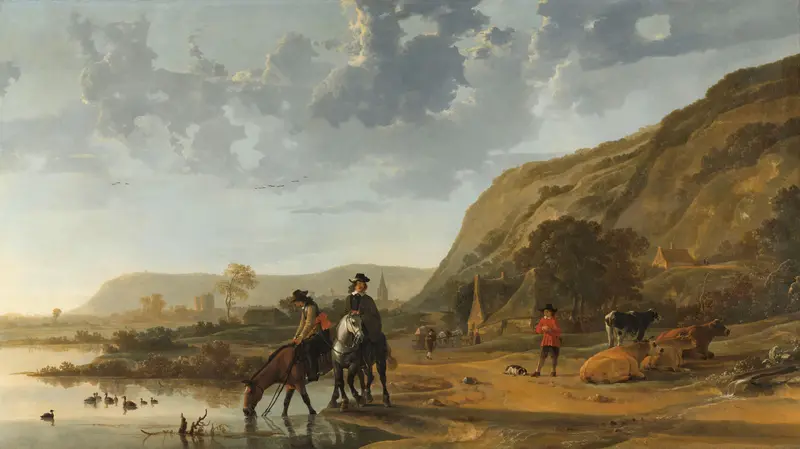
River Landscape with Riders
Aelbert Cuyp

The Maas at Dordrecht
Aelbert Cuyp
Gezicht op Dordrecht
Aelbert Cuyp
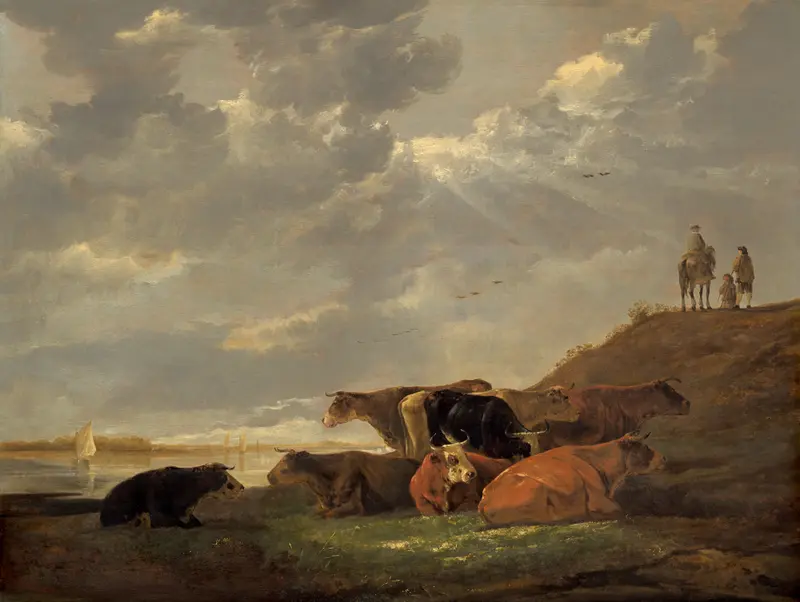
River Landscape with Cows
Aelbert Cuyp
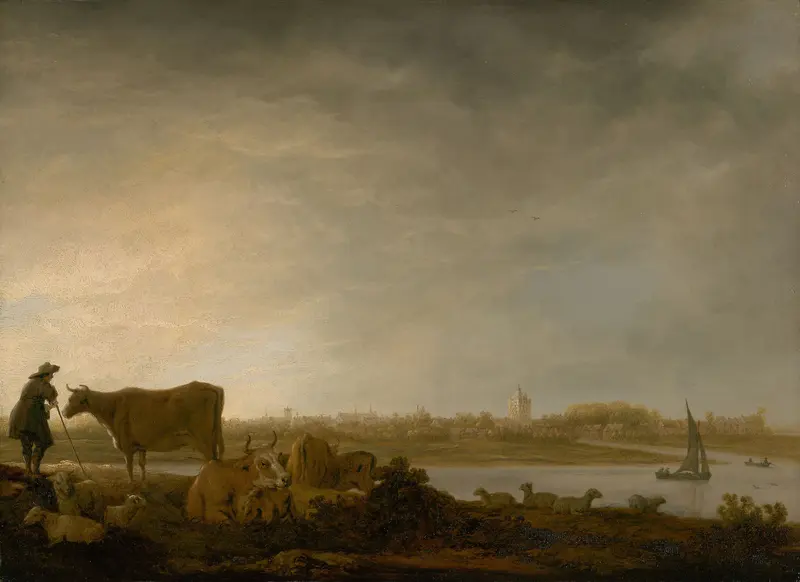
A View of Vianen with a Herdsman and Cattle by a River
Aelbert Cuyp
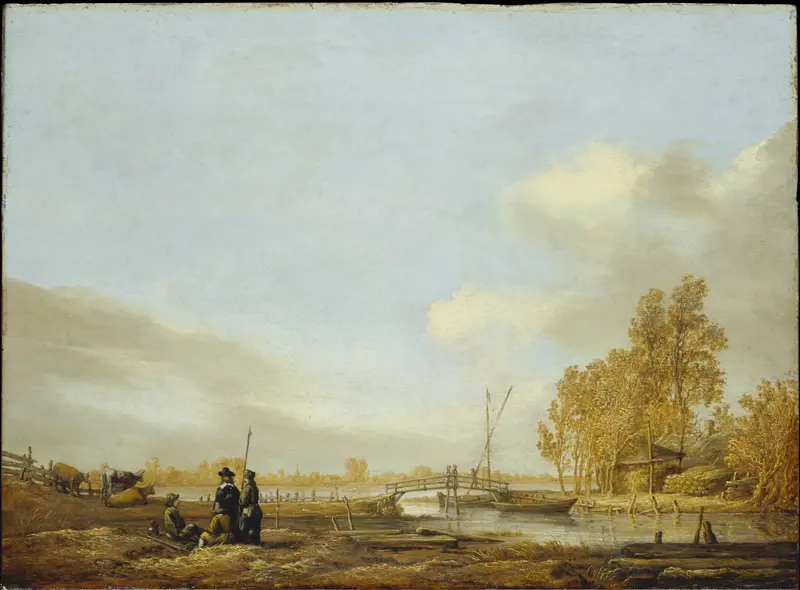
River Landscape with Footbridge
Aelbert Cuyp
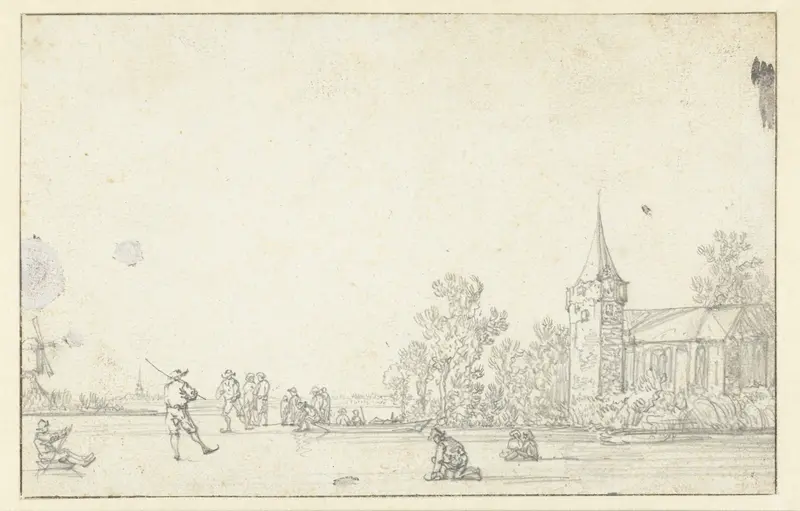
Bevroren rivier met schaatsers bij een kerk
Aelbert Cuyp

Cattle near a River
Aelbert Cuyp
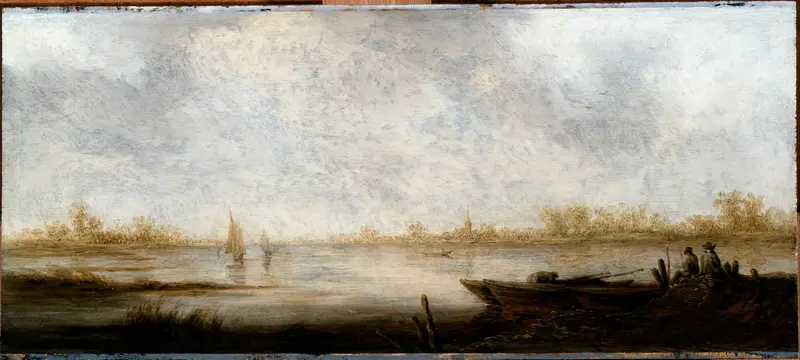
River Landscape
Aelbert Cuyp
More Genre Scene Art

Banquet of the Officers of the St George Civic Guard
Frans Hals

Rembrandt and Saskia in the Scene of the Prodigal Son
Rembrandt van Rijn

Bal du moulin de la Galette
Pierre-Auguste Renoir

Quadrille at the Moulin Rouge
Henri de Toulouse-Lautrec

A Burial at Ornans
Gustave Courbet

When Will You Marry?
Paul Gauguin