
Abhang im Tannenwald — History & Facts
Who listens when art speaks of silence? In the stillness captured by the brush of Schirmer, whispers of nature resonate through the ages, inviting us to ponder our legacy within its embrace. Look to the left at the towering conifers, their trunks standing like sentinels in an ancient forest. Notice how the dappled light filters through the foliage, casting a kaleidoscope of greens and browns across the forest floor. The artist employs a muted palette, using soft brushstrokes to evoke a sense of tranquility and introspection.
Your eye is drawn along the winding path, inviting you deeper into the woodland’s secrets, where every shadow and glimmer tells a story of time lost and found. Yet, it is in the small details that the true essence of this work reveals itself. The gentle curvature of the path suggests a journey, both physical and metaphorical, beckoning us to reflect on the cycles of life. The interplay of light and darkness gives weight to the silence that surrounds.
Here, nature becomes both a sanctuary and a reminder of our fleeting existence, urging us to consider our place within the continuum of life. Schirmer painted Abhang im Tannenwald in 1853, during a period when Romanticism was both flourishing and evolving within the German art scene. The artist, influenced by the lush landscapes of his homeland, sought to convey the harmony between humanity and nature. In a world rapidly changing due to industrialization, his work stands as a testament to the enduring beauty of untouched wilderness and the legacy we leave behind.
More Artworks by Johann Wilhelm Schirmer
Browse all →
Waldlandschaft mit Blick auf Olevano und den Monte Cavo
Johann Wilhelm Schirmer
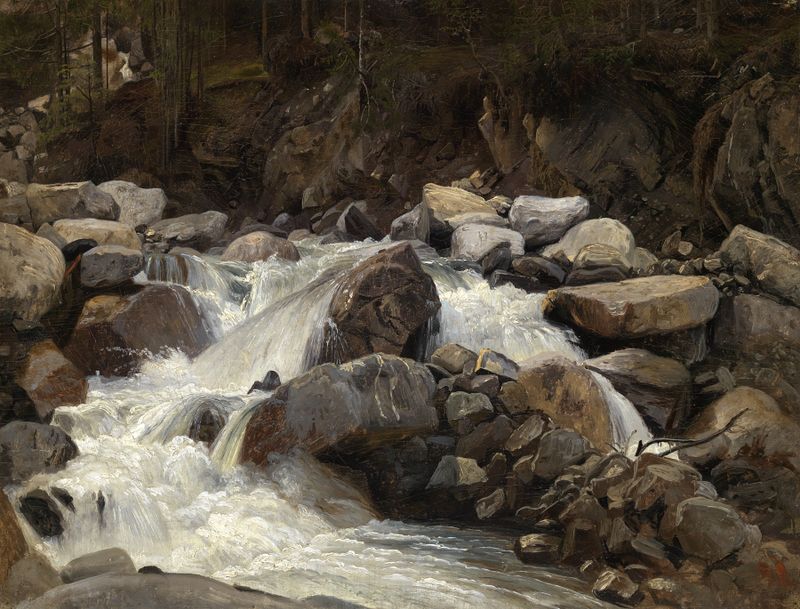
Schweizer Gebirgsbach
Johann Wilhelm Schirmer
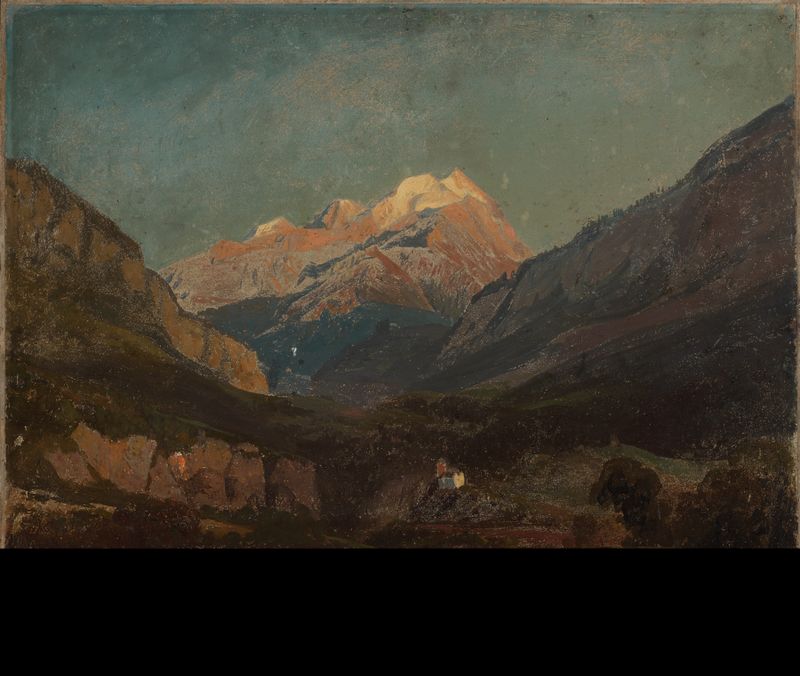
Schweizer Gebirgslandschaft mit Kapelle und fernem Schneegipfel
Johann Wilhelm Schirmer

Schweizer Gebirgslandschaft mit dem Piz Beverin im Hintergrund
Johann Wilhelm Schirmer

Waldinneres mit Hirschen am Wasser
Johann Wilhelm Schirmer

The Wetterhorn
Johann Wilhelm Schirmer

Partie aus der Römischen Campagna
Johann Wilhelm Schirmer

Felsabhang in der Schweiz
Johann Wilhelm Schirmer
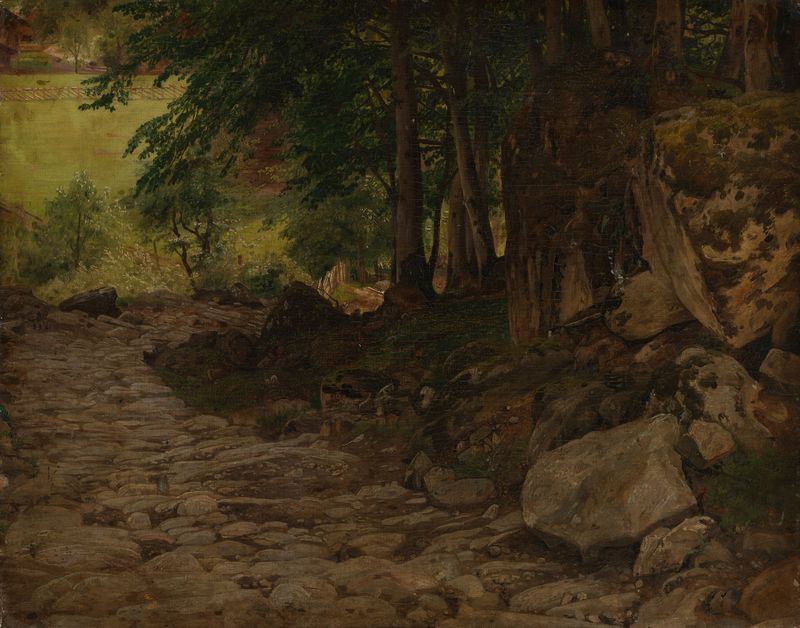
Felsweg in der Schweiz
Johann Wilhelm Schirmer
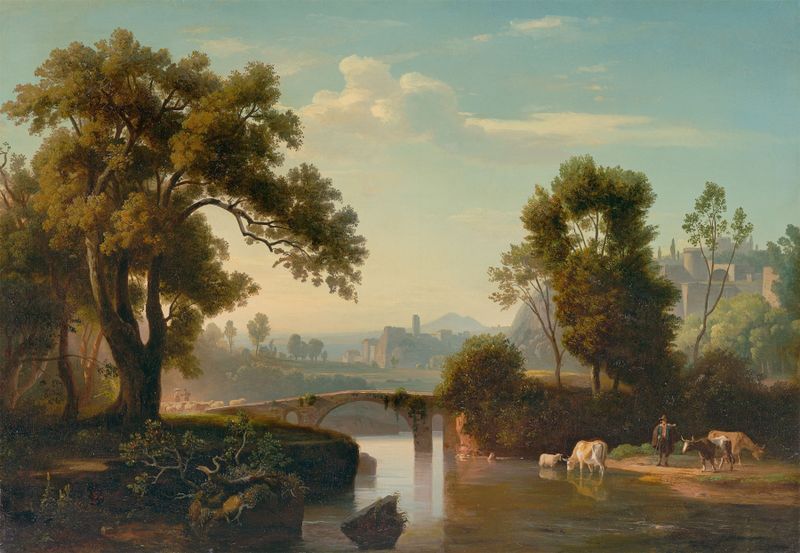
Italienische Landschaft mit Hirten
Johann Wilhelm Schirmer





