
Abraham and Isaac — History & Facts
Few images from the late eighteenth century confront the viewer with such raw psychological tension as Abraham and Isaac by William Blake. Painted in 1790, this work captures a moment from the Book of Genesis that had fascinated and unsettled artists for centuries, but Blake’s version stands out for its deeply personal vision. Unlike many of his contemporaries, Blake was not painting for a wealthy patron or a public exhibition; instead, he created this and similar works as part of his own illuminated books, blending image and text to express his radical spiritual beliefs.
The medium remains uncertain—scholars debate whether this is a watercolor, tempera, or a unique print—but the intensity of its drama is unmistakable. Blake chooses the instant when Abraham, knife in hand, is halted by an angel just as he is about to sacrifice his son Isaac. The composition is taut: Abraham’s arm is outstretched, the blade gleaming, while Isaac lies bound on the altar, his body twisted in fear and submission. The angel, descending in a burst of light, seizes Abraham’s wrist, a gesture that transforms violence into mercy.
Blake’s figures are elongated, almost spectral, and the stark contrast between the darkness encroaching from the edges and the radiance around the angel heightens the sense of divine intervention. Unlike Rembrandt’s more humanized Abraham and Isaac, where emotion is written in every wrinkle and tear, Blake’s vision is visionary, almost dreamlike, emphasizing spiritual revelation over earthly suffering. The journey of this particular Abraham and Isaac is shrouded in some uncertainty, as is often the case with Blake’s works from this period. Many of his biblical images circulated as individual sheets or as part of small, hand-colored editions, making precise provenance difficult to establish.
Today, examples of this composition can be found in major collections such as the Tate and the Metropolitan Museum of Art, though each may differ slightly in color and detail. For Blake, 1790 marked the beginning of his most productive years, when he published his illuminated books and forged his reputation as both poet and painter. While overlooked in his own lifetime, works like Abraham and Isaac now stand as testaments to his singular vision—one that fused art, faith, and imagination in ways that still challenge and intrigue.
More Artworks by William Blake
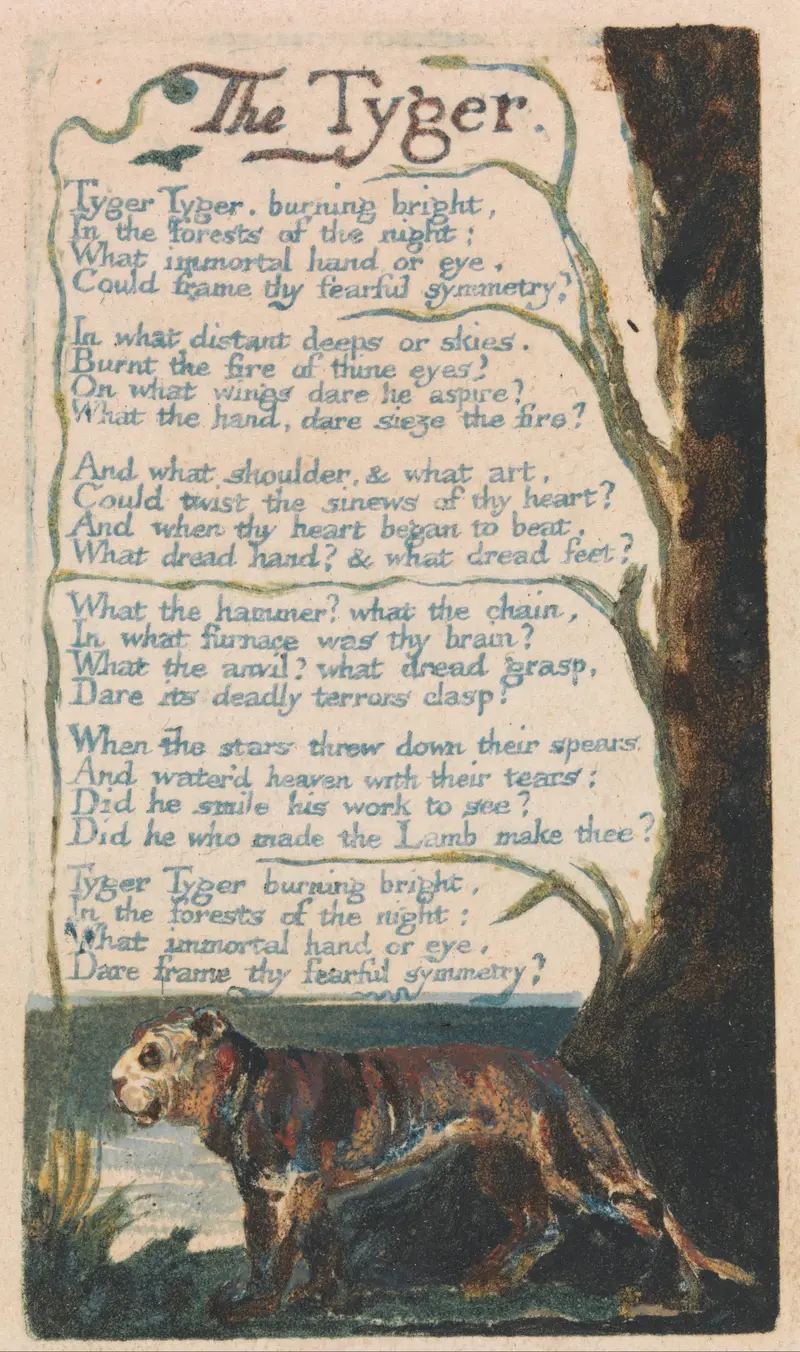
The Tyger
William Blake

Christ Blessing
William Blake
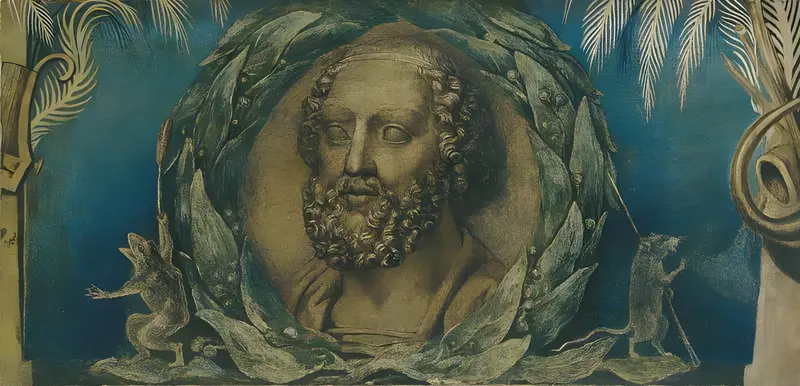
Homer
William Blake
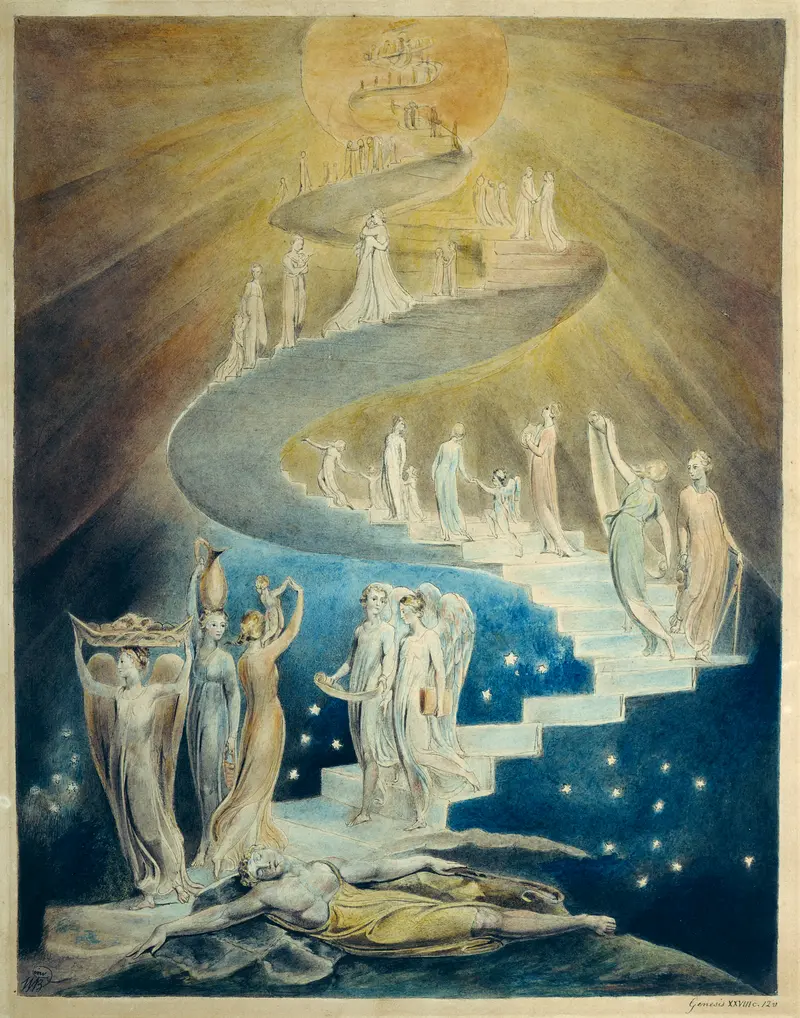
Jacob's Ladder
William Blake
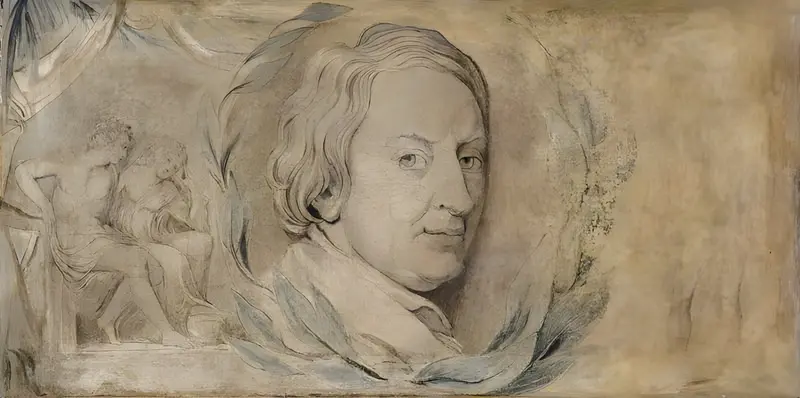
John Dryden (1631–1700)
William Blake
Landscape near Felpham
William Blake
Sacrifice of Job
William Blake
Christ's Entry into Jerusalem
William Blake
The Ancient of Days
William Blake
Adam Naming the Beasts
William Blake





