
Abraham van Strij jr. (1790 - 1840) in zijn atelier — History & Facts
What draws the eye first is the quiet intensity of the artist at work, his whole body angled toward the canvas as if the world beyond the easel has faded away. The soft, golden light falls from the left, catching the curve of his cheek and the rich, rust-colored cap perched atop his head—a flourish that hints at both individuality and tradition. Every detail, from the careful grip on the brush to the clutch of palette and tools in his other hand, is designed to immerse the viewer in a moment of focused creation.
The unfinished landscape on the canvas invites us into the artist’s process, a rare glimpse at the act of making rather than the finished product. Even the sturdy wooden chair and the shadowed wall behind him serve to anchor the scene, making the studio feel both intimate and real. Painted in 1825 by Abraham van Strij (I), this work belongs to a tradition of early nineteenth-century Dutch genre painting that cherished the everyday lives of artists and craftsmen. Such scenes were often collected by the burgeoning middle class, who prized depictions of diligence and skill in familiar, domestic settings.
While history has kept few traces of this particular painting’s journey, its presence today in the collection of Rijksmuseum Twenthe speaks to the enduring fascination with the artist’s studio as a site of both labor and imagination. The signature and date in the lower right corner quietly assert the painter’s pride in his craft—inviting us, two centuries later, to linger over the act of looking itself.
More Artworks by Abraham van Strij (I)

Abraham van (I) Strij Portret van Petronella van der Koogh (1788 89 1878), echtgenote van Jr. DM 017 1190 Dordrechts Museum
Abraham van Strij (I)

Abraham van (I) Strij Binnenhuis met vrouw en kind DM 847 42 Dordrechts Museum
Abraham van Strij (I)

Hendrik Weymans and his Family
Abraham van Strij (I)
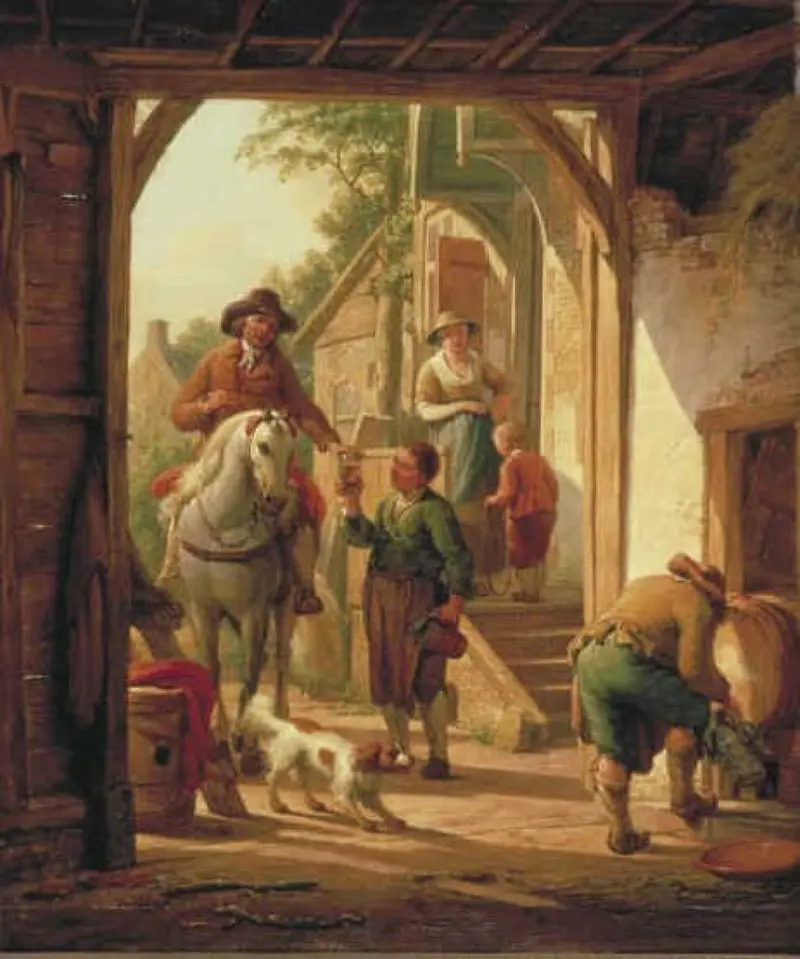
Horseman Resting near a Village Inn
Abraham van Strij (I)
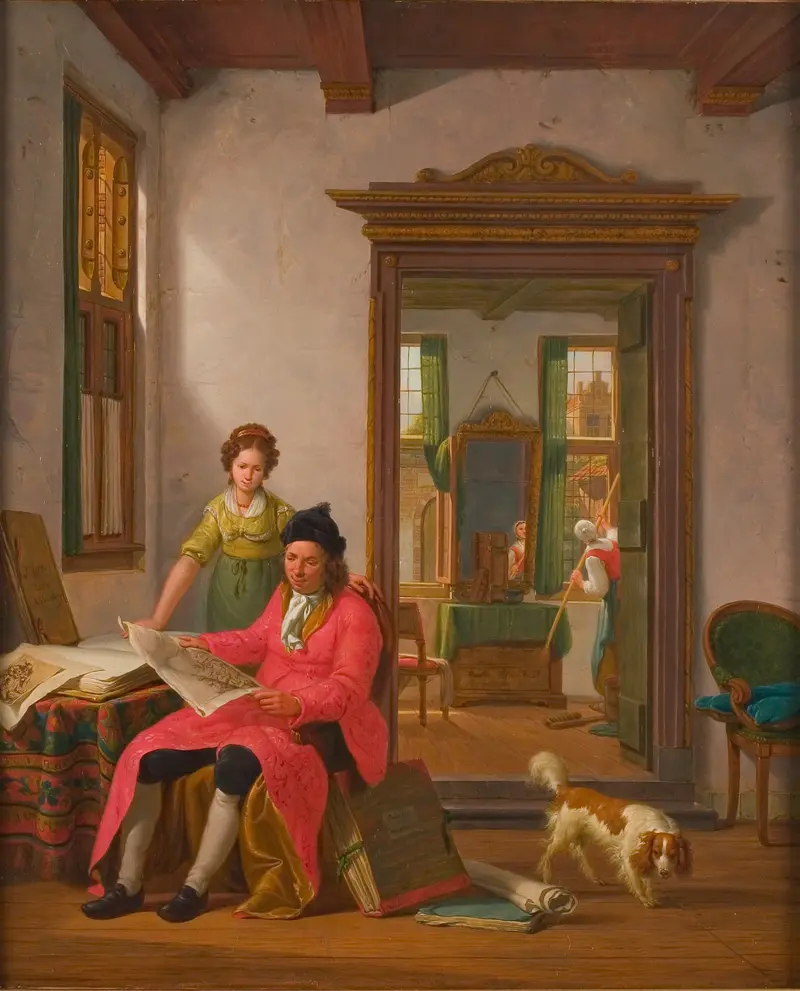
Portrait of an unknown man
Abraham van Strij (I)
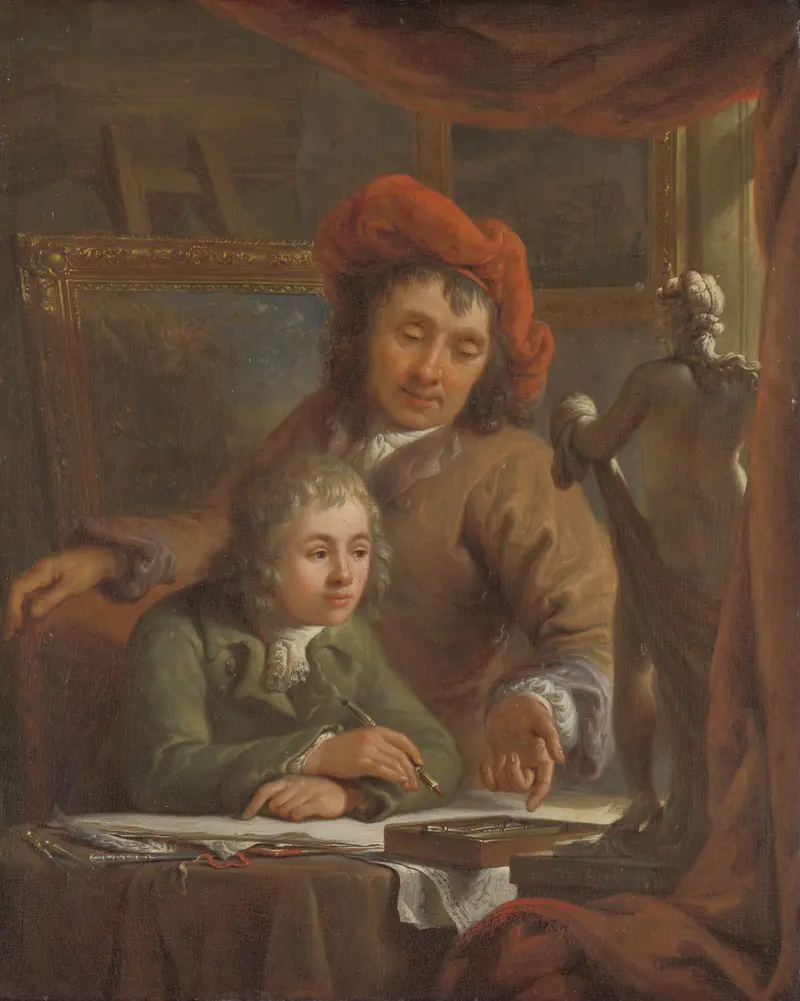
The Drawing Lesson
Abraham van Strij (I)
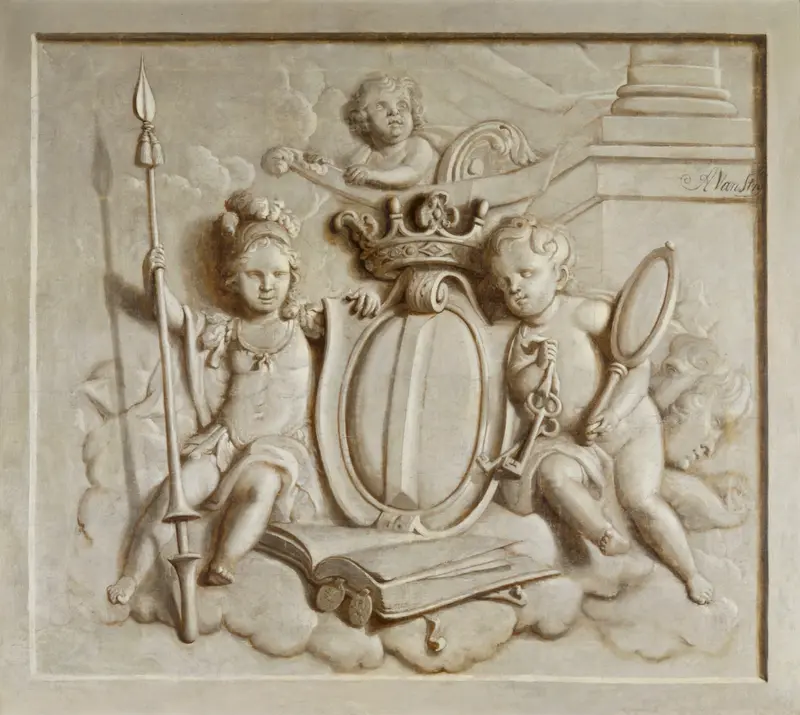
Abraham van (I) Strij Bovendeurstuk met allegorie op de stad Dordrecht DM 017 1188 Dordrechts Museum
Abraham van Strij (I)
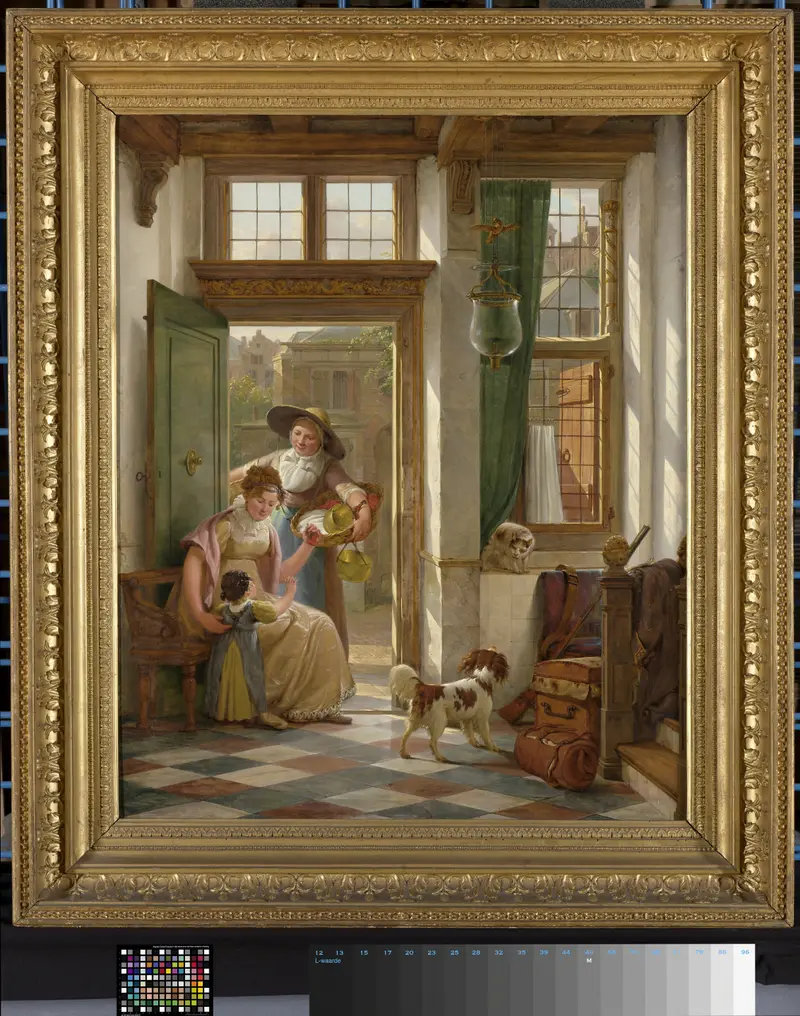
Een kersenverkoopster aan de deur
Abraham van Strij (I)
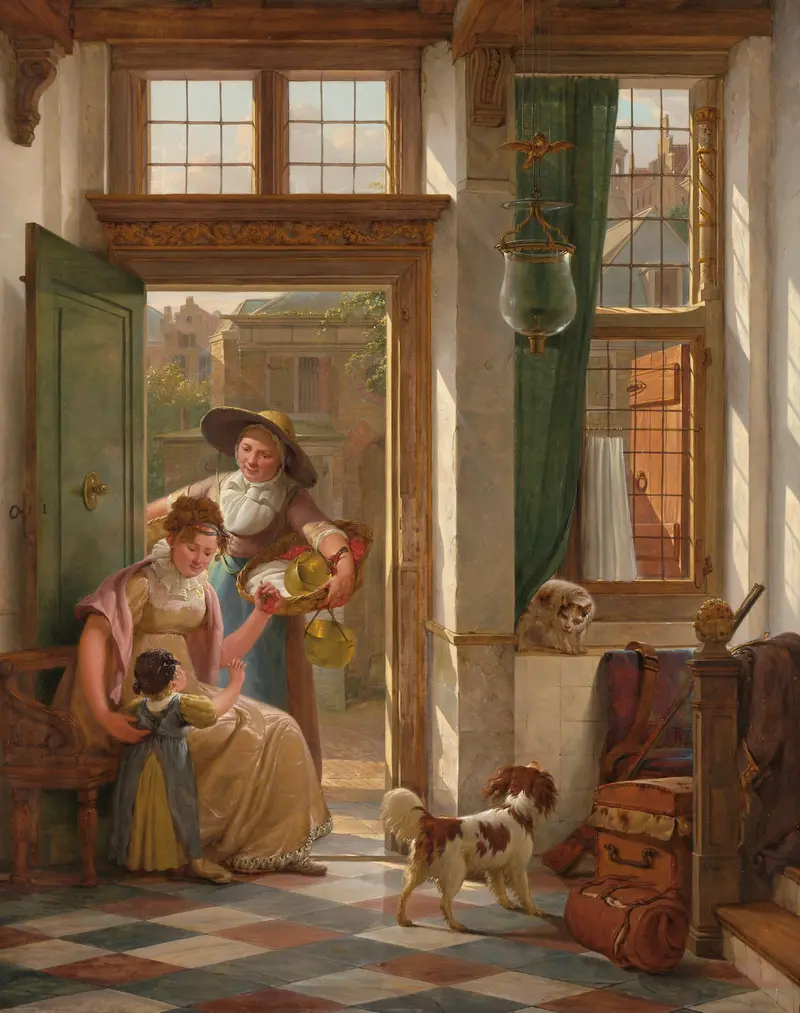
A Cherry Vendor at the Door
Abraham van Strij (I)
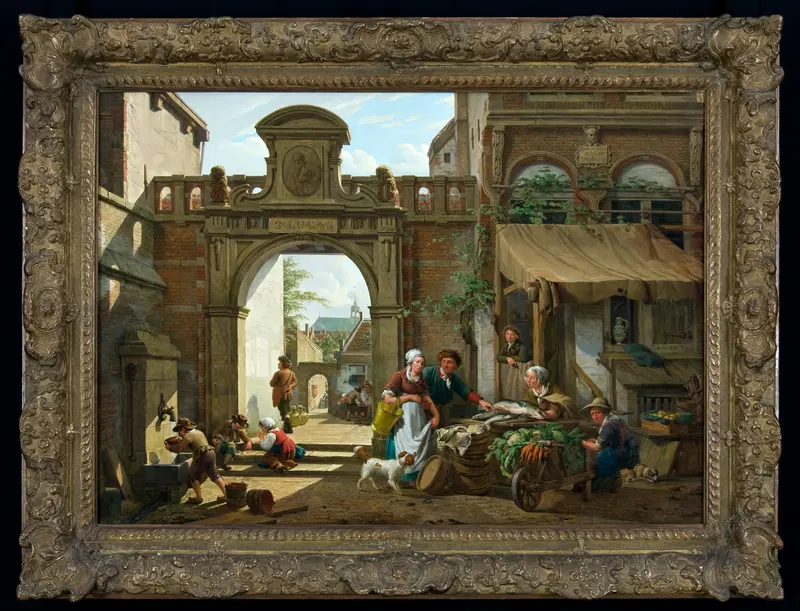
Abraham van (I) Strij Stadsgezicht met het gebouw van het St. Lucasgilde DM 010 950 Dordrechts Museum
Abraham van Strij (I)
More Genre Scene Art

Banquet of the Officers of the St George Civic Guard
Frans Hals

Rembrandt and Saskia in the Scene of the Prodigal Son
Rembrandt van Rijn

Bal du moulin de la Galette
Pierre-Auguste Renoir

Quadrille at the Moulin Rouge
Henri de Toulouse-Lautrec

A Burial at Ornans
Gustave Courbet

When Will You Marry?
Paul Gauguin