
Abside de l’église de Saint Nectaire — History & Facts
In a world often defined by chaos, the quiet elegance of a moment can echo louder than any tumult. This artwork invites us to pause and reflect on the tumultuous motions of life that swirl just beneath the surface. Look to the center, where the serene façade of the church rises, framed by the wild dance of nature surrounding it. The soft blues and greens create a vibrant contrast against the structured lines of the building.
Notice how the ethereal light filters through the trees, casting dappled shadows that whisper secrets of the landscape. Each stroke captures both the solidity of stone and the ephemeral breath of the wind, uniting chaos and calm in a single tableau. The church, a bastion of stability, stands resilient against the swirling forms of the foliage, embodying a struggle between humanity and nature. The uneven brushwork suggests a chaotic world beyond the serene entrance, hinting at the tension that exists at the intersection of human creation and the unpredictable wild.
This duality evokes a sense of contemplation about our place within both the sacred and the tumultuous. In 1831, Eugène Isabey painted this piece during a time marked by political unrest and social change in France. As a Romantic artist, he sought to capture the emotional landscape of his surroundings. Living in Paris, he was influenced by the evolving art scene and the desire to explore the contrasts between civilization and the untamed elements of nature, which is vividly portrayed in this work.
More Artworks by Eugène Isabey
Browse all →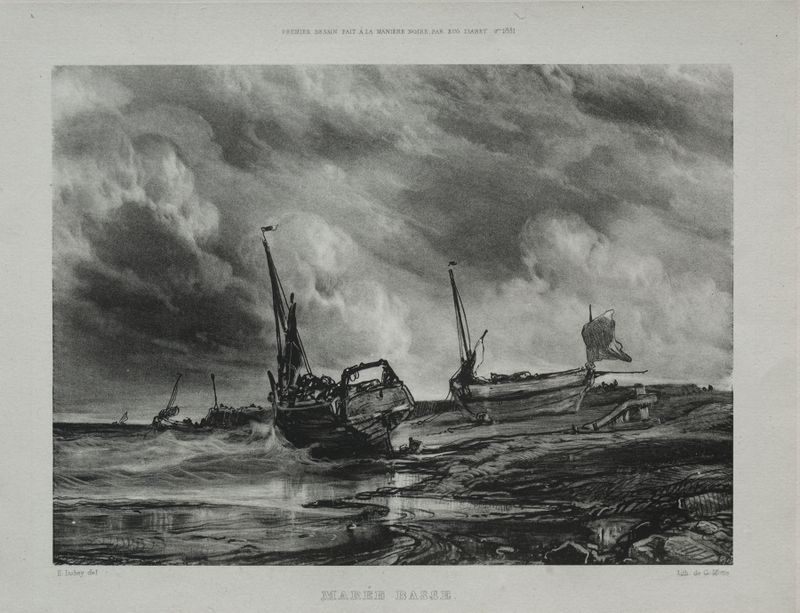
Marée basse
Eugène Isabey

Shipwreck
Eugène Isabey

Shipwreck
Eugène Isabey

The Wreck
Eugène Isabey
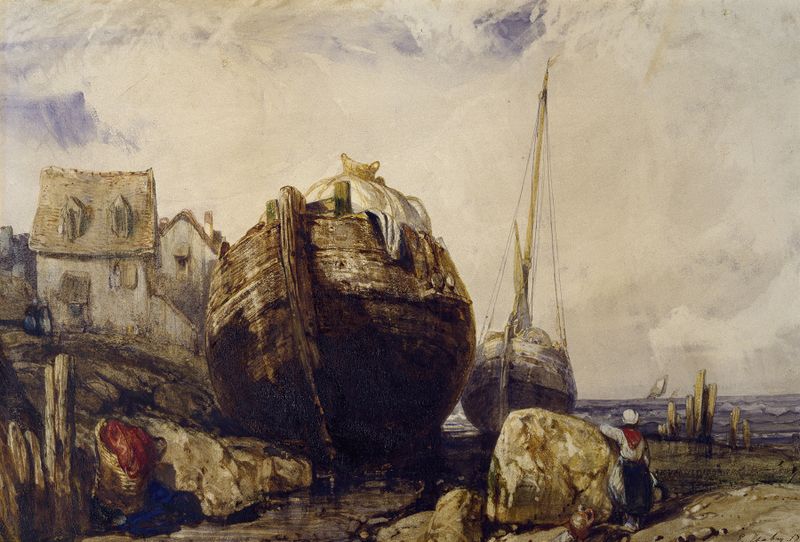
Fishing Boats
Eugène Isabey
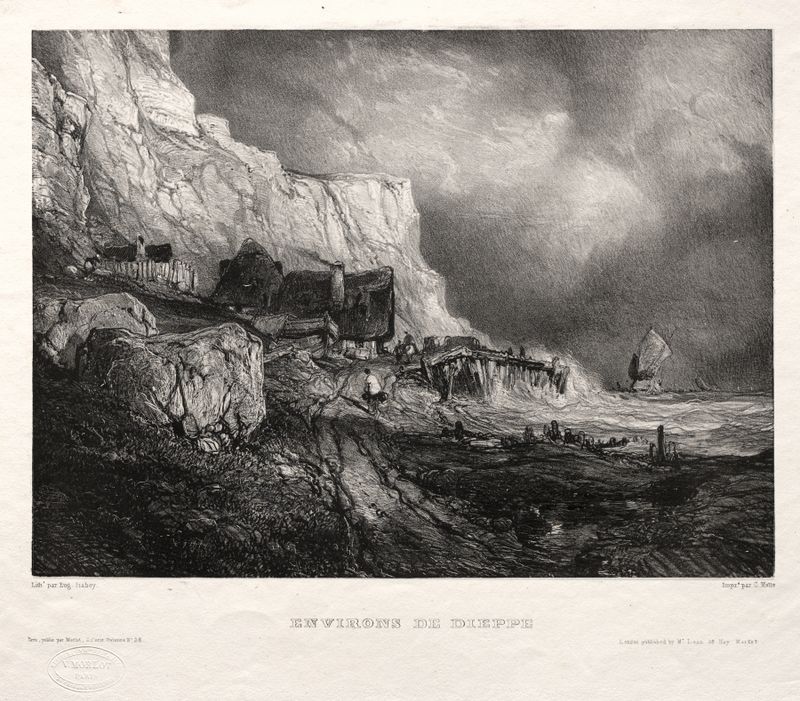
Environs de Dieppe
Eugène Isabey
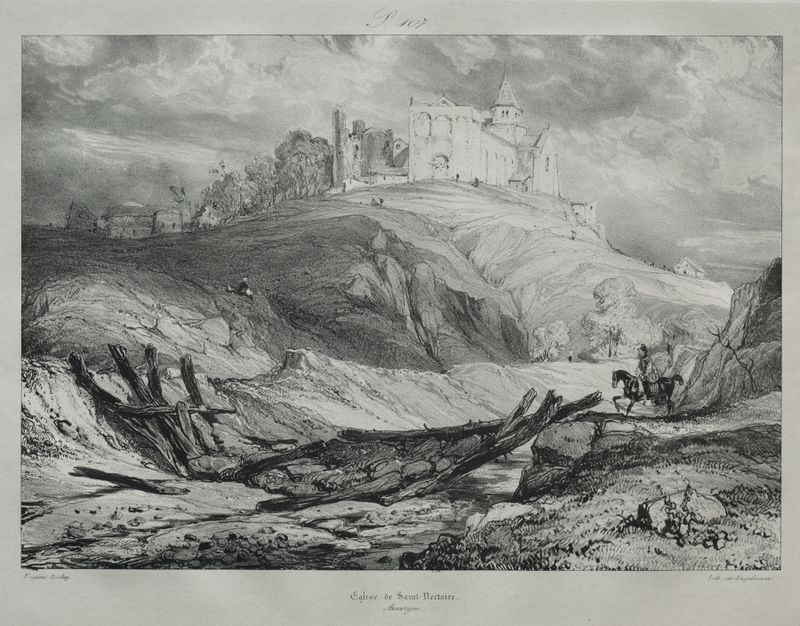
Église de St. Nectaire
Eugène Isabey

Fishing boat at the seaside
Eugène Isabey

Sunset on the Normandy Coast
Eugène Isabey
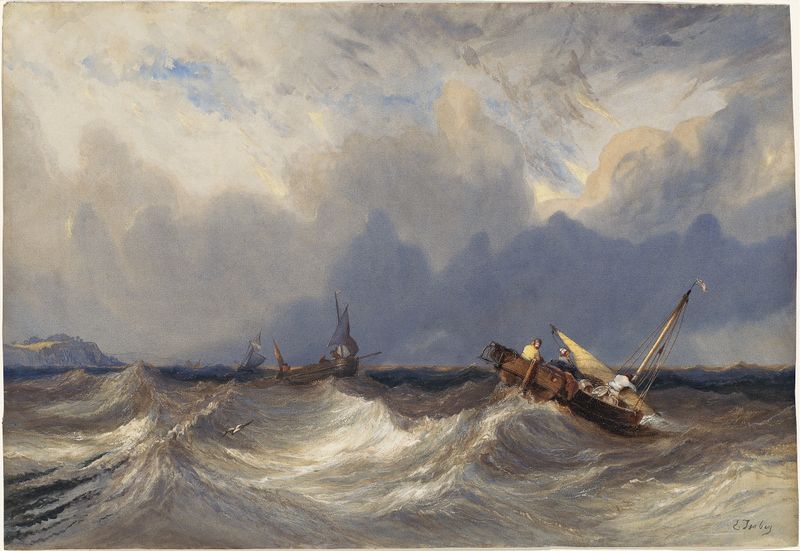
Fishing Boats Tossed before a Storm
Eugène Isabey
More Architecture Art
Browse all →
The statue of Liberty
Frédéric Auguste Bartholdi

View of Houses in Delft, Known as ‘The Little Street’
Johannes Vermeer

View of Houses in Delft, Known as ‘The Little Street’
Johannes Vermeer

The Cathedral in Rouen. The portal, Grey Weather
Claude Monet

The yellow house
Vincent van Gogh

The Church in Auvers-sur-Oise, View from the Chevet
Vincent van Gogh