
Acrobat with violin — History & Facts
What first seizes the eye in Acrobat with violin is the searching, unguarded gaze of the young performer—half child, half apparition—caught in a moment between spectacle and solitude. The violin, cradled like a lifeline, rests against his chest, its polished wood glowing against the dark, velvety backdrop. The boy’s costume, with its bright red yoke and frayed silver trim, hints at a world of circus tents and itinerant lives, yet his expression is anything but theatrical.
Light pools gently on his face and hands, drawing us into his inner world, while the rest dissolves into shadow and loose, almost reckless brushwork. The mood is intimate, uncertain—this is not a scene of performance, but of waiting, perhaps even longing. Painted in 1878, this work belongs to a period when artists like Antonio Mancini turned their attention to the lives of street performers, acrobats, and children on society’s margins. In late nineteenth-century Europe, such subjects were both a social commentary and a technical challenge: how to capture fleeting emotion, rough fabrics, and the glow of youth in oil or pastel.
While little is recorded about the journey of this particular painting, now in the Bottegantica Gallery, its presence speaks to the era’s fascination with the overlooked and the vulnerable. The art of this time often asked viewers to look twice, to see not just a costume or a prop, but the human being beneath—and this acrobat, with his violin and his faraway eyes, rewards such attention.
More Artworks by Antonio Mancini

Portrait of a lady
Antonio Mancini
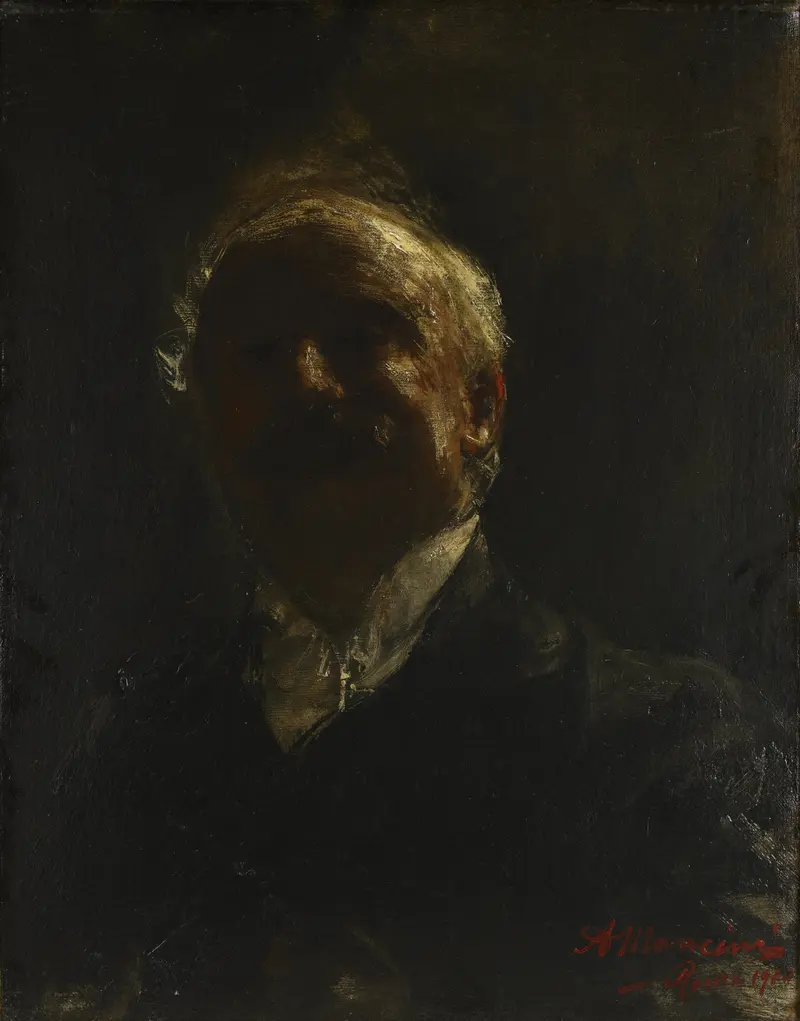
Self-Portrait
Antonio Mancini
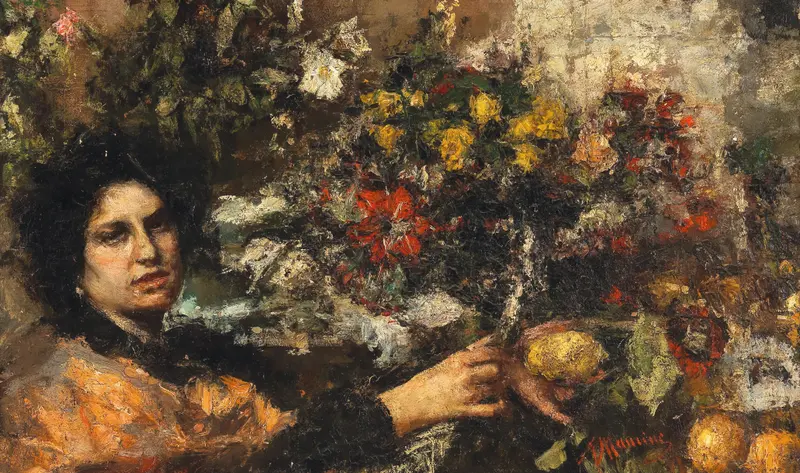
The Flower Seller
Antonio Mancini
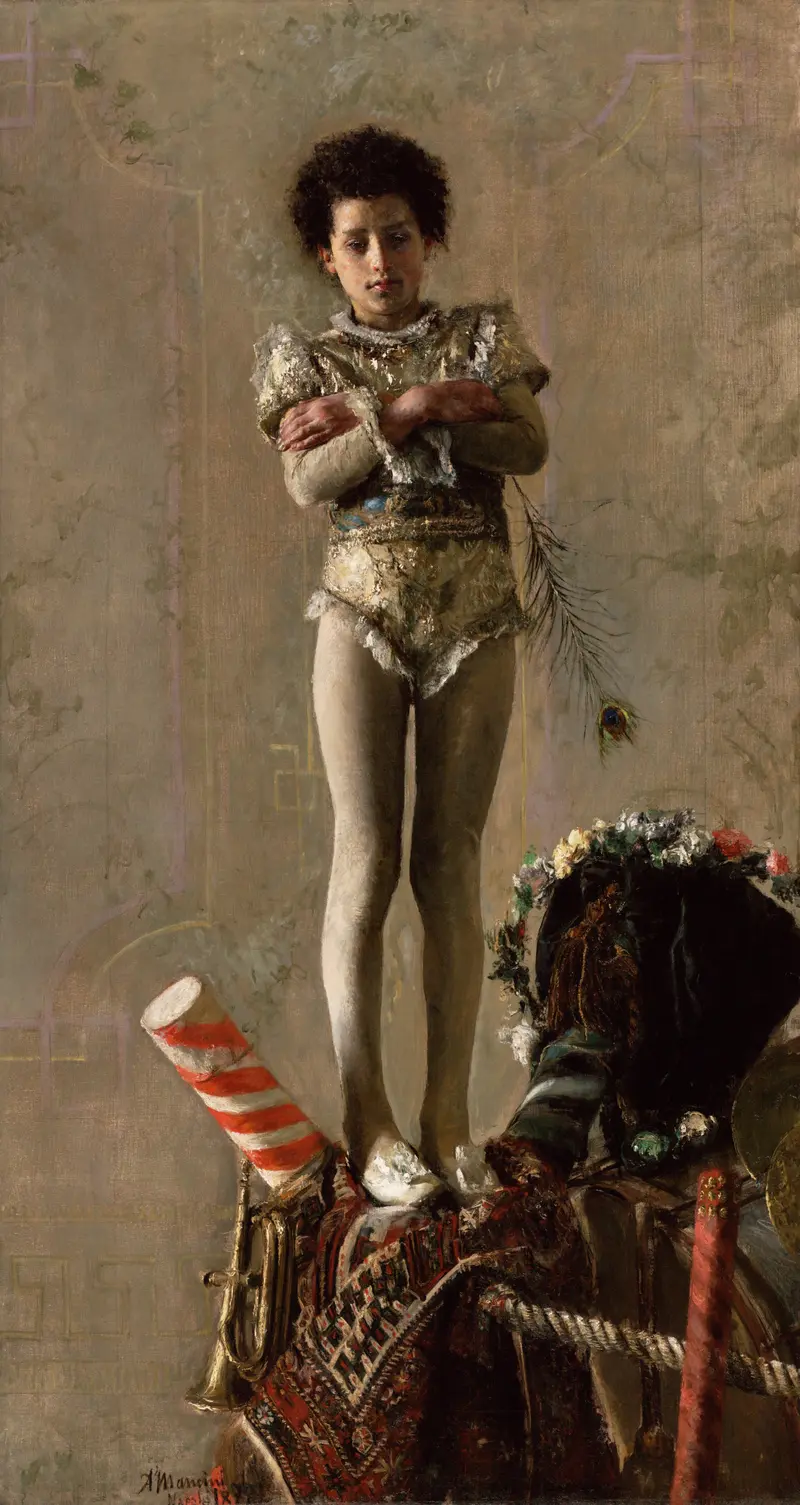
The Saltimbanco
Antonio Mancini
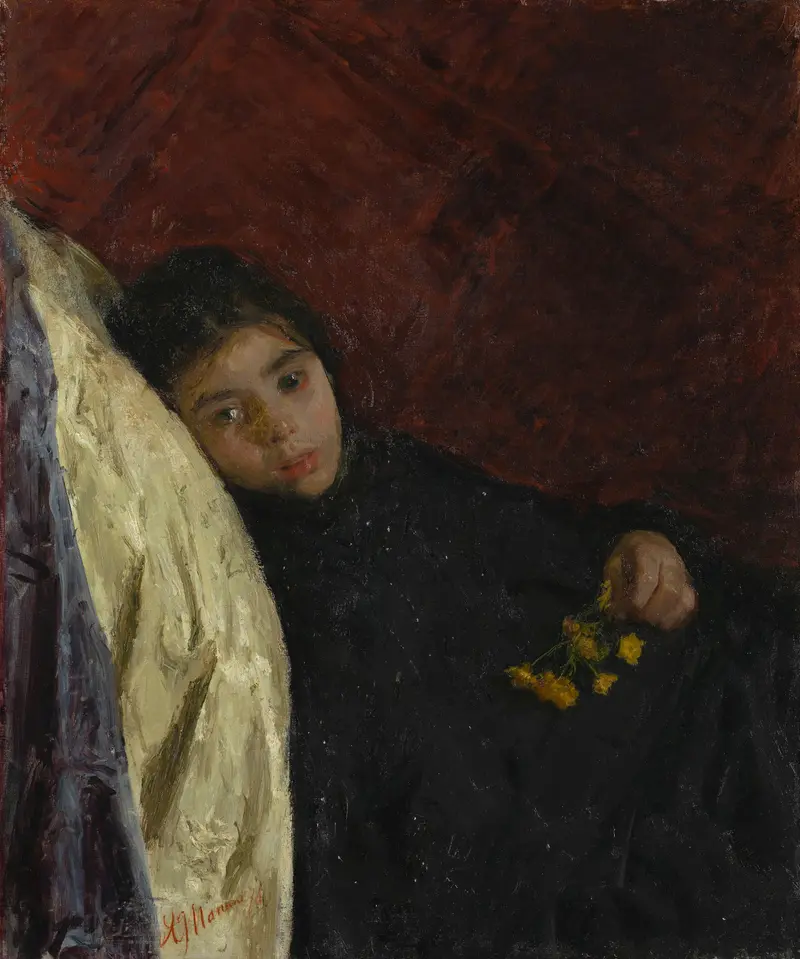
The sick child
Antonio Mancini
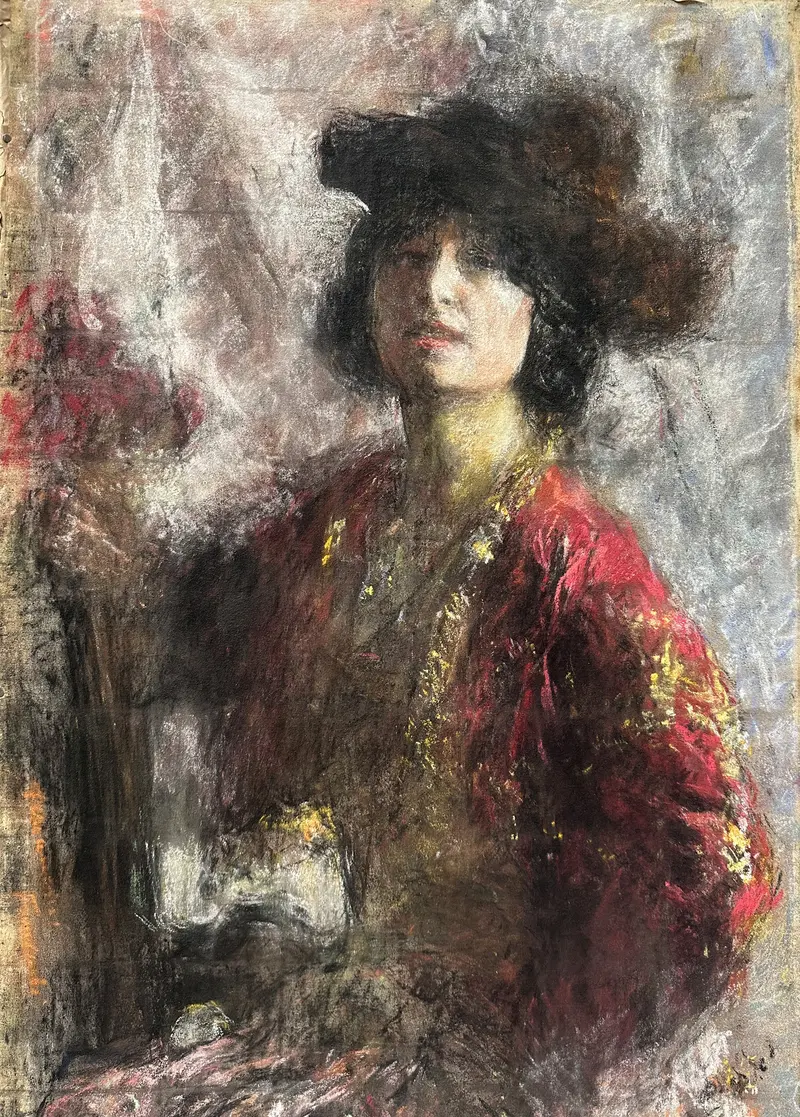
Bolero. Bullfighter
Antonio Mancini
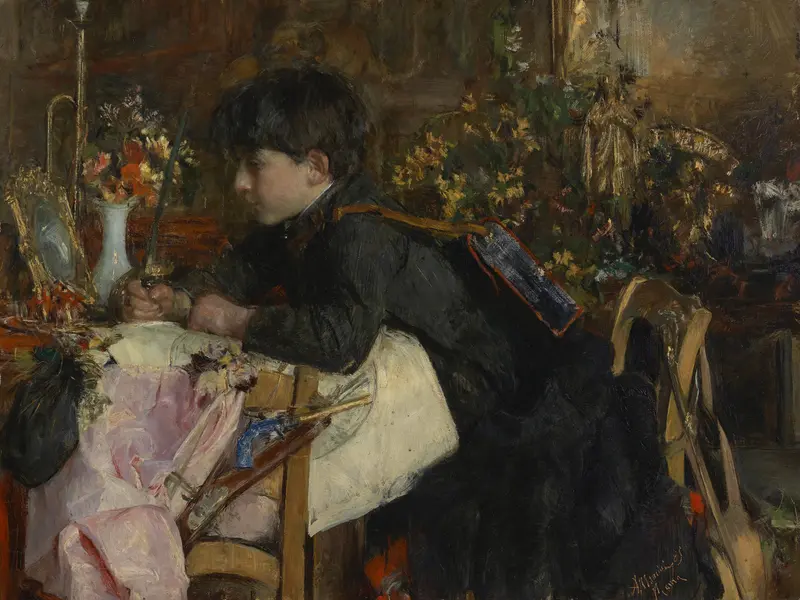
The birthday
Antonio Mancini
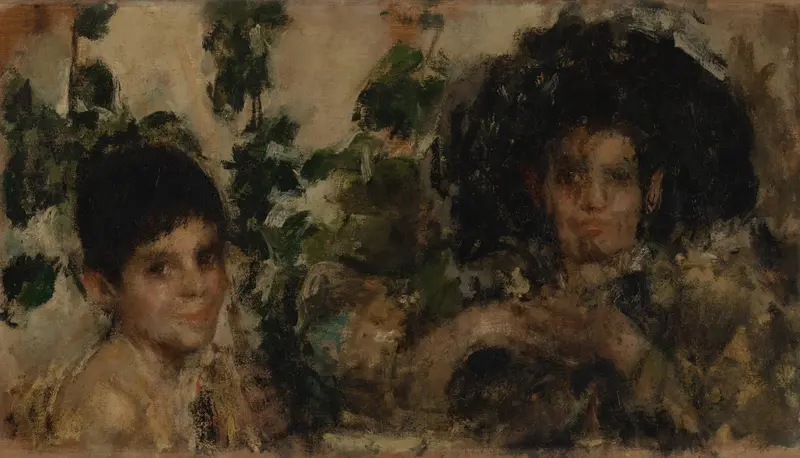
The brothers
Antonio Mancini
Liggend kind hwm0184v The Mesdag Collection
Antonio Mancini
Servetta
Antonio Mancini



