
Adoration of the Magi — History & Facts
Adoration of the Magi is an unfinished painting by Leonardo da Vinci, begun around 1481 and worked on until 1482. The work was commissioned for the monastery of San Donato a Scopeto near Florence, during a period when Leonardo was active in the city and developing his mature style. The subject is the traditional biblical scene of the Three Magi adoring the Christ Child, a theme common in Florentine art of the late fifteenth century. The composition centers on the seated Virgin Mary holding the Christ Child, with the Magi kneeling in reverence before them.
Surrounding figures, both standing and seated, fill the foreground and middle ground, their gestures and expressions rendered in energetic, unfinished brushwork. Architectural ruins and a winding staircase appear in the background, while a large tree rises behind the central group. The painting is executed in oil on panel, and much of the underdrawing and preparatory work is visible, revealing Leonardo’s process and experimentation with light, form, and spatial arrangement. The painting was left incomplete when Leonardo da Vinci departed Florence for Milan in 1482, and it remained in its unfinished state.
Over the centuries, it has been studied for its innovative composition and as a key example of Leonardo’s early artistic development. The work is now held in the collection of the Uffizi Gallery in Florence.
More Artworks by Leonardo da Vinci

Sheet of Studies
Leonardo da Vinci
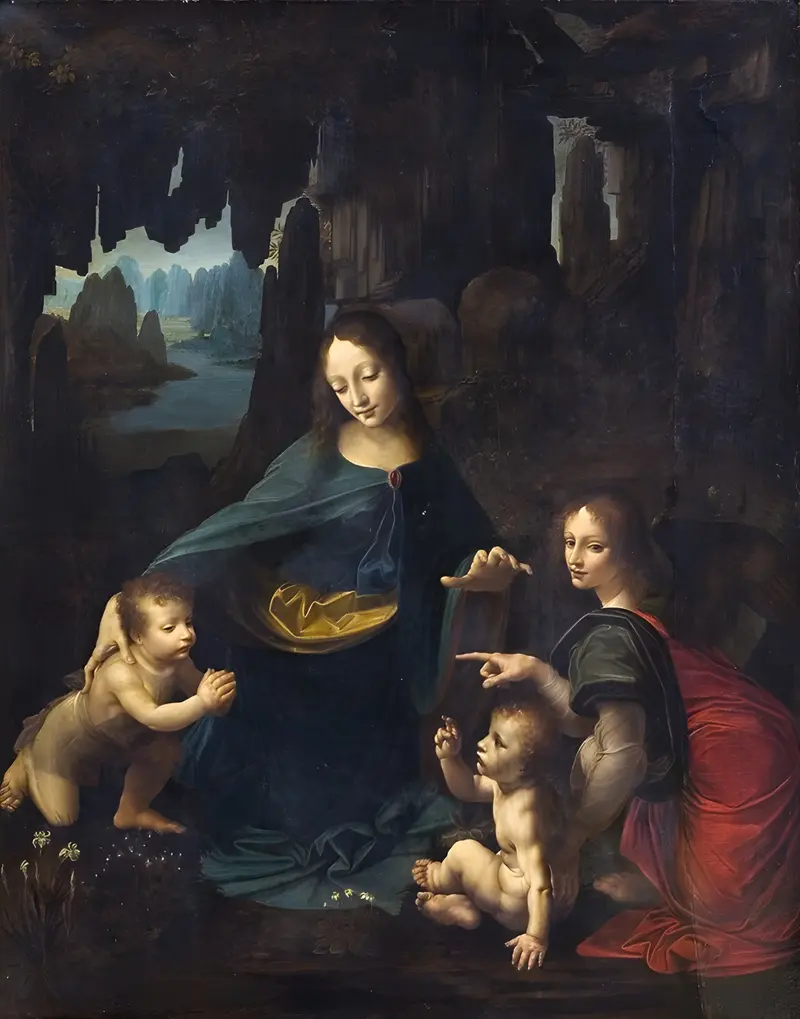
The Virgin of the Rocks
Leonardo da Vinci
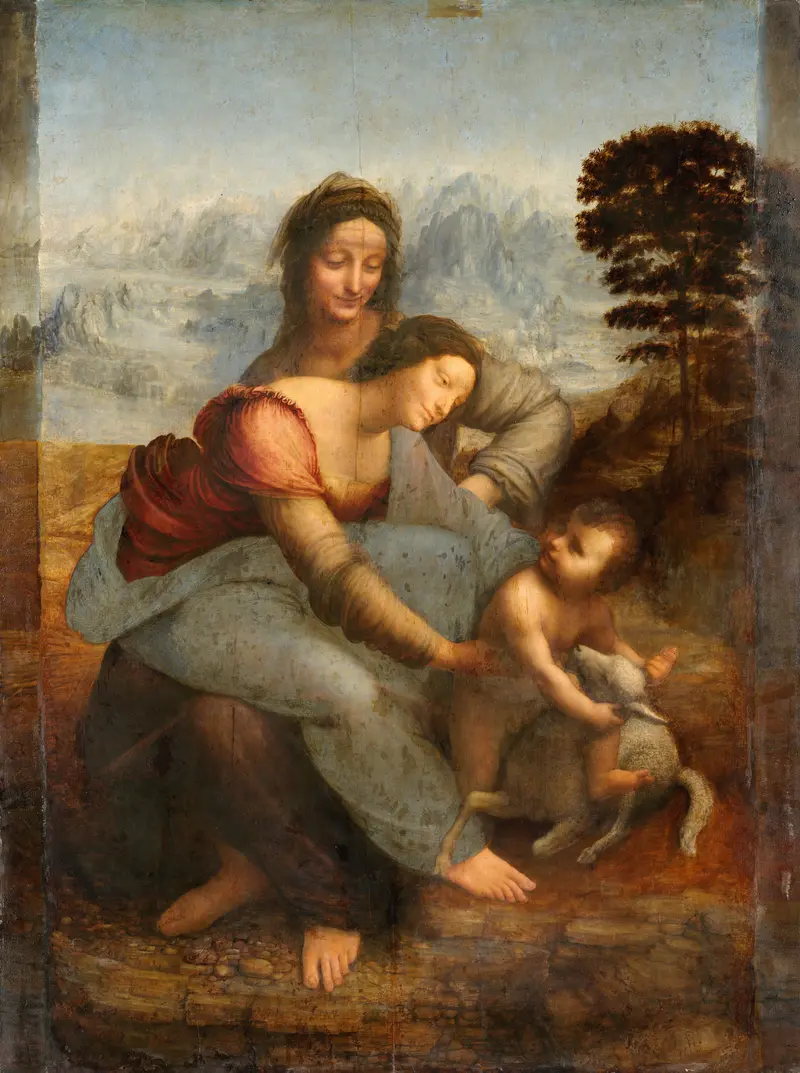
The Virgin and Child with St. Anne
Leonardo da Vinci
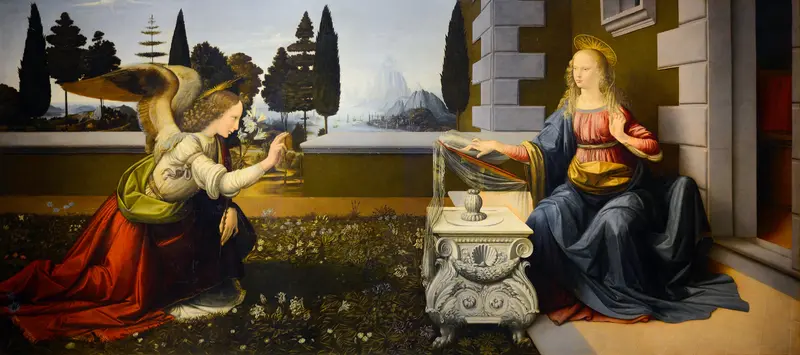
Annunciation
Leonardo da Vinci
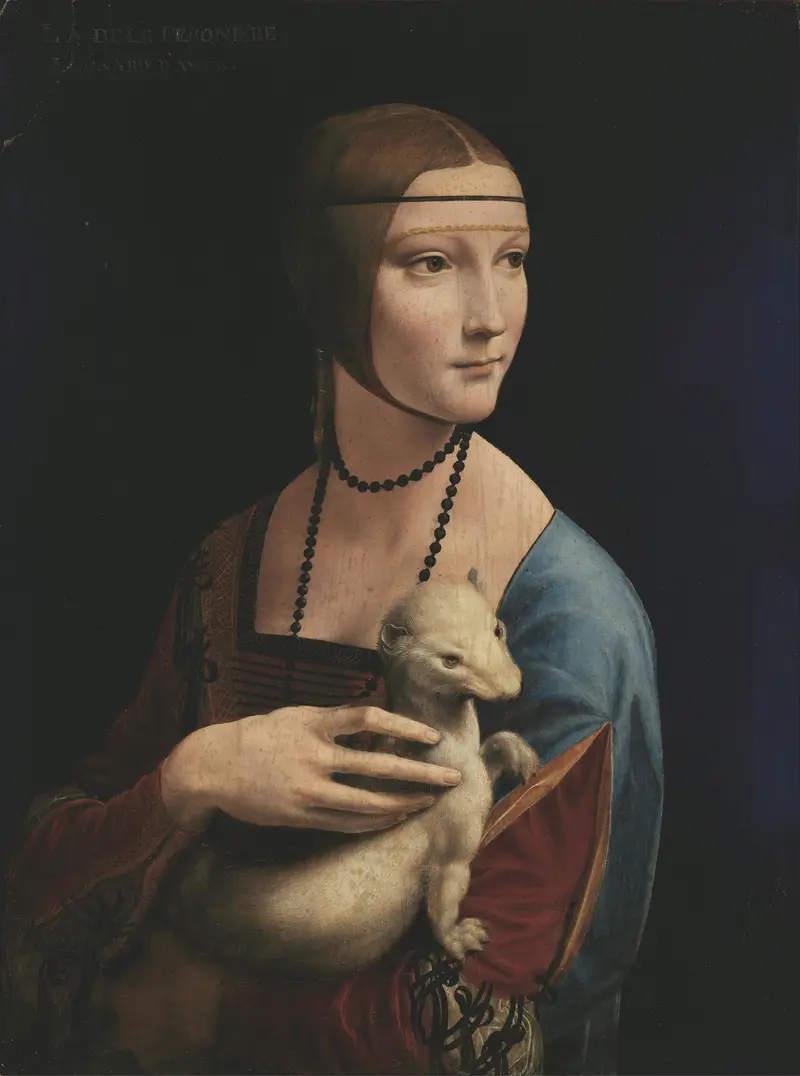
Lady with an Ermine
Leonardo da Vinci
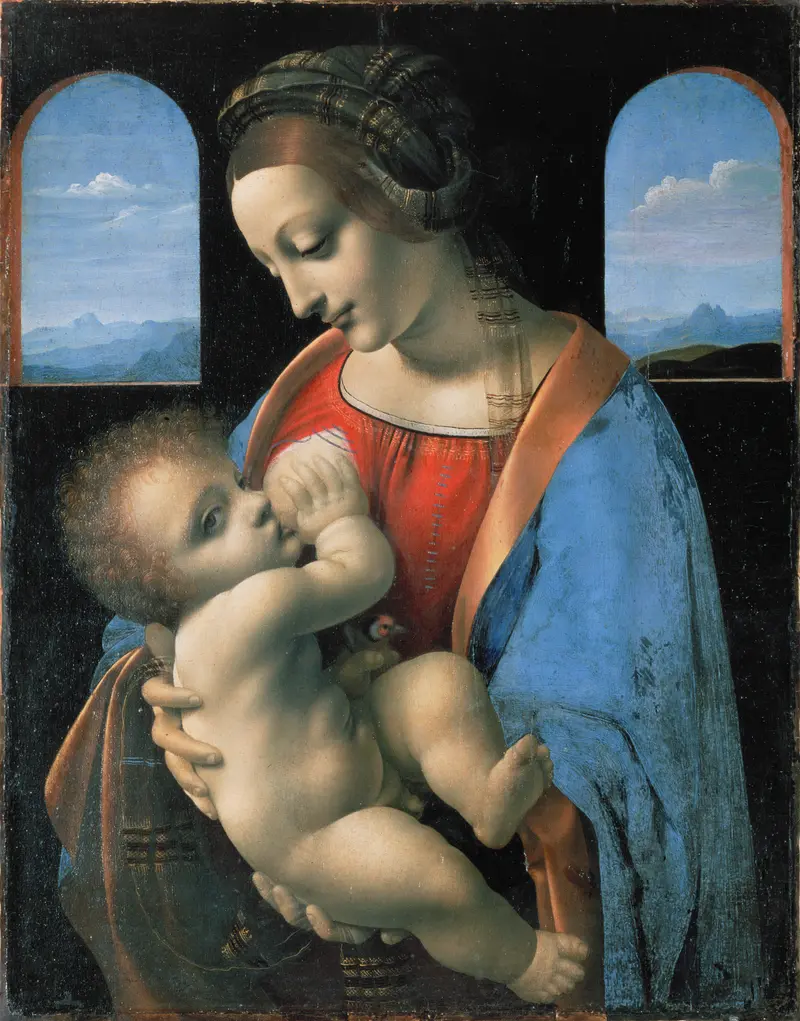
Madonna Litta
Leonardo da Vinci
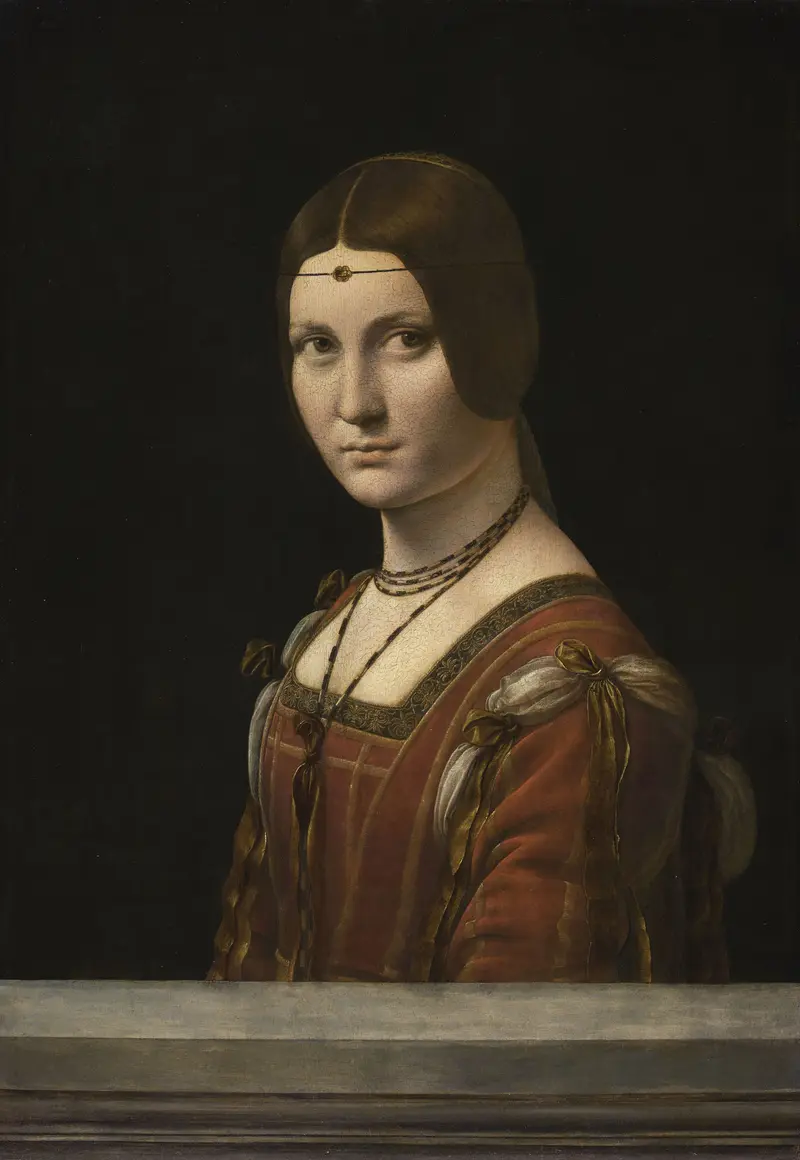
La Belle Ferronnière
Leonardo da Vinci
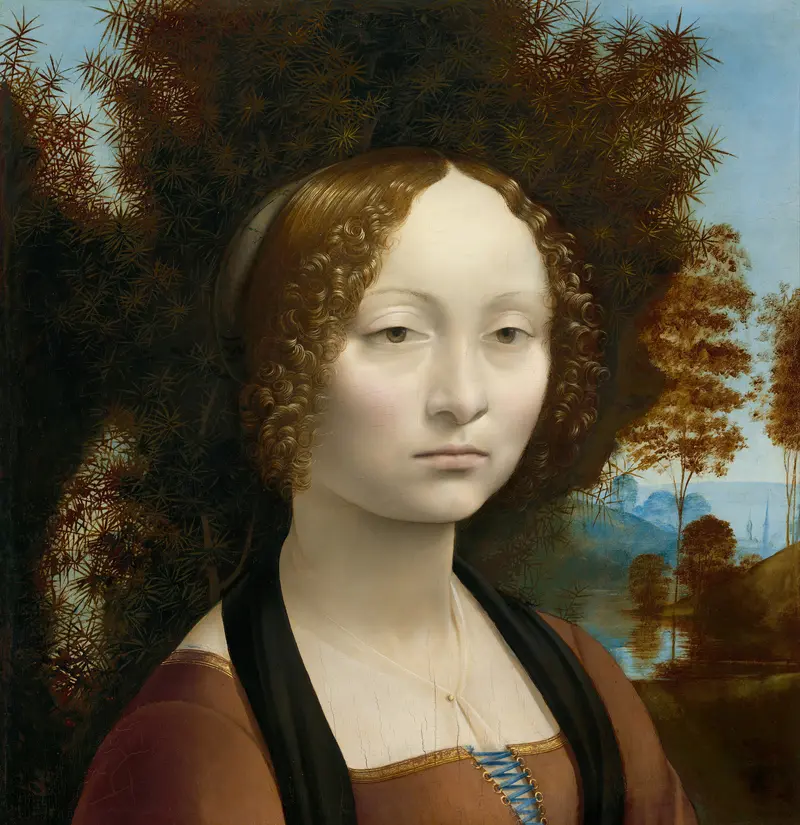
Ginevra de' Benci
Leonardo da Vinci
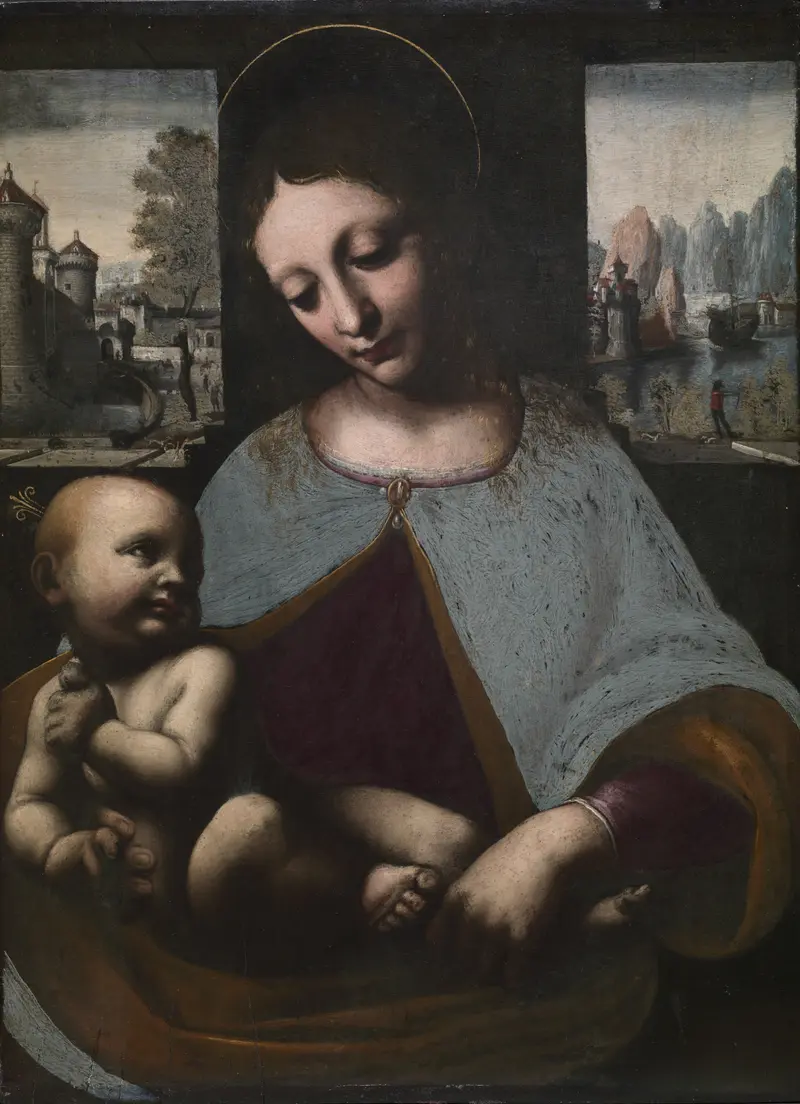
Virgin and Child
Leonardo da Vinci

Head of an Old Man, and Studies of Machinery
Leonardo da Vinci





