
Akhtyrka, Main Entry to the Dacha — History & Facts
What pulls you in first is the riot of color: the dacha’s wooden walls pulse with bands of yellow, orange, and blue, as if the structure itself is alive with memory and sunlight. The eye is drawn along the zigzag of the porch steps, then caught by the shadow-dappled path that leads to the threshold. The brushwork is urgent, almost musical, with each stroke setting up a rhythm between the solid geometry of the house and the restless, leafy forms beyond the fence.
Light pools and scatters across the scene, suggesting both the warmth of afternoon and the flickering uncertainty of a moment about to pass. The palette—so saturated and direct—turns this simple entrance into a stage, a place where the ordinary becomes charged with possibility. Painted in 1917, Akhtyrka, Main Entry to the Dacha belongs to a moment of upheaval and searching in Russian art. By this time, Wassily Kandinsky was already a pioneer of abstraction, but here he returns to the visible world, infusing a familiar rural subject with the bold color and angular forms of the modern era.
Dachas were cherished retreats for Russia’s urban intelligentsia, and paintings like this one often served as tokens of nostalgia or personal refuge. The year 1917 marked revolution and the collapse of old certainties; in this context, the dacha’s entryway becomes more than a passage—it is a threshold between worlds, rendered with all the intensity and uncertainty of its time. The longer you look, the more the painting asks: what lies on the other side of this door?
More Artworks by Wassily Kandinsky

Improvisation 35
Wassily Kandinsky
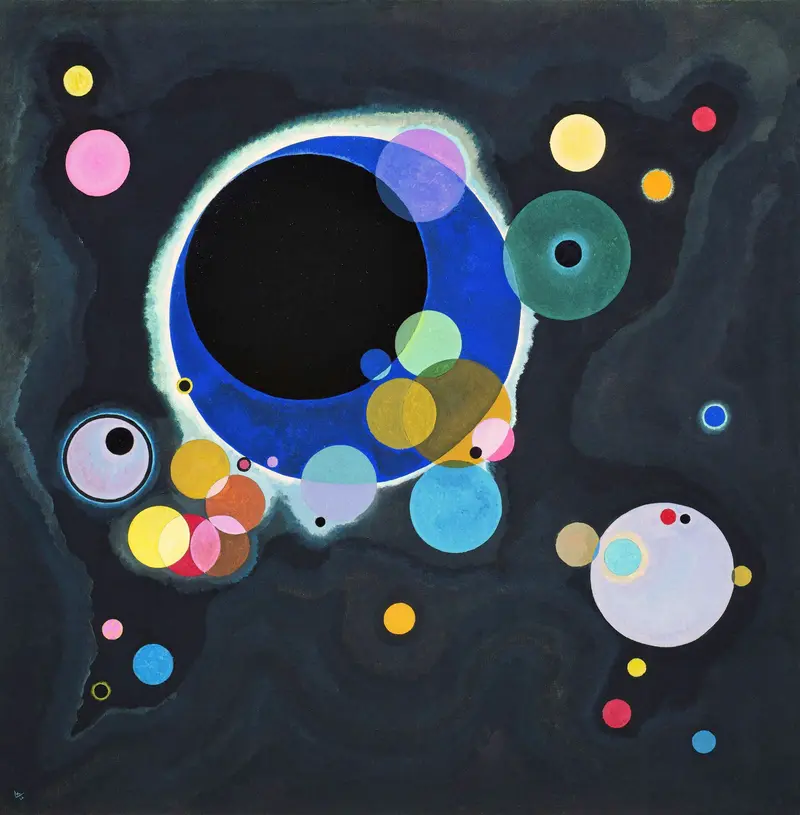
Several Circles
Wassily Kandinsky
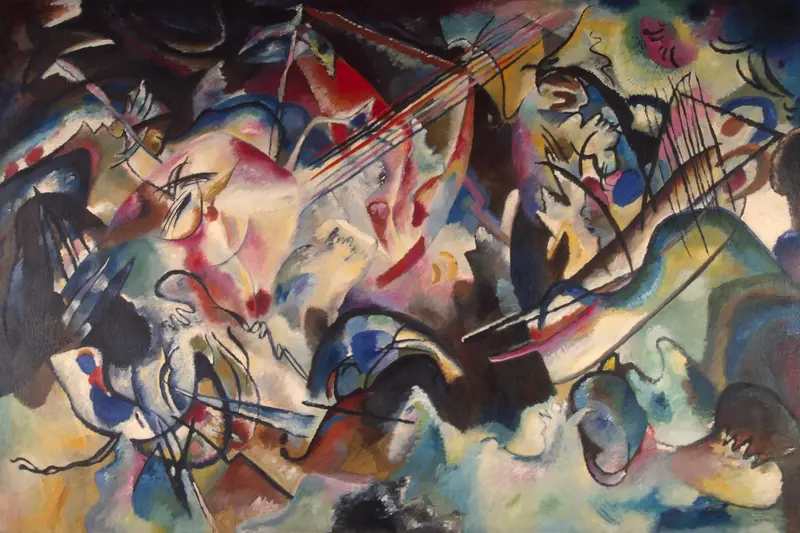
Composition VI
Wassily Kandinsky
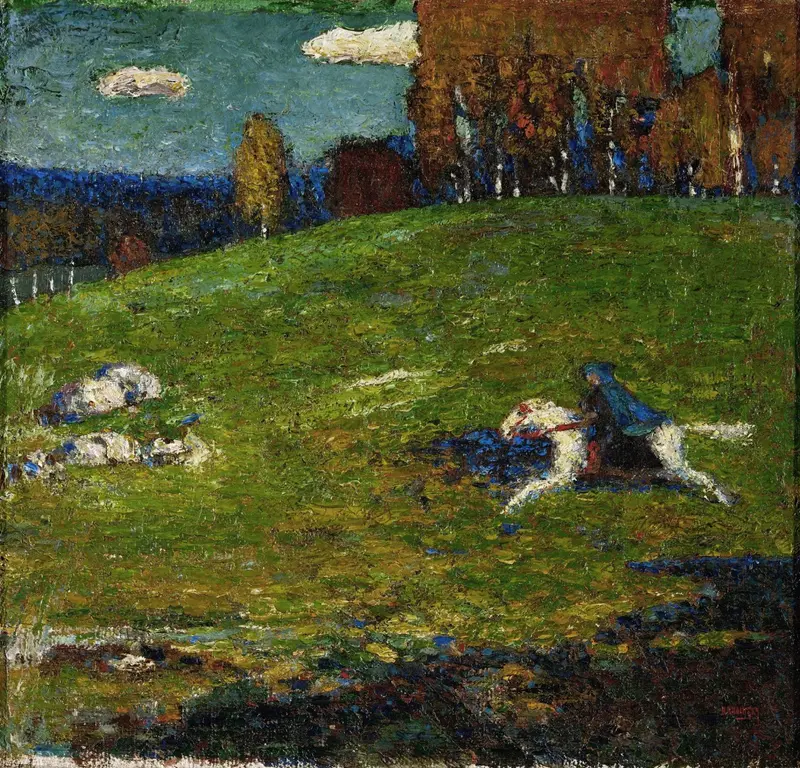
The Blue Rider
Wassily Kandinsky

Murnau
Wassily Kandinsky
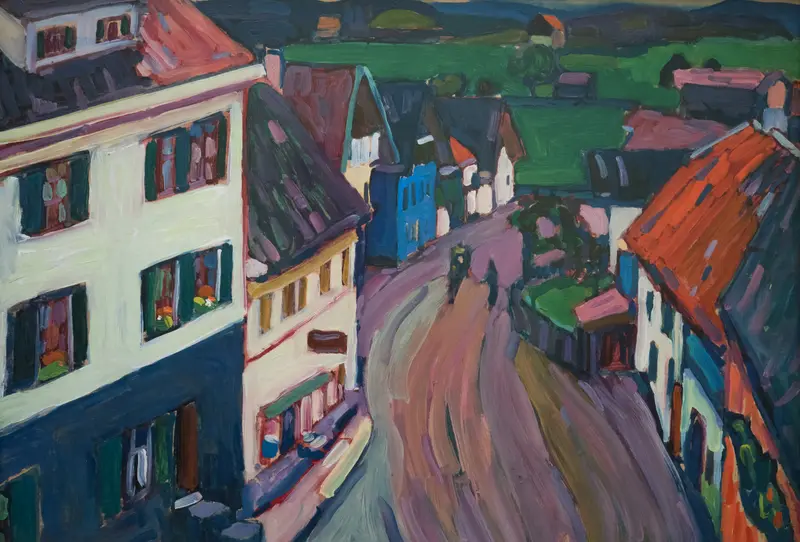
Murnau – View from the window of the Griesbräu
Wassily Kandinsky
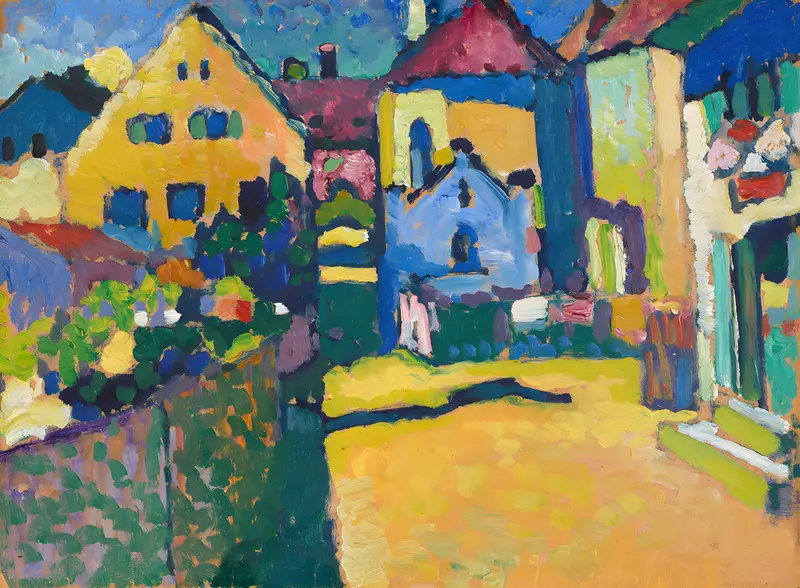
Green Lane in Murnau
Wassily Kandinsky
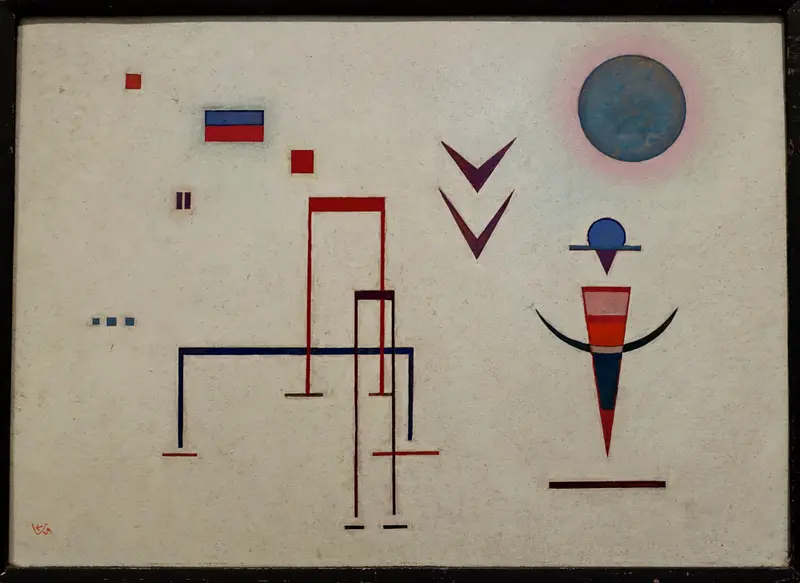
Jocular Sounds
Wassily Kandinsky

Zubovsky Platz
Wassily Kandinsky

Landscape with a yellow field
Wassily Kandinsky
More Landscape Art

The Starry Night
Vincent van Gogh

View of Delft
Johannes Vermeer

Water Lilies
Claude Monet

The Grand Canal, Venice, looking north-west from the Ca' Corner to the Ca' Contarini degli Scrigni, with the campanile of Santa Maria della Carità
Canaletto

Windsor Castle
Canaletto

The Grand Canal looking North-East from the Palazzo Dolfin-Manin to the Rialto Bridge
Canaletto