
Akhtyrka, Nearby Dacha at the Pond's Edge — History & Facts
The first thing that catches the eye in Akhtyrka, Nearby Dacha at the Pond's Edge is the riot of color, as if the landscape itself is pulsing with energy just beneath the surface. The hillside blazes with orange and yellow, tumbling down toward a pond that doubles the world above it in a shimmering, fractured reflection. The dacha, perched at the crest, seems almost to hover—its roof a cool green anchor amid the surrounding heat.
Kandinsky’s brushwork is urgent and alive, each stroke a decision, each patch of color a note in a visual symphony. The trees, rendered in bold, looping outlines, cluster protectively around the house, their forms echoing in the water below. Painted in 1917, this work belongs to a world in flux, both for Russia and for Wassily Kandinsky himself. The years around the First World War and the Russian Revolution saw artists searching for new ways to capture the spirit of their time, often turning to landscape as a site of memory and longing.
Kandinsky, a pioneer of abstraction, was deeply attuned to the expressive power of color and form, and here he bends the landscape to his vision—less a record of a place than a record of feeling. The painting’s presence today in the Google Art & Culture collection is a reminder that history has kept few traces of some works, leaving us with the image itself as the truest witness. Let your gaze linger on the shoreline, where paint and reflection blur, and consider what it means to see the world remade through an artist’s eyes.
More Artworks by Wassily Kandinsky

Improvisation 35
Wassily Kandinsky
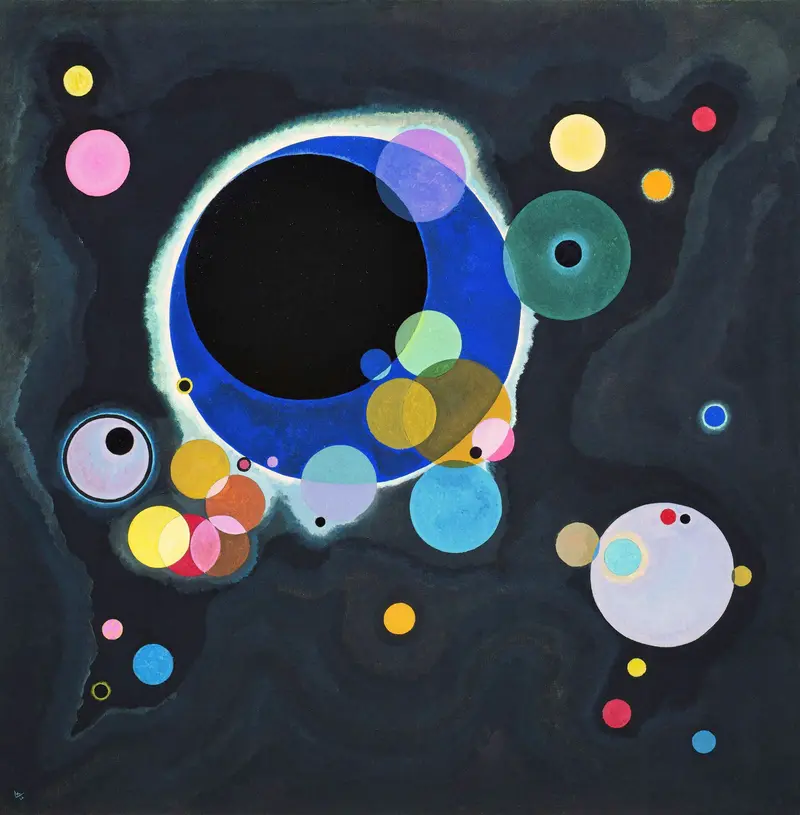
Several Circles
Wassily Kandinsky
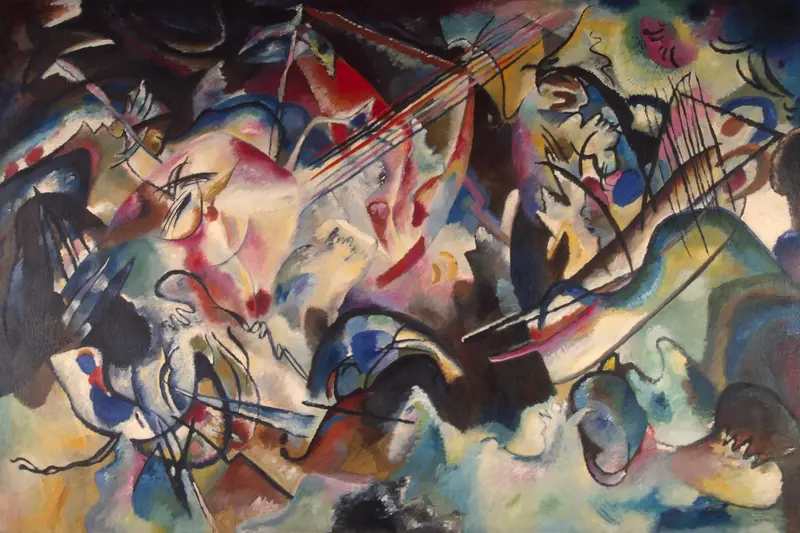
Composition VI
Wassily Kandinsky
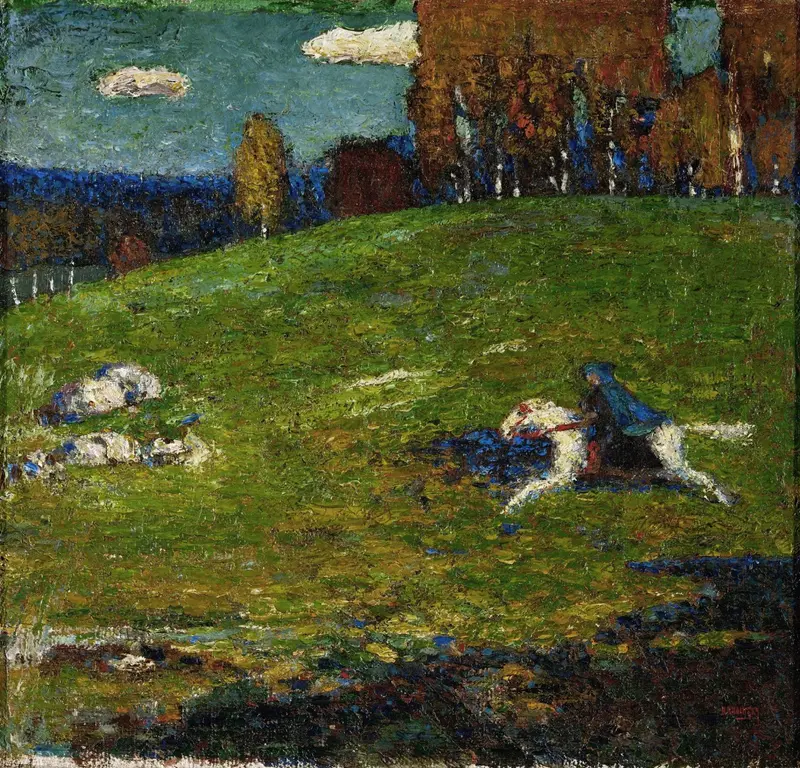
The Blue Rider
Wassily Kandinsky

Murnau
Wassily Kandinsky
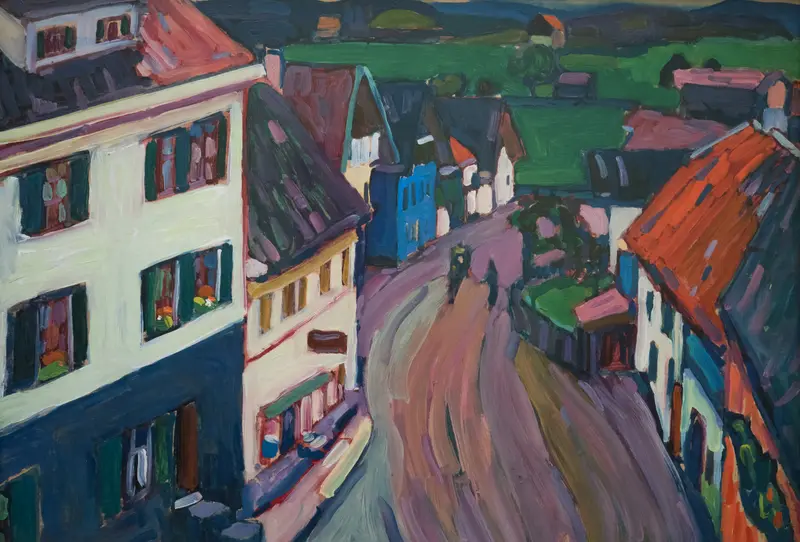
Murnau – View from the window of the Griesbräu
Wassily Kandinsky
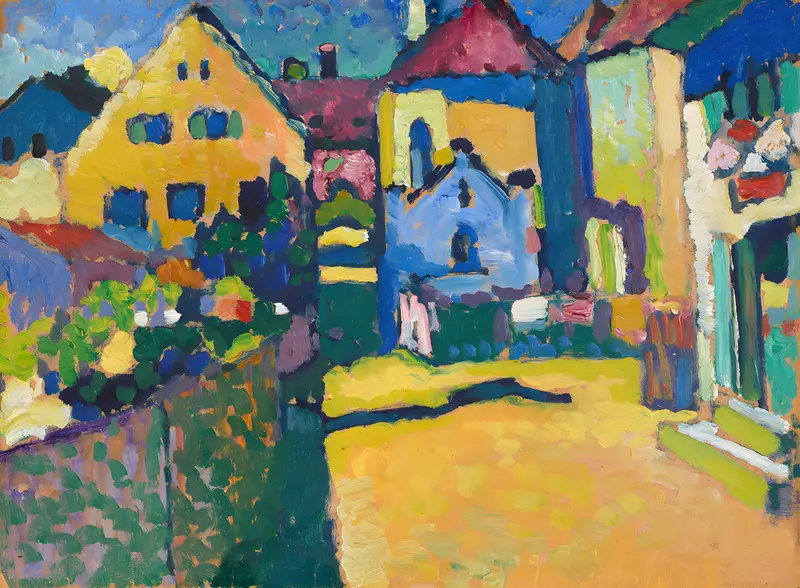
Green Lane in Murnau
Wassily Kandinsky
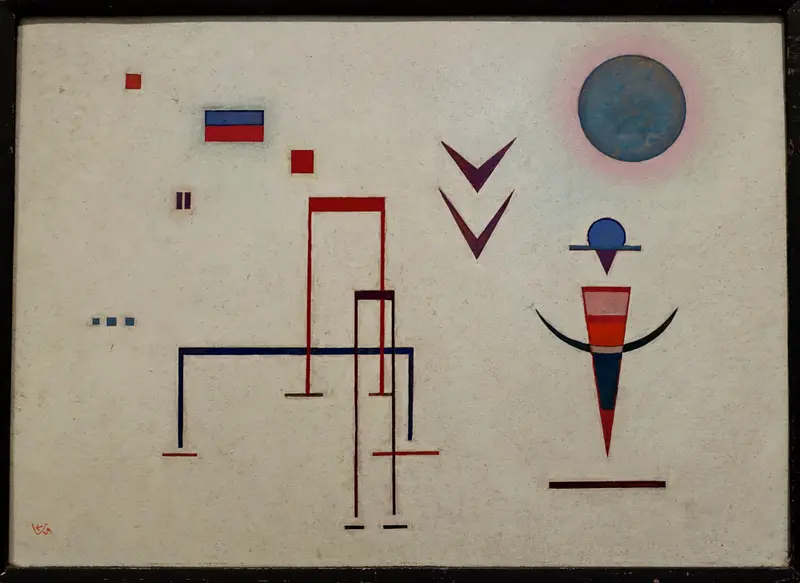
Jocular Sounds
Wassily Kandinsky

Zubovsky Platz
Wassily Kandinsky

Landscape with a yellow field
Wassily Kandinsky
More Landscape Art

The Starry Night
Vincent van Gogh

View of Delft
Johannes Vermeer

Water Lilies
Claude Monet

The Grand Canal, Venice, looking north-west from the Ca' Corner to the Ca' Contarini degli Scrigni, with the campanile of Santa Maria della Carità
Canaletto

Windsor Castle
Canaletto

The Grand Canal looking North-East from the Palazzo Dolfin-Manin to the Rialto Bridge
Canaletto