
Alchemist Sendivogius and Sigismund III, sketch — History & Facts
In 1867, Jan Matejko turned to a little-known episode from Polish history: the fabled encounter between the enigmatic alchemist Michał Sędziwój (Sendivogius) and King Sigismund III Vasa. This meeting, believed to have taken place around the turn of the 17th century, was the subject of fascination in Matejko’s time, when the boundaries between science and magic were still debated. The artist’s choice was daring—few painters before him had ventured to depict the secretive world of alchemy, much less its intersection with royal power.
The sketch is one of several studies Matejko made as he prepared his monumental cycle of Polish history, and it stands out for its lively immediacy. Matejko captures the moment when Sendivogius, reputed to possess the secret of transmuting base metals into gold, presents his mysterious process to the skeptical but intrigued king. The alchemist leans forward, gesturing toward a crucible, his face lit by the flickering glow of an unseen fire. Sigismund III, resplendent in his fur-trimmed robe, regards the demonstration with a mixture of suspicion and hope, his hand resting on a table scattered with glass vessels and arcane instruments.
The composition’s dramatic lighting—firelight on Sendivogius, shadow on the king—emphasizes the tension between hidden knowledge and royal authority. Unlike Rembrandt’s The Alchemist in His Study, which isolates the scholar in solitary contemplation, Matejko places science and power in direct, uneasy dialogue. The precise medium of this sketch is not clearly documented, though it bears the loose, vigorous lines characteristic of Matejko's preparatory works. It was likely created as part of his research for larger canvases on Polish history, a project that would define his career and national reputation.
While the finished painting based on this scene is housed in the Wawel Royal Castle, the sketch itself has remained in lesser-known collections and has rarely been exhibited. Today, it is valued not only as a glimpse into Matejko’s working process but also as a testament to his fascination with the interplay of myth, science, and power in Poland’s past.
More Artworks by Jan Matejko
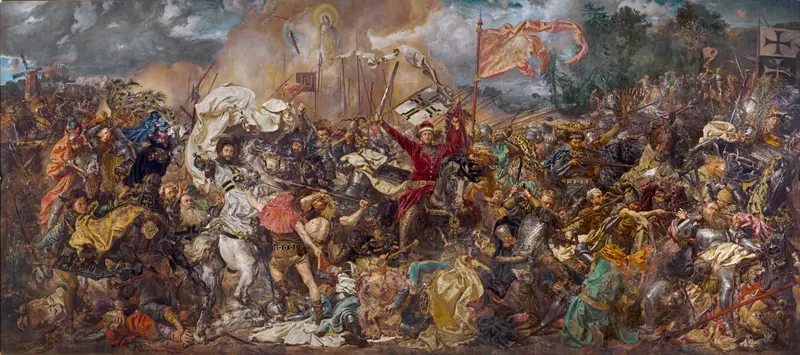
Battle of Grunwald
Jan Matejko

Stańczyk
Jan Matejko

Battle of Raclawice
Jan Matejko
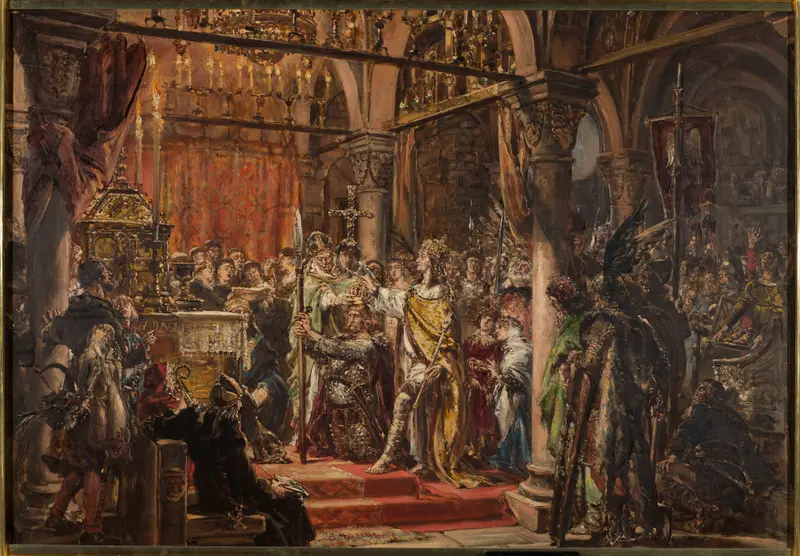
Coronation of the First King, 1001 AD, from the series “History of Civilization in Poland”
Jan Matejko
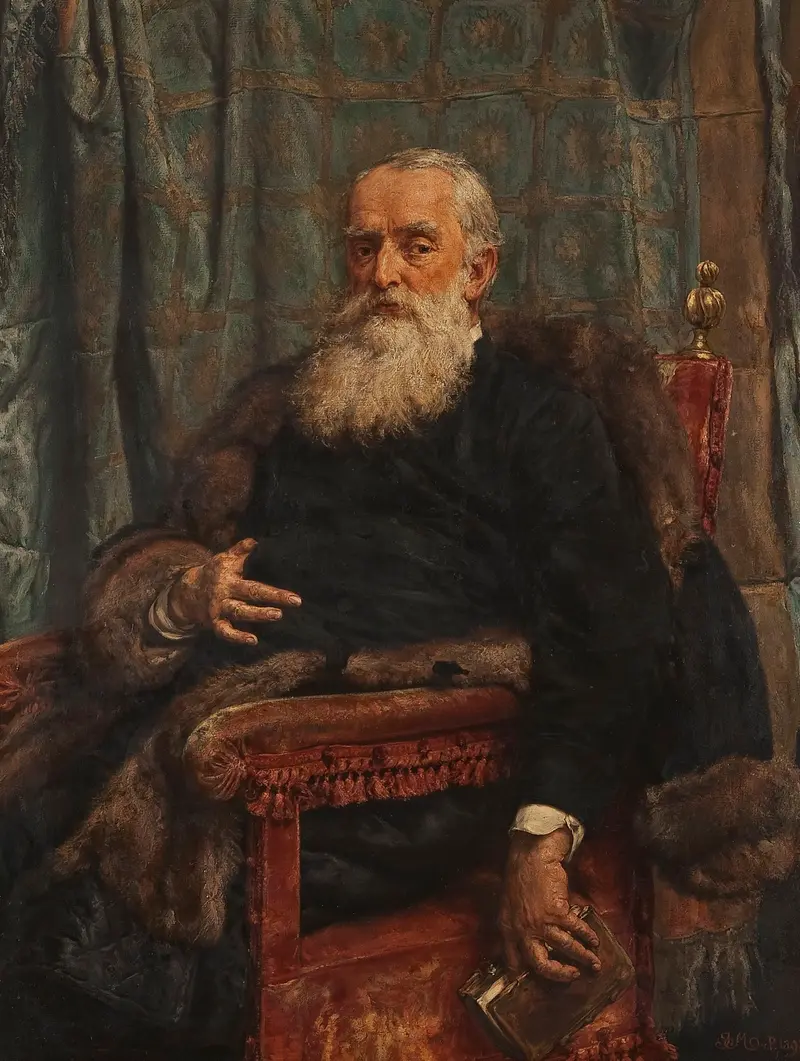
Portrait of Henryk Krajewski
Jan Matejko
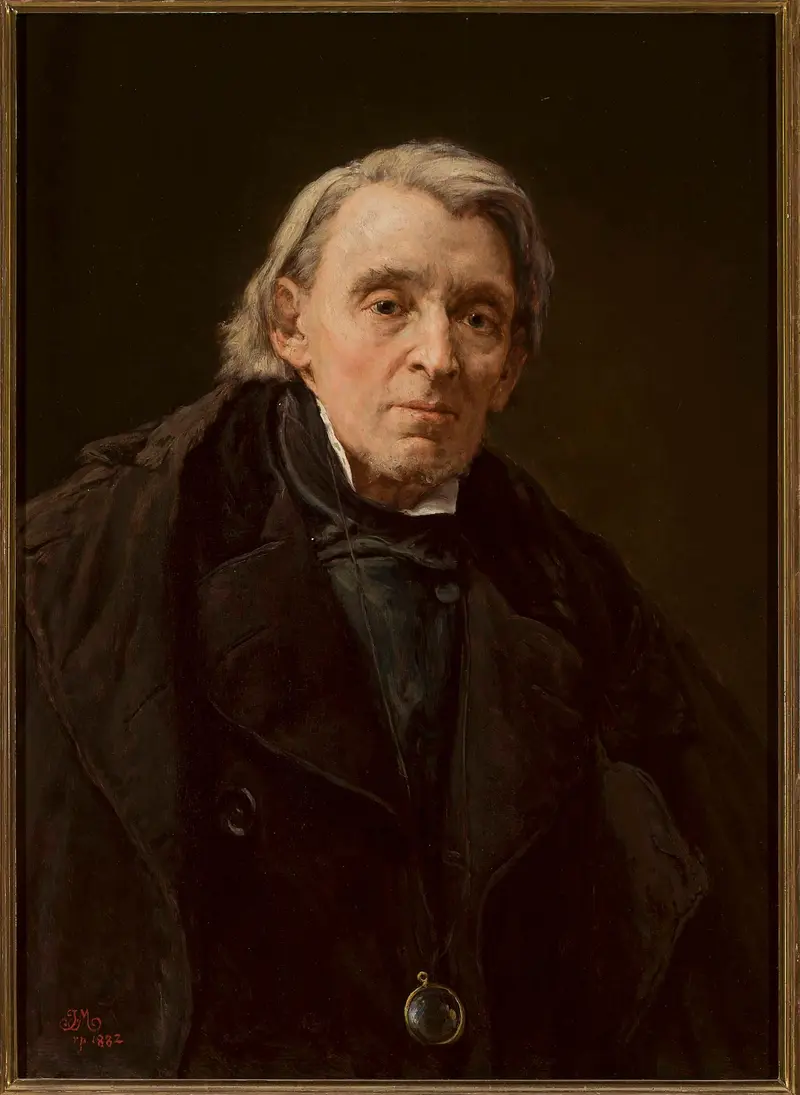
Portrait of Karol Podlewski
Jan Matejko
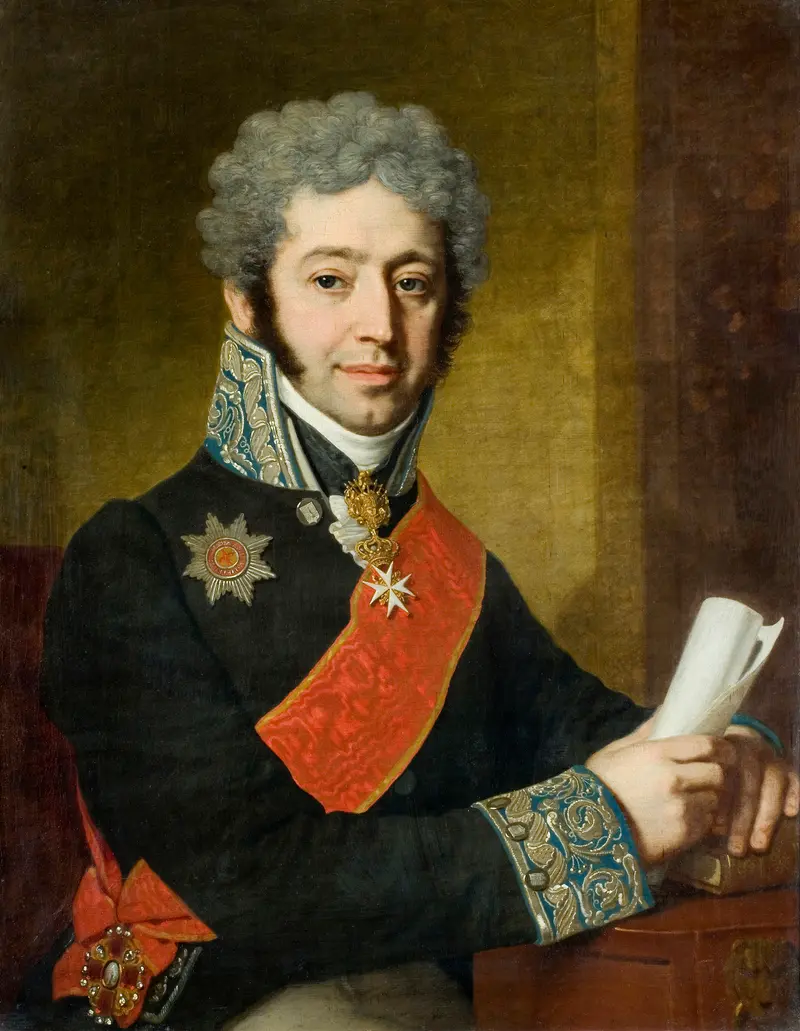
Portrait of Potocki and Poninski
Jan Matejko
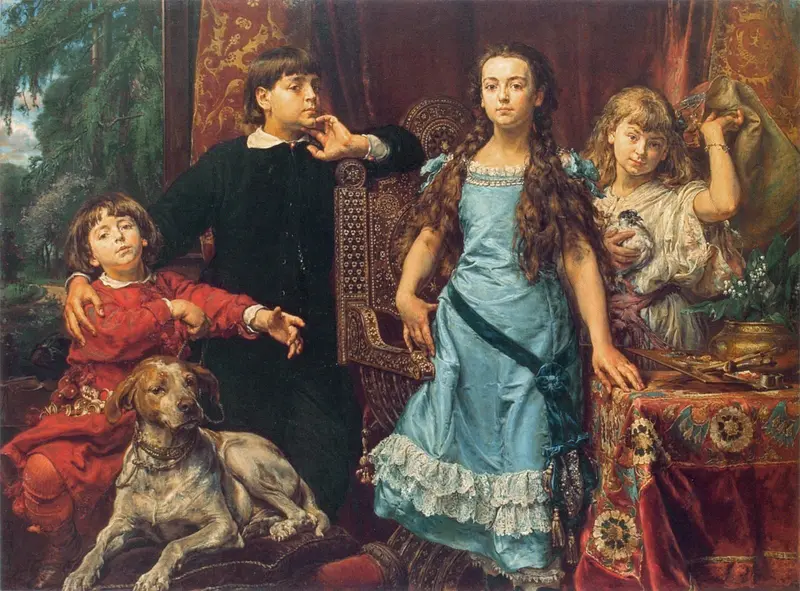
Portrait of the artist's four children
Jan Matejko
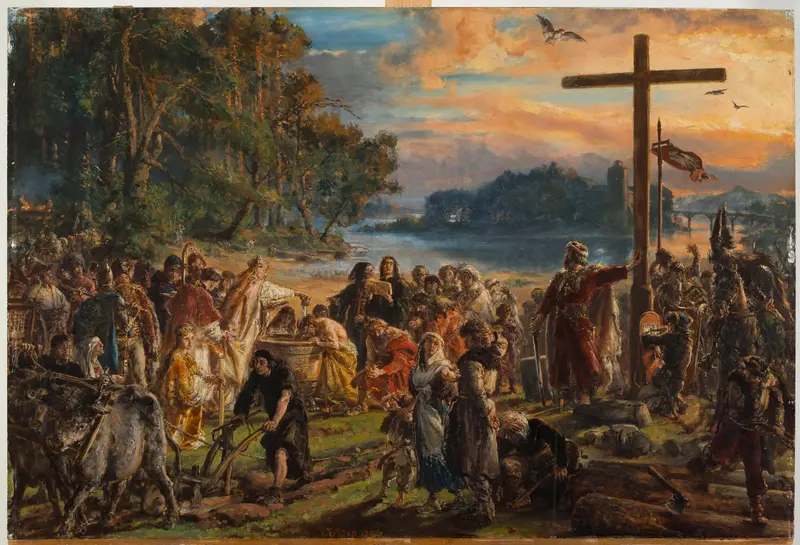
Introduction of Christianity in Poland
Jan Matejko
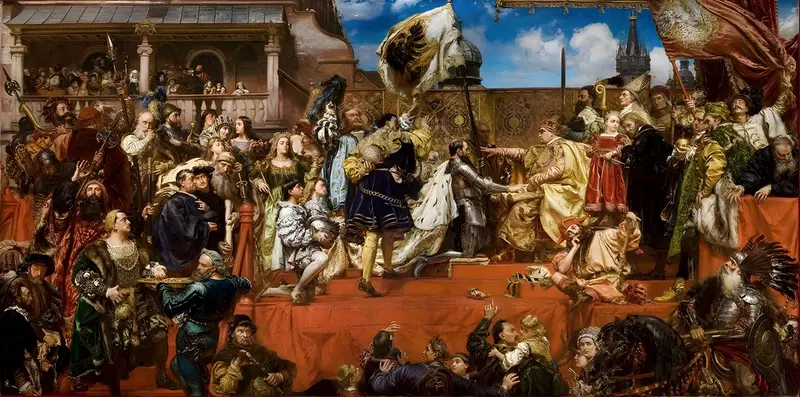
Prussian Homage
Jan Matejko





