
Allegory of Virtue and Nobility — History & Facts
In Allegory of Virtue and Nobility, Tiepolo employs a vibrant palette dominated by golds, blues, and reds. The painting features allegorical figures representing virtue and nobility, elegantly draped in flowing garments. The setting is a grand, idealized landscape that enhances the figures' prominence.
Light plays a crucial role, highlighting the intricate details of the clothing and the serene expressions of the figures. The painting is executed in oil on canvas, a medium that allows for rich color saturation and fine detail. Tiepolo's brushwork is fluid, creating a sense of movement among the figures. The dimensions are approximately 200 x 150 cm, making it a large-scale work that commands attention.
The composition is balanced, with figures arranged harmoniously within the space. Giovanni Battista Tiepolo was a leading painter of the Rococo style, known for his dramatic use of color and light. Allegory of Virtue and Nobility reflects his mastery in creating dynamic compositions filled with allegorical meaning. An interesting fact about this work is that it was likely commissioned for a noble family, emphasizing the themes of virtue and nobility that resonate throughout the piece.
Tiepolo's influence can be seen in many subsequent artists who sought to emulate his vibrant style.
More Artworks by Giovanni Battista Tiepolo
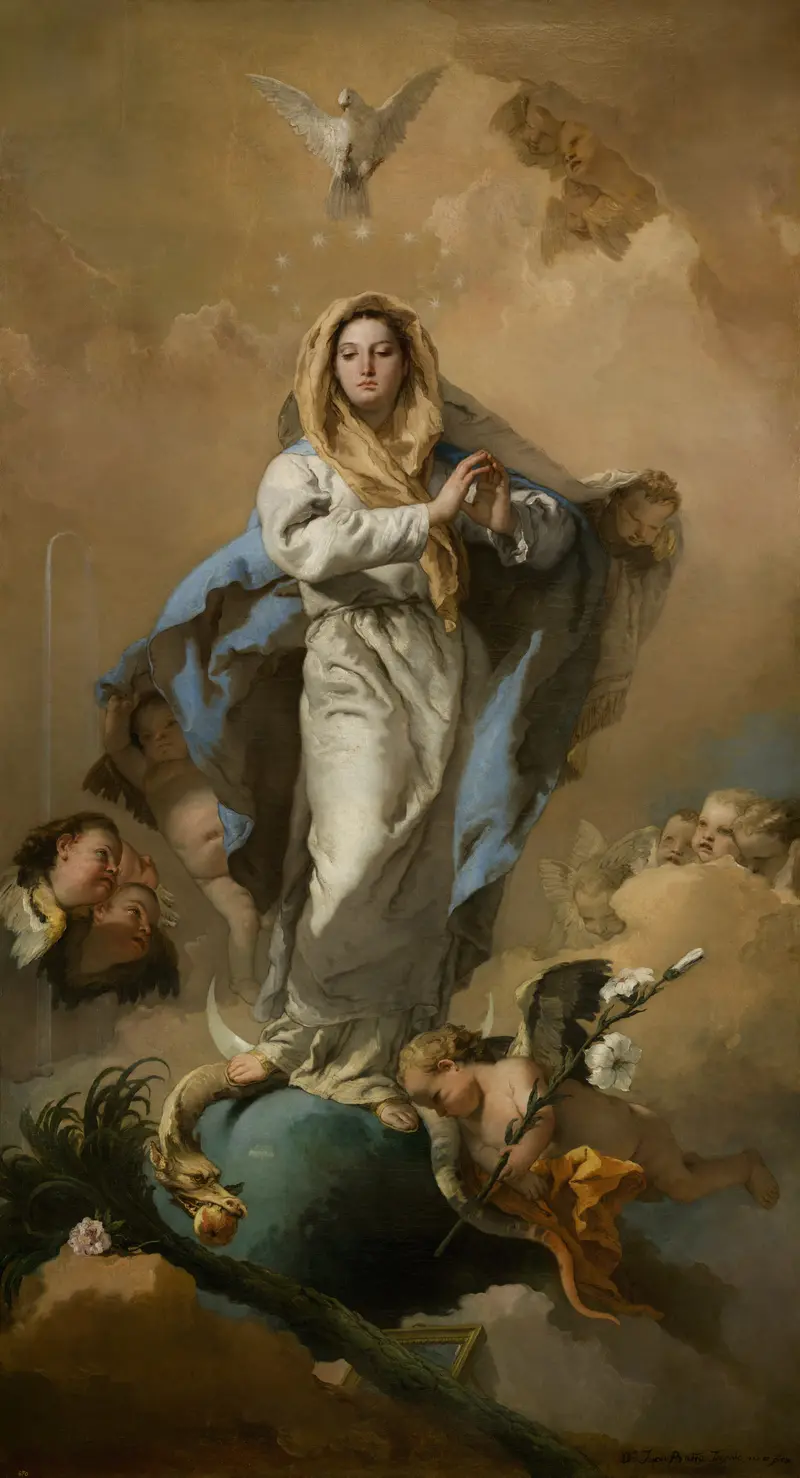
The Immaculate Conception
Giovanni Battista Tiepolo
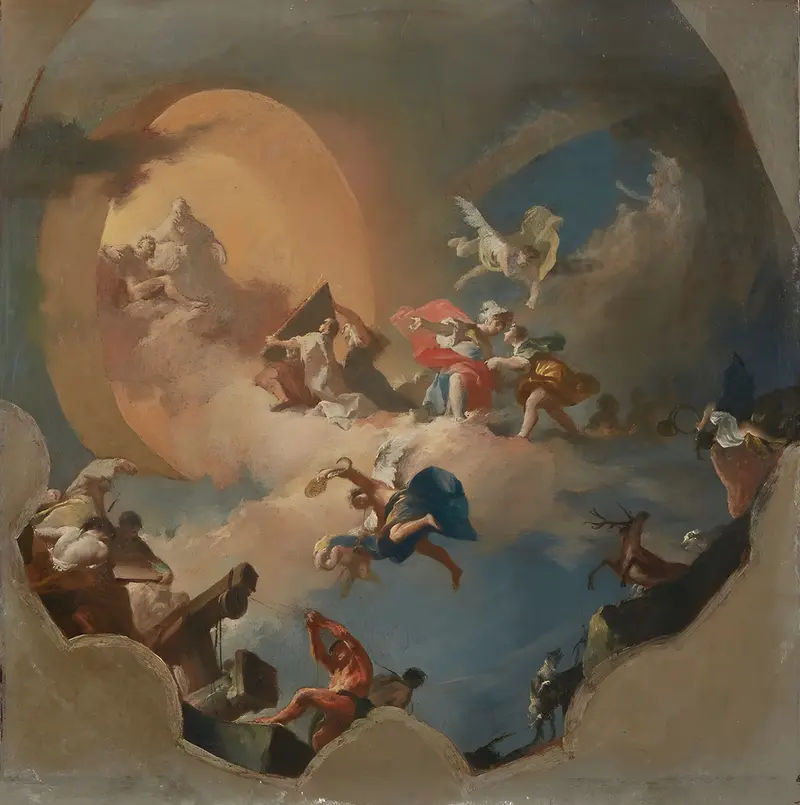
The Apotheosis of the Arts
Giovanni Battista Tiepolo
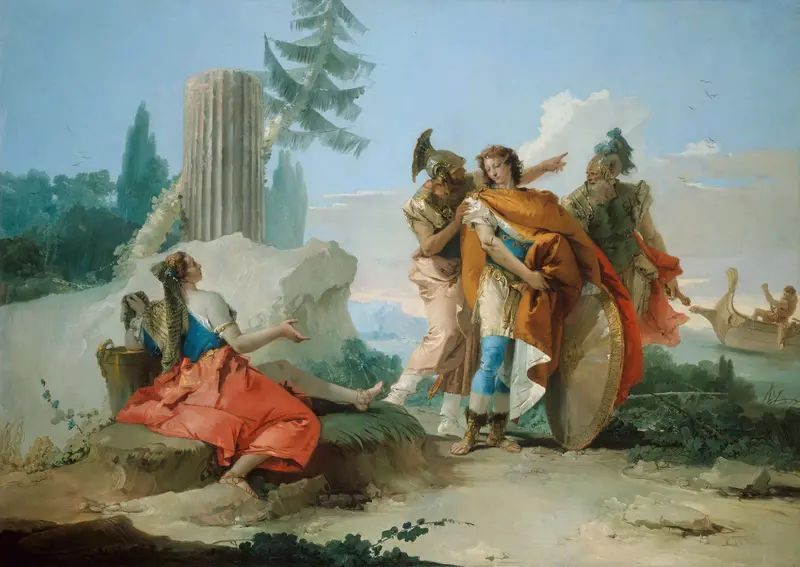
Armida Abandoned by Rinaldo
Giovanni Battista Tiepolo
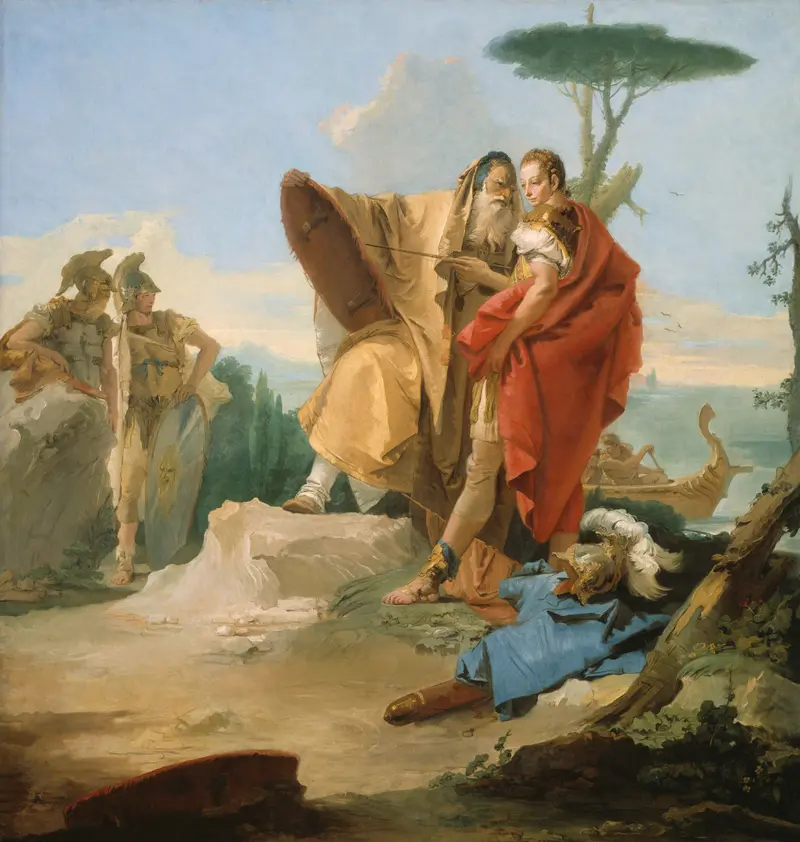
Rinaldo and the Magus of Ascalon
Giovanni Battista Tiepolo
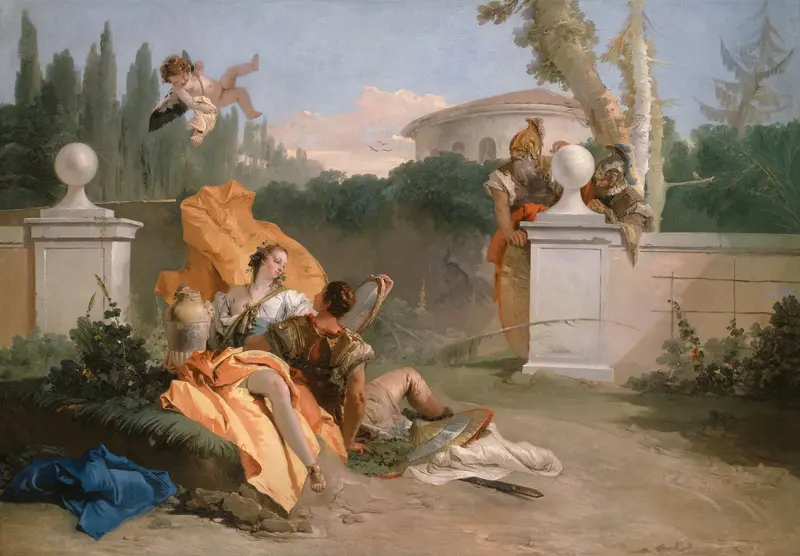
Rinaldo and Armida in Her Garden
Giovanni Battista Tiepolo
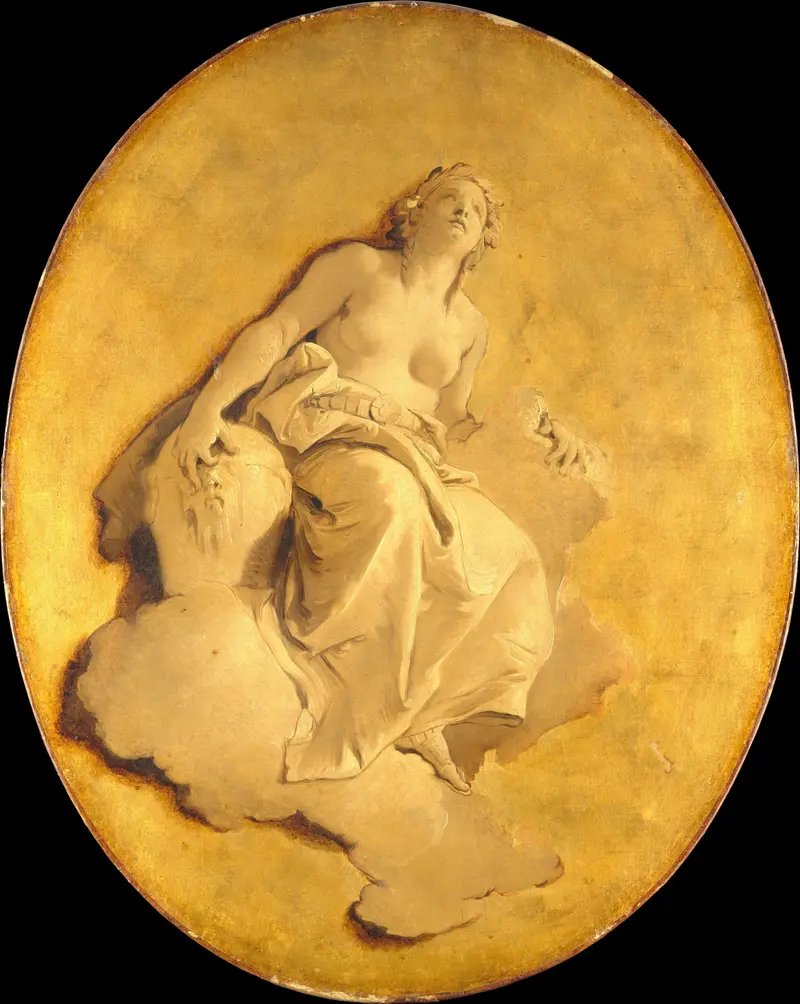
A Female Allegorical Figure
Giovanni Battista Tiepolo
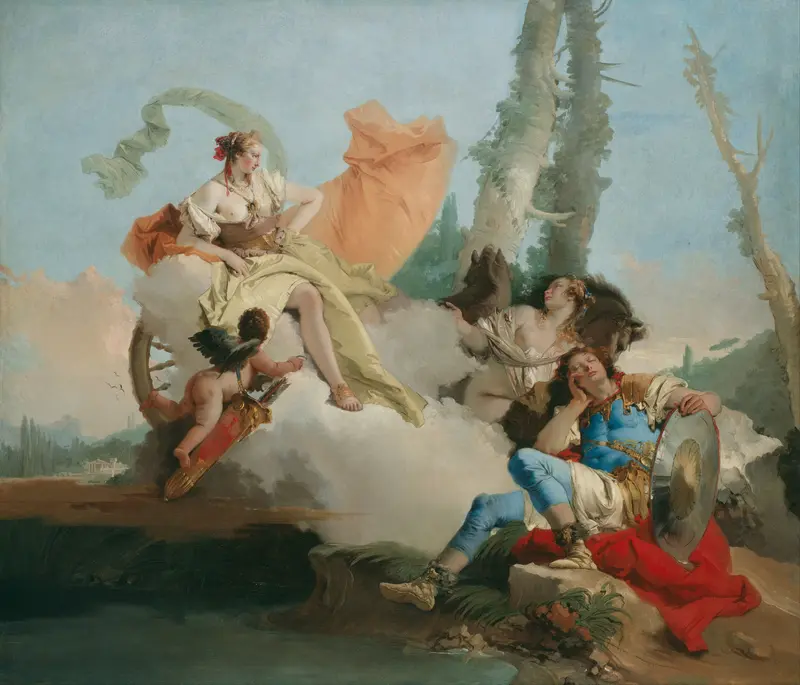
Armida Encounters the Sleeping Rinaldo
Giovanni Battista Tiepolo
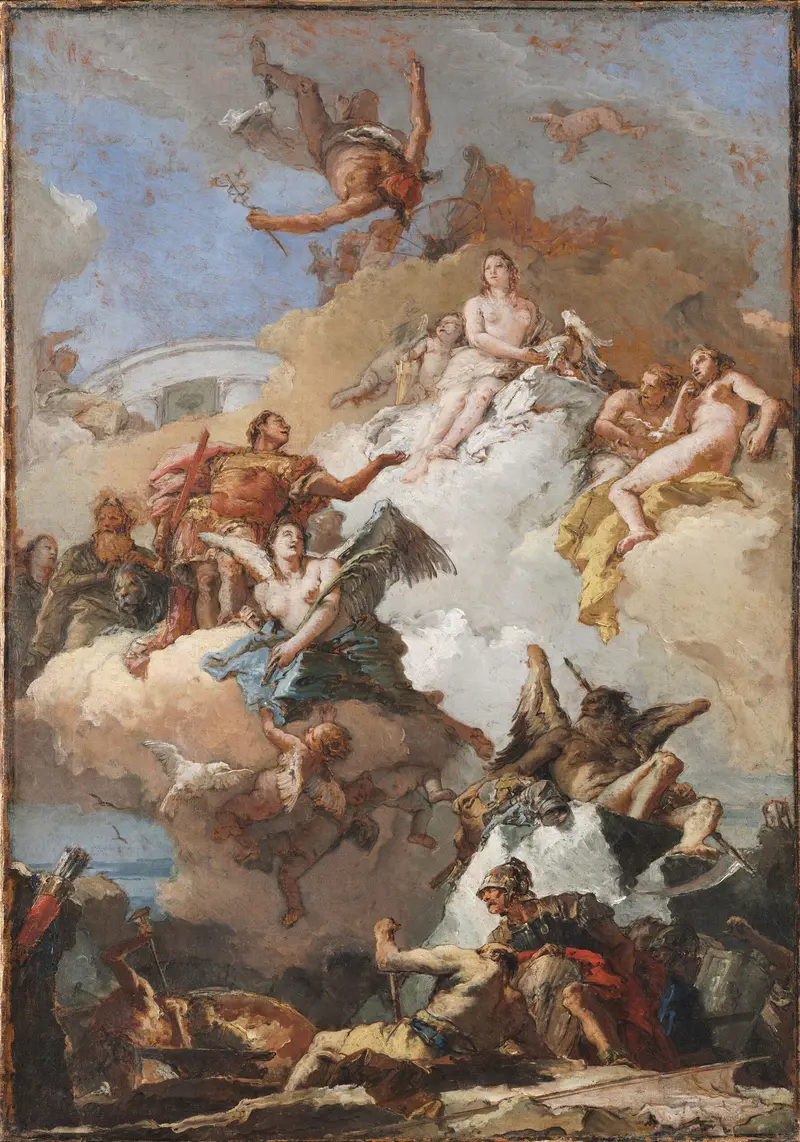
The Apotheosis of Aeneas
Giovanni Battista Tiepolo
Saint Roch as a Pilgrim
Giovanni Battista Tiepolo
The Apotheosis of the Spanish Monarchy
Giovanni Battista Tiepolo





