
Amours chevauchant des boucs — History & Facts
When Amours chevauchant des boucs was painted by Nicolas Poussin around 1630, it was part of a wave of mythological scenes that delighted the Roman elite, who collected such works for their private palaces. The subject—a playful, even risqué, parade of winged cupids riding goats—was rare and bold, echoing the taste for witty, erudite allegory in early Baroque Rome. While the exact patron of this painting remains uncertain, it is widely believed that Poussin created it for a discerning collector who appreciated both the sensuality and the learned references embedded in such scenes.
The painting’s theme, drawn from ancient poetry and motifs, was considered daring enough to be noted by early commentators. The moment Poussin chose to depict is one of wild, mischievous revelry: a group of putti, or amours, clutch the horns and manes of unruly goats, their laughter almost audible as they tumble across a sunlit landscape. The goats, ancient symbols of lust and fertility, reinforce the erotic undertones, while the scattered garlands and fluttering drapery suggest the aftermath of a Bacchic festival. The artist’s clear, classical composition and cool palette recall his admiration for ancient reliefs, yet the energy of the scene sets it apart from the more restrained treatments by contemporaries like Guido Reni.
Every gesture is calculated—one cupid’s backward glance invites the viewer to join the procession, while another’s raised hand signals both triumph and abandon. The precise early history of Amours chevauchant des boucs is not fully documented, a fate it shares with many of Poussin’s Roman works. It likely remained in private hands for generations, passing quietly through collections in Italy and France before entering the public eye. Today, the painting is recognized as a key example of Poussin’s early mythological style, balancing learned references with a lively, sensual spirit.
Its playful subject and classical rigor mark an important moment in the artist’s career, when he was forging his reputation among Rome’s intellectual elite. The work’s journey from private delight to public treasure mirrors the changing fortunes of mythological painting in the Baroque era.
More Artworks by Nicolas Poussin

Spring
Nicolas Poussin
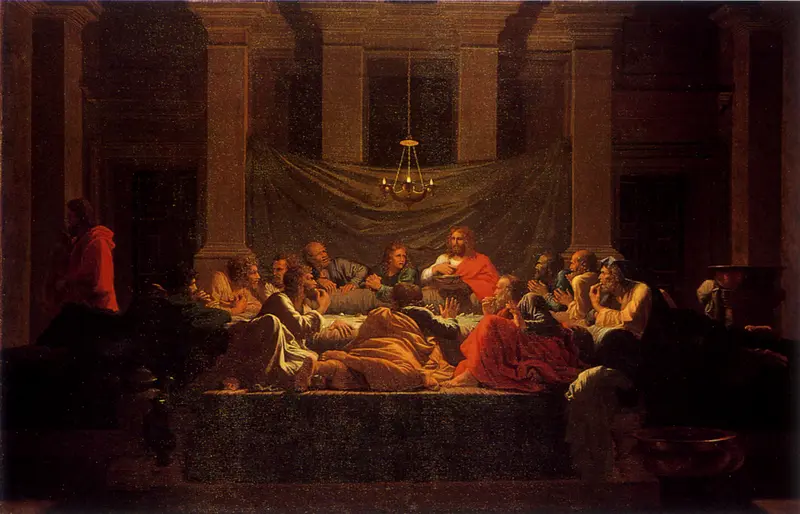
The Sacrament of the Holy Eucharist
Nicolas Poussin
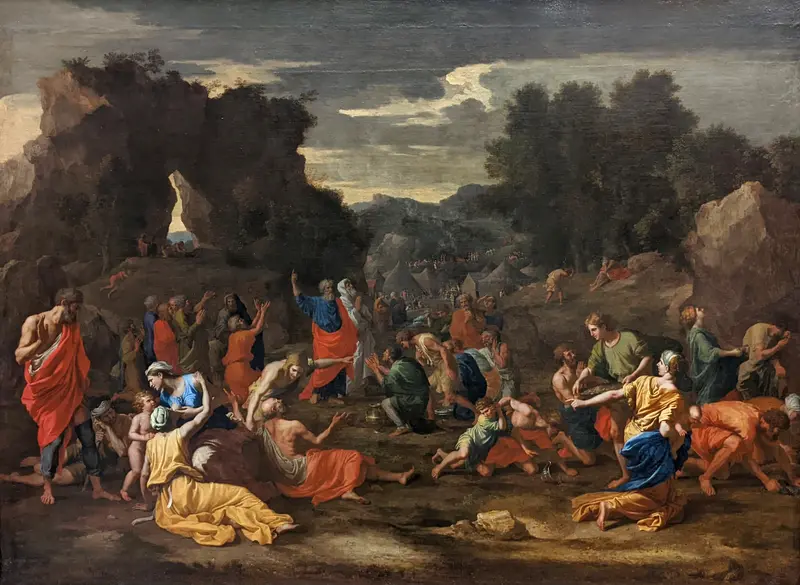
The Israelites gathering Manna in the Desert
Nicolas Poussin
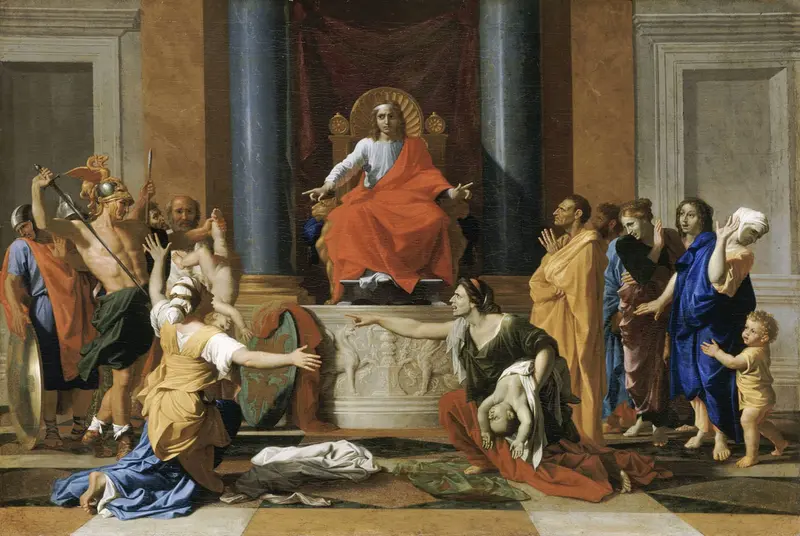
The Judgment of Solomon
Nicolas Poussin
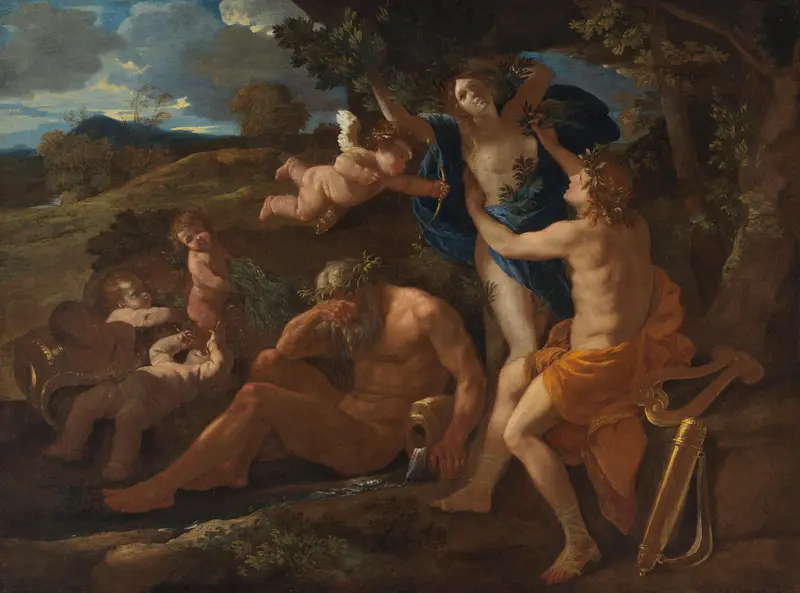
Apollo and Daphne
Nicolas Poussin

The Nurture of Jupiter
Nicolas Poussin

Ordination
Nicolas Poussin
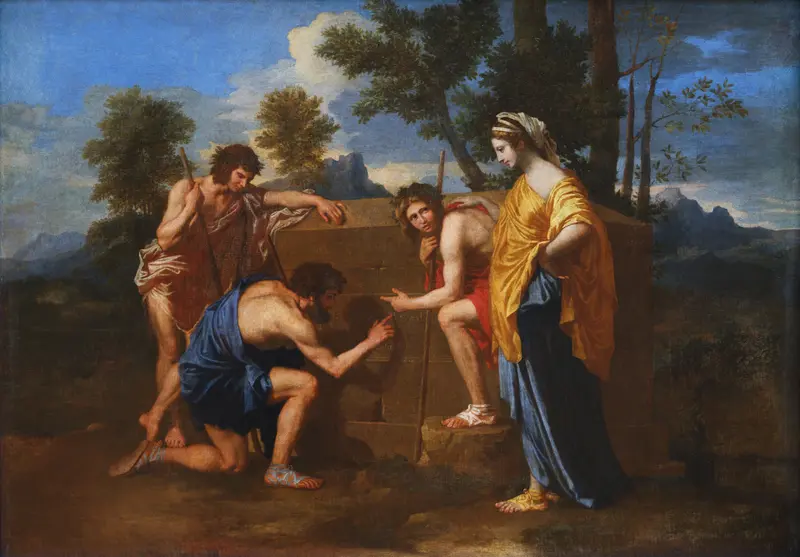
Et in Arcadia ego
Nicolas Poussin
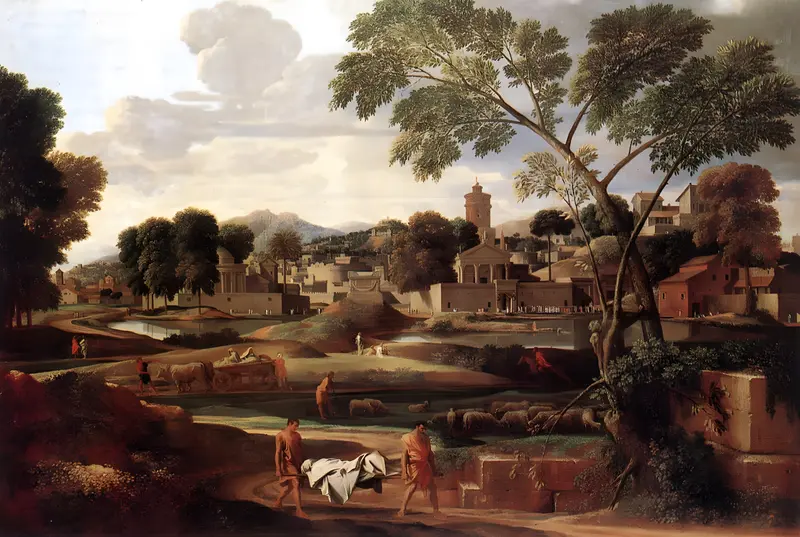
The Funeral of Phocion
Nicolas Poussin
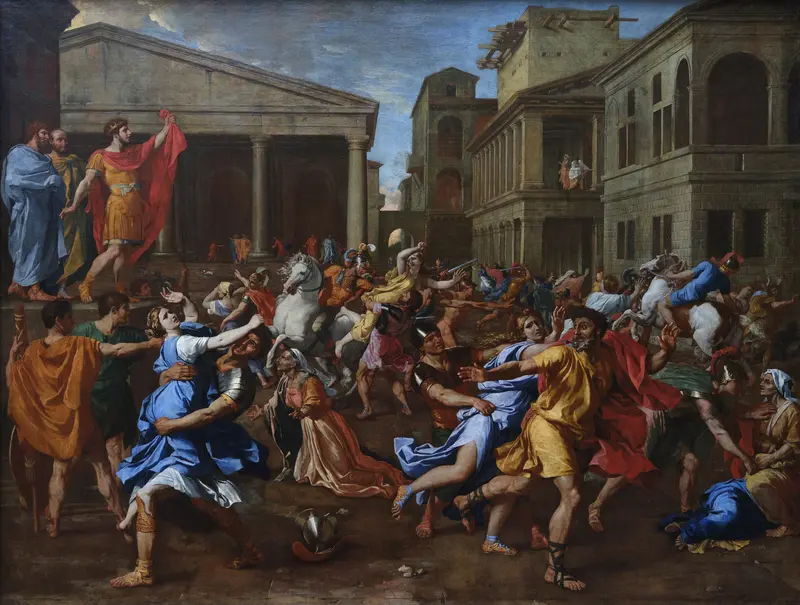
The Rape of the Sabine Women
Nicolas Poussin





