
An elegant loggia with the Proposal of Isaac to Rebecca — History & Facts
A palace of arches and delicate tracery rises on the left, its pale stonework catching the morning sun, while the scene below teems with life and anticipation. The painter draws your eye first to the elegant loggia, where a small group gathers in animated conversation, their gestures and bright garments suggesting the promise of a momentous event. The architecture is almost fantastical, a stage set for human drama, and the figures—some in vibrant red, others in deep green—move with a sense of purpose.
Beyond the colonnade, the world opens up: shepherds tend their flocks, townsfolk go about their work, and the distant hills cradle a story just out of reach. The artist’s palette is clear and luminous, setting a mood of order and festivity, while the careful placement of each figure invites the viewer to imagine their roles in the unfolding narrative. Painted by Abel Grimmer by 1620, this work belongs to a tradition of Northern European storytelling in paint, where biblical or legendary episodes are set amid contemporary architecture and landscapes. In the early seventeenth century, such pictures were prized by prosperous merchants and burghers, who saw in them both moral instruction and a celebration of civic life.
The detailed rendering of costume and building, the mingling of sacred and everyday, reflect a world in which faith and daily labor were tightly interwoven. Now held in the Dorotheum collection, this painting is a rare window onto the aspirations and imaginations of its time—inviting us to wander its loggia and fields, and to find our own place in its intricate pageant.
Sources: Wikidata Q112118065 · Image source (Wikimedia Commons)
More Artworks by Abel Grimmer

Flemish proverbs
Abel Grimmer
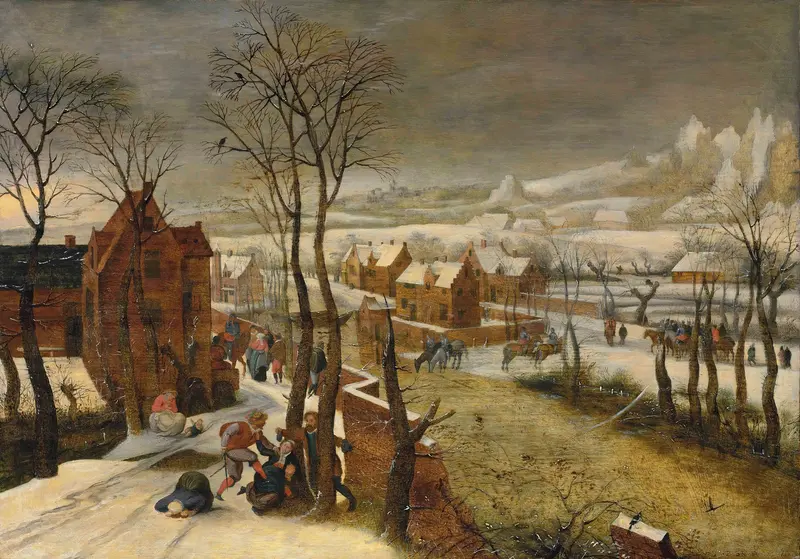
A Village Landscape In Winter With The Massacre Of The Innocents
Abel Grimmer
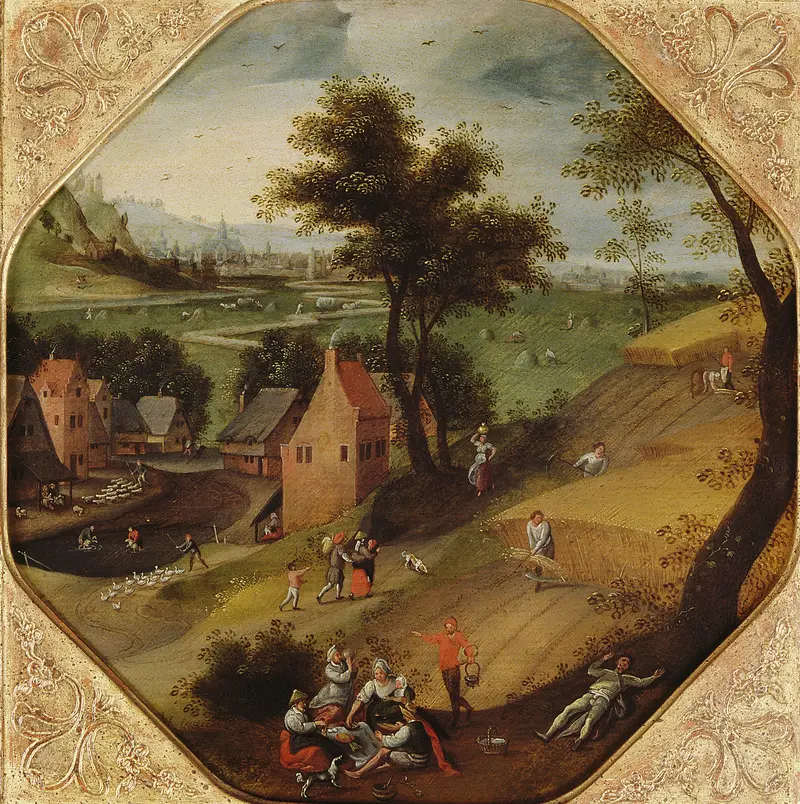
De Zomer
Abel Grimmer
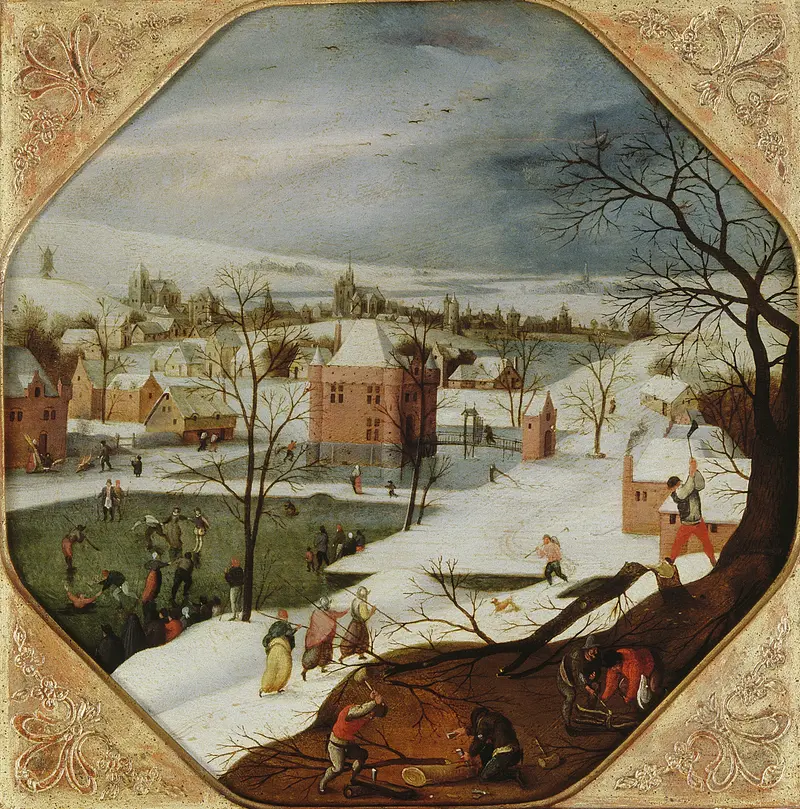
De Winter
Abel Grimmer
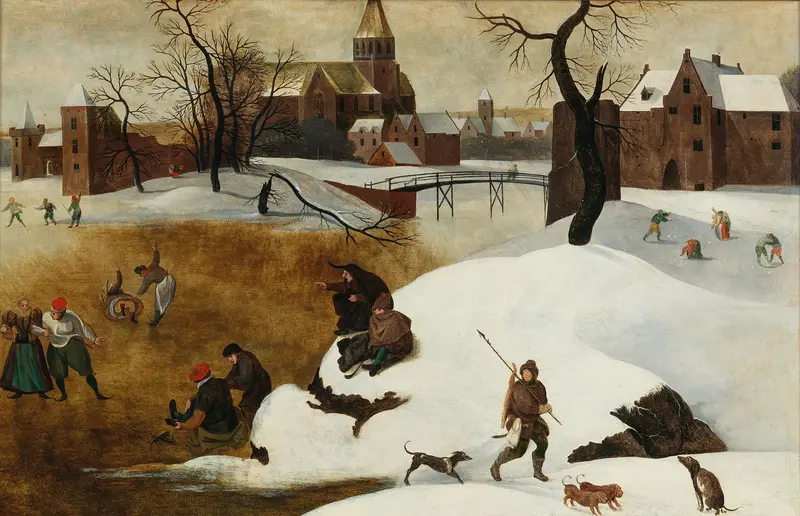
winter landscape with skaters
Abel Grimmer
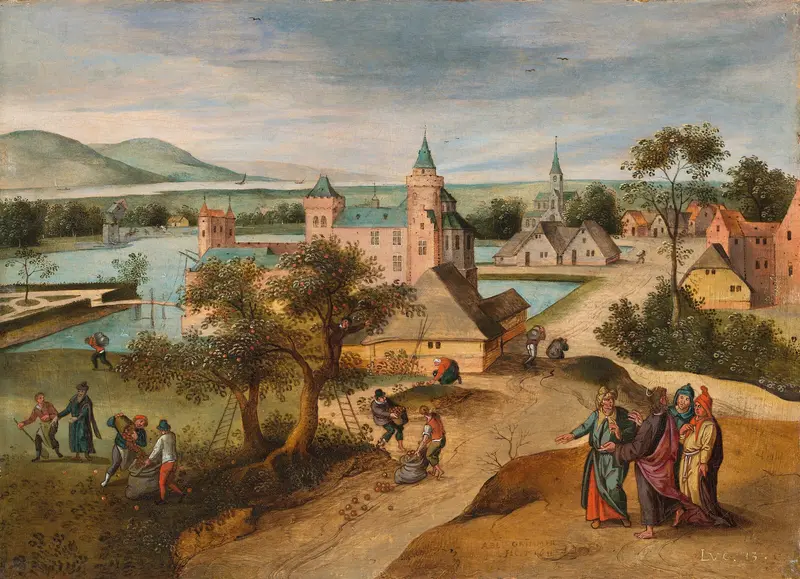
September – The Parable of the Barren Fig Tree
Abel Grimmer
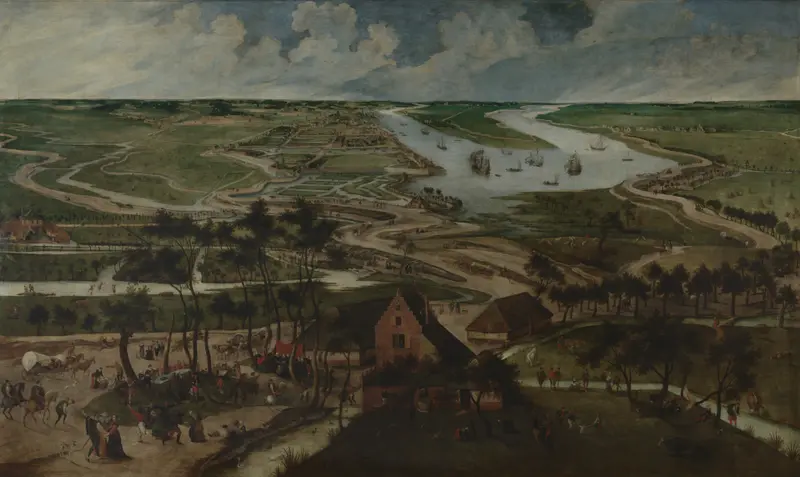
The Eel Huts in the Antwerp Polder outside the Lillo or Slijk Gate
Abel Grimmer
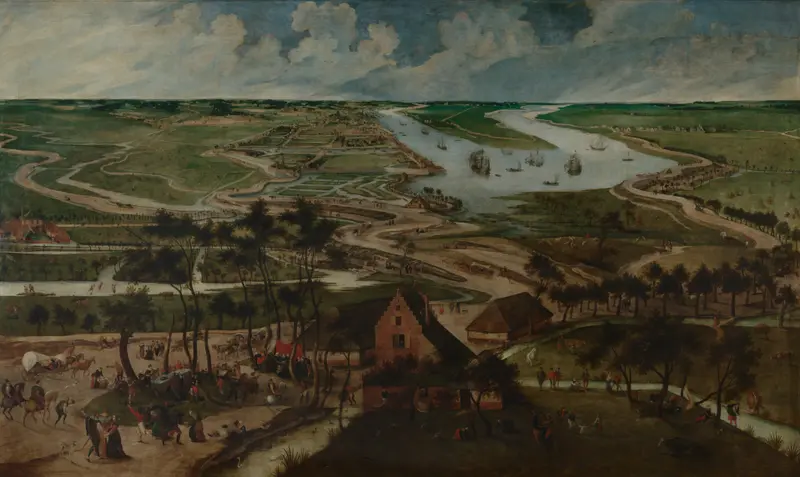
De Antwerpse polder en de Palinghuizen buiten de Slijk- of Lillopoort
Abel Grimmer
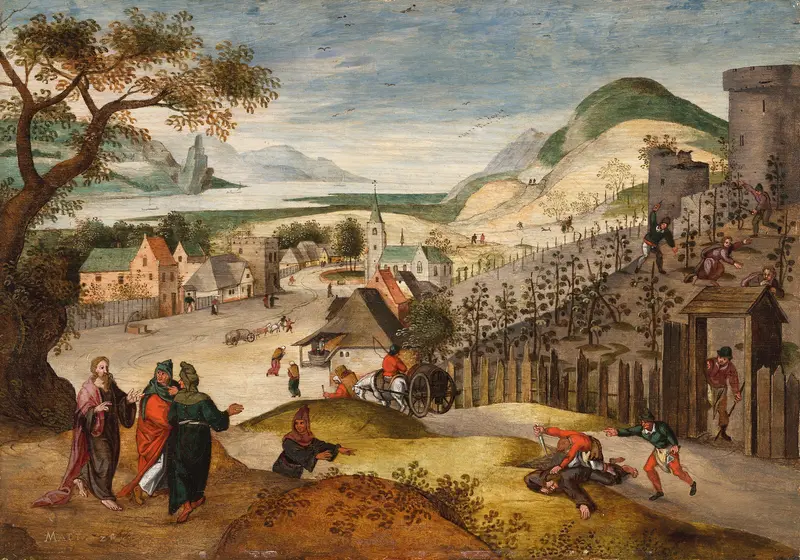
October – The Parable of the Vineyard
Abel Grimmer
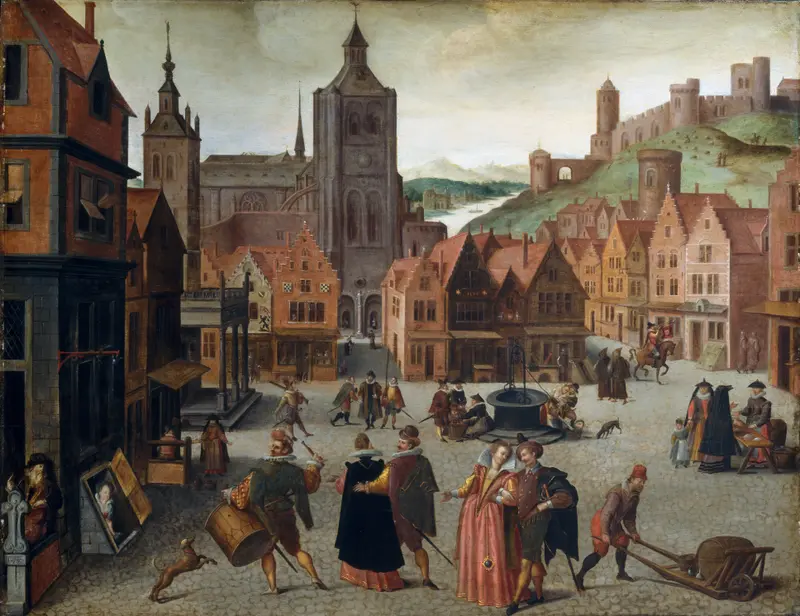
The Marketplace in Bergen op Zoom
Abel Grimmer
More Genre Scene Art

Banquet of the Officers of the St George Civic Guard
Frans Hals

Rembrandt and Saskia in the Scene of the Prodigal Son
Rembrandt van Rijn

Bal du moulin de la Galette
Pierre-Auguste Renoir

Quadrille at the Moulin Rouge
Henri de Toulouse-Lautrec

A Burial at Ornans
Gustave Courbet

When Will You Marry?
Paul Gauguin