
Arashiyama, Kyoto — History & Facts
Can paint confess what words never could? The silent whispers of brush strokes often unveil hidden violence beneath serene surfaces, a paradox lurking in vibrant colors. Focus on the rich greens and blues that envelop the landscape, where the iconic bamboo groves of Arashiyama stretch toward the sky. The fluid lines guide your gaze through the gentle undulations of the scene, inviting you deeper into a moment suspended between tranquility and tension. Notice how the play of light filters through the leaves, casting intricate shadows that dance upon the ground, suggesting both harmony and an underlying chaos. As you examine the softer elements, consider the tension held in the contrast between the serene beauty of nature and the subtle hints of disturbance—a fallen branch, a darkened patch of earth—that allude to the violence of human impact on the landscape.
The juxtaposition of lush greenery against the muted tones in the background echoes a deeper commentary on the fragility of peace in a world marked by conflict. Each brushstroke encapsulates a fleeting moment, reminding us that beneath any picturesque facade lies an unspoken narrative of struggle. Kobayashi Kiyochika created this work in 1897 during a period of profound transformation in Japan, as the nation grappled with modernization and the remnants of its feudal past. Working in an era when ukiyo-e was evolving, he sought to capture the changing essence of landscapes, often infusing his art with a sense of nostalgia amid rapid societal shifts.
More Artworks by Kobayashi Kiyochika
Browse all →
Thunder and Lightning at Oumaya Bridge
Kobayashi Kiyochika

Shinkyō, Sacred Bridge at Nikkō
Kobayashi Kiyochika

Daybreak at Shrine, Kanda
Kobayashi Kiyochika

The Great Fire at Ryōgoku Bridge, Viewed from Asakusa Bridge on the 26th of January, 1881
Kobayashi Kiyochika

The Moon At Shinagawa
Kobayashi Kiyochika
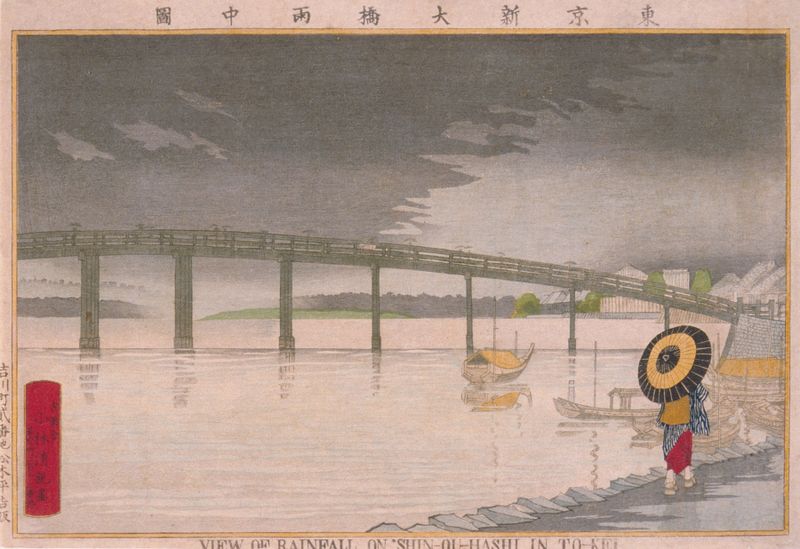
View of Rainfall on Shin-Ou-hashi in To-kei
Kobayashi Kiyochika

Evening at Tōshōgū Shrine, Ueno, Tokyo
Kobayashi Kiyochika

Snow at Ochanomizu
Kobayashi Kiyochika
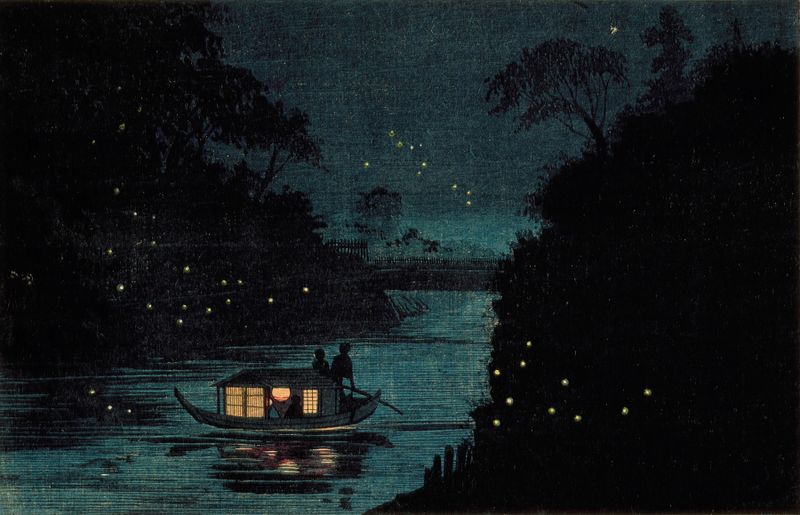
Fireflies at Ochanomizu
Kobayashi Kiyochika
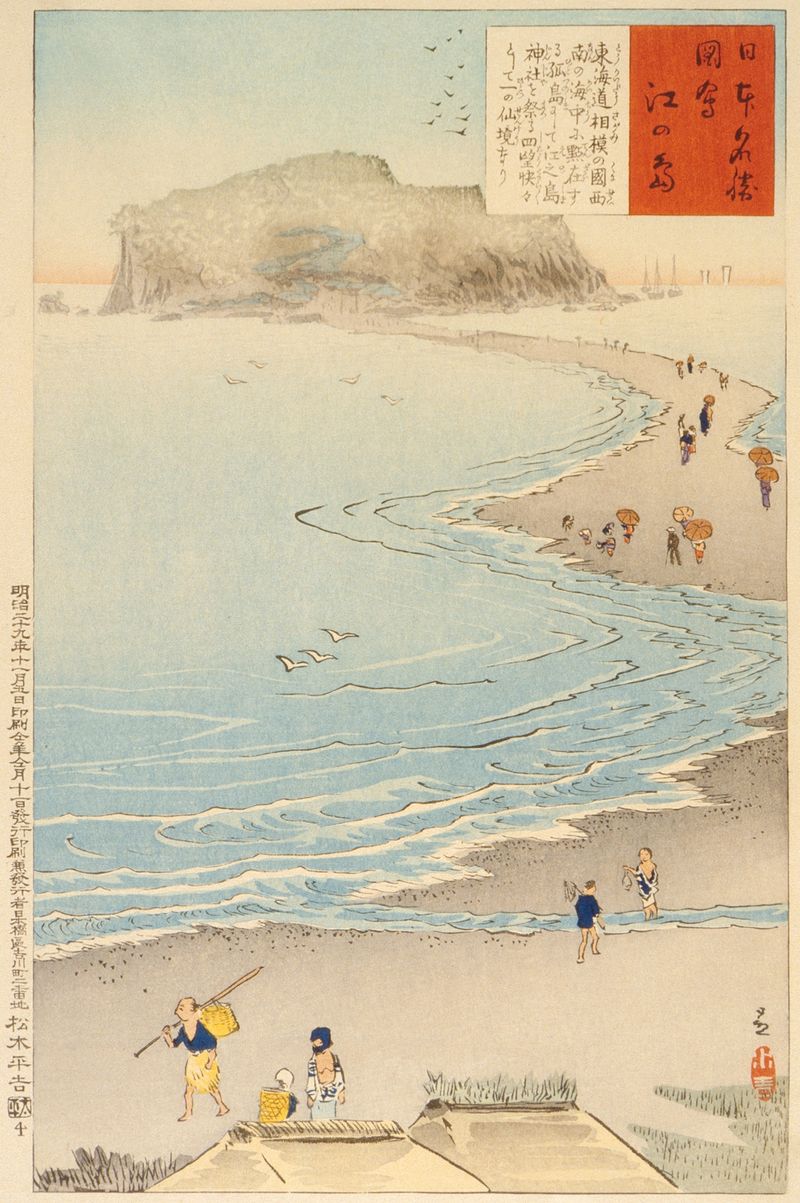
The Island Enoshima
Kobayashi Kiyochika





