
Bacchus, Ariane and Venus — History & Facts
In the final years of his life, Tintoretto returned to mythological subjects with a vigor that surprised Venetian patrons. Bacchus, Ariane and Venus, painted around 1600, stands as one of his last explorations of classical legend, and its precise commission remains a mystery. The painting’s uncertain provenance has long intrigued scholars, especially since no preparatory drawings survive, and its medium—whether oil on canvas or another support—remains unconfirmed.
What is certain is that this work encapsulates the late Renaissance fascination with the union of divine and mortal realms, a theme that resonated deeply in Venice at the turn of the 17th century. The scene captures the moment Ariadne, abandoned by Theseus on Naxos, is discovered by Bacchus, the god of wine, who offers her immortality. Venus, goddess of love, presides above, crowning Ariadne with a starry diadem—a symbol of her transformation into a constellation. Bacchus’s outstretched hand and Ariadne’s upward gaze create a dynamic diagonal, while Venus’s gesture links heaven and earth.
The lush drapery and tumbling figures recall Titian’s treatment of similar myths, yet Tintoretto’s composition is more turbulent, with flickering light animating the scene and lending it a sense of immediacy. The inclusion of both Bacchus and Venus emphasizes the dual nature of Ariadne’s fate: love lost and love divine. Little is known about the early history of Bacchus, Ariane and Venus, and its path to the present is obscure, lacking the detailed records that accompany many of Tintoretto’s larger commissions. It likely remained in a private Venetian collection for centuries, surfacing in inventories only in the 19th century.
Today, the painting is valued as a late work by Tintoretto, showcasing his energetic brushwork and inventive storytelling even in old age. Its uncertain attribution and medium continue to invite research, making it a touchstone for scholars interested in the twilight of the Venetian Renaissance and the enduring power of myth.
More Artworks by Tintoretto
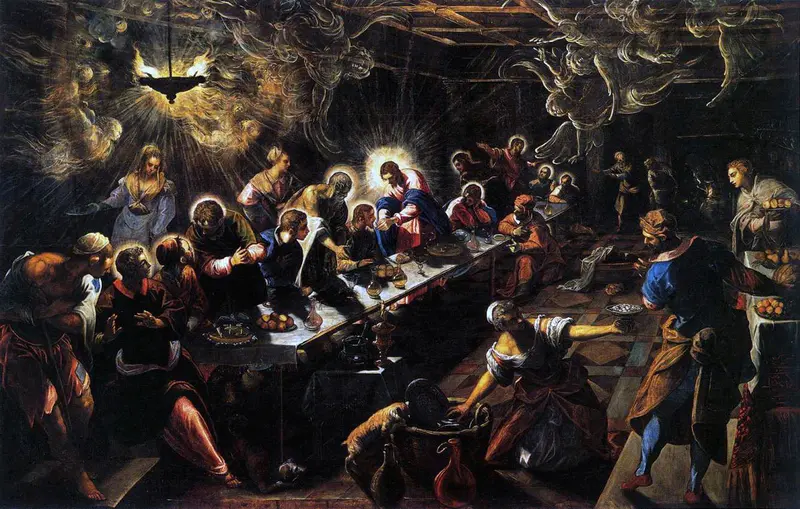
The Last Supper
Tintoretto
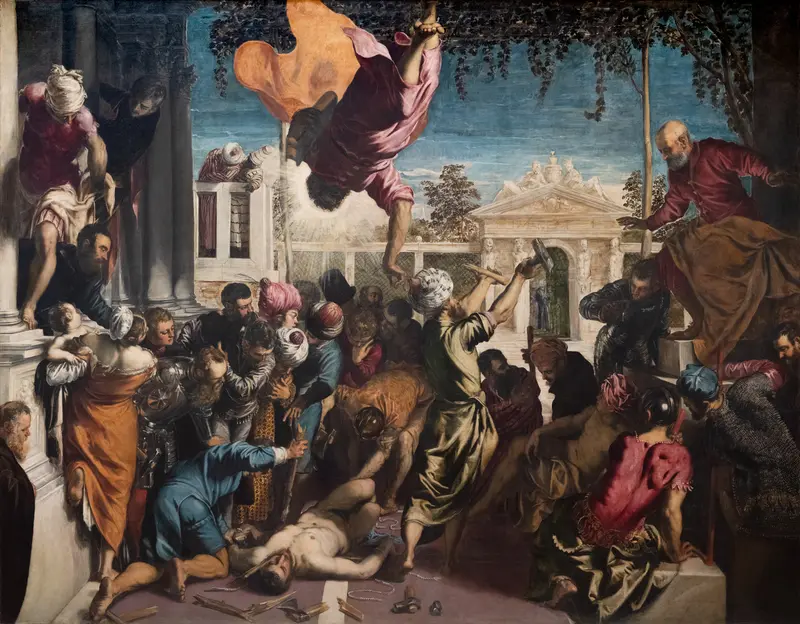
The Miracle of the Slave
Tintoretto
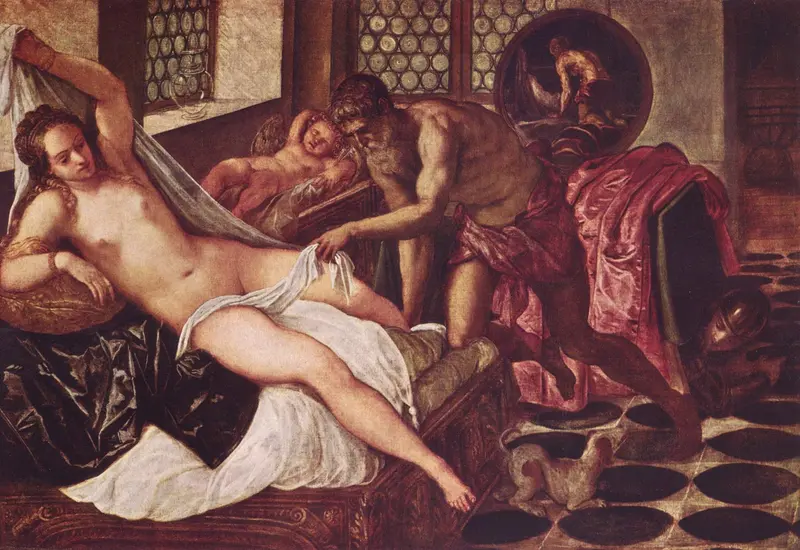
Venus and Mars Surprised by Vulcan
Tintoretto

Adoration of the Shepherds
Tintoretto
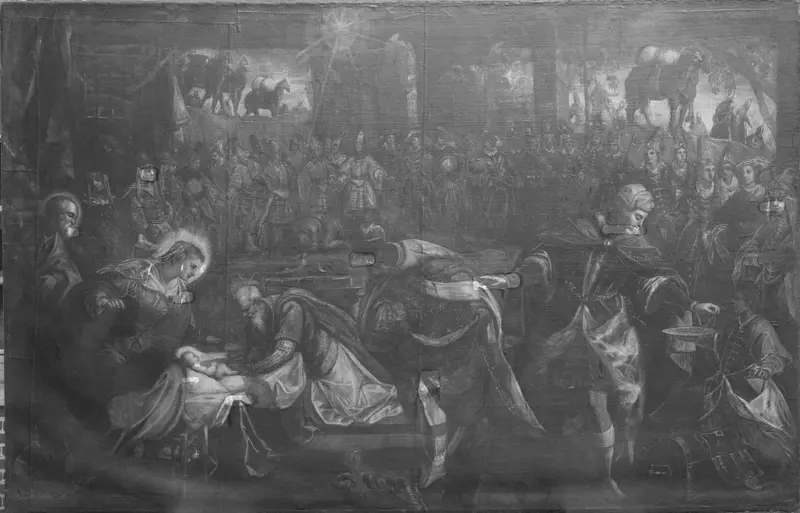
Adoration of the Magi
Tintoretto
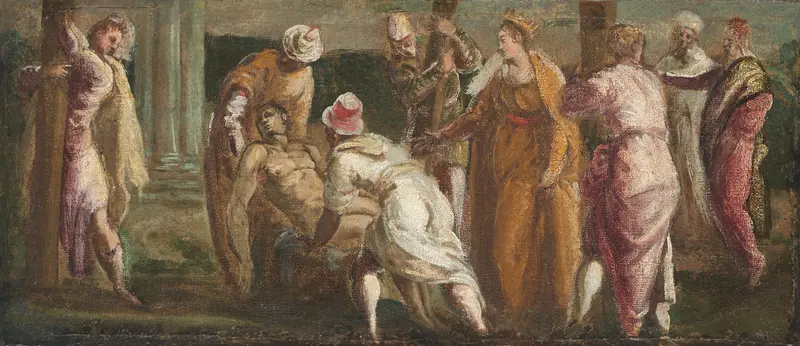
Saint Helen Testing the True Cross
Tintoretto
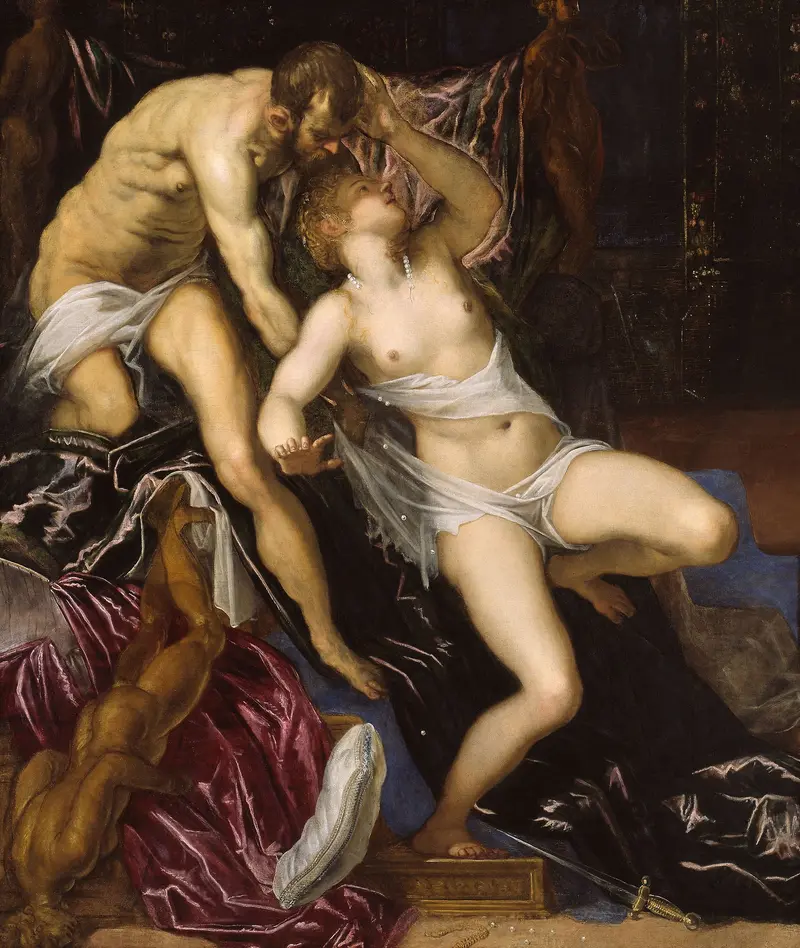
Tarquin and Lucretia
Tintoretto
Two Male Figures in Motion (verso)
Tintoretto
A Female Nude [verso]
Tintoretto
Veduta Kopra
Tintoretto





