
Baumstudie mit Talblick — History & Facts
Could beauty survive in a century of chaos? In Johann Wilhelm Schirmer's Baumstudie mit Talblick, serenity emerges as a gentle answer to this profound question. The painting invites you to explore the tranquil interplay between nature and the human spirit, a refuge amid the tumultuous world of the mid-19th century. Look to the left at the towering trees, their gnarled trunks and lush foliage rising majestically against the gentle slope of the valley. The dappled sunlight filters through the leaves, casting playful shadows on the ground.
Notice how the warm greens and soft browns of the landscape blend harmoniously, evoking a sense of peace that pervades the composition. The subtle gradients of color lead your gaze into the vast, open valley, suggesting a vastness of possibility beyond the immediate scene. Amidst this serene landscape lies a delicate tension: the trees stand firmly rooted, yet they sway gently in the breeze, symbolizing resilience. The distant valley, painted in lighter hues, contrasts with the solidity of the trees, representing a horizon filled with hope and uncertainty.
Shadows and light dance across the canvas, reflecting the dual nature of existence—both the calm and the storm that life offers. During the years between 1855 and 1860, Schirmer was deeply engaged with the Romantic movement, which sought to express emotional depth and a connection to nature. Painting primarily in Germany, he focused on landscapes that evoked contemplation and connection to the sublime. At this time, Europe was navigating significant social and political changes, making the tranquility of his work a poignant reminder of beauty even during upheaval.
More Artworks by Johann Wilhelm Schirmer
Browse all →
Waldlandschaft mit Blick auf Olevano und den Monte Cavo
Johann Wilhelm Schirmer
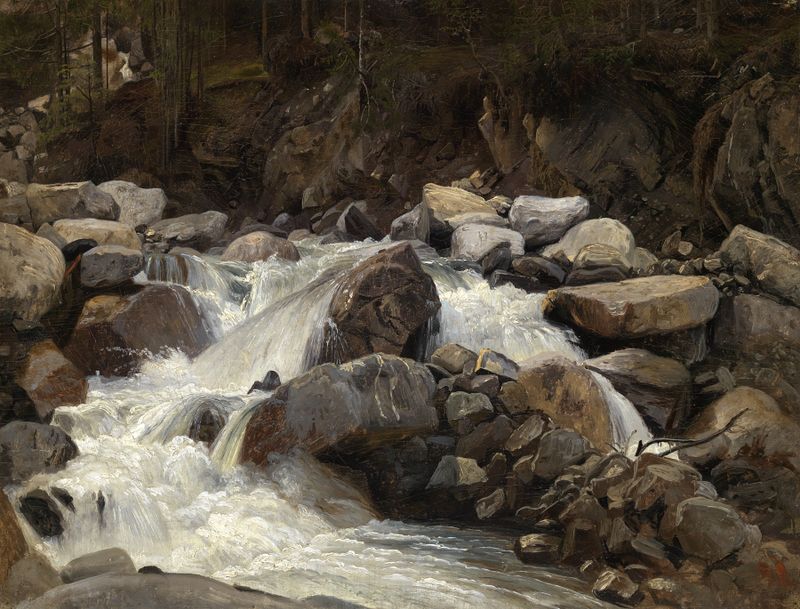
Schweizer Gebirgsbach
Johann Wilhelm Schirmer
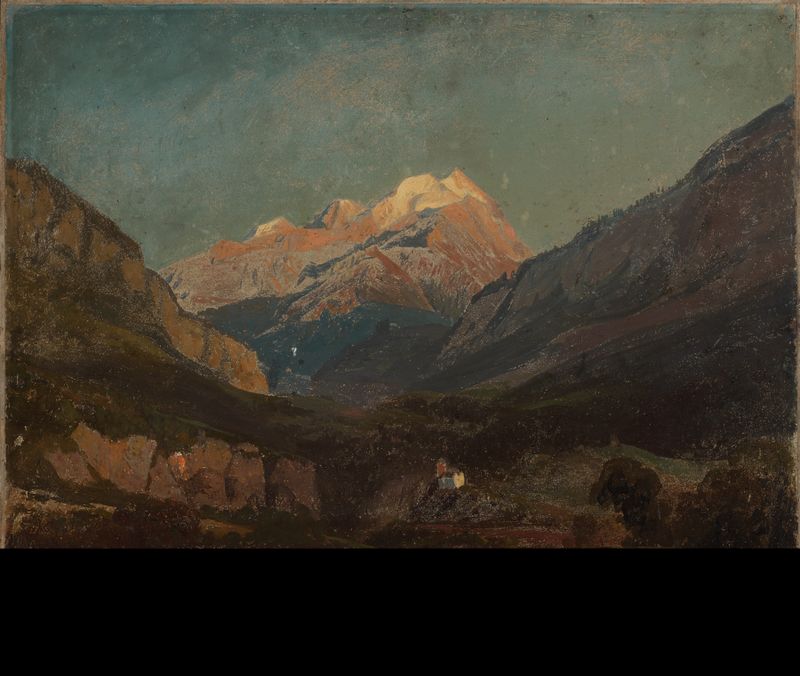
Schweizer Gebirgslandschaft mit Kapelle und fernem Schneegipfel
Johann Wilhelm Schirmer

Schweizer Gebirgslandschaft mit dem Piz Beverin im Hintergrund
Johann Wilhelm Schirmer

Waldinneres mit Hirschen am Wasser
Johann Wilhelm Schirmer

The Wetterhorn
Johann Wilhelm Schirmer

Partie aus der Römischen Campagna
Johann Wilhelm Schirmer

Felsabhang in der Schweiz
Johann Wilhelm Schirmer
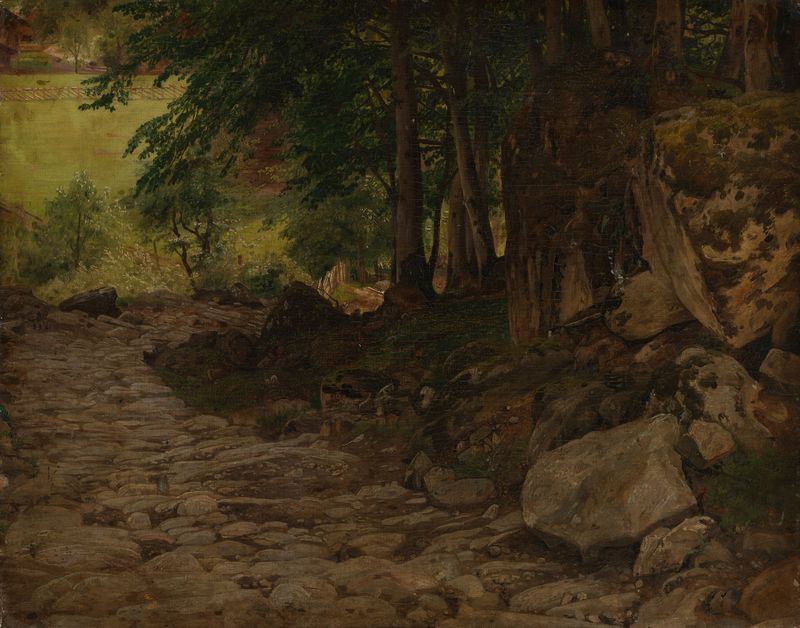
Felsweg in der Schweiz
Johann Wilhelm Schirmer
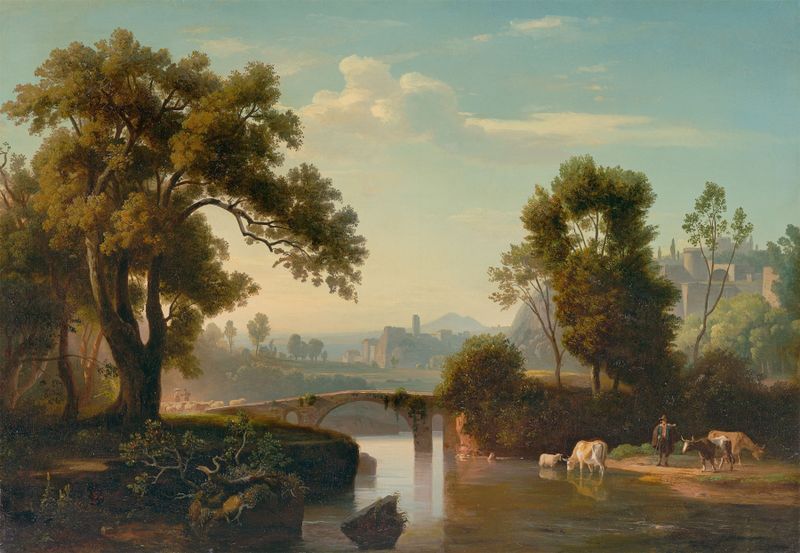
Italienische Landschaft mit Hirten
Johann Wilhelm Schirmer





