
Blue Mountain — History & Facts
A mountain rises like a blue flame at the heart of this painting, its bold color slicing through a world ablaze with yellow and crimson. The eye is drawn first to that electric blue, then swept along by the surge of riders and figures that seem to tumble forward, caught in the mountain’s magnetic pull. The trees on either side are not mere background but living presences, their leaves rendered in dappled, feverish brushstrokes that pulse with energy.
Every figure is simplified, almost mask-like, their forms broken into patches of color—red, white, ochre—so that they become part of the landscape’s rhythm rather than its subjects. The scene is not a quiet one; it hums with movement and the sense of something just beginning or just ending. Painted in 1908, Blue Mountain belongs to the world of early twentieth-century Europe, when artists like Wassily Kandinsky began to push painting toward abstraction. This was a time of artistic revolution, when color and form were set free from strict representation and allowed to speak for themselves.
Works like this were rarely commissioned; instead, they were born from the artist’s own search for new ways to see and feel. The painting’s current home in the Solomon R. Guggenheim Museum speaks to its place in the story of modern art, but its wild colors and restless forms recall a moment when the rules of painting were being rewritten.
Let your eye wander from the mountain’s edge to the flickering trees, and you might sense the thrill—and the uncertainty—of that leap into the unknown.
More Artworks by Wassily Kandinsky

Improvisation 35
Wassily Kandinsky
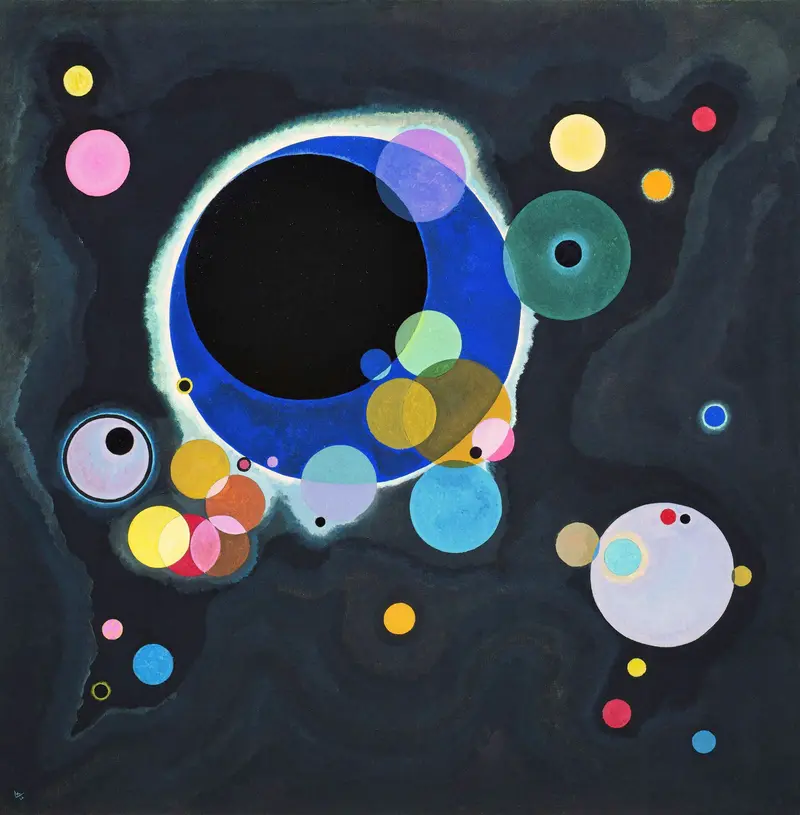
Several Circles
Wassily Kandinsky
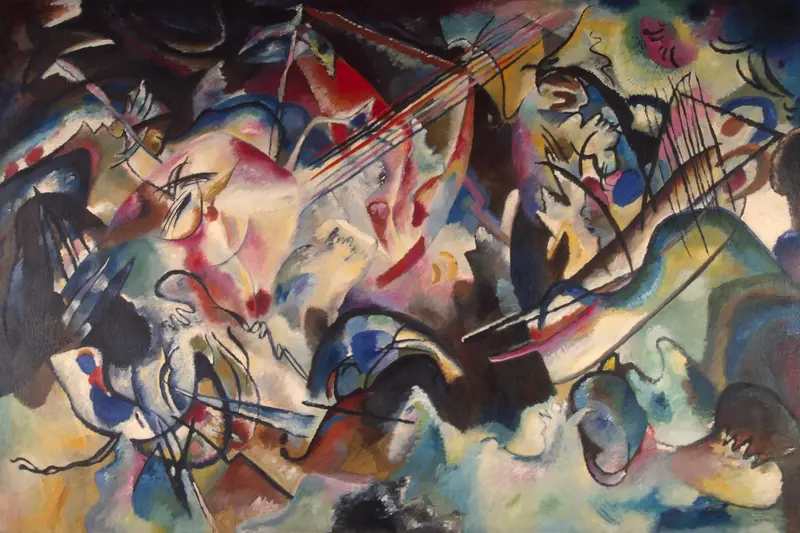
Composition VI
Wassily Kandinsky
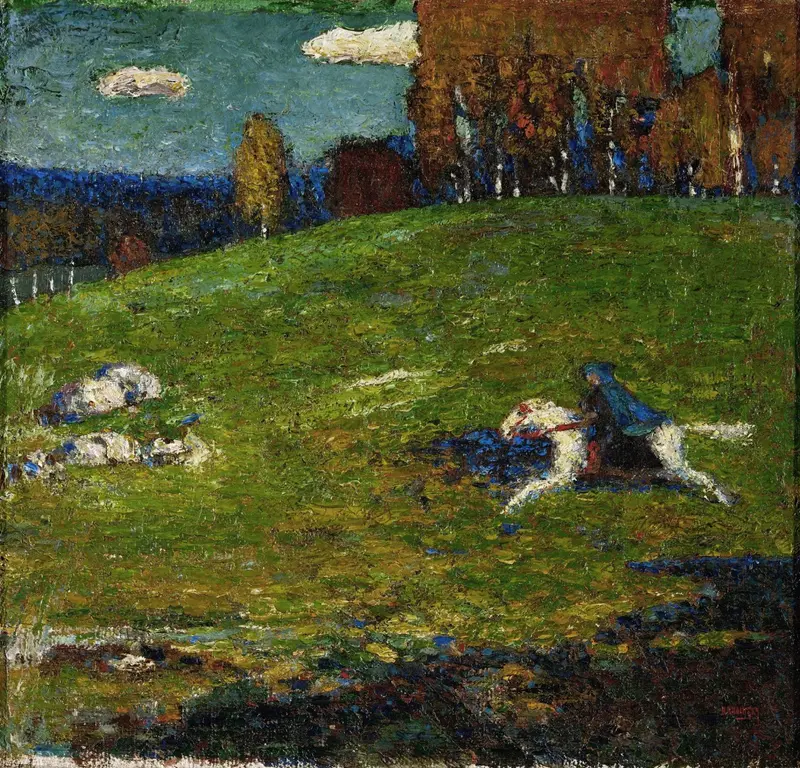
The Blue Rider
Wassily Kandinsky

Murnau
Wassily Kandinsky
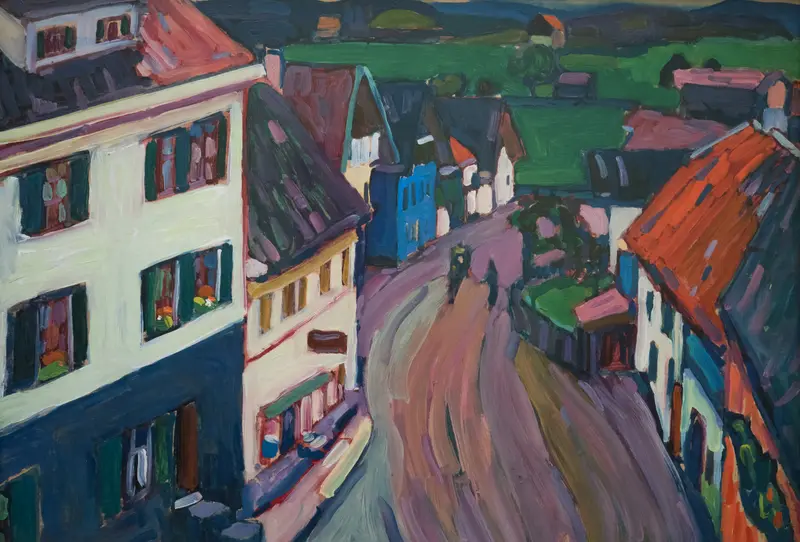
Murnau – View from the window of the Griesbräu
Wassily Kandinsky
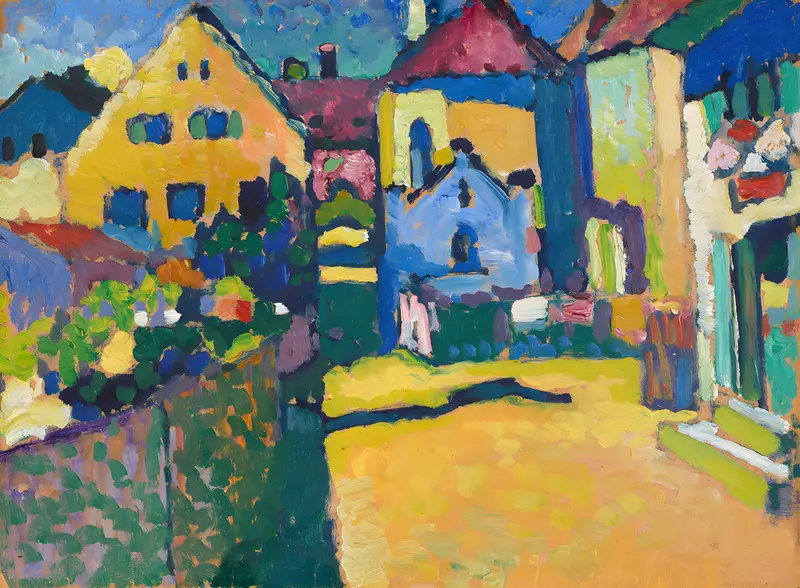
Green Lane in Murnau
Wassily Kandinsky
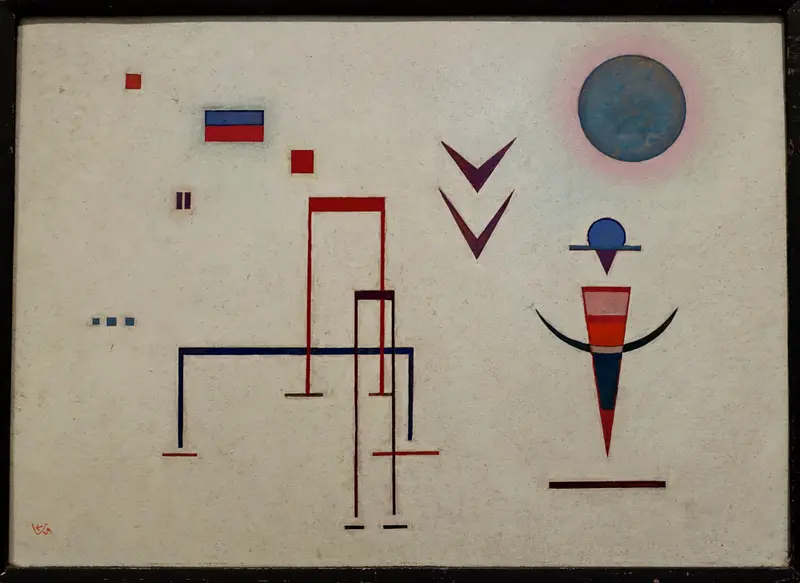
Jocular Sounds
Wassily Kandinsky

Zubovsky Platz
Wassily Kandinsky

Landscape with a yellow field
Wassily Kandinsky
More Landscape Art

The Starry Night
Vincent van Gogh

View of Delft
Johannes Vermeer

Water Lilies
Claude Monet

The Grand Canal, Venice, looking north-west from the Ca' Corner to the Ca' Contarini degli Scrigni, with the campanile of Santa Maria della Carità
Canaletto

Windsor Castle
Canaletto

The Grand Canal looking North-East from the Palazzo Dolfin-Manin to the Rialto Bridge
Canaletto