
Boating Party — History & Facts
What first catches the eye in Boating Party is not the boat itself, but the golden haze that seems to dissolve the boundaries between figures, trees, and water. The scene is a tapestry of movement and stillness: a group of elegantly dressed women gather in animated conversation on the bank, their gestures lively and their gowns catching the last warm light. In the background, a boat glides quietly across the water, its passengers rendered in loose, almost dreamlike strokes.
The painter draws you in with color—burnished oranges, mossy greens, and deep shadows—inviting you to linger among the figures and imagine the stories exchanged beneath these trees. The light, filtering through the foliage, is not just illumination but a silent participant, softening edges and lending the whole gathering an air of reverie. Painted in 1886, this work belongs to a moment in French painting when artists like Adolphe Joseph Thomas Monticelli reveled in the pleasures of leisure and the poetry of everyday gatherings. Such scenes were rarely commissioned by institutions; instead, they appealed to private collectors eager for glimpses of an idealized, festive world.
The loose, textured brushwork and glowing palette anticipate the Impressionists, yet Monticelli’s figures retain a theatricality and richness of costume that harks back to earlier Romantic and Rococo traditions. Today, Boating Party resides in the collection of the Philadelphia Museum of Art, a testament to the enduring allure of these imagined afternoons—where the real subject may be the fleeting shimmer of light itself. Return to the painting, and notice how every brushstroke seems to pulse with the memory of laughter and the hush of water under trees.
More Artworks by Adolphe Monticelli

Portrait of a Lady
Adolphe Monticelli
A Young Family Under Trees On A Hill
Adolphe Monticelli

Fête d'Après-Midi
Adolphe Monticelli
Mephisto from the Opera Faust
Adolphe Monticelli
The Fairies
Adolphe Monticelli
Aan het altaar
Adolphe Monticelli
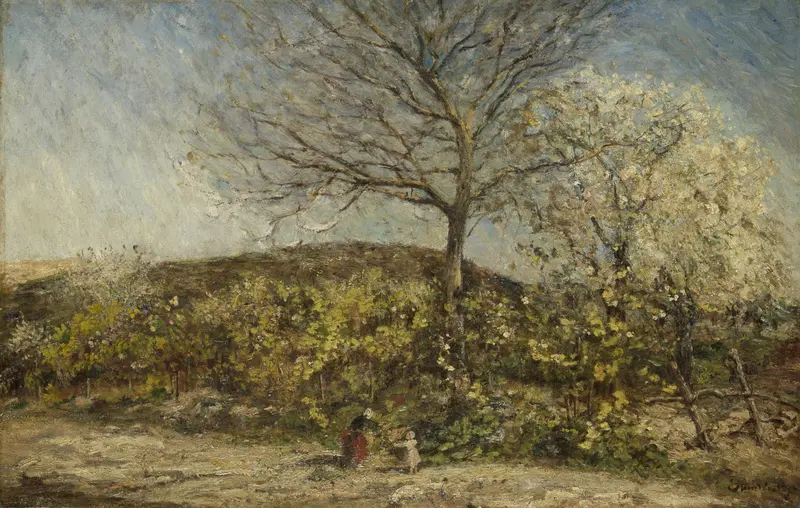
Landschap met bloeiende boomgaard
Adolphe Monticelli
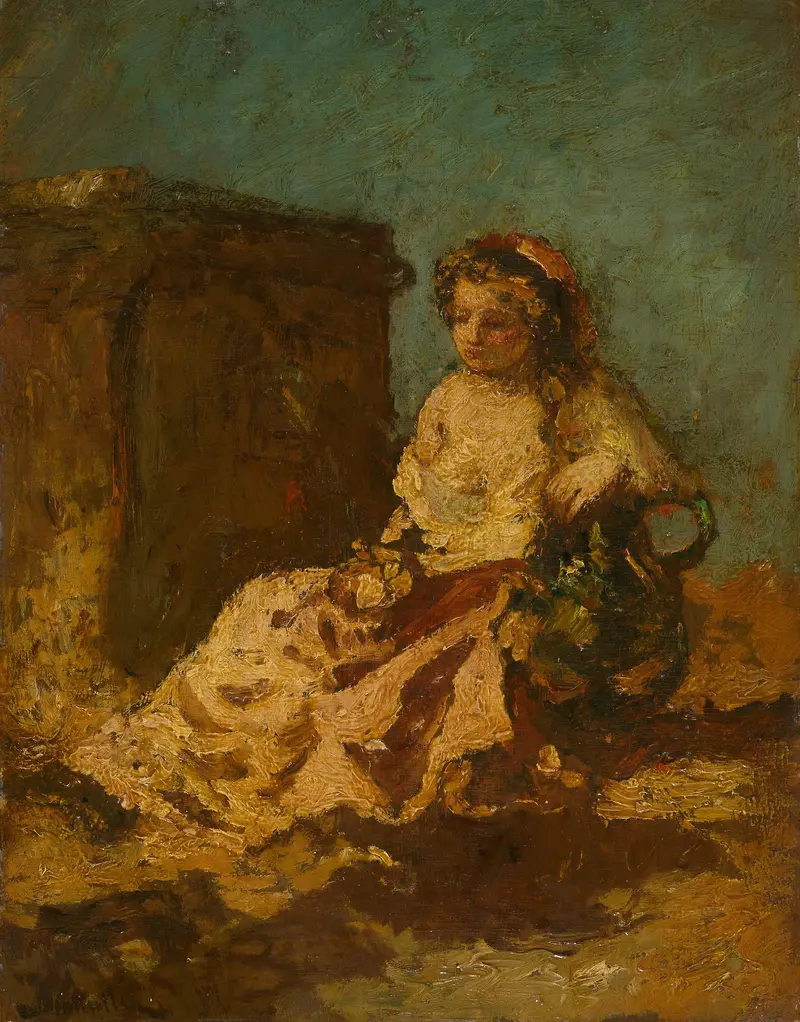
Meditation (Seated Woman)
Adolphe Monticelli
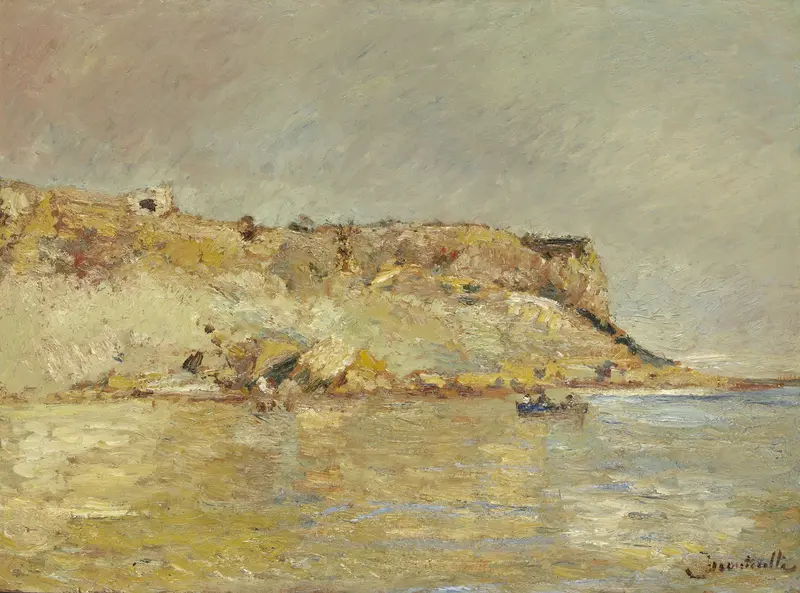
Coastal Mountains
Adolphe Monticelli
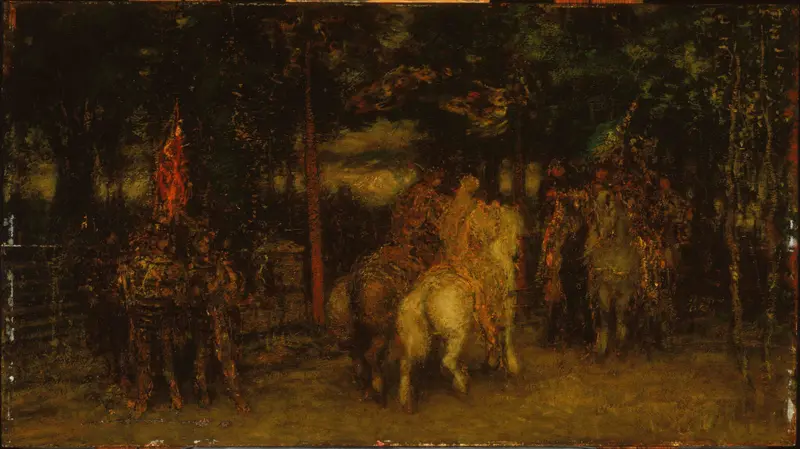
Landscape with Figures
Adolphe Monticelli
More Genre Scene Art

Banquet of the Officers of the St George Civic Guard
Frans Hals

Rembrandt and Saskia in the Scene of the Prodigal Son
Rembrandt van Rijn

Bal du moulin de la Galette
Pierre-Auguste Renoir

Quadrille at the Moulin Rouge
Henri de Toulouse-Lautrec

A Burial at Ornans
Gustave Courbet

When Will You Marry?
Paul Gauguin