
Bouillon en een glas port — History & Facts
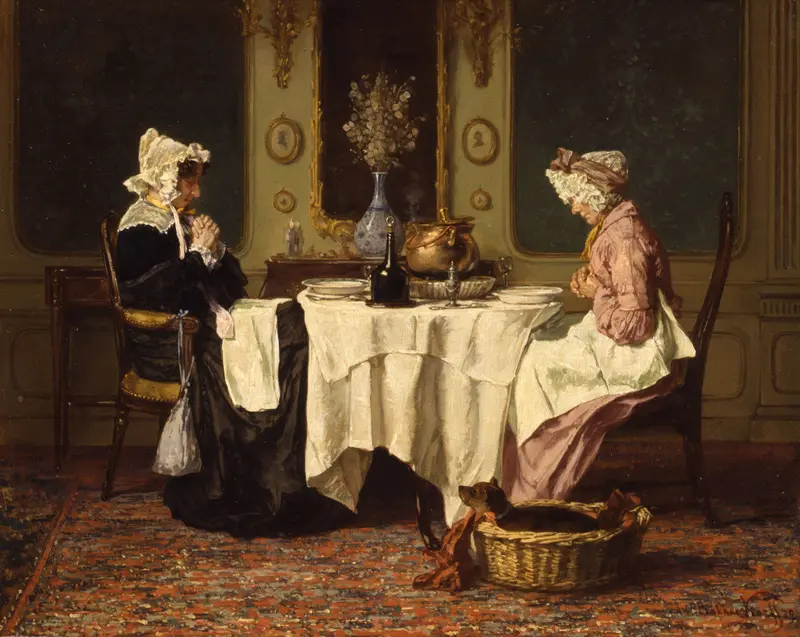
What draws the eye first in Bouillon en een glas port is the gentle resignation of the seated woman, her head bowed in a moment of private reflection or perhaps drowsiness. The light, warm but subdued, pools across her pale skirt and softly illuminates the textures of her shawl and lace cap, inviting the viewer to linger on the quiet luxury of her surroundings. Each object—a porcelain tureen, a delicate glass, the heavy drape of her dress—speaks to a life of order and routine.
The woman’s hand, resting on the table near the untouched port, suggests a pause between rituals, while the footstool beneath her feet hints at comfort hard-won and fiercely maintained. The muted palette and careful composition create a mood of stillness, as if the entire room is holding its breath. Painted in 1865, this work belongs to a world where domestic interiors were both a stage and a sanctuary. In the Netherlands, the tradition of genre painting ran deep, with artists like Alexander Hugo Bakker Korff capturing the daily lives of the middle class with a blend of affection and irony.
Such scenes were often commissioned or collected by those who saw their own values reflected in these orderly, sunlit rooms—stability, propriety, a touch of genteel melancholy. Little is recorded about this specific painting’s early history, but today it forms part of the collection at www.centraalmuseum.nl, a quiet testament to the enduring fascination with the rhythms of ordinary life. Look again at the woman’s face: what story does she keep behind those downcast eyes?
More Artworks by Alexander Hugo Bakker Korff
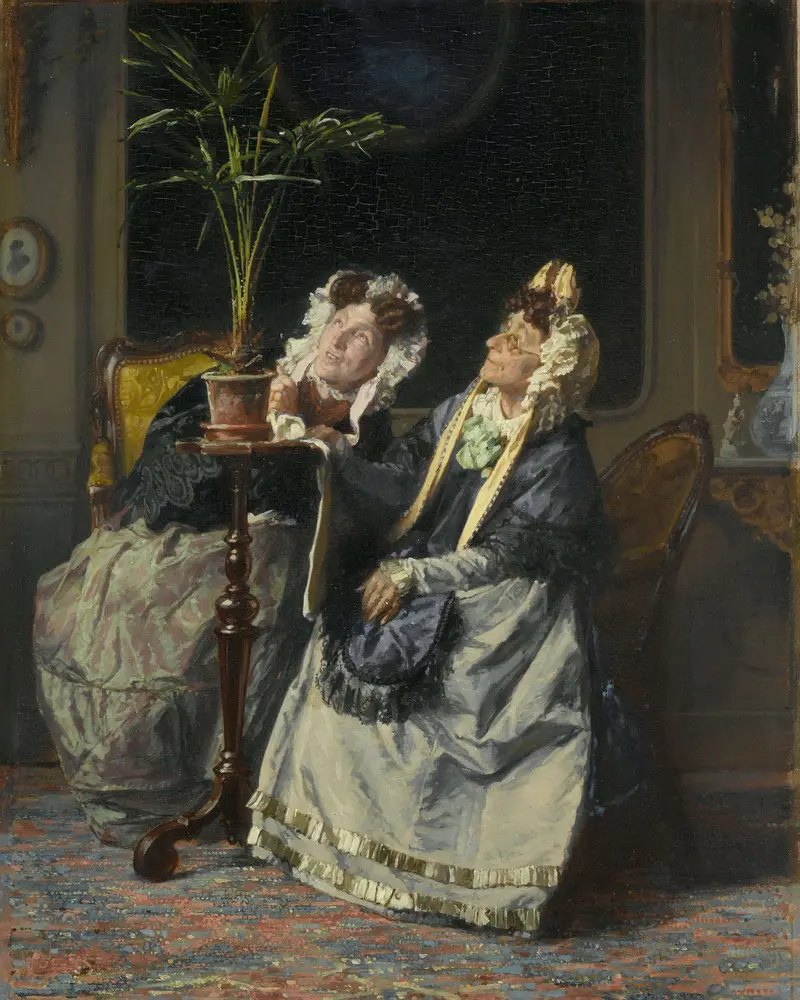
Under the Palms
Alexander Hugo Bakker Korff
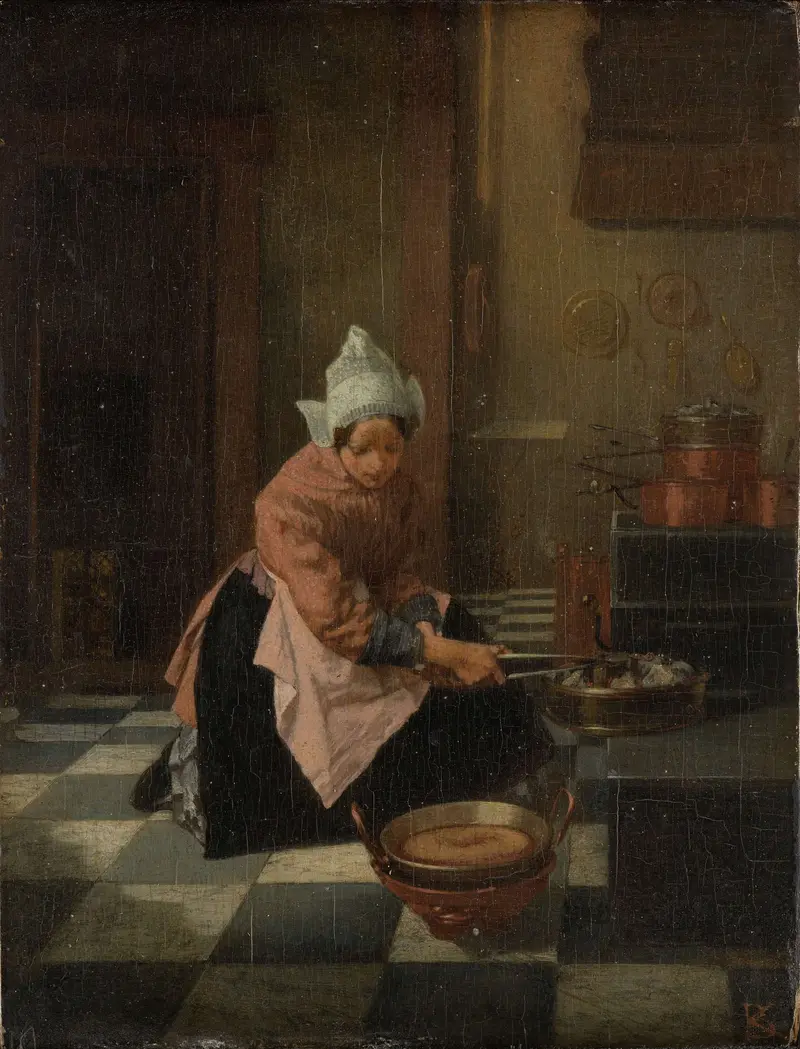
The Waffle Maker
Alexander Hugo Bakker Korff
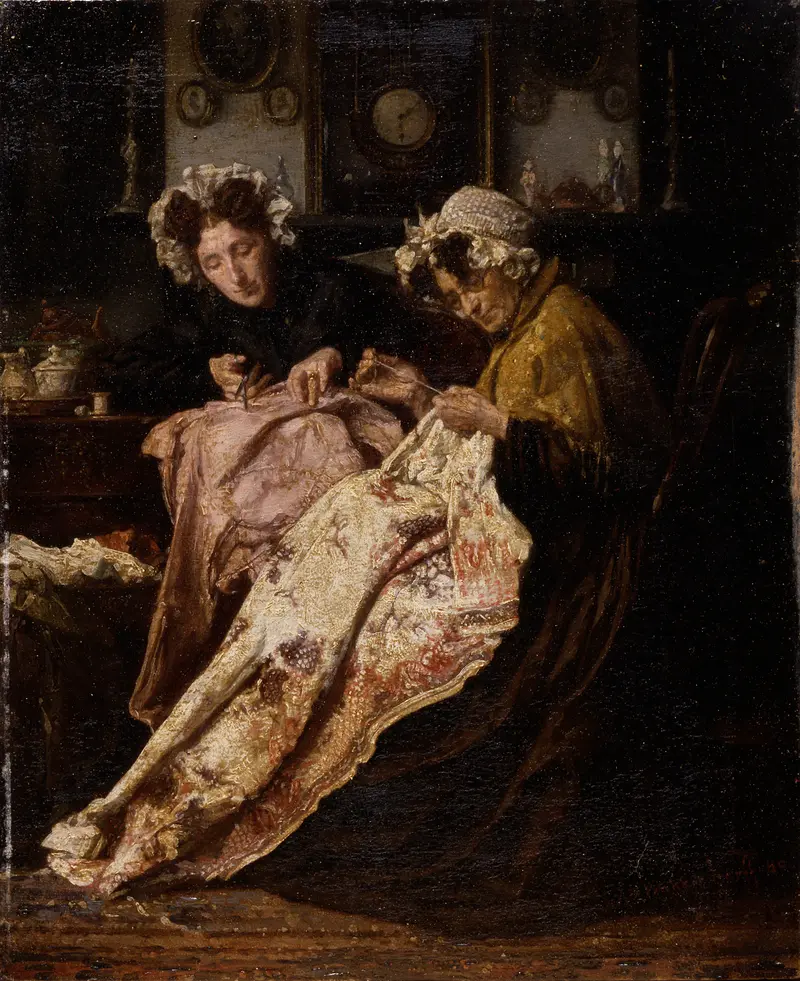
The Seamstress
Alexander Hugo Bakker Korff
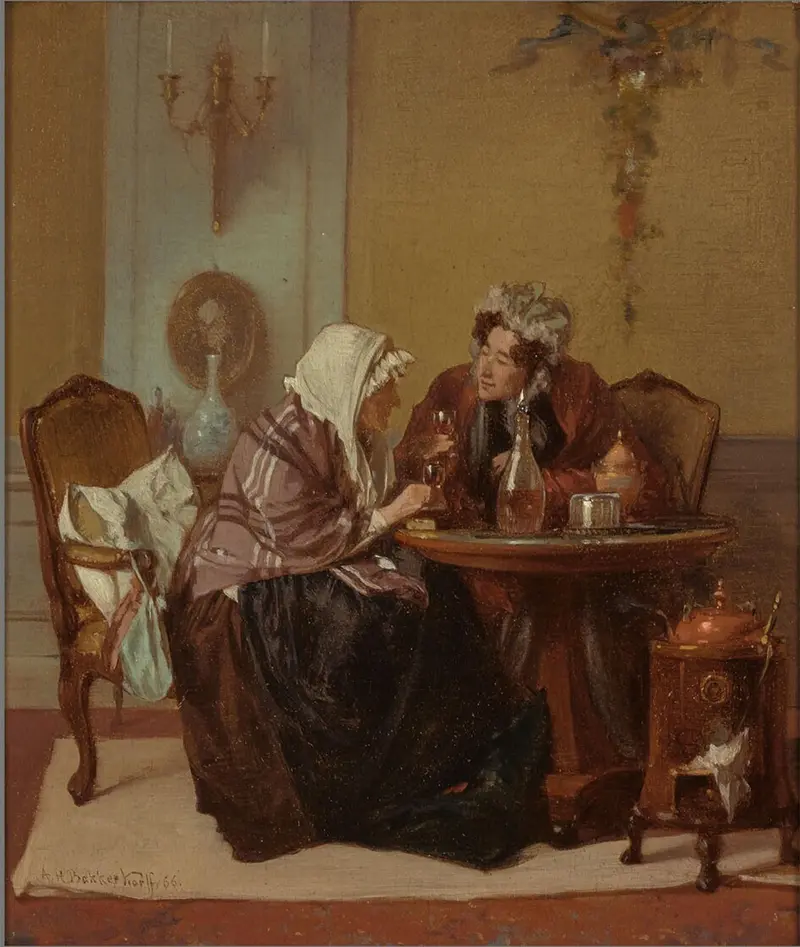
La convalescente
Alexander Hugo Bakker Korff
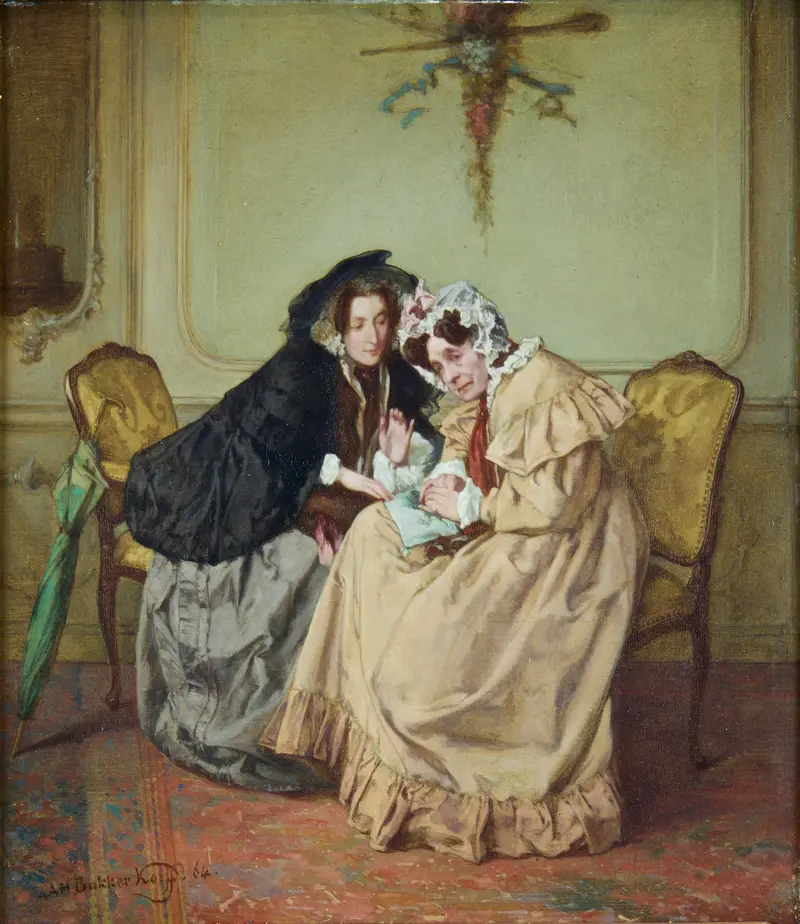
Het geheim DM 916 47 Dordrechts Museum
Alexander Hugo Bakker Korff
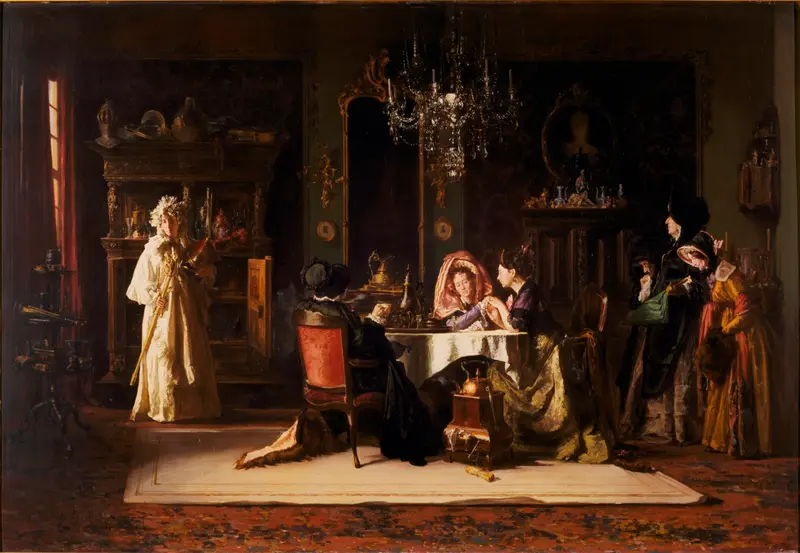
'La Fille du Héros' (The Hero's Daughter)
Alexander Hugo Bakker Korff
Drie oktober feest DM 938 48 Dordrechts Museum
Alexander Hugo Bakker Korff
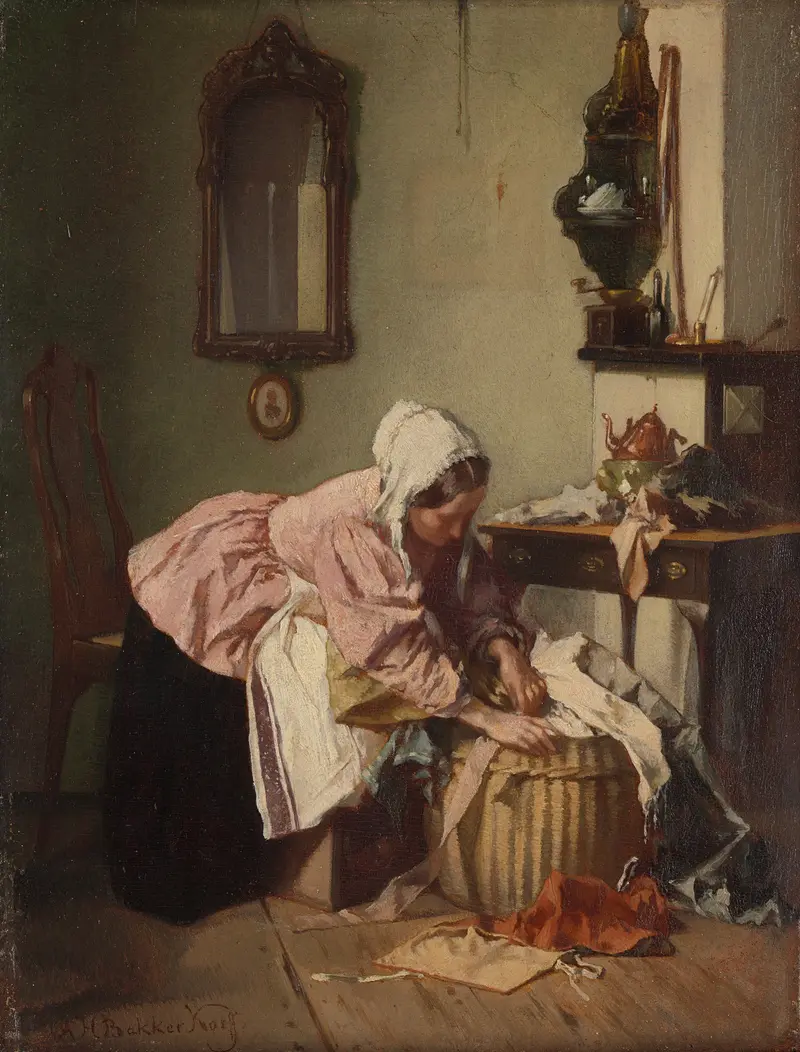
The Rag Basket
Alexander Hugo Bakker Korff
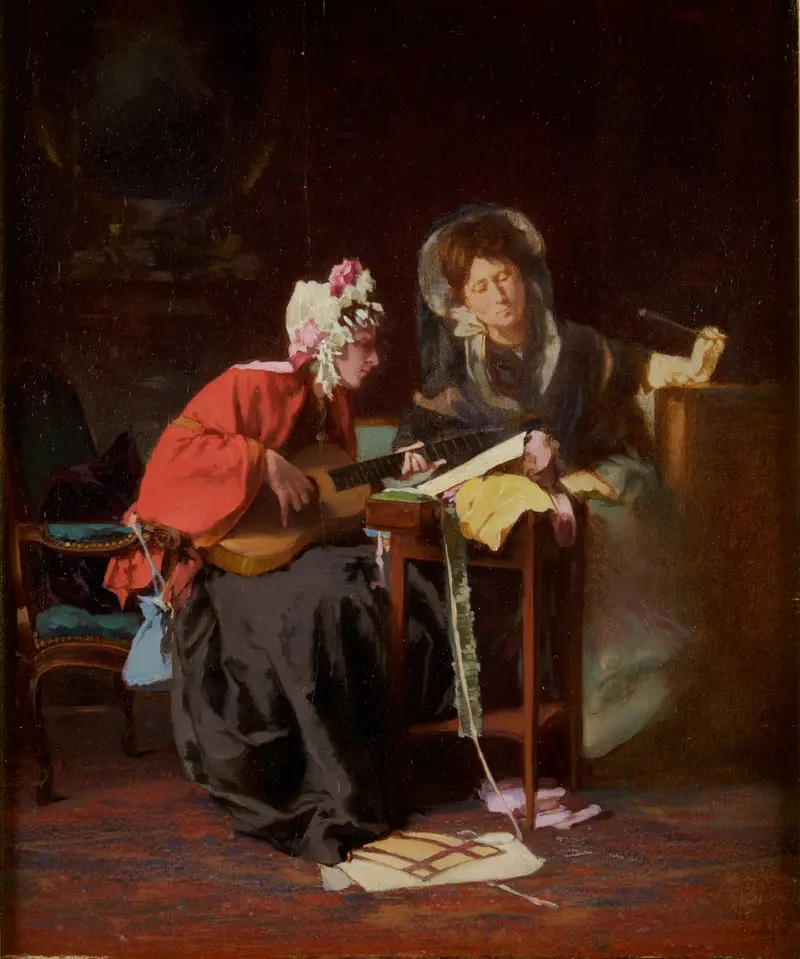
Gitaarles VBL 8 Dordrechts Museum
Alexander Hugo Bakker Korff
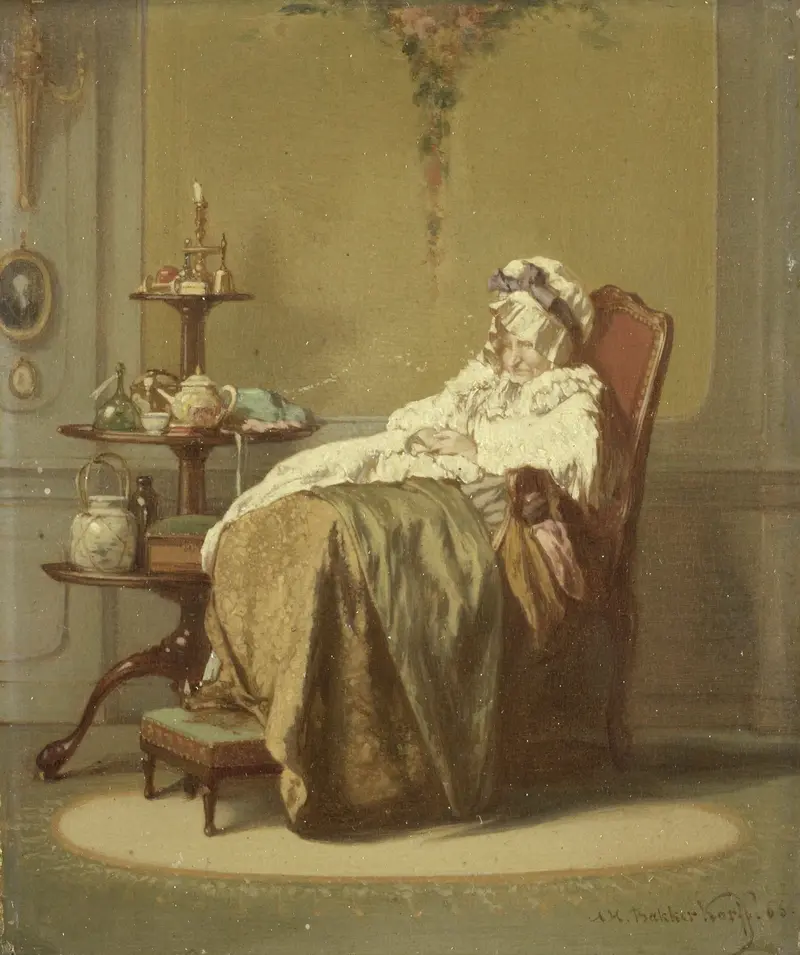
Taking a Nap
Alexander Hugo Bakker Korff
More Genre Scene Art

Banquet of the Officers of the St George Civic Guard
Frans Hals

Rembrandt and Saskia in the Scene of the Prodigal Son
Rembrandt van Rijn

Bal du moulin de la Galette
Pierre-Auguste Renoir

Quadrille at the Moulin Rouge
Henri de Toulouse-Lautrec

A Burial at Ornans
Gustave Courbet

When Will You Marry?
Paul Gauguin