
Drie oktober feest DM 938 48 Dordrechts Museum — History & Facts
What draws the viewer in first is the hush: two elderly women, heads bowed and hands clasped, sit across from each other at a table set for a modest feast. The room is rich with detail, from the patterned carpet underfoot to the gleaming copper pot and blue porcelain vase that anchor the composition. The light falls gently, illuminating the white tablecloth and the women’s lace caps, creating a quiet intimacy.
Every object seems chosen for its role in this ritual of gratitude—the bottle of wine, the simple plates, the basket at their feet where a small dog peeks out, half-participant, half-observer. The painter leads the eye from the clasped hands to the carefully arranged meal, inviting us to witness not just a meal, but a moment of shared reflection. Painted in 1879, this work by Alexander Hugo Bakker Korff belongs to a tradition of Dutch genre painting that cherished scenes of domestic life, especially those that celebrated the virtues of modesty, gratitude, and togetherness. In the late nineteenth century, such images were cherished by a middle-class audience eager to see their own values reflected on canvas.
While history has kept few traces of this particular painting’s story beyond its home in the Dordrechts Museum, it stands as a testament to the enduring appeal of the everyday, rendered with care and dignity. Look again at the women’s faces, the dog’s attentive gaze, the play of light on porcelain and brass—each detail offers another invitation into their quiet world.
More Artworks by Alexander Hugo Bakker Korff
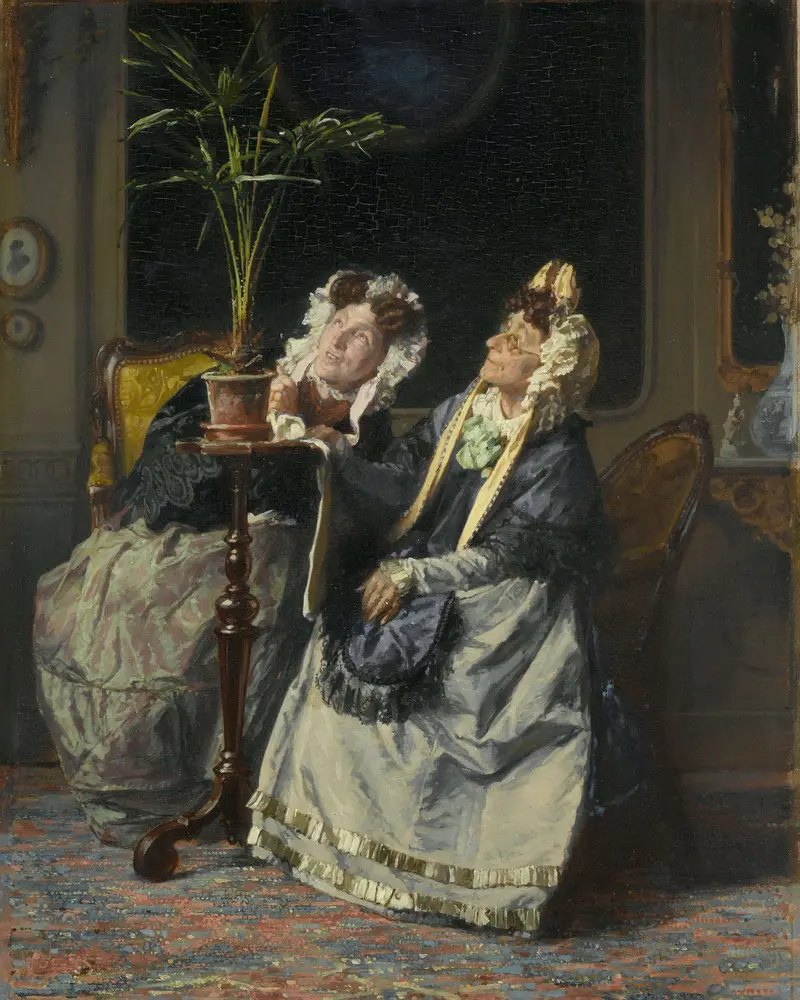
Under the Palms
Alexander Hugo Bakker Korff
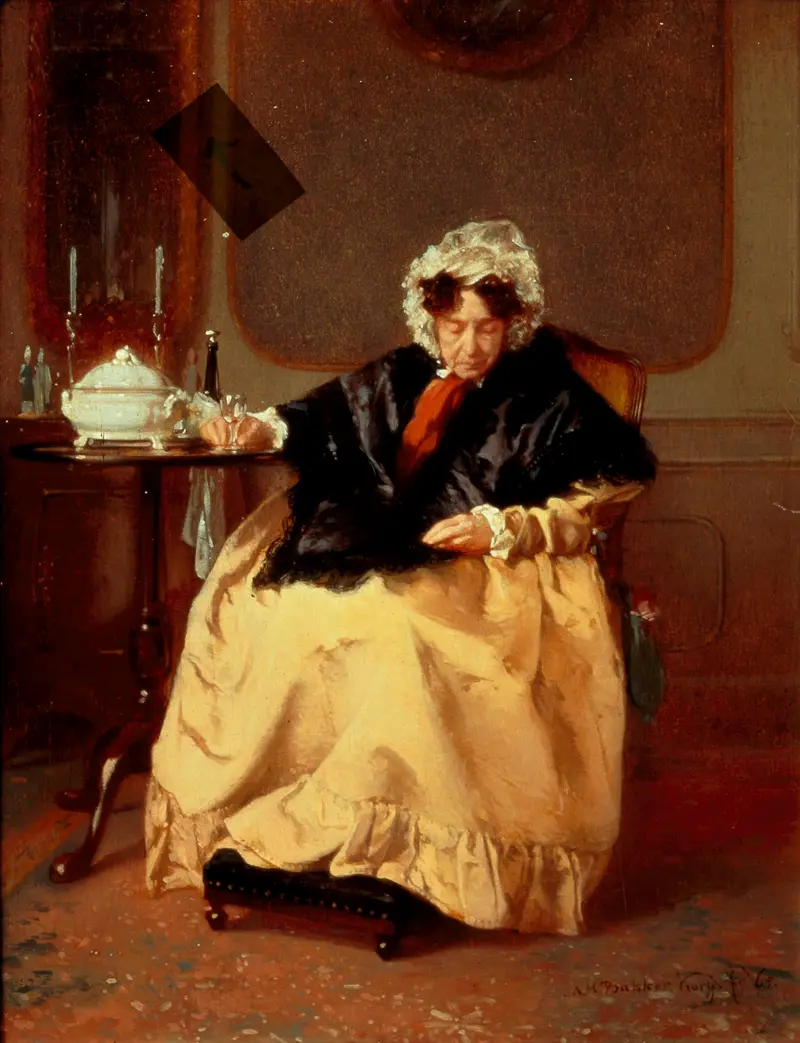
Bouillon en een glas port
Alexander Hugo Bakker Korff
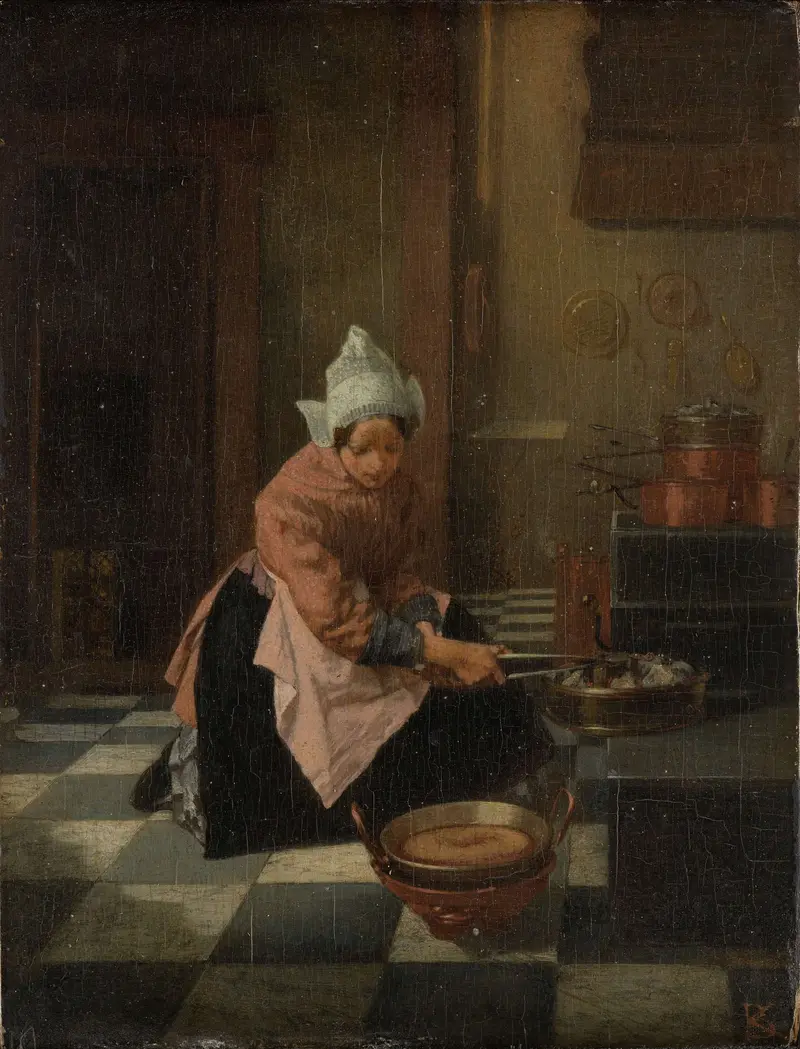
The Waffle Maker
Alexander Hugo Bakker Korff
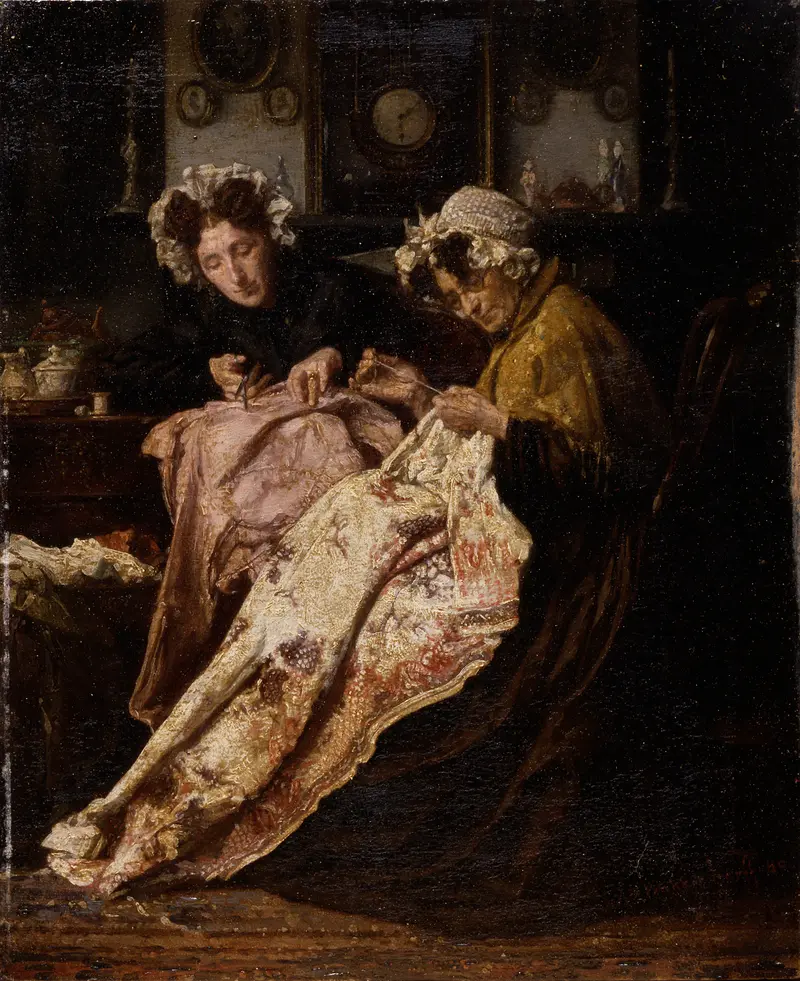
The Seamstress
Alexander Hugo Bakker Korff
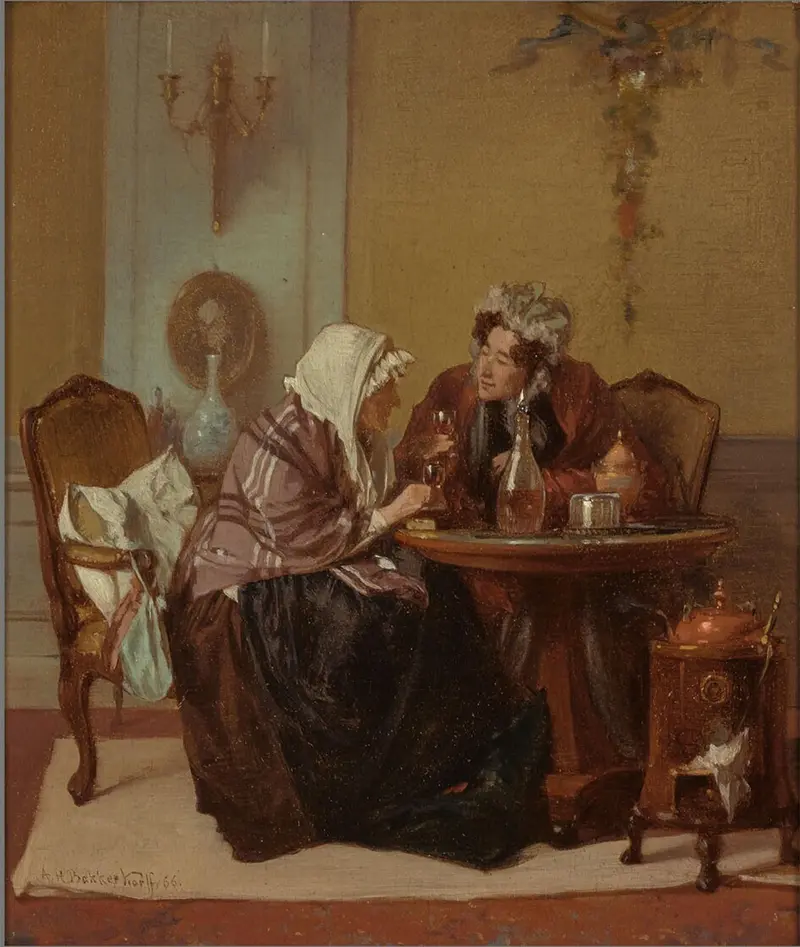
La convalescente
Alexander Hugo Bakker Korff
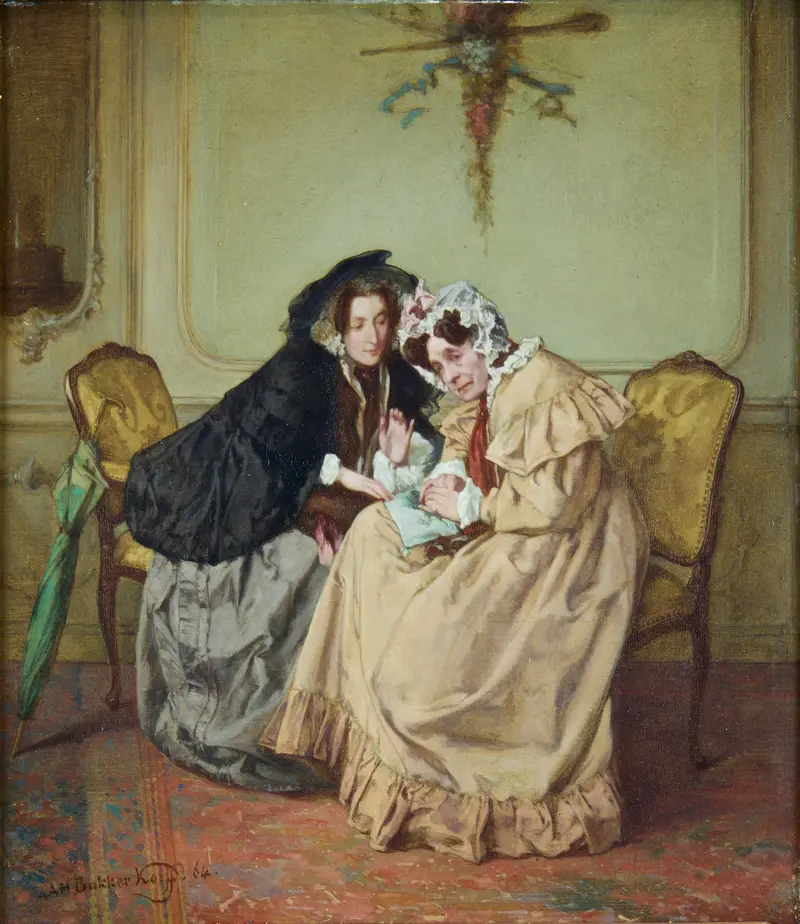
Het geheim DM 916 47 Dordrechts Museum
Alexander Hugo Bakker Korff
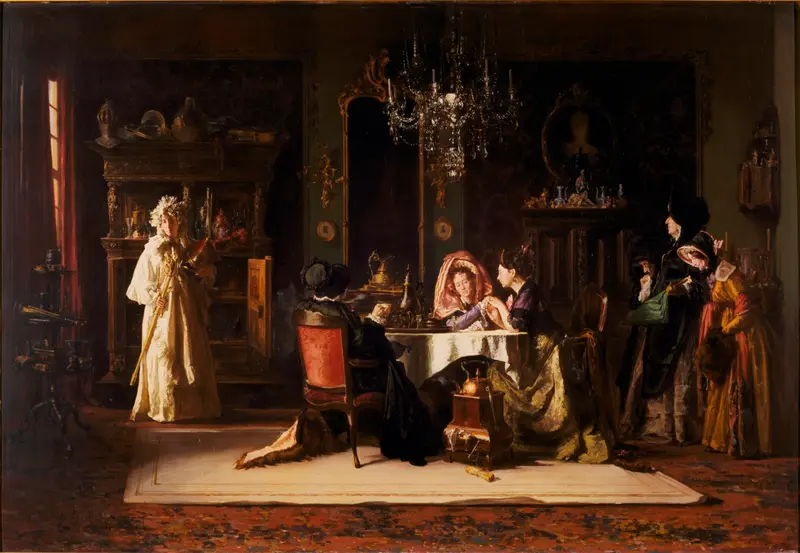
'La Fille du Héros' (The Hero's Daughter)
Alexander Hugo Bakker Korff
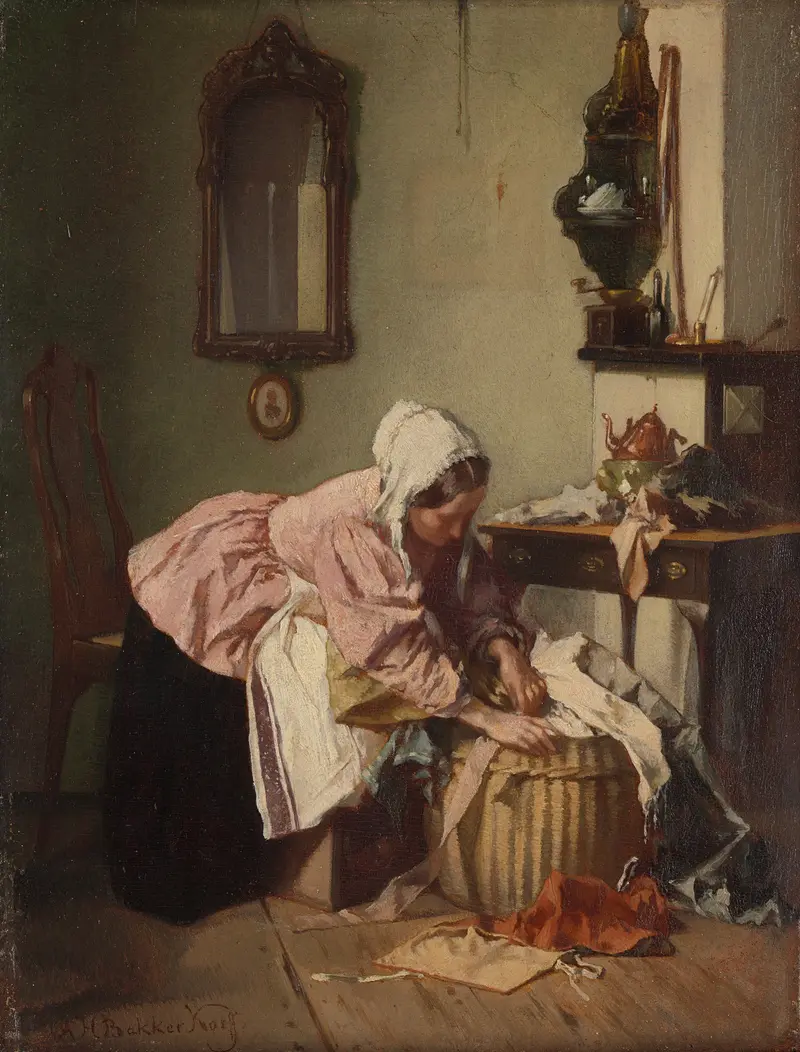
The Rag Basket
Alexander Hugo Bakker Korff
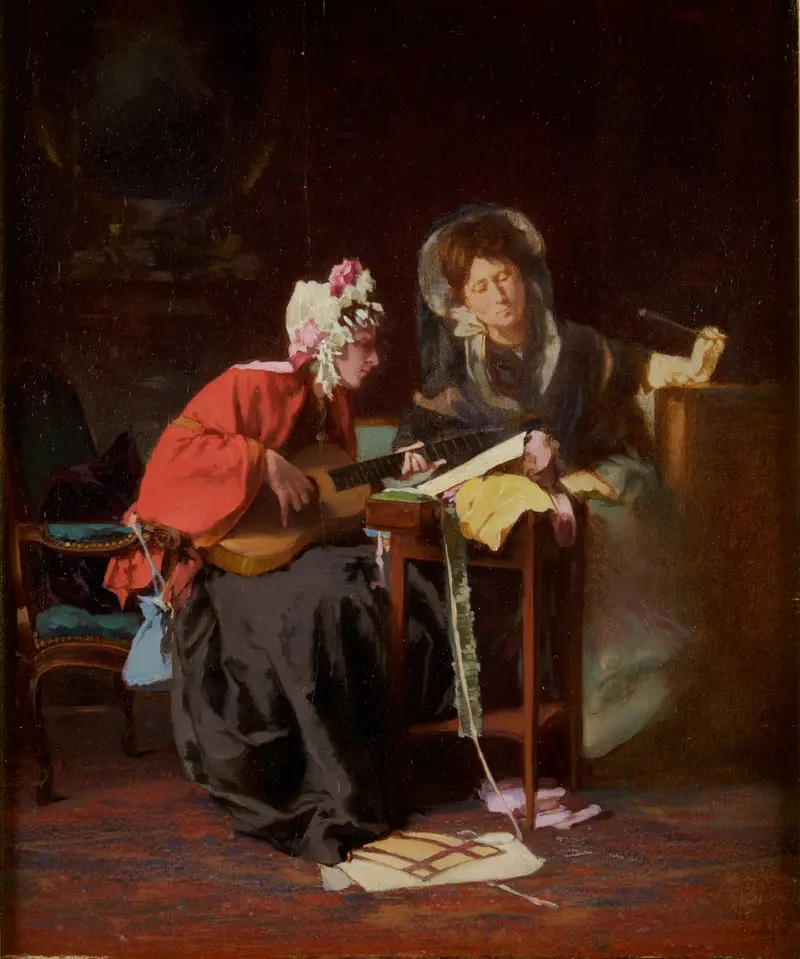
Gitaarles VBL 8 Dordrechts Museum
Alexander Hugo Bakker Korff
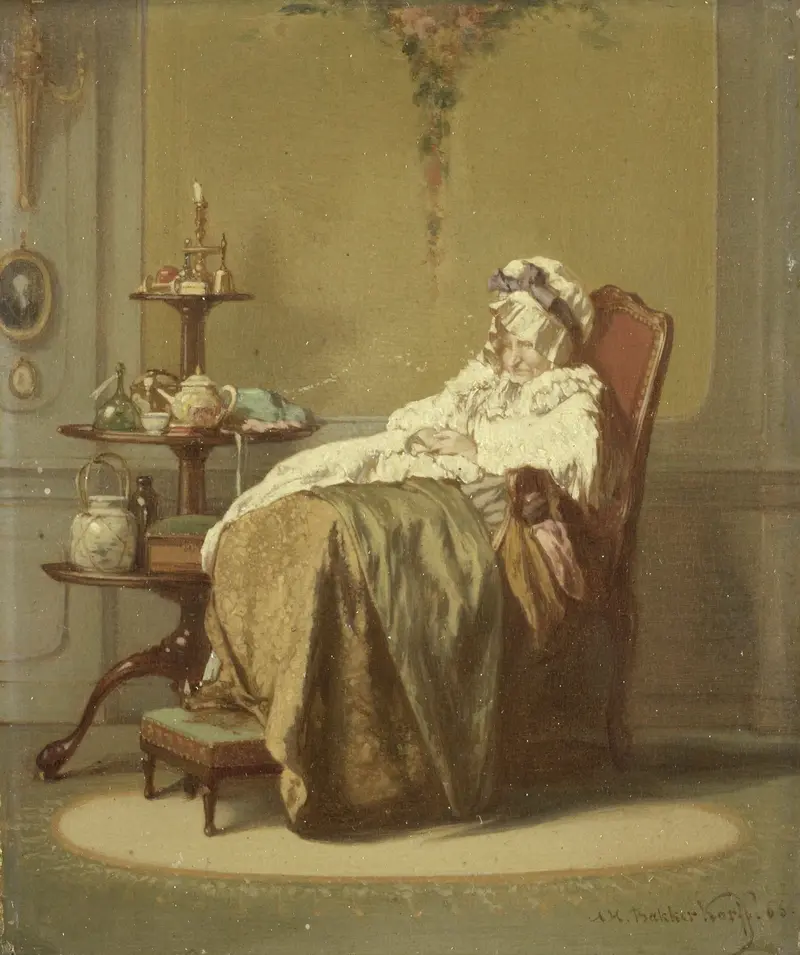
Taking a Nap
Alexander Hugo Bakker Korff
More Genre Scene Art

Banquet of the Officers of the St George Civic Guard
Frans Hals

Rembrandt and Saskia in the Scene of the Prodigal Son
Rembrandt van Rijn

Bal du moulin de la Galette
Pierre-Auguste Renoir

Quadrille at the Moulin Rouge
Henri de Toulouse-Lautrec

A Burial at Ornans
Gustave Courbet

When Will You Marry?
Paul Gauguin