
The Seamstress — History & Facts
What draws the eye first is the sweep of patterned fabric, tumbling like a waterfall from the lap of the seamstress and catching the light with every fold. The scene is hushed and intimate: two women, heads bent close, hands busy with needle and thread. One, in a crisp white cap and yellow shawl, is utterly absorbed in her work, while her companion leans in, perhaps offering advice or simply sharing the quiet company.
The background is dim, but carefully arranged—china, clocks, and figurines line the mantel, suggesting a world of domestic pride and routine. The painter’s brush lingers over the textures: the sheen of silk, the roughness of wool, the gleam of porcelain, each detail reinforcing the sense of a life measured out in careful stitches and shared labor. The Seamstress by Alexander Hugo Bakker Korff, painted in 1880, belongs to a tradition of 19th-century genre painting that found beauty and dignity in the everyday. In the Netherlands, such works were often collected by the rising middle class, who saw their own values—industry, order, modest comfort—reflected in these interiors.
Bakker Korff was known for his small, precisely observed scenes, often set in genteel, slightly old-fashioned rooms. Little is recorded about this particular painting’s early history, but its presence today in a public collection invites us to linger over a moment that, in its time, might have passed unnoticed. The longer one looks, the more the painting rewards with its quiet celebration of skill, patience, and the bonds that form over shared work.
More Artworks by Alexander Hugo Bakker Korff
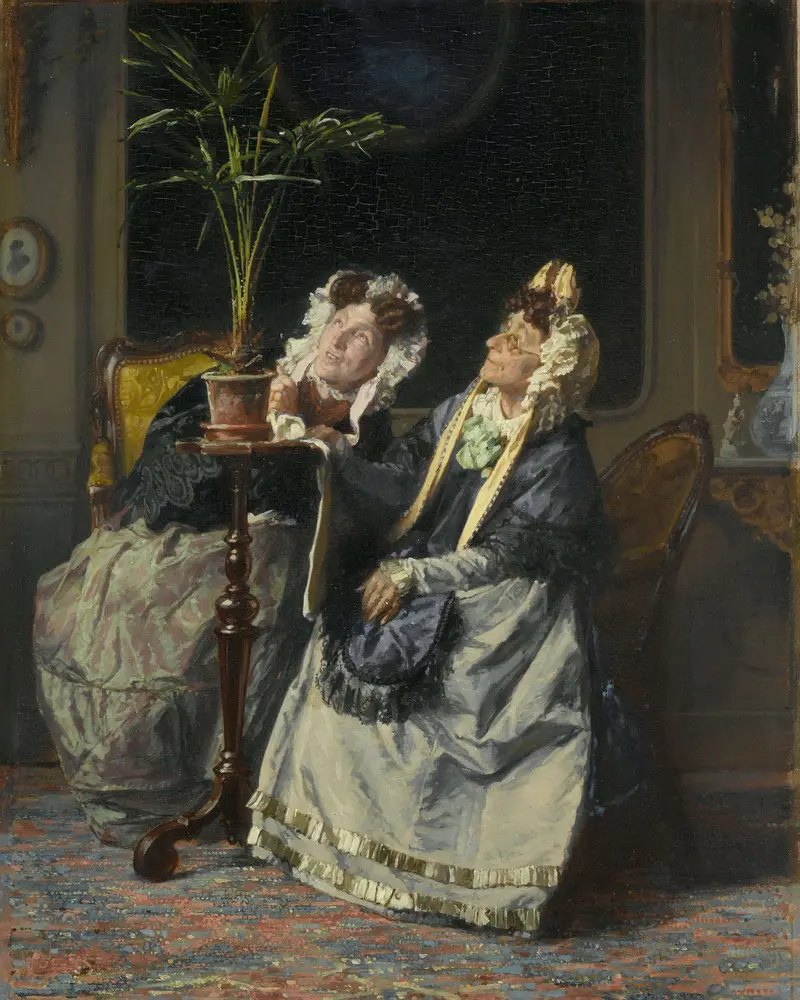
Under the Palms
Alexander Hugo Bakker Korff
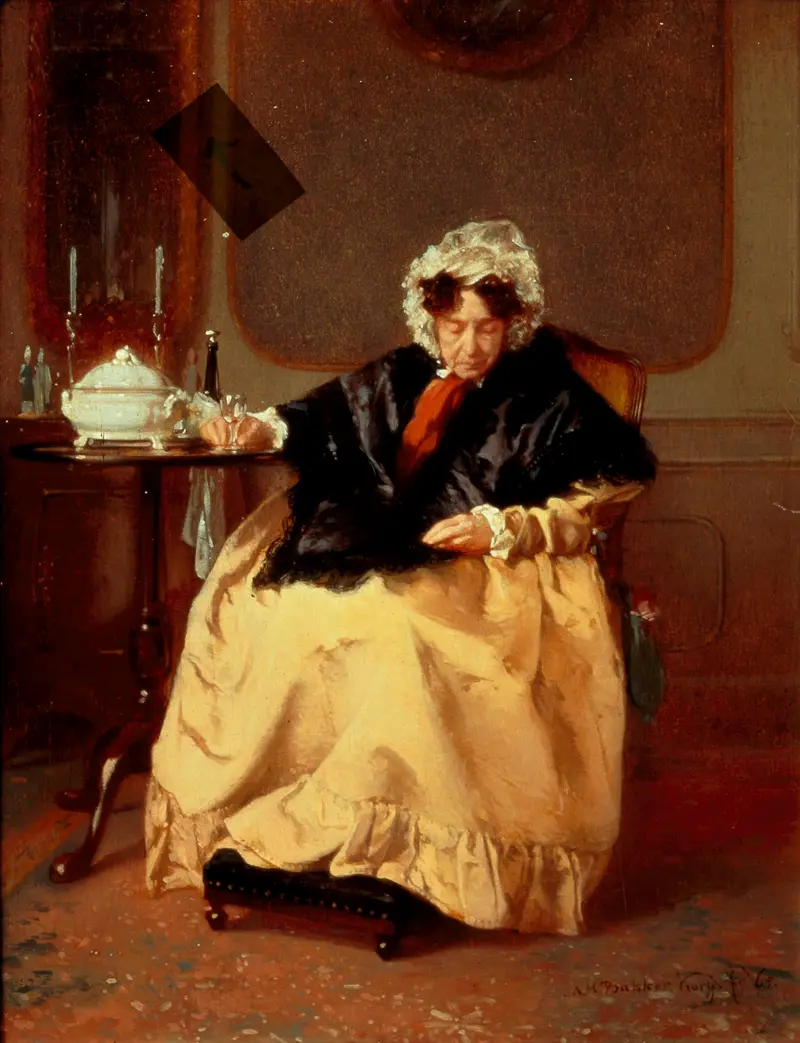
Bouillon en een glas port
Alexander Hugo Bakker Korff
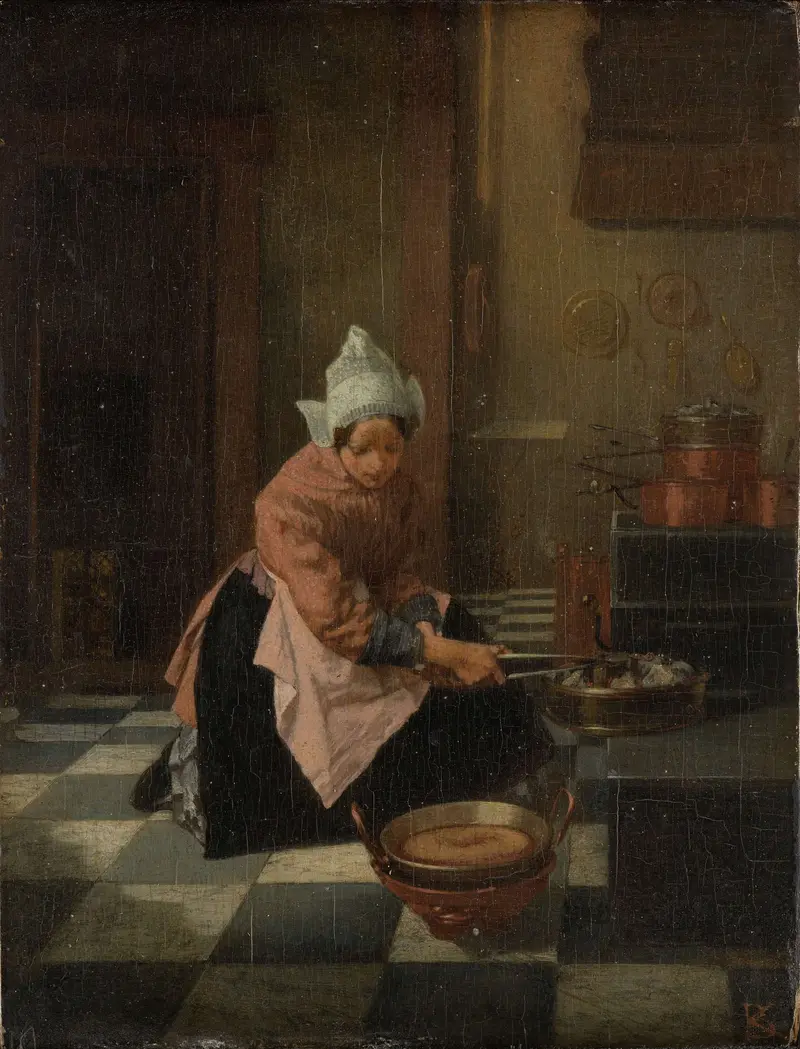
The Waffle Maker
Alexander Hugo Bakker Korff
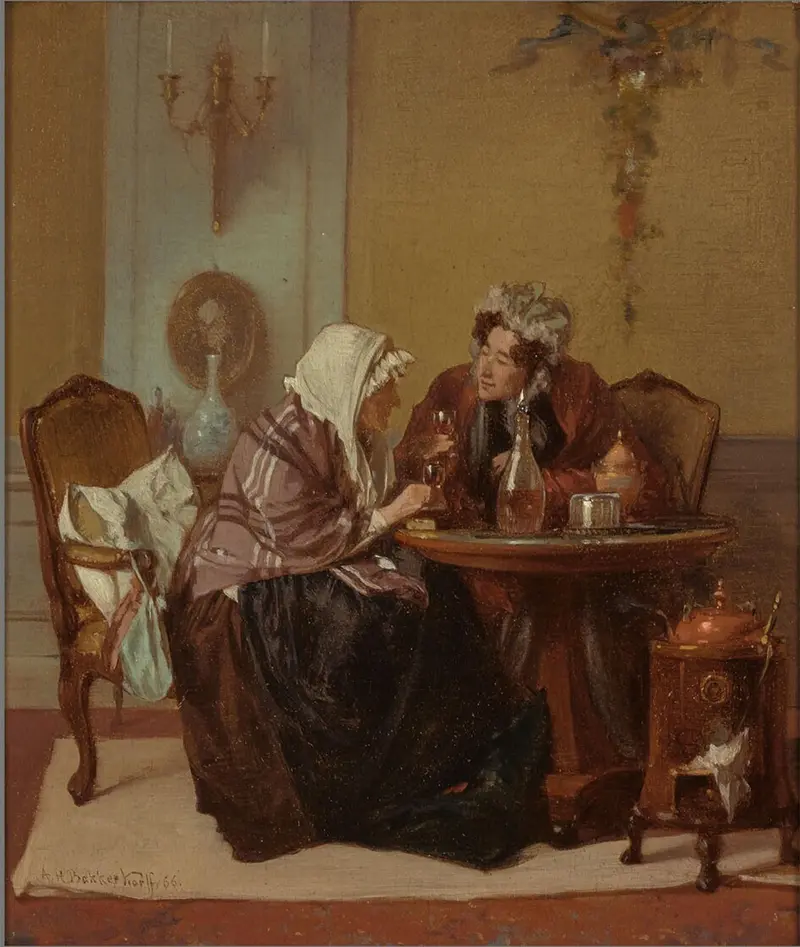
La convalescente
Alexander Hugo Bakker Korff
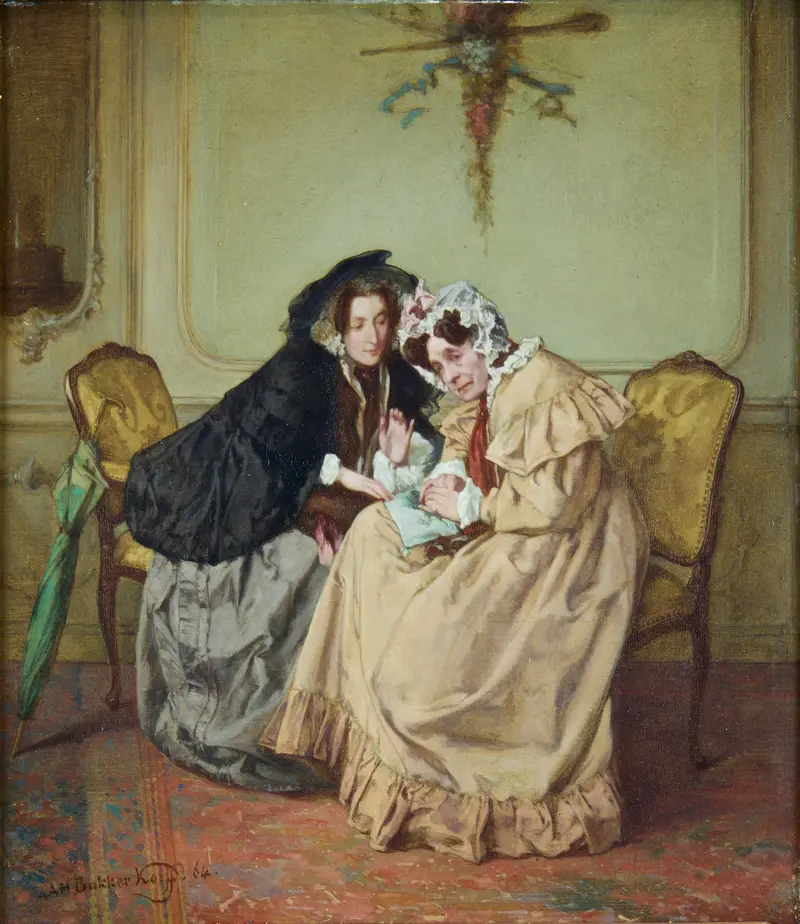
Het geheim DM 916 47 Dordrechts Museum
Alexander Hugo Bakker Korff
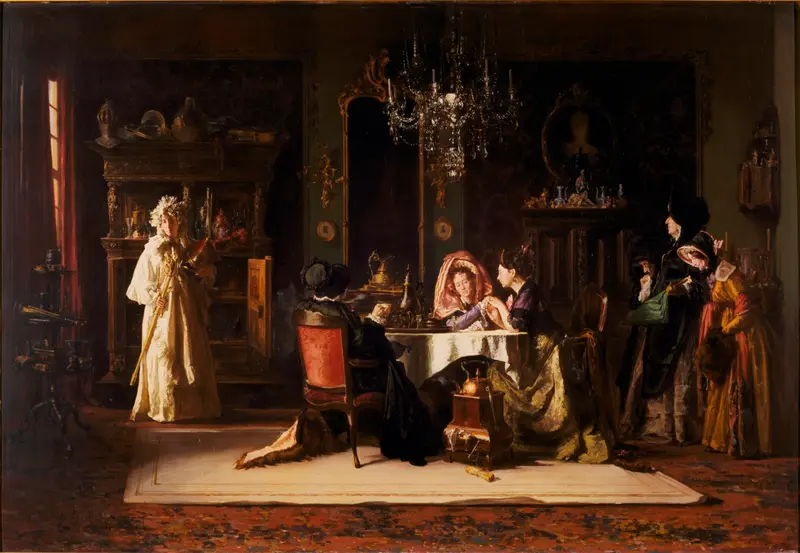
'La Fille du Héros' (The Hero's Daughter)
Alexander Hugo Bakker Korff
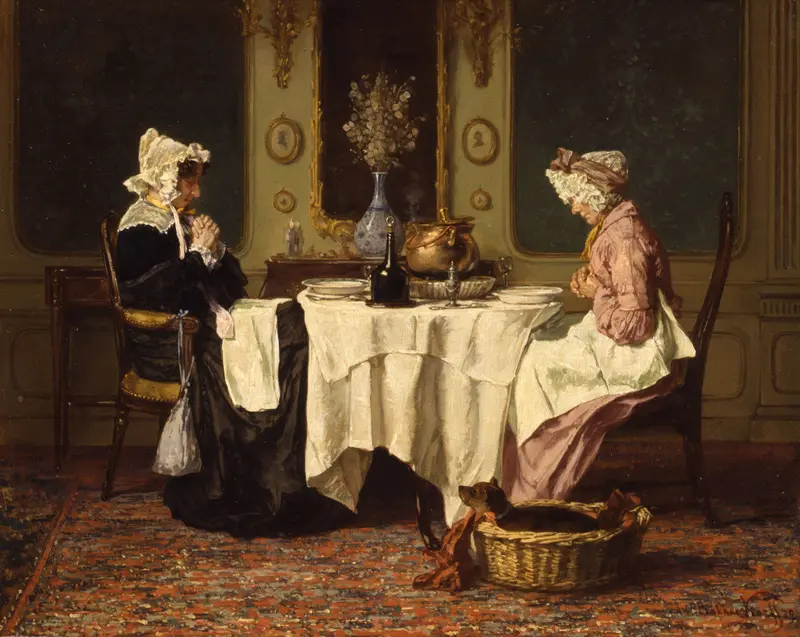
Drie oktober feest DM 938 48 Dordrechts Museum
Alexander Hugo Bakker Korff
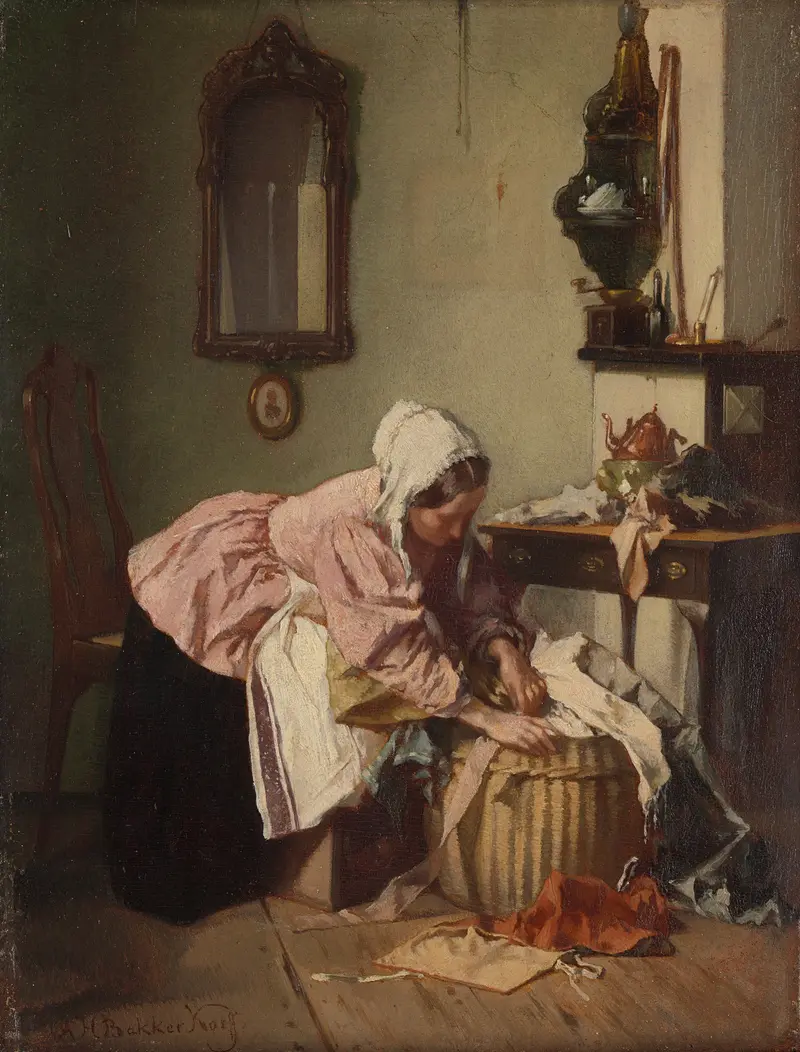
The Rag Basket
Alexander Hugo Bakker Korff
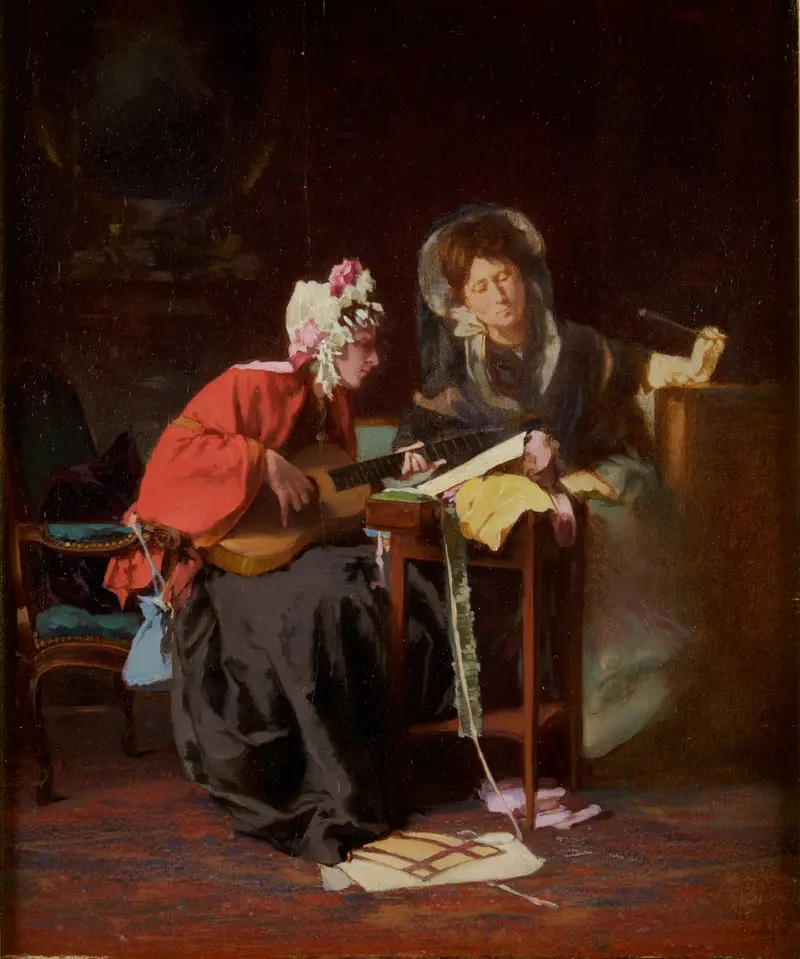
Gitaarles VBL 8 Dordrechts Museum
Alexander Hugo Bakker Korff
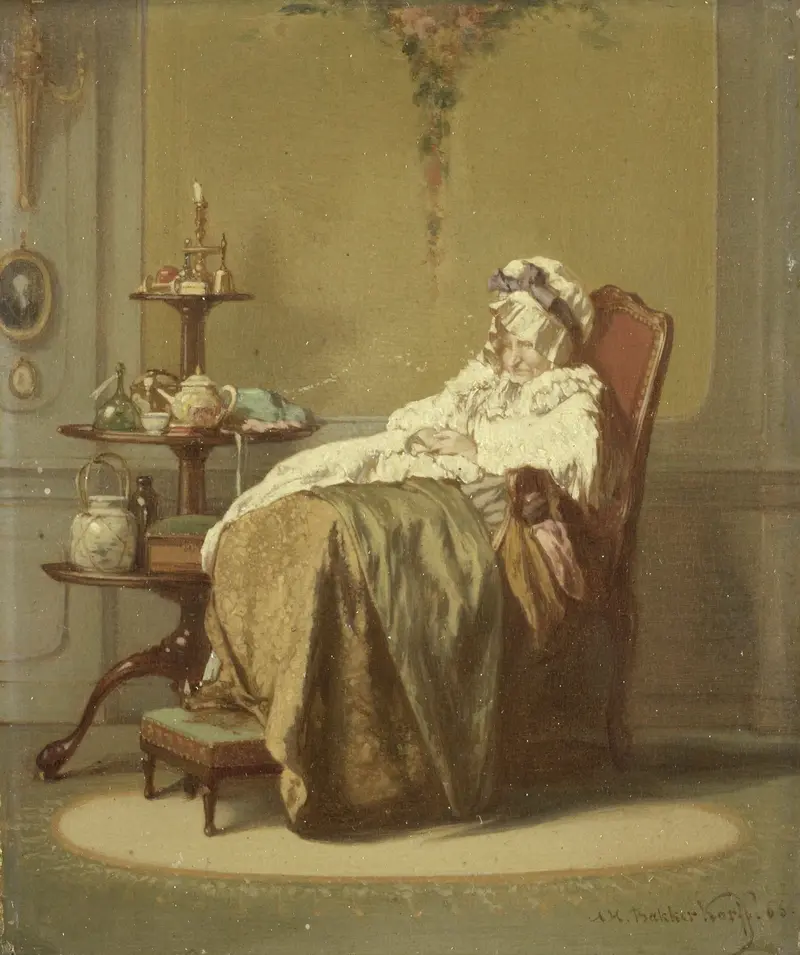
Taking a Nap
Alexander Hugo Bakker Korff
More Genre Scene Art

Banquet of the Officers of the St George Civic Guard
Frans Hals

Rembrandt and Saskia in the Scene of the Prodigal Son
Rembrandt van Rijn

Bal du moulin de la Galette
Pierre-Auguste Renoir

Quadrille at the Moulin Rouge
Henri de Toulouse-Lautrec

A Burial at Ornans
Gustave Courbet

When Will You Marry?
Paul Gauguin