
Taking a Nap — History & Facts
What draws the eye first is not the figure’s slumber, but the careful choreography of comfort that surrounds her. The woman’s head tips gently to one side, her cap and shawl softening her features, as if the afternoon itself has coaxed her into rest. Every object in the room seems to conspire in her favor: the plush armchair, the footstool just so, the tea service within arm’s reach.
Light falls evenly, with a golden hush, across the folds of her skirt and the polished wood, making the entire scene feel suspended—an oasis of quiet in a world that rarely stops. Painted in 1866, this work belongs to an era when Dutch interiors were both a source of pride and a subject for gentle humor. Artists like Alexander Hugo Bakker Korff specialized in these intimate, almost theatrical domestic scenes, often with a note of affectionate irony. Such paintings were prized by the rising bourgeoisie, who saw their own aspirations and rituals reflected in the art on their walls.
Today, Taking a Nap rests in the collection of the Rijksmuseum, a small but telling window into the comforts and conventions of nineteenth-century life. The longer you look, the more the silence of the room seems to deepen.
More Artworks by Alexander Hugo Bakker Korff
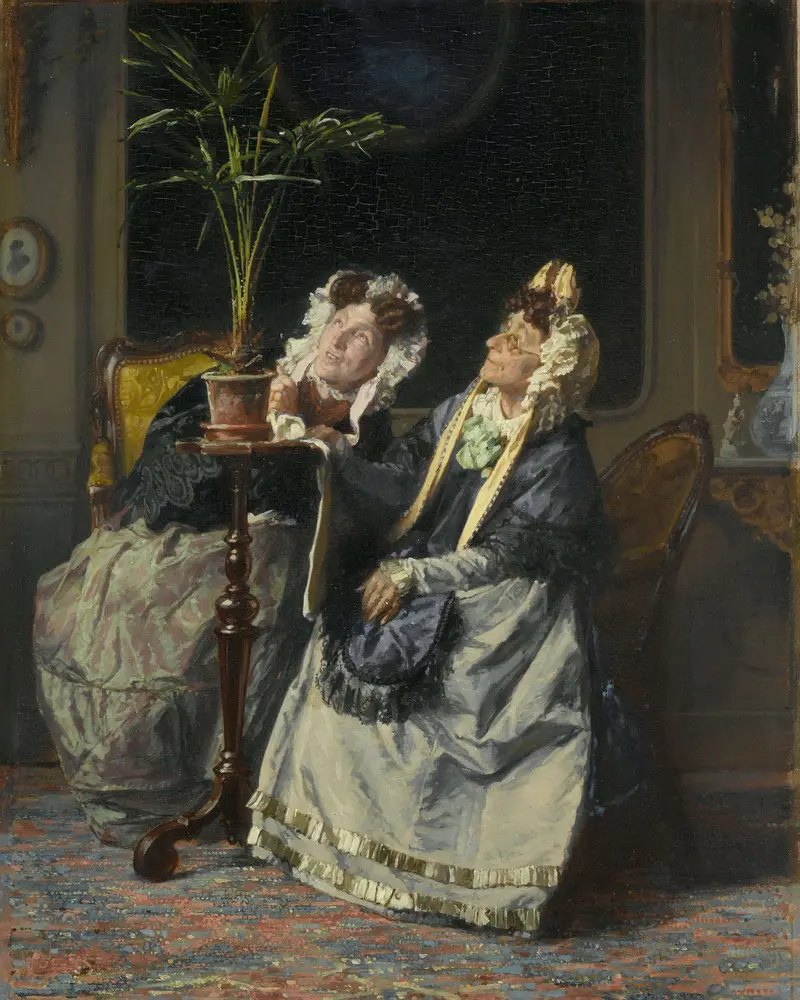
Under the Palms
Alexander Hugo Bakker Korff
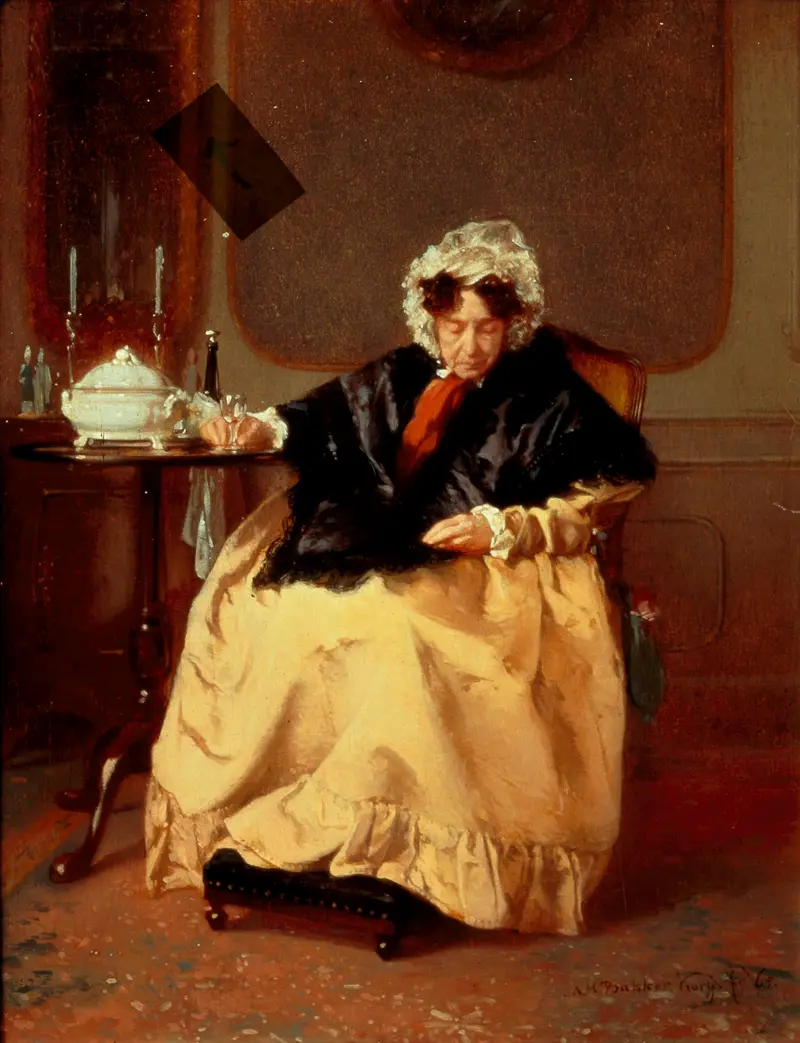
Bouillon en een glas port
Alexander Hugo Bakker Korff
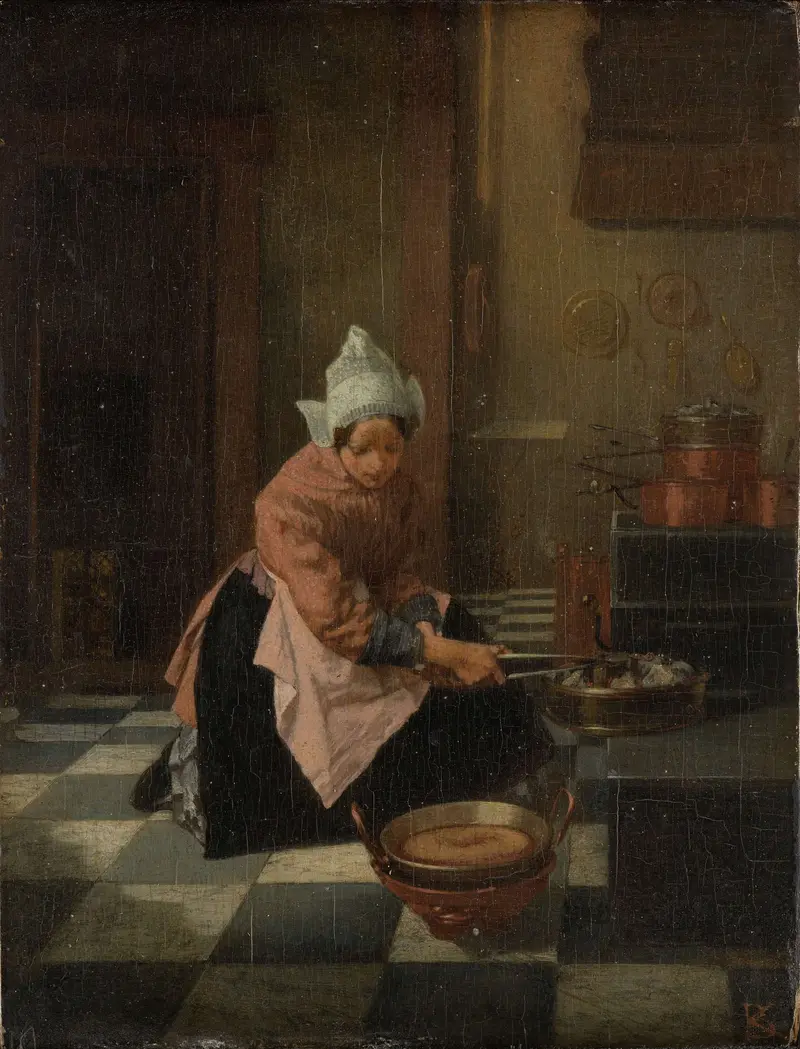
The Waffle Maker
Alexander Hugo Bakker Korff
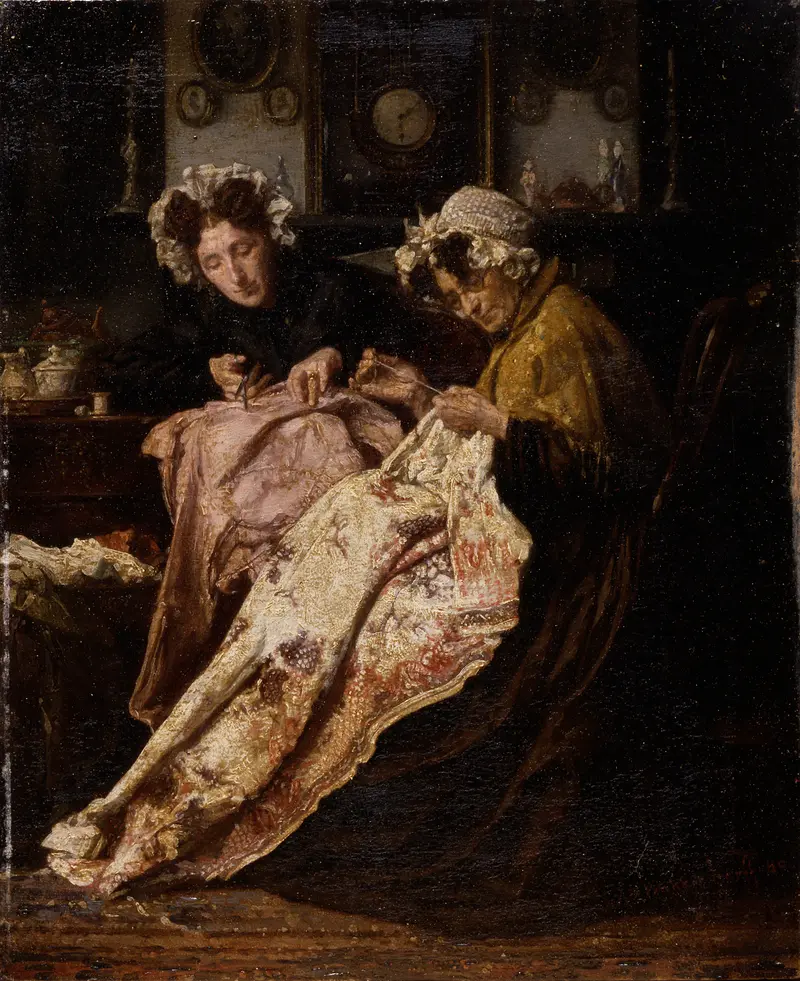
The Seamstress
Alexander Hugo Bakker Korff
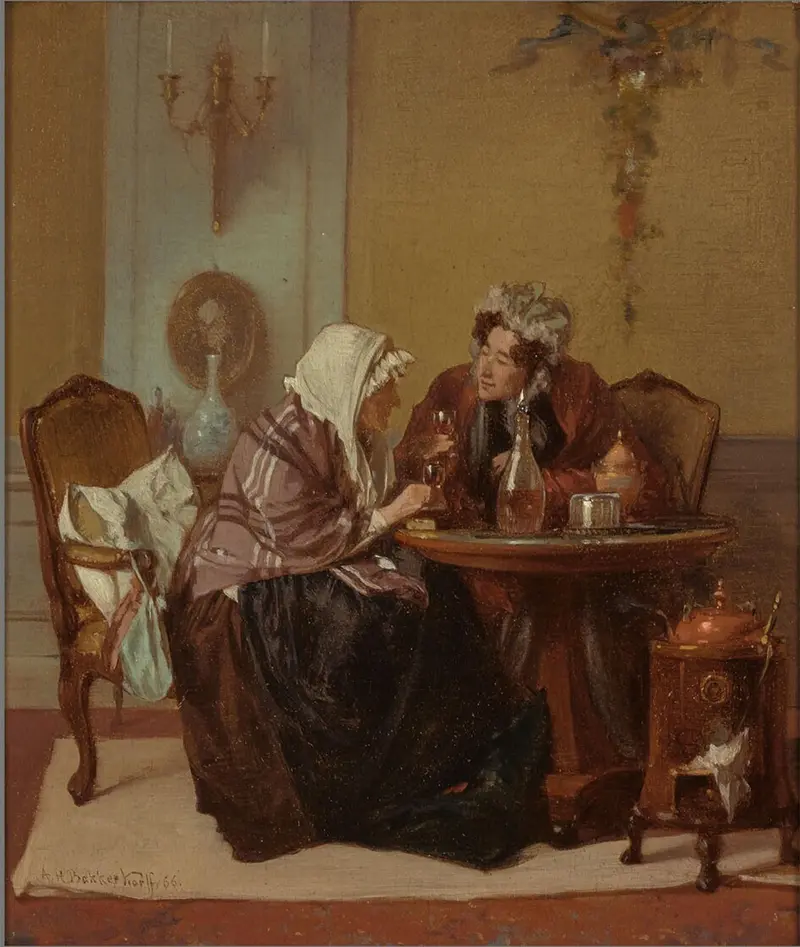
La convalescente
Alexander Hugo Bakker Korff
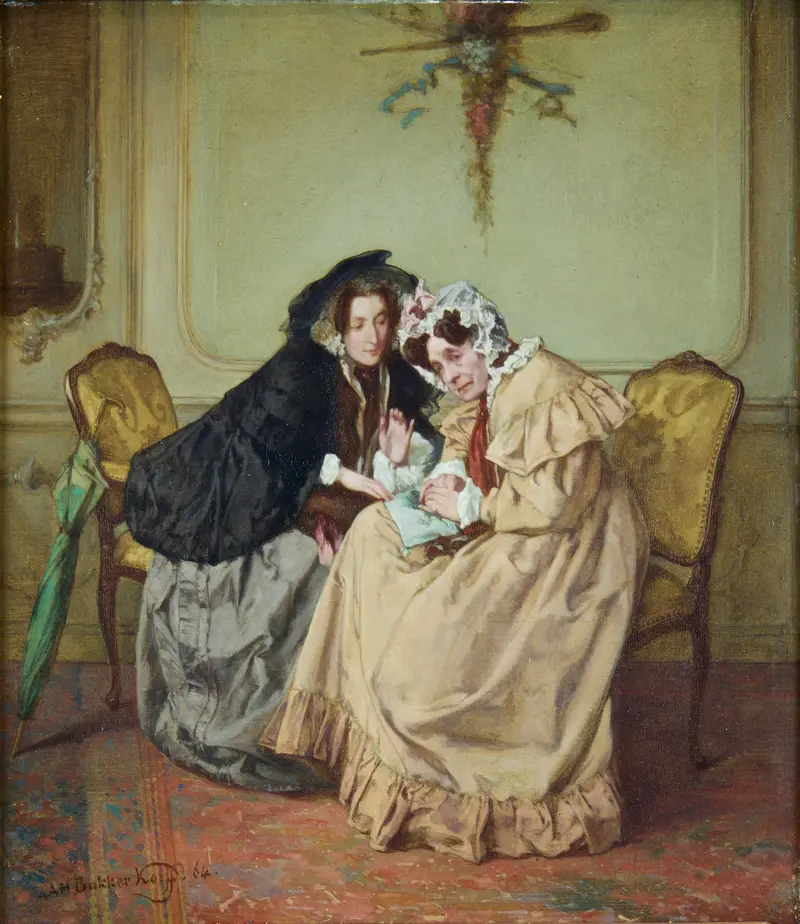
Het geheim DM 916 47 Dordrechts Museum
Alexander Hugo Bakker Korff
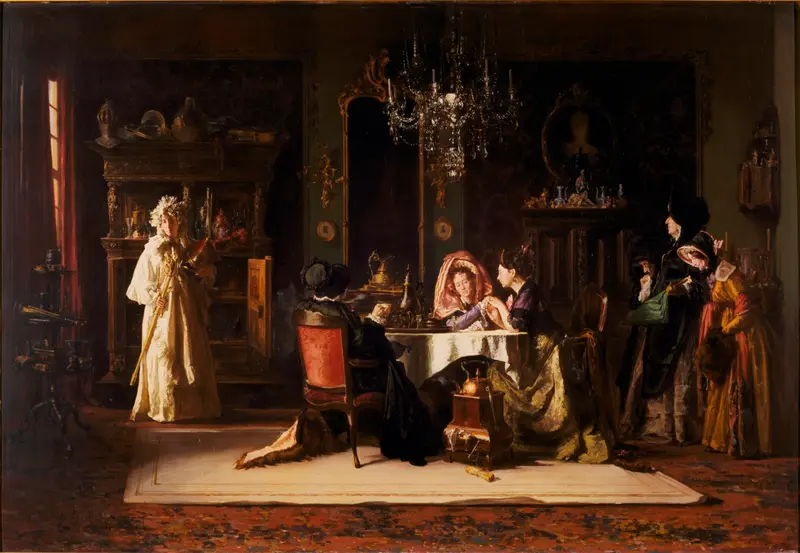
'La Fille du Héros' (The Hero's Daughter)
Alexander Hugo Bakker Korff
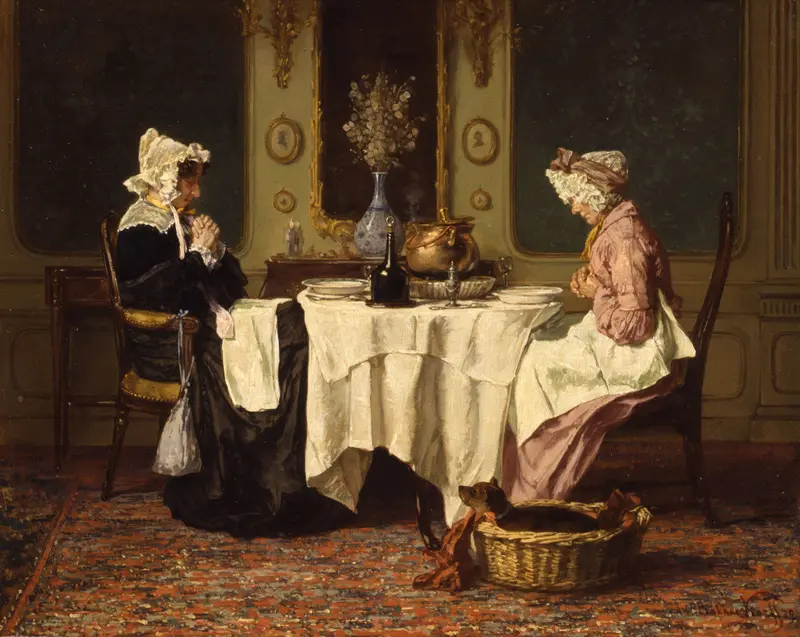
Drie oktober feest DM 938 48 Dordrechts Museum
Alexander Hugo Bakker Korff
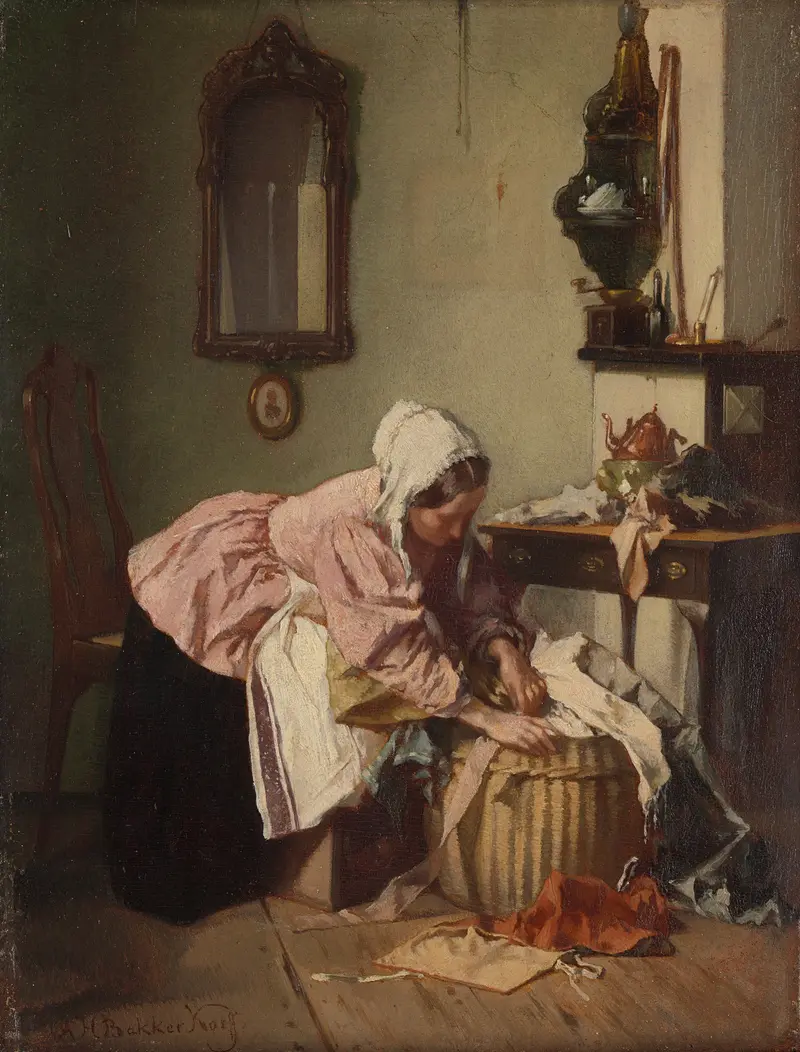
The Rag Basket
Alexander Hugo Bakker Korff
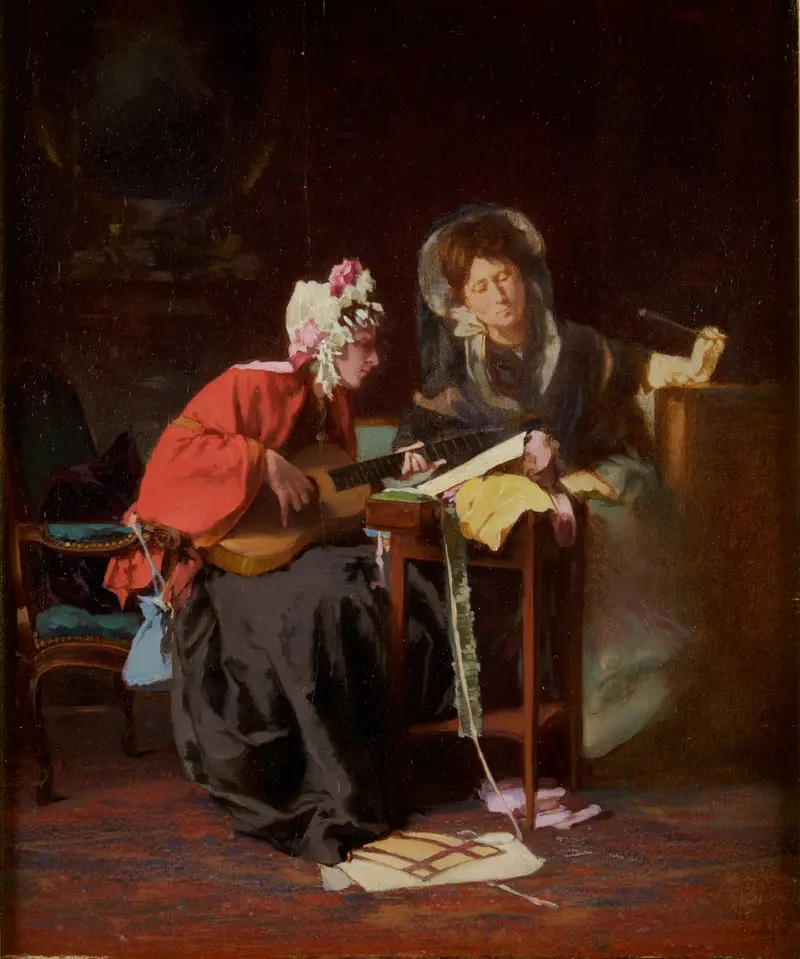
Gitaarles VBL 8 Dordrechts Museum
Alexander Hugo Bakker Korff
More Genre Scene Art

Banquet of the Officers of the St George Civic Guard
Frans Hals

Rembrandt and Saskia in the Scene of the Prodigal Son
Rembrandt van Rijn

Bal du moulin de la Galette
Pierre-Auguste Renoir

Quadrille at the Moulin Rouge
Henri de Toulouse-Lautrec

A Burial at Ornans
Gustave Courbet

When Will You Marry?
Paul Gauguin